Icatibant EG
Italy
Table of Contents
Patient Information Leaflet: Information for the patient
ICATIBANT EG 30 mg solution for injection in pre-filled syringe
Equivalent medicine
Please read all of this leaflet carefully before you use this medicine because it contains important information for you.
- Keep this leaflet. You may need to read it again.
- If you have any questions, ask your doctor or pharmacist.
- This medicine has been prescribed for you only. Do not give it to other people, even if their symptoms are the same as yours, as it may be harmful.
- If you experience any side effects, including those not listed in this leaflet, tell your doctor or pharmacist. See section 4.
Contents of this leaflet
- What Icatibant EG is and what it is used for
- What you need to know before using Icatibant EG
- How to use Icatibant EG
- Possible side effects
- How to store Icatibant EG
- Contents of the pack and other information
1. What Icatibant EG is and what it is used for
Icatibant EG contains the active substance icatibant.
This medicine is used to treat the symptoms of hereditary angioedema (HAE) in adults,
adolescents, and children from the age of 2 years.
In HAE, levels in the blood of a substance called bradykinin increase, causing symptoms such as
swelling, pain, nausea, and diarrhea.
Icatibant EG blocks the activity of bradykinin and thus stops the progression of symptoms.
2. What you need to know before using Icatibant EG
Do not use Icatibant EG
- if you are allergic to icatibant or to any of the other ingredients of this medicine (listed in section 6).
Warnings and precautions
Talk to your doctor before taking Icatibant EG:
- if you suffer from angina (reduced blood flow to the heart muscle);
- if you have recently had a stroke.
Some of the side effects associated with Icatibant EG are similar to the symptoms of the disease you have.
Contact your doctor immediately if you notice that your attack symptoms worsen after administration of this
medicine.
Furthermore:
- you or the person caring for you must have been trained in the subcutaneous injection technique (under the skin) before self-administering or administering this medicine to you.
- Immediately after self-administering Icatibant EG or after administration by the caregiver during a laryngeal attack (obstruction of the upper airways), you must seek medical assistance at a healthcare facility.
- If your symptoms have not resolved after self-administering or after receiving an injection of Icatibant EG, contact a doctor for additional injections of this medicine. In adult patients, up to 2 additional injections may be administered within 24 hours.
Children and adolescents
The use of this medicine is not recommended in children under 2 years of age or weighing less than 12 kg, as it has not been studied in these patients.
Other medicines and Icatibant EG
Inform your doctor if you are taking, have recently taken, or might take any other medicines.
No interactions with other medicines are known for Icatibant EG. If you are taking a medicine known as an angiotensin-converting enzyme (ACE) inhibitor (e.g., captopril, enalapril, ramipril, quinapril, lisinopril), used to lower blood pressure or for other reasons, inform your doctor before taking this medicine.
Pregnancy and breastfeeding
If you are pregnant, suspect you may be pregnant, plan to become pregnant, or are breastfeeding, consult your doctor before starting to use this medicine.
If you are breastfeeding, you must not breastfeed for 12 hours following the last administration of this medicine.
Driving and using machines
Do not drive or operate machinery if you feel tired or dizzy after an HAE attack or after administration of this medicine.
Icatibant EG contains sodium
This medicine contains less than 1 mmol (23 mg) of sodium per dose, i.e., essentially 'sodium-free'.
3. How to use Icatibant EG
Use this medicine exactly as directed by your doctor. If you have any doubts, consult your doctor.
If you have never received Icatibant EG before, your first dose of this medicine will be administered by your
doctor or a nurse. Your doctor will advise when it is safe for you to return home.
After discussing with your doctor or nurse and receiving training in the subcutaneous injection technique (under the skin), you may self-administer Icatibant EG during an HAE attack, or it may be administered to you by a caregiver.
It is important that Icatibant EG is injected subcutaneously (under the skin) at the first sign of an angioedema attack. Your healthcare provider will teach you and your caregiver how to safely inject this medicine according to the instructions in the package leaflet.
When and how often to use Icatibant EG?
Your doctor has determined the exact dose of this medicine and will indicate how often it should be used.
Adults
-
The recommended dose of Icatibant EG is one injection (3 ml, 30 mg) administered subcutaneously (under the skin) at the first sign of an angioedema attack (e.g., increasing swelling of the skin, especially in the face and neck, or worsening abdominal pain).
-
If you do not experience symptom relief within 6 hours, contact a doctor for additional injections of Icatibant EG. In adult patients, up to 2 additional injections may be administered within 24 hours.
-
Do not administer more than 3 injections within a 24-hour period, and if more than 8 injections are needed in one month, consult a doctor.
Children and adolescents aged 2 to 17 years
- The recommended dose of Icatibant EG is one subcutaneous injection (under the skin) of 1 ml up to a maximum of 3 ml, depending on body weight, at the first onset of symptoms of an angioedema attack (e.g., increasing skin swelling, especially in the face and neck, or increasing abdominal pain).
- For the specific dose to be administered, refer to the instructions for use section.
- If you are unsure about which dose to administer, consult your doctor, pharmacist, or nurse.
- If your symptoms worsen or you obtain no relief, seek immediate medical assistance.
How should Icatibant EG be administered?
Icatibant EG is intended for subcutaneous injection (under the skin). Each syringe must be used only once.
This medicine should be injected with a short needle into the fatty tissue under the skin of the abdomen (stomach).
If you have any questions about the use of this medicine, consult your doctor or pharmacist.
The following are step-by-step instructions for:
- self-administration (in adults);
- administration to adults, adolescents, or children aged over 2 years (with a minimum body weight of 12 kg) by a caregiver or healthcare professional.
The instructions include the following main steps:
- General information
2a) Preparation of the syringe for children and adolescents (aged 2–17 years) weighing ≤65 kg
2b) Preparation of the syringe and needle for injection (all patients) - Preparation of the injection site
- Injection of the solution
- Disposal of the injection kit
Step-by-step injection instructions
1) General information
- Before starting the procedure, clean the work area (surface) to be used.
- Wash your hands with soap and water.
- Remove the pre-filled syringe from its packaging.
- Unscrew and remove the cap from the end of the pre-filled syringe.
- After removing the cap, place the syringe on a clean surface.
2a) Preparation of the syringe for children and adolescents (aged 2–17 years) weighing ≤65 kg:
Important information for healthcare professionals and caregivers:
When the dose is less than 30 mg (3 ml), the following materials are required to withdraw the appropriate dose (see below):
Pre-filled syringe of Icatibant EG (containing icatibant solution)
Connector (adapter)
3 ml graduated syringe
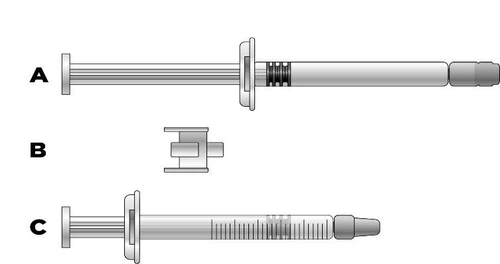
The required volume in ml should be withdrawn into an empty 3 ml graduated syringe (see table below).
Table 1: Dosing regimen for children and adolescents
| Body weight | Injection volume |
| 12 kg - 25 kg | 1.0 ml |
| 26 kg - 40 kg | 1.5 ml |
| 41 kg - 50 kg | 2.0 ml |
| 51 kg - 65 kg | 2.5 ml |
Patients weighing more than 65 kg will use the entire contents of the pre-filled syringe (3 ml).

If in doubt about the volume of solution to withdraw, consult your doctor, pharmacist, or
nurse.
Remove the caps from both ends of the connector.

Avoid touching the ends of the connector and the tips of the syringes to prevent
contamination.
Screw the connector onto the pre-filled syringe.
Attach the graduated syringe to the other end of the connector, ensuring that both connections are
securely fastened.

Transfer the icatibant solution into the graduated syringe:
To begin transferring the icatibant solution, push down the plunger of the pre-filled syringe (to the far
left in the figure below).

If the icatibant solution does not transfer into the graduated syringe, gently pull back the plunger of the
graduated syringe until the icatibant solution starts to flow into it (see figure below).

Continue pushing down the plunger of the pre-filled syringe until the required injection volume (dose) has been transferred into the graduated syringe. For dosage information, see Table 1.
If there is air in the graduated syringe:
- Invert the connected syringes so that the pre-filled syringe is on top (see figure below).
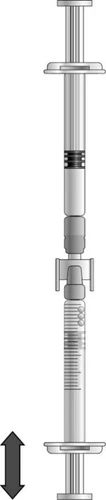
- Push down the plunger of the graduated syringe so that the air is transferred back into the pre-filled syringe (this step may need to be repeated several times).
- Withdraw the required volume of icatibant solution.
Detach the pre-filled syringe and connector from the graduated syringe.
Dispose of the pre-filled syringe and connector in a sharps container.
2b) Preparation of the syringe and needle for injection:
All patients (adults, adolescents, and children)
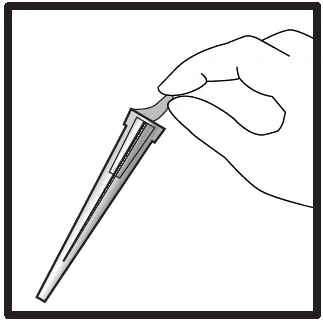
- Remove the cap containing the needle from the blister pack.
- Peel off the film from the cap (the needle should still be inside the cap).
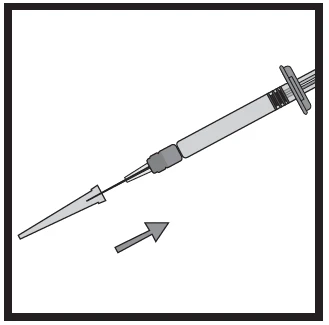
- Hold the syringe firmly. Carefully attach the needle to the pre-filled syringe containing the clear solution.
- Screw the pre-filled syringe onto the needle while it is still in the cap.
- Remove the needle from the cap by pulling the syringe, without pulling the plunger.
- The syringe is now ready for injection. 3) Preparation of the injection site
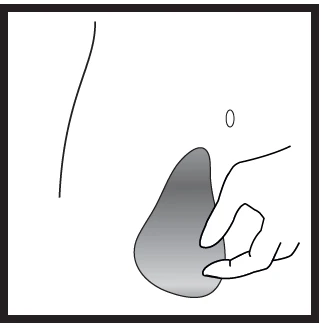
- Choose the injection site, which should be a skin fold on the abdomen approximately 5–10 cm to the right or left of the navel. The area must be at least 5 cm away from any scars. Do not select an area that is bruised, swollen, or tender.
- Clean the injection site by wiping it with an alcohol-soaked cotton ball and allow it to dry. 4) Injection of the solution
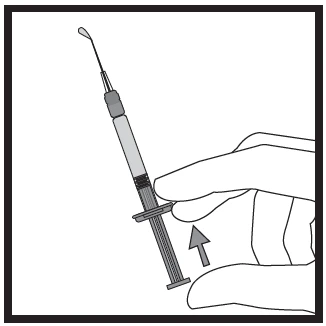
- Hold the syringe between two fingers of one hand, with your thumb on the plunger.
- Ensure that no air bubbles are present in the syringe by pushing the plunger until the first drop appears at the tip of the needle.
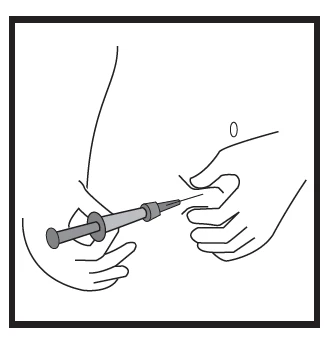
- Hold the syringe at an angle of 45–90 degrees to the skin, with the needle pointing toward the injection site.
- While holding the syringe in one hand, use the other hand to gently pinch a skin fold between your thumb and fingers at the previously disinfected injection site.
- While maintaining the skin fold, bring the syringe close and quickly insert the needle into the skin fold.
- Slowly and steadily push the syringe plunger until all the liquid has been injected and the syringe is empty.
- Push slowly: the injection should take about 30 seconds.
- Release the skin fold and gently withdraw the needle.
5) Disposal of the injection kit
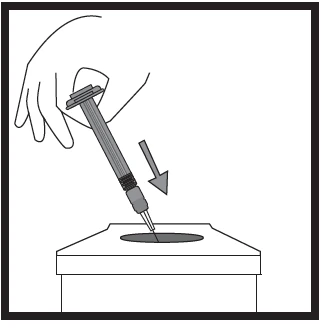
- Dispose of the syringe, needle, and its cap in a designated container for disposal of waste that could injure others if not handled properly.
4. Possible side effects
Like all medicines, this medicine can cause side effects, although not everyone experiences them.
Almost all patients treated with Icatibant EG have a reaction at the injection site (such as skin irritation, swelling, pain, itching, redness, and burning sensation). These effects are usually mild in intensity and resolve spontaneously without the need for further treatment.
Immediately contact your doctor if you notice that your attack symptoms worsen after administration of this medicine.
Very common (may affect more than 1 in 10 people):
Further reactions at the injection site (feeling of pressure, bruising, loss of sensation and/or numbness, swollen and itchy skin rash, warmth).
Common (may affect up to 1 in 10 people):
Feeling unwell
Headache
Dizziness
Fever
Itching
Skin rash
Skin redness
Abnormal liver function tests
Frequency not known (frequency cannot be estimated from the available data):
Urticaria
Reporting of side effects
If you experience any side effect, including those not listed in this leaflet, inform your doctor or pharmacist. You can also report side effects directly through the national reporting system at the following website: https://www.aifa.gov.it/content/segnalazioni-reazioni-avverse.
By reporting side effects, you can help provide more information on the safety of this medicine.
5. How to store Icatibant EG
Keep this medicine out of the sight and reach of children.
Do not use this medicine after the expiry date stated on the label and packaging following the word EXP. The expiry date refers to the last day of that month.
Do not store above 25°C. Do not freeze.
Do not use this medicine if you notice any damage to the syringe or needle packaging, or if there are clear signs of deterioration, for example if the solution is cloudy, contains floating particles, or if the colour of the solution has changed.
Do not dispose of any medicine via wastewater or household waste. Ask your pharmacist how to dispose of medicines no longer required. This will help protect the environment.
6. Package contents and other information
What Icatibant EG contains
- The active substance is icatibant. Each pre-filled syringe contains 30 mg of icatibant (as acetate). Each ml of solution contains 10 mg of icatibant.
- The other components are sodium chloride, glacial acetic acid, sodium hydroxide (for pH adjustment) and water (see section 2).
Description of the appearance of Icatibant EG and contents of the pack
Icatibant EG is supplied as a clear, colourless injectable solution in a 3 ml glass pre-filled syringe. A hypodermic needle is included in the pack.
Icatibant EG is available in a single pack containing one pre-filled syringe and one needle, or in a multiple pack containing three pre-filled syringes and three needles.
Not all pack sizes may be marketed.
Marketing Authorisation Holder
EG S.p.A., Via Pavia 6, 20136 Milano, Italy
Manufacturers
Pharmadox Healthcare Ltd., KW20A Kordin Industrial Park, Paola PLA 3000, Malta
STADA Arzneimittel GmbH, Muthgasse 36/2, 1190 Wien, Austria
STADA Arzneimittel AG, Stadastrasse 2 – 18, 61118 Bad Vilbel, Germany
Eurofins PROXY Laboratories BV, Archimedesweg 25, 2333 CM Leiden, The Netherlands
This medicinal product is authorised in the European Economic Area countries under the following names:
DK Icatibant STADA
AT Icatibant STADA 30 mg Injektionslösung in einer Fertigspritze
DE Icatibant AL 30 mg Injektionslösung in einer Fertigspritze
ES Icatibant STADA 30 mg solución inyectable en jeringa precargada EFG
FI Icatibant STADA 30 mg injektioneste, liuos, esitäytetty ruisku
HU Icatibant Stada 30 mg oldatos injekció előretöltött fecskendőben
IT Icatibant EG
IS Icatibant STADA 30 mg stungulyf, lausn
NO Icatibant STADA
RO Icatibant Stada 30mg soluţie injectabilă în seringă preumplută
SE Icatibant STADA 30 mg injektionsvätska, lösning, i förfylld spruta