Ibitred
ItalyTable of Contents
Patient Information Leaflet
IBItreD 10,000 U.I./ml oral drops, solution
Colecalciferol (vitamin D)
Please read this leaflet carefully before taking this medicine because it contains important information for you.
- Keep this leaflet. You may need to read it again.
- If you have any questions, ask your doctor or pharmacist.
- This medicine has been prescribed for you only. Do not give it to other people, even if their symptoms are the same as yours, as it may be harmful.
- If you experience any side effects, including those not listed in this leaflet, inform your doctor or pharmacist. See section 4.
Contents of this leaflet
- What IBItreD is and what it is used for
- What you need to know before taking IBItreD
- How to take IBItreD
- Possible side effects
- How to store IBItreD
- Contents of the pack and other information
1. What IBItreD is and what it is used for
IBItreD contains the active substance colecalciferol (vitamin D).
Vitamin D regulates the absorption and metabolism of calcium and the deposition of calcium into bone tissue.
IBItreD is used to prevent vitamin D deficiency in adults and adolescents who are at risk of vitamin D deficiency, and to treat vitamin D deficiency in adults, adolescents, and children.
2. What you need to know before taking IBItreD
Do not take IBItreD
- if you are allergic to the active substance or to any of the other ingredients of this medicine (listed in section 6)
- if you have high levels of vitamin D in the blood (hypervitaminosis D)
- if your calcium levels in the blood (hypercalcemia) or in the urine (hypercalciuria) are high
- if you have kidney stones (renal calculi) or suffer from severe kidney problems
Warnings and precautions
Talk to your doctor or pharmacist before taking IBItreD.
- if you have kidney damage or kidney disease. Your doctor will ask you to monitor calcium levels in blood and urine
- if you are being treated for heart conditions
- if you have sarcoidosis (an immune system disorder that may affect the liver, lungs, skin, or lymph nodes)
- if you are already taking calcium or vitamin D. During treatment with IBItreD, your doctor will monitor your calcium levels to ensure they do not become too high
- if you are prone to forming calcium-containing kidney stones.
Children
In children under 12 years of age, the recommended dosage for the prevention of vitamin D deficiency may not be adequate with this droplet formulation. Therefore, IBItreD is not recommended for the prevention of vitamin D deficiency in children under 12 years of age.
Other medicines and IBItreD
Inform your doctor or pharmacist if you are taking, have recently taken, or might take any other medicines.
In particular, the following medicines may interact with IBItreD:
- heart medications (cardiac glycosides such as digoxin). Your doctor may monitor your heart with an electrocardiogram (ECG) and measure your blood calcium levels
- medications for epilepsy (such as phenytoin) or sleep medications (barbiturates such as phenobarbital), as these may reduce the effect of vitamin D
- glucocorticoids (steroid hormones such as hydrocortisone or prednisolone). These may reduce the effect of vitamin D
- laxatives (such as liquid paraffin) or cholesterol-lowering medicines called cholestyramine or orlistat, which may reduce the absorption of vitamin D
- actinomycin (a medicine used to treat certain forms of cancer) and imidazole antifungals (medicines such as clotrimazole and ketoconazole used to treat fungal diseases), as they may interfere with vitamin D metabolism
- rifampicin may reduce the efficacy of colecalciferol due to induction of hepatic enzymes
- isoniazid may reduce the efficacy of colecalciferol due to inhibition of metabolic activation of colecalciferol
- concomitant administration of benzothiadiazine derivatives (thiazide diuretics) increases the risk of hypercalcemia due to reduced renal excretion of calcium. Therefore, urinary and plasma calcium levels should be monitored.
Pregnancy and breastfeeding
If you are pregnant, think you may be pregnant, planning to become pregnant, or breastfeeding, consult your doctor or pharmacist before taking this medicine.
During pregnancy, do not take this medicine unless vitamin D deficiency is confirmed.
Daily doses exceeding 4,000 IU may be harmful.
IBItreD may be taken during breastfeeding when vitamin D deficiency is confirmed. Vitamin D passes into breast milk. This should be taken into account when additional vitamin D is given to a breastfed infant.
Driving and using machines
IBItreD has no known effects on the ability to drive vehicles or use machinery.
3. How to take IBItreD
Always use only the dropper provided with this medicine, as using other droppers
may not deliver the correct dose.
Take this medicine exactly as directed by your doctor or pharmacist. If you
have any doubts, consult your doctor or pharmacist.
1 Drop contains 250 IU of Vitamin D.
It is preferable to take IBItreD during a substantial meal.
This medicine has a mild olive oil flavour. It can be taken alone or by mixing the prescribed
number of drops onto a spoon or with a small amount of cold or lukewarm food,
immediately before use. Make sure you have taken the entire dose.
Instructions for use
The package contains 1 bottle and a dropper applicator cap. The bottle is sealed with a child-resistant
plastic cap. The dropper is equipped with a plastic protective cover. Shake the bottle before use and follow the instructions listed below:
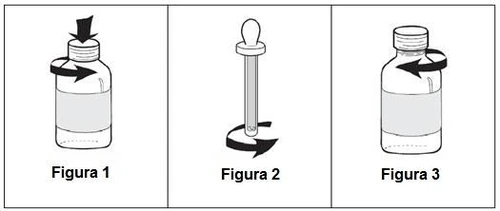
a. To open the bottle, press and turn the cap simultaneously (see Figure 1)
b. Before using the dropper applicator cap, unscrew the plastic cylinder by removing the plastic stem from the dropper applicator cap (see Figure 2)
c. Insert the dropper applicator cap into the bottle to draw up the contents. Collect the prescribed number of drops onto a spoon
d. Close the bottle (see Figure 3). Screw the plastic cylinder back onto the tip of the dropper
e. Store the bottle in its original cardboard carton
Use in children and adolescents
For the prevention of vitamin D deficiency in at-risk adolescents (12 to 18 years of age), administration of 2–3 drops (500 IU–750 IU) daily is recommended.
In children under 12 years of age, the recommended dosage may not be achievable with this dropper formulation.
For the treatment of vitamin D deficiency, the dosage should be individually adjusted. The daily dose must not exceed:
- 1,000 IU (4 drops) for children under 1 year of age
- 2,000 IU (8 drops) for children aged 1 to 10 years
- 4,000 IU (16 drops) for adolescents aged 11 years and older
Use in adults
The recommended dose for the prevention of vitamin D deficiency is 2–3 drops (500 IU–750 IU) daily. For the treatment of vitamin D deficiency, the usual dose is 3 drops (750 IU) daily; however, your doctor may adjust this dose individually. The daily dose must not exceed 4,000 IU (16 drops).
Alternatively, national recommendations on dosing for the prevention and treatment of vitamin D deficiency may be followed.
If you take more IBItreD than you should
If you accidentally take one extra drop, it is unlikely to cause harm. If you accidentally take several extra drops, inform your doctor or seek immediate medical advice. If possible, bring the bottle, the packaging, and this leaflet with you to show the doctor. If you take too many drops, you may experience nausea, constipation, stomach pain, muscle weakness, fatigue, loss of appetite, kidney problems, and in severe cases, irregular heartbeat.
If you forget to take IBItreD
If you forget to take your dose, take it as soon as you remember. Do not take a double dose to make up for the missed dose. Then, continue with your next dose according to your doctor's instructions.
If you have any questions about the use of this medicine, consult your doctor or pharmacist.
4. Possible side effects
Like all medicines, this medicine can cause side effects, although not everybody will experience them.
Side effects with IBItreD may include:
Uncommon side effects (may affect up to 1 in 100 people)
- too much calcium in the blood (hypercalcemia). You may feel unwell or sick, lose your appetite, be constipated, have stomach pain, feel very thirsty, have muscle weakness, drowsiness or confusion
- too much calcium in the urine (hypercalciuria)
Rare side effects (may affect up to 1 in 1000 people)
- rash
- itching
- hives
Reporting of side effects
If you experience any side effect, including those not listed in this leaflet, talk to your doctor or pharmacist.
You can also report side effects directly via the national reporting system at https://www.aifa.gov.it/content/segnalazioni-reazioni-avverse . By reporting side effects, you can help provide more information on the safety of this medicine.
5. How to store IBItreD
Keep this medicine out of the sight and reach of children.
Do not freeze or refrigerate.
Do not store at temperatures above 25°C.
Keep this medicine in the original packaging to protect it from light.
Do not use this medicine after the expiry date stated on the packaging after the wording
EXP. The expiry date refers to the last day of that month.
The opened bottle must be used within 5 months.
Do not use this medicine if you notice that the solution is cloudy.
Do not dispose of any medicine via wastewater or household waste. Ask your pharmacist how to
dispose of medicines no longer required. This will help protect the environment.
6. Package contents and other information
What IBItreD 10,000 IU/ml oral drops, solution contains
- The active substance is colecalciferol 2.5 mg (vitamin D equivalent to 100,000 IU). Each drop contains 6.25 micrograms of vitamin D, corresponding to 250 IU of colecalciferol.
- The other component is: refined olive oil.
Description of the appearance of IBItreD and contents of the pack
IBItreD 10,000 IU/ml oral drops, solution is a clear, light yellow oil. It is supplied in an amber glass bottle sealed with a child-resistant plastic cap and one dropper cap.
Each pack contains one bottle with 10 ml of oral solution (equivalent to 400 drops) and one dropper.
Marketing Authorisation Holder and Manufacturer
ISTITUTO BIOCHIMICO ITALIANO GIOVANNI LORENZINI S.p.A.
Via Fossignano, 2 – 04011 Aprilia (LT)
email: [email protected]
This medicinal product is authorised in the European Economic Area Member States under the following names:
Patient Information Leaflet
IBItreD 25,000 U.I./2.5 ml oral solution
Colecalciferol (vitamin D )
For use in adults only
Please read this leaflet carefully before taking this medicine as it contains
important information for you.
- Keep this leaflet. You may need to read it again.
- If you have any questions, ask your doctor or pharmacist.
- This medicine has been prescribed for you only. Do not give it to other people, even if they have the same symptoms as you, because it could be harmful.
- If you experience any side effect, including those not listed in this leaflet, contact your doctor or pharmacist. See section 4.
Contents of this leaflet
- What IBItreD is and what it is used for
- What you need to know before taking IBItreD
- How to take IBItreD
- Possible side effects
- How to store IBItreD
- Package contents and other information
1. What IBItreD is and what it is used for
IBItreD contains the active substance colecalciferol (vitamin D).
Vitamin D regulates the absorption and metabolism of calcium and the deposition of calcium into bone tissue.
IBItreD is used for the initial treatment of symptomatic vitamin D deficiency in adults.
2. What you need to know before taking IBItreD
Do not take IBItreD
- if you are allergic to the active substance or to any of the other ingredients of this medicine (listed in section 6)
- if you have high levels of vitamin D in the blood (hypervitaminosis D)
- if your blood calcium levels (hypercalcemia) or urine calcium levels (hypercalciuria) are high
- if you have kidney stones (renal calculi) or suffer from severe kidney problems
Warnings and precautions
Talk to your doctor or pharmacist before taking IBItreD.
- if you have kidney damage or kidney disease. Your doctor will ask you to monitor calcium levels in blood and urine
- if you are being treated for heart conditions
- if you have sarcoidosis (an immune system disease that may affect the liver, lungs, skin, or lymph nodes)
- if you are already taking calcium or vitamin D. During treatment with IBItreD, your doctor will monitor your calcium levels to ensure they do not become too high
- if you are prone to forming calcium-containing kidney stones.
Children and adolescents
IBItreD 25,000 IU oral solution is not recommended for children and adolescents under 18 years of age.
Other medicines and IBItreD
Inform your doctor or pharmacist if you are taking, have recently taken, or might take any other medicines.
In particular, the following medicines may interact with IBItreD.
- heart medications (cardiac glycosides such as digoxin). Your doctor may monitor your heart with an electrocardiogram (ECG) and measure your blood calcium levels
- medicines used to treat epilepsy (such as phenytoin) or sleeping medicines (barbiturates such as phenobarbital), as these may reduce the effect of vitamin D
- glucocorticoids (steroid hormones such as hydrocortisone or prednisolone). These medicines may reduce the effect of vitamin D
- laxatives (such as liquid paraffin) or cholesterol-lowering medicines called cholestyramine or orlistat, which may reduce the absorption of vitamin D
- actinomycin (a medicine used to treat certain forms of cancer) and imidazole antifungals (medicines such as clotrimazole and ketoconazole used to treat fungal infections), as they may interfere with vitamin D metabolism
- rifampicin may reduce the efficacy of colecalciferol due to inhibition of hepatic enzymes
- isoniazid may reduce the efficacy of colecalciferol due to inhibition of metabolic activation of colecalciferol
- concomitant administration of benzothiadiazine derivatives (thiazide diuretics) increases the risk of hypercalcemia due to reduced renal excretion of calcium. Therefore, urinary and plasma calcium levels should be monitored.
Pregnancy and breastfeeding
If you are pregnant, think you may be pregnant, planning to become pregnant, or breastfeeding, please consult your doctor or pharmacist before taking this medicine.
The use of this high-dose formulation is not recommended during pregnancy and breastfeeding.
Driving and using machines
IBItreD has no known effects on the ability to drive vehicles or operate machinery.
3. How to take IBItreD
Take this medicine exactly as your doctor has told you. If you are unsure, consult your doctor or pharmacist.
The bottle should be shaken before use.
It is preferable to take IBItreD during a substantial meal.
This medicine has a mild olive oil flavour. IBItreD 25,000 IU oral solution can be taken directly from the bottle or administered onto a spoon. The oral solution may be mixed with a small amount of cold or lukewarm food immediately before use. The entire dose must be taken.
The recommended dose is 1 bottle (25,000 IU) per week during the first month; your doctor will determine the appropriate dose for you.
Alternatively, national recommendations on dosage for the treatment of vitamin D deficiency may be followed.
Use in children and adolescents
IBItreD 25,000 IU oral solution is not recommended for children and adolescents under 18 years of age.
If you take more IBItreD than you should
If you accidentally take more medicine than prescribed, inform your doctor or seek immediate medical advice. If possible, bring the bottle, the carton, and this leaflet with you to show your doctor. If you take too much of the solution, you may experience a feeling of discomfort, constipation, stomach pain, muscle weakness, fatigue, loss of appetite, kidney problems, and in more severe cases, irregular heartbeat.
If you forget to take IBItreD
If you forget to take a dose of IBItreD, take the missed dose as soon as possible. Do not take a double dose to make up for the forgotten dose. Then, take the next dose according to your doctor's instructions.
If you have any doubts about how to use this medicine, consult your doctor or pharmacist.
4. Possible side effects
Like all medicines, this medicine can cause side effects, although not everybody will experience them.
Side effects with IBItreD may include:
Uncommon side effects (may affect up to 1 in 100 people)
- too much calcium in the blood (hypercalcemia). You may feel unwell or sick, lose your appetite, become constipated, have stomach pain, feel very thirsty, have muscle weakness, drowsiness or confusion
- too much calcium in the urine (hypercalciuria)
Rare side effects (may affect up to 1 in 1,000 people)
- rash
- itching
- hives
Reporting of side effects
If you experience any side effect, including those not listed in this leaflet, talk to your doctor or pharmacist.
You can also report side effects directly via the national reporting system at https://www.aifa.gov.it/content/segnalazioni-reazioni-avverse.
By reporting side effects, you can help provide more information on the safety of this medicine.
5. How to store IBItreD
Keep this medicine out of the sight and reach of children.
Do not freeze or refrigerate.
Do not store above 25°C.
Keep this medicine in the original packaging to protect it from light.
Do not use this medicine after the expiry date stated on the packaging after the wording
EXP. The expiry date refers to the last day of that month.
Do not use this medicine if you notice the solution is cloudy.
Do not dispose of any medicine via wastewater or household waste. Ask your pharmacist how to
dispose of medicines no longer in use. This will help protect the environment.
6. Package contents and other information
What IBItreD 25,000 IU oral solution contains
- The active substance is cholecalciferol (vitamin D). One single-dose vial of 2.5 ml contains 0.625 mg of cholecalciferol (vitamin D, equivalent to 25,000 IU).
- The other components are: refined olive oil.
Description of the appearance of IBItreD and contents of the pack
IBItreD 25,000 IU/2.5 ml oral solution is a clear oily solution, colourless to yellowish-green, without visible solid particles and/or precipitate.
It is supplied in an amber glass vial sealed with a plastic cap.
Each pack contains 1 or 4 single-dose vials containing 2.5 ml of solution.
Not all pack sizes may be marketed.
Marketing Authorisation Holder and Manufacturer
ISTITUTO BIOCHIMICO ITALIANO GIOVANNI LORENZINI S.p.A.
Via Fossignano, 2 – 04011 Aprilia (LT)
e-mail: [email protected]
This medicinal product is authorised in the European Economic Area countries under the following names: