Glicorest
Italy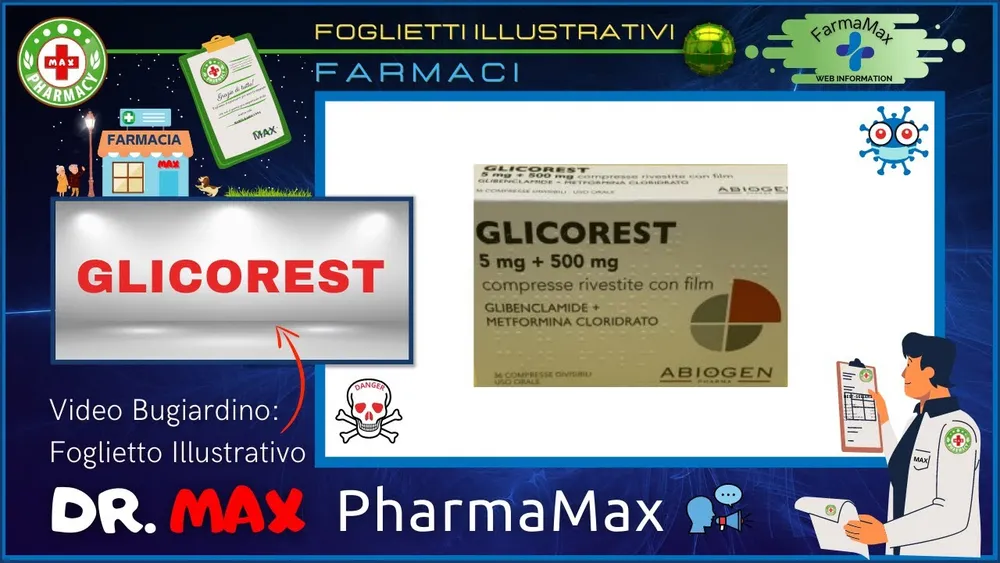
Table of Contents
Package leaflet: Information for the patient
GLICOREST 5mg + 500mg film-coated tablets
GLIBENCLAMIDE + METFORMIN HYDROCHLORIDE
Please read all of this leaflet carefully before taking this medicine because it contains important information for you.
- Keep this leaflet. You may need to read it again.
- If you have any questions, ask your doctor or pharmacist.
- This medicine has been prescribed for you only. Do not give it to other people, even if their symptoms are the same as yours, as it may be harmful.
- If you experience any side effects, including those not listed in this leaflet, contact your doctor or pharmacist. See section 4.
Contents of this leaflet:
- What GLICOREST is and what it is used for
- What you need to know before taking GLICOREST
- How to take GLICOREST
- Possible side effects
- How to store GLICOREST
- Contents of the pack and other information
1. What GLICOREST is and what it is used for
GLICOREST is an oral antihyperglycemic medicinal product (lowers blood glucose levels)
containing two active substances:
- metformin hydrochloride (belonging to the class of biguanides)
- glibenclamide (belonging to the class of sulfonylureas).
GLICOREST is indicated in adults for the treatment of non-insulin-dependent diabetes mellitus
(also known as type 2 diabetes), non-ketoacidotic (i.e. not associated with increased levels of
substances called "ketone bodies" in urine or blood), when glucose levels are not controlled
by diet alone or by combined treatment with diet and sulfonylureas (medicinal products used
to treat diabetes).
2. What you should know before taking GLICOREST
Do not take GLICOREST
- if you are allergic to metformin, glibenclamide, or any of the other ingredients of this medicine (listed in section 6);
- if you are allergic to other medicines containing substances similar to metformin;
- if you have latent diabetes (not yet manifested) or suspect you may have diabetes;
- if you have diabetes that develops during pregnancy (gestational diabetes);
- if you have a form of diabetes requiring insulin treatment (insulin-dependent);
- if you have uncontrolled diabetes associated, for example, with severe hyperglycemia (high blood glucose levels), nausea, vomiting, diarrhea, rapid weight loss, lactic acidosis (see below “Risk of lactic acidosis”) or ketoacidosis. Ketoacidosis is a condition in which substances called “ketone bodies” accumulate in the blood and may lead to diabetic precoma. Symptoms include stomach pain, deep and rapid breathing, drowsiness, and breath with an unusually fruity odor;
- if you experience loss of consciousness or feeling of fainting due to diabetes (diabetic coma or precoma);
- if you have severe liver problems (hepatic insufficiency);
- if you have severely reduced kidney function;
- if you are taking diuretic medicines (to increase urine production) or antihypertensive medicines (to lower blood pressure) that may affect your kidney function;
- if you are scheduled for a test to evaluate kidney function (intravenous urography);
- if you suffer from diseases that may alter how your kidneys work (e.g., if you have lost a lot of fluids, have a serious ongoing infection, or suffer from reduced blood flow to all organs);
- if you have severe heart or blood vessel problems (heart failure, recent heart attack, cardiogenic or septic shock, peripheral arterial circulation disorders);
- if you have severe respiratory problems (respiratory failure or other serious breathing disorders);
- if you have an adrenal gland disease (glands located above the kidneys);
- if you abuse alcohol or have recently abused it (alcoholism, acute alcohol intoxication) (see section “GLICOREST with food and alcohol”);
- if you eat very little (very low-calorie diets) or, especially, if you are fasting (see section “GLICOREST with food and alcohol”);
- if you have severe nerve and muscle diseases (dystrophic);
- if you have severe acute bleeding;
- if you have localized tissue-destructive processes leading to tissue death (gangrene);
- if you have undergone or are going to undergo surgery, do not take GLICOREST within two days before or after the procedure;
- if you are pregnant;
- if you are breastfeeding;
- if you are scheduled for imaging tests involving injection of iodine-containing contrast agents (see section “Other medicines and GLICOREST”).
Warnings and precautions
Talk to your doctor or pharmacist before taking GLICOREST.
Taking GLICOREST may expose you to a higher risk of fatal heart and blood vessel diseases (cardiovascular mortality), especially if you also have heart artery disorders (coronary artery disease), compared to treatment with other diabetes medicines such as metformin or gliclazide.
Patients aged 65 years or older are particularly sensitive to the hypoglycemic action of glibenclamide and are therefore at higher risk of hypoglycemia. In elderly patients, low blood sugar levels may be somewhat difficult to recognize. The initial and maintenance doses of glibenclamide must be carefully determined by your treating physician to avoid hypoglycemic reactions.
Risk of lactic acidosis
GLICOREST may cause a very rare but very serious side effect called lactic acidosis, particularly if the kidneys are not functioning properly. The risk of developing lactic acidosis is higher in the presence of uncontrolled diabetes, severe infections, prolonged fasting or alcohol consumption, dehydration (see below for further information), liver problems, or any other medical condition characterized by reduced oxygen supply to part of the body (such as in severe heart disease).
If you have any of the above-mentioned medical conditions, consult your doctor for further instructions. Your doctor will frequently monitor your health status through tests to assess whether you have factors that may favor the onset of lactic acidosis, especially:
- if you are over 60 years old
- if you have severe kidney disease
- if you are not taking medicines to treat your diabetes
- if you have ketone bodies in your blood, a condition also known as acetone (ketosis)
- if you have a disease causing oxygen deficiency in the body
- if you have liver disease
- if you have heart or lung disease (cardiorespiratory failure)
- if you abuse alcohol
- if you are fasting for prolonged periods
- if you are being treated with diuretic medicines (used to increase urine production)
- if you have stomach or intestinal problems. Temporarily stop taking GLICOREST if you develop a medical condition that may be associated with dehydration (significant loss of body fluids), such as severe vomiting, diarrhea, fever, heat exposure, or if you drink less fluid than normal. Consult your doctor for further instructions.
If you experience any of the symptoms of lactic acidosis, stop taking GLICOREST and contact your doctor or go to the nearest hospital immediately, as lactic acidosis can lead to coma.
Symptoms of lactic acidosis include:
- vomiting
- stomach pain (abdominal pain)
- muscle cramps
- a general feeling of discomfort associated with severe fatigue
- difficulty breathing
- lowered body temperature and slower heart rate
Lactic acidosis is a medical emergency and must be treated in hospital.
Contact your doctor immediately for further instructions if:
- you know you have a hereditary genetic disease affecting mitochondria (cellular components that produce energy), such as MELAS syndrome (Mitochondrial Encephalopathy, myopathy, Lactic Acidosis and Stroke-like episodes, mitochondrial encephalomyopathy with lactic acidosis and stroke-like episodes) or maternally inherited diabetes and deafness (MIDD, Maternal Inherited Diabetes and Deafness);
- you experience any of the following symptoms after starting metformin: seizures, decreased cognitive abilities, movement difficulties, symptoms indicating nerve damage (e.g., pain or numbness), headache, and deafness. If you are undergoing major surgery, you must stop taking GLICOREST during the procedure and for a certain period afterward. Your doctor will decide when to stop and when to restart treatment with GLICOREST.
During treatment with GLICOREST, your doctor will check your kidney function at least once a year, or more frequently if you are elderly and/or if kidney function worsens.
Also inform your doctor:
- if you experience symptoms of hypoglycemia (low blood sugar levels) such as headache, irritability, difficulty concentrating, sleep disturbances, tremors, nausea, excessive sweating, feeling of hunger. If you experience these symptoms, take carbohydrates (sugars) and INFORM YOUR DOCTOR IMMEDIATELY: you may need blood tests, temporary discontinuation of therapy, or hospitalization to bring your blood glucose back under control.
Symptoms of hypoglycemia may occur, although rarely, especially:
- if you are debilitated
- if you are elderly
- if you perform unusual physical exertion
- if you have irregular eating habits
- if you consume alcoholic beverages
- if you have kidney or liver problems.
Inform your doctor also in case of trauma, surgical procedures, infectious or febrile illnesses. Your doctor may temporarily prescribe insulin therapy for better control of blood sugar levels.
Also inform your doctor:
- if you have a deficiency of an enzyme called glucose-6-phosphate dehydrogenase (G6PD). In this case, your doctor will administer this medicine cautiously or recommend another medicine to avoid the risk of hemolytic anemia (a disease of red blood cells, a type of blood cell);
- if you have a blood disorder called megaloblastic anemia, caused by reduced absorption of vitamin B (see section 4. “Possible side effects”).
Continue the diet prescribed by your doctor and have regular blood tests even during treatment with GLICOREST.
Children and adolescents
Do not give GLICOREST to children or adolescents, as it is not indicated for them.
Other medicines and GLICOREST
If you are scheduled to receive an injection of an iodinated contrast agent into the bloodstream, for example for an X-ray, you must stop taking GLICOREST before or during the injection. Your doctor will decide when to stop and when to restart treatment with GLICOREST.
Inform your doctor if you are currently taking, have recently taken, or might take any other medicine. You may need to monitor your blood glucose and kidney function more frequently, or your doctor may decide to adjust the dose of GLICOREST. It is particularly important to mention the following:
- the following medicines that may increase the effect of GLICOREST:
- dicoumarol and derivatives (medicines to make blood thinner)
- monoamine oxidase inhibitors (medicines to treat depression)
- antibiotics (medicines to treat infections, such as sulfonamides, quinolones (mainly fluoroquinolones such as gatifloxacin, ciprofloxacin, etc.) and chloramphenicol)
- phenylbutazone and derivatives (medicines to treat inflammation and pain)
- cyclophosphamide (medicine to treat tumors)
- probenecid (medicine to treat gout, a disease causing joint inflammation and pain)
- fibrates (medicines to lower cholesterol)
- pheniramidol (medicine to treat pain)
- salicylates (medicines to treat inflammation)
- oral miconazole (medicine used to treat fungal infections)
- sulfinpyrazone (medicine to prevent heart attacks)
- perhexiline (medicine to treat heart diseases)
- medicines containing alcohol (see section “GLICOREST with food and alcohol”)
- the following medicines that may decrease the effect of GLICOREST:
- adrenaline (medicine used to treat severe allergic reactions)
- corticosteroids (medicines used to treat inflammation)
- oral contraceptives (the pill)
- thiazide diuretics (medicines used to increase urine production)
- diazoxide (medicine used to lower blood pressure)
- phenothiazine derivatives (tranquilizers for certain psychotic disorders)
- phenytoin and barbiturates (medicines used to treat epilepsy)
- H₂-receptor antagonists (medicines used to treat ulcers, stomach perforations)
- ß-blockers (medicines used to treat high blood pressure)
- clonidine (medicine used to lower blood pressure)
- guanethidine or reserpine (medicines used to lower blood pressure or treat mental disorders)
- iodine-containing contrast agents.
Also inform your doctor if you are taking the following medicines, as their use with GLICOREST requires caution:
- glucocorticoids (e.g., in cream, tablets, or by injection) (medicines used to treat inflammation)
- sympathomimetics (medicines acting on the nervous system, stimulating the heart and increasing blood pressure)
- medicines that increase urine production (diuretics)
- medicines used to treat pain and inflammation (NSAIDs and COX-2 inhibitors, such as ibuprofen and celecoxib)
- some medicines for treating high blood pressure (ACE inhibitors and angiotensin II receptor antagonists).
GLICOREST with food and alcohol
Take this medicine with meals and do not take it if you eat very little or are fasting.
Avoid excessive alcohol consumption during treatment with GLICOREST, as this may increase the risk of lactic acidosis (see section “Warnings and precautions”), enhance its hypoglycemic effect (lowering blood sugar levels), and cause palpitations, headache, and vomiting (antabuse-like reactions) (see section 2. “Do not take GLICOREST”), especially if you have liver disease (hepatic insufficiency).
Pregnancy and breastfeeding
If you are pregnant, think you may be pregnant, are planning to become pregnant, or are breastfeeding, consult your doctor or pharmacist before taking this medicine.
Do not take GLICOREST if you are pregnant or breastfeeding (see section 2. “Do not take GLICOREST”).
Driving and using machines
Do not drive or operate machinery if you experience reduced reflex responsiveness or have difficulty concentrating. This may be due to an episode of low blood sugar (hypoglycemia).
3. How to take GLICOREST
Take this medicine exactly as directed by your doctor or pharmacist. If you have any doubts, consult your doctor or pharmacist.
Every treatment (initial treatment or switch from other medicines) must be prescribed by your doctor. Your doctor will determine the most suitable dose for you based on your condition.
Always strictly follow your doctor's recommendations regarding dosage, method of administration, diet, and physical activity.
The recommended dose in adults is 1–3 tablets daily, divided among the main meals.
If you have reduced kidney function, your doctor may prescribe you a lower dose.
If you take more GLICOREST than you should
If you ingest/absorb an excessive dose of GLICOREST, contact your doctor immediately or go to the nearest hospital.
In case of overdose, you may experience:
- hypoglycaemia, which may lead to behavioural disorders or loss of consciousness (coma). In such cases, take carbohydrates orally (sugars) or go to hospital, where, if necessary, sugars will be administered intravenously or appropriate treatment will be given.
- lactic acidosis (difficulty breathing, stomach pain, decreased body temperature, and loss of consciousness – see section 2. “Warnings and precautions”). In this case, go to hospital where you will receive appropriate treatment (e.g. haemodialysis, a blood filtration system).
If you forget to take GLICOREST
Do not take a double dose to make up for the missed tablet.
If you have any questions about the use of this medicine, consult your doctor or pharmacist.
4. Possible side effects
Like all medicines, this medicine can cause side effects, although not everyone experiences them.
GLICOREST may cause a very rare (may occur in up to 1 in 10,000 people) but very serious side effect called lactic acidosis (see section “Warnings and precautions”). If this occurs, you must stop taking GLICOREST and contact your
doctor or go immediately to the nearest hospital, because lactic acidosis can lead to coma.
The possible side effects are listed below according to the following frequency:
Very common (may affect more than 1 in 10 people)
- nausea
- loss of appetite (anorexia)
- vomiting
- diarrhoea
- abdominal pain
To prevent these side effects, take GLICOREST in 1–3 divided daily doses during or after meals.
Common (may affect up to 1 in 10 people)
- headache
- taste disturbances
Very rare (may affect up to 1 in 10,000 people)
- skin redness (erythema)
- itching (pruritus)
- skin redness accompanied by itching (urticaria)
- severe skin reaction (erythema multiforme)
- inflammation of blood vessels due to allergy (allergic vasculitis)
- low blood sugar levels (hypoglycaemia) (see section “Warnings and precautions”)
- lactic acidosis (build-up of lactic acid in the body) (see section “Warnings and precautions”)
- low or reduced levels of vitamin B in the blood (symptoms may include extreme tiredness (fatigue), red and sore tongue (glossitis), tingling sensations (paraesthesias), or pale or yellowish skin). Your doctor may carry out certain tests to determine the cause of these symptoms, as some of them may also be caused by diabetes or other unrelated health problems. Reduced absorption and lower levels of vitamin B in the blood may occur during long-term use of GLICONORM. Inform your doctor if you have a blood disorder (megaloblastic anaemia). (See section “Warnings and precautions”)
- reduced number of white blood cells in the blood (leucopenia)
- reduced number of platelets in the blood (thrombocytopenia)
- reduced number of granulocytes in the blood, a type of white blood cell (agranulocytosis)
- disease caused by the destruction of certain blood cells, the red blood cells (haemolytic anaemia)
- reduced functioning of the bone marrow, the tissue that produces blood cells (aplastic anaemia)
- reduced number of all types of blood cells (pancytopenia)
- abnormalities in liver function tests
- impairment of bile flow (a substance useful for digestion) (cholestasis)
- inflammation of the liver (hepatitis)
- allergic reactions
Reporting of side effects
If you experience any side effects, including those not listed in this leaflet, talk to your doctor or pharmacist. You can also report side effects directly via the national reporting system at the website https://www.aifa.gov.it/content/segnalazioni-reazioni-avverse.
By reporting side effects, you can help provide more information on the safety of this medicine.
5. How to store GLICOREST
This medicine does not require any special storage conditions.
Keep this medicine out of the sight and reach of children.
Do not use this medicine after the expiry date stated on the pack after "EXP". The expiry date refers to the last day of that month.
Do not dispose of any medicine via wastewater or household waste. Ask your pharmacist how to dispose of medicines no longer in use. This will help protect the environment.
6. Package contents and other information
What GLICOREST contains
- The active substances are glibenclamide and metformin hydrochloride. Each film-coated tablet contains 5 mg of glibenclamide and 500 mg of metformin hydrochloride.
- The other components are: maize starch, anhydrous colloidal silica, microcrystalline cellulose, gelatin, glycerol 85 percent, talc, magnesium stearate, hypromellose, titanium dioxide, macrogol 400.
Description of the appearance of GLICOREST and package contents
GLICOREST is available as divisible tablets.
It is supplied in a carton containing 36 film-coated tablets.
Marketing Authorization Holder
ABIOGEN PHARMA S.p.A. - Via Meucci, 36 – Ospedaletto – Pisa
Manufacturer
ABIOGEN PHARMA S.p.A. - Via Meucci, 36 – Ospedaletto – Pisa