Fucicin
Italy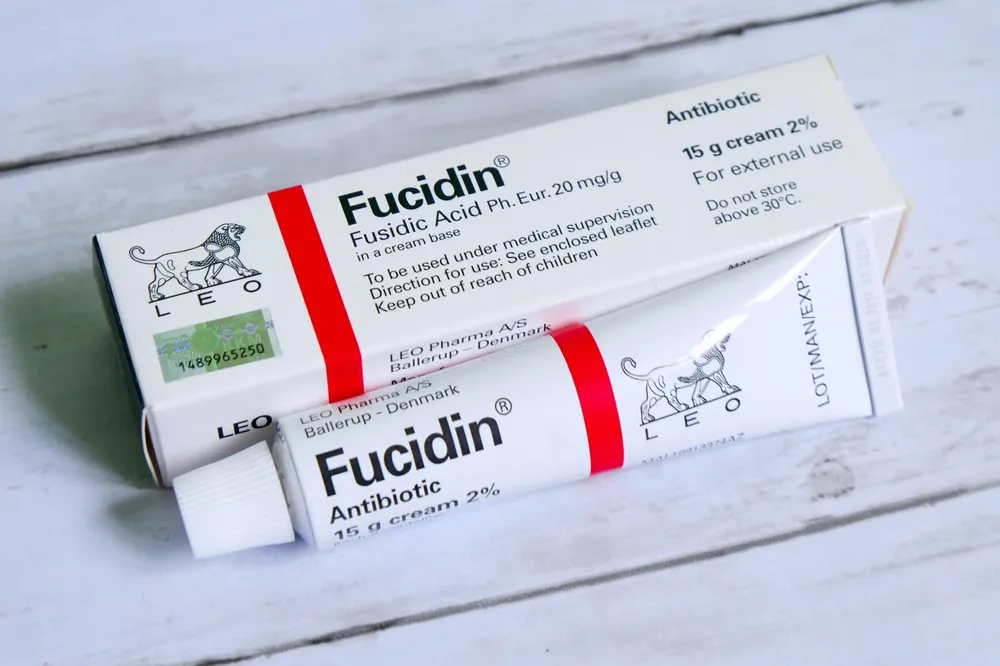
Table of Contents
Patient Information Leaflet: Information for the User
Fucidin 20 mg/g cream, 20 mg/g ointment
Fusidic acid / Sodium fusidate
Please read this leaflet carefully before using this medicine because it contains important information for you.
- Keep this leaflet. You may need to read it again.
- If you have any questions, ask your doctor or pharmacist.
- This medicine has been prescribed for you only. Do not give it to other people, even if their symptoms are the same as yours, as it may be harmful.
- If you experience any side effects, including those not listed in this leaflet, contact your doctor or pharmacist. See section 4.
Contents of this leaflet:
- What Fucidin is and what it is used for
- What you need to know before using Fucidin
- How to use Fucidin
- Possible side effects
- How to store Fucidin
- Contents of the pack and other information
1. What Fucidin is and what it is used for
Fucidin contains the active substance fusidic acid, an antibiotic that stops the growth of bacteria.
Fucidin is indicated in adults and children for skin infections caused by bacteria sensitive to fusidic acid.
Consult your doctor if you do not feel better or if you feel worse.
2. What you need to know before using Fucidin
Do not use Fucidin if you/your child
- is allergic to fusidic acid or to any of the other ingredients of this medicine (listed in section 6).
Warnings and precautions
Talk to your doctor or pharmacist before using Fucidin.
Take particular care when applying this medicine to the face.
Avoid contact with the eyes, as eye disorders may occur (see section 4, “Possible side effects”).
Occlusive dressing
Do not use occlusive dressings (such as bandages or plastic wrap) during treatment with Fucidin unless specifically instructed. If used, apply less frequently.
Prolonged treatment
With prolonged treatment, allergic reactions may occur (see section 4, “Possible side effects”).
Resistant germs (germs against which fusidic acid is ineffective)
Bacterial resistance (ability to survive) has been observed in a type of bacterium (Staphylococcus aureus) with topical use of fusidic acid. As with all antibiotics, prolonged or repeated use of Fucidin may increase the risk of developing antibiotic resistance.
Other medicines and Fucidin
Inform your doctor or pharmacist if you/your child are taking, have recently taken, or might take any other medicines.
The likelihood of interactions with medicines administered systemically (i.e. those reaching the site of action via the bloodstream) is minimal, since absorption of Fucidin into the bloodstream is negligible.
Pregnancy, breastfeeding and fertility
If you are pregnant, think you may be pregnant, planning a pregnancy, or are breastfeeding, ask your doctor or pharmacist for advice before using this medicine.
- Pregnancy: you may use Fucidin during pregnancy.
- Breastfeeding: you may use Fucidin while breastfeeding, but avoid applying it to the breast area.
- Fertility: you may use Fucidin if you are a woman of childbearing age.
Driving and using machines
Fucidin does not affect, or affects negligibly, the ability to drive or operate machinery.
Fucidin cream contains butylhydroxyanisole, cetyl alcohol and potassium sorbate
These excipients may cause local skin reactions (e.g. contact dermatitis).
Butylhydroxyanisole may also cause eye and mucous membrane irritation.
Fucidin ointment contains cetyl alcohol, lanolin and butylated hydroxytoluene
These excipients may cause localized skin reactions (e.g. contact dermatitis).
Butylated hydroxytoluene may also cause eye and mucous membrane irritation.
3. How to use Fucidin
Use this medicine exactly as described in this leaflet or as directed by your doctor or pharmacist. If you are unsure, consult your doctor or pharmacist.
Adults and children
The recommended dose is one application 2 or 3 times a day.
If using occlusive dressings, less frequent applications are recommended.
If you use more Fucidin than you should
If Fucidin is accidentally ingested or overdosed, inform your doctor immediately or go to the nearest hospital.
If you forget to use Fucidin
If you have any doubts about how to use this medicine, consult your doctor or pharmacist.
4. Possible side effects
Like all medicines, this medicine can cause side effects, although not everybody will experience them.
If you/your child experience any of the following side effects during treatment with Fucidin, STOP
treatment immediately and contact your doctor, who will determine the appropriate therapy:
- allergic reactions
The additional side effects that may occur during the use of Fucidin are listed below:
Uncommon (may affect up to 1 in 100 people)
- inflammation of the skin (dermatitis, including contact dermatitis and eczema),
- skin rash which may present as redness (erythema), pustules, blisters, spots or small dots, or generalized rash),
- itching,
- swelling (oedema),
- pain at the application site (including a burning sensation on the skin),
- irritation at the application site.
Rare (may affect up to 1 in 1,000 people)
- urticaria,
- swelling of the skin and underlying tissues (angioedema),
- blisters,
- allergic reactions,
- eye inflammation (conjunctivitis).
Reporting of side effects
If you experience any side effect, including those not listed in this leaflet, inform your doctor. You can also report side effects directly via the national reporting system.
By reporting side effects, you can help provide more information on the safety of this medicine.
5. How to store Fucidin
Fucidin 20 mg/g cream: store below 25°C.
Fucidin 20 mg/g ointment: this medicinal product does not require any special storage conditions.
Shelf life after first opening: 90 days.
Keep this medicine out of the sight and reach of children.
Do not use this medicine after the expiry date stated on the packaging after "Exp". The expiry date refers to the last day of that month.
Do not dispose of any medicine via wastewater or household waste. Ask your pharmacist how to dispose of medicines no longer required. This will help protect the environment.
6. Package Contents and Other Information
What Fucidin 20 mg/g cream contains
Each gram of cream contains:
- The active substance is fusidic acid 20 mg;
- The other components are butylhydroxyanisole, cetyl alcohol, potassium sorbate (see section “Fucidin contains butylhydroxyanisole, cetyl alcohol and potassium sorbate”), glycerol, liquid paraffin, polysorbate 60, white soft paraffin, all-rac-α-tocopherol, hydrochloric acid, purified water.
What Fucidin 20 mg/g ointment contains
Each gram of ointment contains:
- The active substance is fusidic acid sodium 20 mg (equivalent to 19.18 mg of fusidic acid);
- The other components are lanolin, cetyl alcohol, butylated hydroxytoluene (see section “Fucidin contains lanolin, cetyl alcohol and butylated hydroxytoluene”), liquid paraffin, white soft paraffin, all-rac-α-tocopherol.
Description of the appearance of Fucidin and contents of the pack
Fucidin cream is a cream supplied in 15 g and 30 g tubes.
Fucidin ointment is an ointment supplied in 15 g and 30 g tubes.
Not all pack sizes may be marketed.
Marketing Authorization Holder
LEO Pharma A/S, Industriparken 55, 2750 Ballerup (DK)
Licensee in Italy: LEO Pharma S.p.A., Via Amsterdam 125, 00144 Rome
Manufacturer
LEO Laboratories Limited, 285 Cashel Road, Dublin 12, Ireland