Feldene Fast
Italy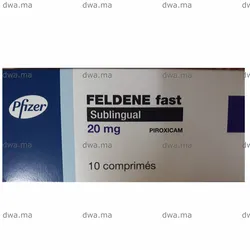
Table of Contents
Package leaflet: Information for the patient
FELDENE FAST 20 mg sublingual tablets
Piroxicam
Please read this leaflet carefully before taking this medicine because it contains
important information for you.
- Keep this leaflet. You may need to read it again.
- If you have any questions, ask your doctor or pharmacist.
- This medicine has been prescribed for you only. Do not give it to other people, even if their symptoms are the same as yours, because it could be harmful.
- If you experience any adverse reactions, including those not listed in this leaflet, contact your doctor or pharmacist. See section 4.
Contents of this leaflet:
- What Feldene Fast is and what it is used for
- What you need to know before taking Feldene Fast
- How to take Feldene Fast
- Possible side effects
- How to store Feldene Fast
- Contents of the pack and other information
1. What Feldene Fast is and what it is used for
Feldene Fast contains the active substance piroxicam, which belongs to a group of medicines called
non-steroidal anti-inflammatory drugs (NSAIDs).
Feldene Fast is an anti-inflammatory and analgesic medicine, used in adults to
relieve symptoms such as swelling, stiffness, and joint pain caused by:
- osteoarthritis (a degenerative joint disease)
- rheumatoid arthritis (a chronic inflammatory joint disease)
- ankylosing spondylitis (spinal rheumatism)
Feldene Fast does not cure the underlying cause of these diseases and will relieve your symptoms only for as long as you continue taking it. Your doctor will prescribe Feldene Fast only when other non-steroidal anti-inflammatory drugs (NSAIDs) are no longer effective in relieving your symptoms.
2. What you should know before taking Feldene Fast
Do not take Feldene Fast
- if you are allergic to piroxicam or to any of the other ingredients of this medicine (listed in section 6);
- if you have or have previously had a stomach or intestinal ulcer, bleeding, or perforation;
- if you have previously experienced stomach and/or intestinal disorders that increase your risk of bleeding, such as:
- ulcerative colitis and Crohn's disease (chronic inflammatory bowel diseases)
- stomach and/or intestinal tumors
- diverticulitis (inflammation/infection of pouches in the colon wall, a part of the intestine);
- if you suffer from inflammation of the stomach or intestine or have digestive problems;
- if you have severe liver problems;
- if you have severe kidney problems;
- if you have moderate or severe heart problems;
- if you suffer from very high blood pressure;
- if you have severe blood disorders;
- if you are prone to frequent bleeding;
- if you are taking the following medicines (see section “Other medicines and Feldene Fast”):
- other non-steroidal anti-inflammatory drugs (NSAIDs) at doses used to relieve pain, including acetylsalicylic acid and "selective COX-2 inhibitors" (a class of NSAIDs)
- anticoagulants (medicines used to thin the blood)
- if you have previously experienced a severe allergic reaction of any type to medicines, including serious skin reactions such as:
- erythema multiforme (a skin disease characterized by bright red lesions on the skin)
- Stevens-Johnson syndrome (characterized by red, blistered, damaged, bloody, or crusted skin) and toxic epidermal necrolysis (characterized by blisters and peeling of the superficial layer of the skin);
- if you are or think you may be pregnant;
- if you are breastfeeding;
- if you are under 18 years of age;
- if you have previously experienced symptoms such as asthma, runny nose, nasal polyps, swelling, redness, and itching of the face, tongue, or throat (angioedema), or hives during treatment with acetylsalicylic acid or other NSAIDs;
- if you have phenylketonuria, a rare inherited metabolic disorder.
Warnings and precautions
Consult your doctor or pharmacist before taking Feldene Fast if you think any of the following conditions apply to you:
- you suffer or have suffered from high blood pressure or heart problems, or have a history of heart attack or stroke, or think you may be at risk for these conditions (for example, if you have diabetes, high cholesterol, or are a smoker);
- you are being treated with medicines that inhibit platelet aggregation (e.g., low-dose acetylsalicylic acid), because Feldene Fast may enhance the effect of these medicines. Your doctor may perform blood tests;
- you are being treated with medicines that may increase the risk of bleeding (such as corticosteroids or medicines called "selective serotonin reuptake inhibitors" or acetylsalicylic acid) (see “Other medicines and Feldene Fast”). In this case, your doctor may prescribe a medicine to protect your stomach and intestines alongside Feldene Fast;
- you have reduced kidney or liver function or are being treated with diuretics (medicines that increase urine production);
- you suffer from reduced blood flow to the kidneys ( renal hypoperfusion );
- you have or have previously had blood clotting disorders ;
- you are asthmatic, because this medicine may cause breathing difficulties, shock, and allergic reactions;
- you are diabetic. In this case, regular blood sugar monitoring is recommended;
- you have or suspect you have a congenital reduced ability to metabolize certain medicines. Your doctor may decide to prescribe a lower dose of this medicine.
During treatment with Feldene Fast, you may experience one of the following conditions
(see also section 4 “Possible side effects”):
-
serious stomach and intestinal problems such as bleeding, ulcers, and perforation. Stop taking Feldene Fast immediately and contact your doctor if you experience stomach pain or any signs of gastrointestinal bleeding, such as passing black or blood-stained stools or vomiting blood;
-
heart attack and stroke. These events are serious and may occasionally be fatal;
-
eye problems. With prolonged treatment, periodic eye examinations are recommended to assess eye function;
-
yellow or yellowish discoloration of the skin and whites of the eyes ( jaundice ) and inflammatory liver lesions, which may be fatal. If you experience symptoms of liver problems, stop taking Feldene Fast immediately and consult your doctor;
-
potentially life-threatening skin rashes (Stevens-Johnson syndrome, toxic epidermal necrolysis). If you experience these symptoms, stop taking Feldene Fast immediately and never take this medicine again (see section “Do not take Feldene Fast”).
If you develop a skin rash or skin symptoms, you must stop taking Feldene Fast immediately, seek immediate medical attention, and inform the doctor that you are taking this medicine.
If you are elderly (over 70 years)
If you are over 70 years old, your doctor may prescribe a medicine to protect your stomach and intestines alongside Feldene Fast, as you are at higher risk of experiencing adverse effects in the stomach and/or intestines.
You must not take this medicine if you are over 80 years old.
Other medicines and Feldene Fast
Inform your doctor or pharmacist if you are taking, have recently taken, or might take any other medicine.
Do not take Feldene Fast together with the following medicines due to increased risk of stomach and intestinal bleeding (see section “Do not take Feldene Fast”):
- non-steroidal anti-inflammatory drugs (NSAIDs), including acetylsalicylic acid and "selective COX-2 inhibitors" (a class of NSAIDs), used to relieve pain and/or reduce fever;
- anticoagulants (e.g., warfarin, coumarin derivatives, apixaban, dabigatran, and rivaroxaban), medicines used to thin the blood.
The following medicines may affect the efficacy and toxicity of Feldene Fast, or Feldene Fast may affect the efficacy and toxicity of these medicines:
- corticosteroids, medicines used to treat allergies and severe inflammation;
- selective serotonin reuptake inhibitors (SSRIs) and lithium, medicines used to treat depression;
- antiplatelet agents (e.g., low-dose acetylsalicylic acid) used to prevent blood clots;
- diuretics, ACE inhibitors, angiotensin II antagonists, and beta-blockers, medicines used for high blood pressure and heart diseases;
- methotrexate, a medicine used to treat cancer;
- quinolones, used to treat bacterial infections.
Feldene Fast may reduce the effectiveness of intrauterine devices (IUDs). It is advisable to use alternative contraceptive methods (e.g., condoms) during treatment with this medicine to avoid unintended pregnancies.
Feldene Fast and alcohol
Avoid drinking alcohol during treatment with Feldene Fast, as it may increase the risk of serious stomach or intestinal problems (see section “Warnings and precautions”).
Pregnancy, breastfeeding, and fertility
If you are pregnant, think you may be pregnant, are planning to become pregnant, or are breastfeeding, consult your doctor or pharmacist before taking this medicine.
Do not take Feldene Fast if you are or think you may be pregnant or if you are breastfeeding (see section “Do not take Feldene Fast”).
NSAIDs may cause kidney and heart problems in the fetus. NSAIDs may affect the tendency of the mother and baby to bleed and may delay or prolong labor beyond the expected time. From week 20 of pregnancy, NSAIDs may cause kidney problems in the fetus, thereby reducing the levels of amniotic fluid surrounding the baby (oligohydramnios), or cause narrowing of a blood vessel (ductus arteriosus) in the baby's heart.
Feldene Fast may cause reversible infertility. Your doctor may advise stopping treatment with this medicine if you have difficulty conceiving or are undergoing fertility tests.
Driving and using machines
Feldene Fast may affect alertness. If you experience dizziness or unusual tiredness, exercise particular caution when driving or operating machinery.
Feldene Fast contains aspartame
This medicine contains 0.25 mg of aspartame per tablet.
Aspartame is a source of phenylalanine. Phenylalanine may be harmful if you have phenylketonuria (PKU), a rare genetic disorder that causes phenylalanine to accumulate because the body cannot properly eliminate it.
3. How to take Feldene Fast
Take this medicine exactly as directed by your doctor or pharmacist. If
you have any doubts, consult your doctor or pharmacist.
Dissolve the tablets under the tongue. Do not swallow the tablets whole.
The maximum recommended dose is 20 mg per day (equivalent to 1 tablet).
If you are elderly, your doctor may prescribe a lower dose and reduce the duration of treatment.
Do not exceed or change the doses prescribed by your doctor.
Your doctor may prescribe Feldene Fast together with another medicine to protect your stomach and
intestine from possible undesirable effects.
If you take more Feldene Fast than you should
If you have accidentally taken an excessive dose of Feldene Fast, inform your doctor immediately or
go to the nearest hospital.
You may experience headache, vomiting, drowsiness, dizziness, and fainting.
If you forget to take Feldene Fast
Take the medicine as soon as you remember. If it is almost time for your next dose, do not take the
missed dose, but take the next dose at the correct time. Do not take a double dose to make up for the
missed dose.
If you have any questions about the use of this medicine, consult your doctor or pharmacist.
4. Possible side effects
Like all medicines, this medicine can cause side effects, although not everyone gets them.
STOP treatment with Feldene Fast immediately and contact your doctor if you experience:
- stomach pain or signs of perforation and bleeding in the stomach or intestine, such as passing black stools or stools with blood, or if you vomit blood;
- yellow or yellowish skin and whites of the eyes ( jaundice );
- liver inflammation ;
- severe reduction in kidney function (renal failure);
- any signs of allergic reaction such as skin rash or swelling of the face, lips, and throat, which may cause difficulty breathing and swallowing;
- skin reactions characterized by blisters, redness, or peeling of the skin, ulcers anywhere on the body (e.g., skin, mouth, nose, throat, genitals), even severe cases (DRESS syndrome, Stevens-Johnson syndrome, toxic epidermal necrolysis).
Other side effects you may experience are listed below:
More common side effects:
- stomach ulcers
- nausea, vomiting, diarrhoea, flatulence, constipation, indigestion, abdominal pain, inflammation and ulcers in the mouth, worsening of inflammatory bowel diseases (colitis and Crohn's disease)
- swelling of ankles, legs and feet due to fluid retention
- increased blood pressure
- heart problems which may also cause difficulty breathing and fatigue
Less common side effects:
- heart attack (myocardial infarction)
- stroke
- loss or reduction of appetite
- tiredness
- anaemia, even severe
- increased liver function test values
- inflammation of the pancreas
- blood in the urine, difficulty urinating
- increased blood nitrogen levels
- nosebleeds
- headache
- drowsiness
- deafness or ringing in the ears (tinnitus)
- dizziness
- vision disturbances
- malaise
- changes in blood tests (e.g., decreased haemoglobin and haematocrit)
- reduced number of red blood cells, white blood cells and platelets in the blood, increased number of eosinophils (a type of white blood cells) in the blood
- stomach inflammation
Rare side effects:
- appearance of bruises
- increased or decreased blood sugar levels (hypoglycaemia and hyperglycaemia)
- sweating
- change in body weight
- insomnia
- depression
- swelling, blisters or peeling of the skin
- increased sensitivity of the skin to light
- appearance of small red spots usually located on the legs and buttocks but which may also appear in other areas of the body (Henoch-Schönlein purpura)
- dry mouth
- hyperexcitability
- disturbances in bladder function
- shock
- hair loss
- changes in nail growth
Side effects with unknown frequency (frequency cannot be estimated from available data):
- reduced female fertility
- disorders and inflammation of various parts of the kidney (renal tubules and glomeruli), resulting in protein in the urine, increased blood cholesterol levels and fluid retention
- drug-induced fixed eruption (may appear as round or oval patches of redness and swelling of the skin), blisters (urticaria), itching.
Reporting of side effects
If you experience any side effect, including those not listed in this leaflet, talk to your doctor or pharmacist.
You can also report side effects directly via the national reporting system at: https://www.aifa.gov.it/content/segnalazioni-reazioni-avverse .
By reporting side effects, you can help provide more information on the safety of this medicine.
5. How to store Feldene Fast
Keep this medicine out of the sight and reach of children.
Do not use this medicine after the expiry date stated on the carton and blister after "Expiry". The expiry date refers to the last day of that month.
Store in a cool and dry place.
Do not dispose of any medicine via wastewater or household waste. Ask your pharmacist how to dispose of medicines you no longer use. This will help protect the environment.
6. Package contents and other information
What Feldene Fast contains
The active substance is piroxicam.
Each sublingual tablet contains 20 mg of piroxicam.
The other components are: aspartame (E951) (see section 2 “Feldene Fast contains aspartame”),
anhydrous citric acid, gelatin, and mannitol.
Description of the appearance of Feldene Fast and pack sizes
Feldene Fast is available in PVC/PVDC/aluminum blisters in packs of 5 and 20 tablets.
Not all pack sizes may be marketed.
Marketing Authorization Holder
Pfizer Italia S.r.l.
Via Isonzo, 71
04100 Latina
Manufacturer
Haupt Pharma Latina S.r.l.
S.S. 156, Km 47.600 - Borgo San Michele
04100 Latina