Exparel liposomal
Italy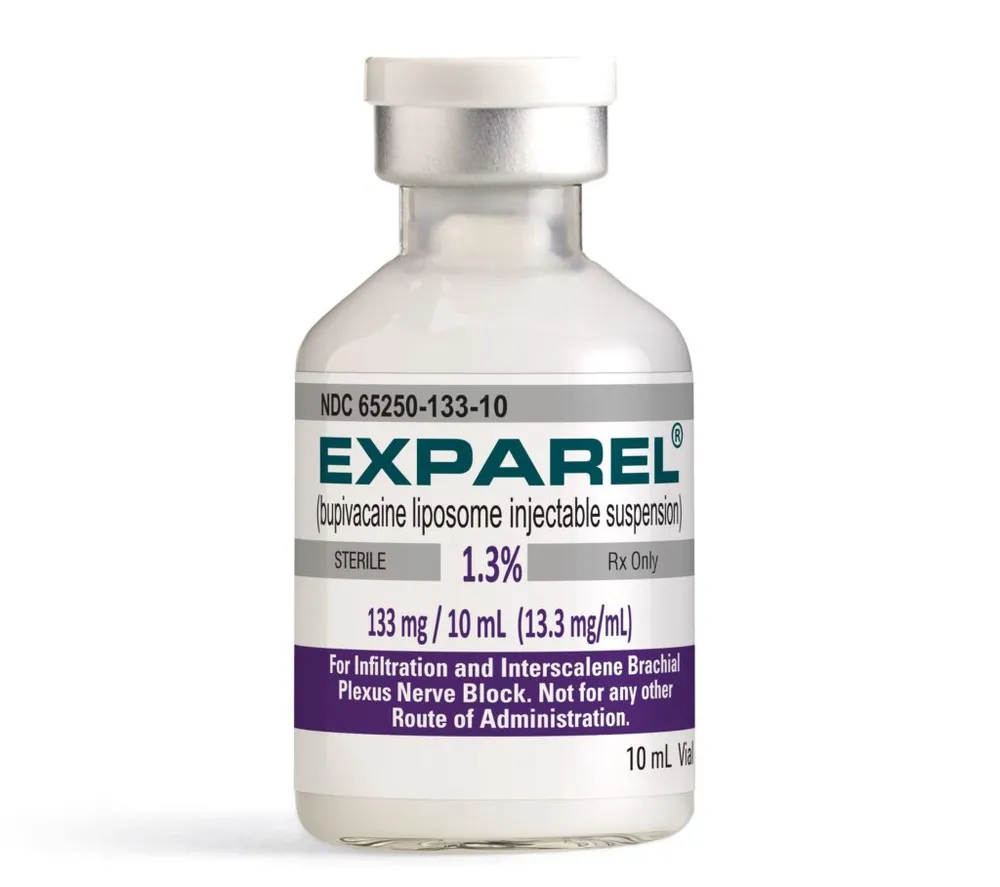
Table of Contents
Package leaflet: Information for the user
EXPAREL liposomal 133 mg/10 mL dispersion for injectable preparation with prolonged release
EXPAREL liposomal 266 mg/20 mL dispersion for injectable preparation with prolonged release
bupivacaine
Read all of this leaflet carefully before using this medicine because it contains important information for you.
- Keep this leaflet. You may need to read it again.
- If you have any questions, ask your doctor or nurse.
- If you experience any side effects, including those not listed in this leaflet, tell your doctor or nurse. See section 4.
Contents of this leaflet
- What EXPAREL liposomal is and what it is used for
- What you need to know before receiving EXPAREL liposomal
- How EXPAREL liposomal will be administered to you
- Possible side effects
- How to store EXPAREL liposomal
- Contents of the pack and other information
1. What EXPAREL liposomal is and what it is used for
EXPAREL liposomal is a local anaesthetic that contains the active substance bupivacaine.
EXPAREL liposomal is used in adults to reduce pain felt in a specific part of the body after surgery (for example, surgery on the knee or shoulder joint).
EXPAREL liposomal is also used in adults and in children aged 6 years and older to reduce pain felt at small to medium-sized surgical wounds after surgery.
2. What you should know before receiving EXPAREL liposomal
DO NOT receive this medicine:
- if you are allergic to bupivacaine (or to other similar local anesthetics) or to any of the other ingredients of this medicine (listed in section 6 of this leaflet);
- if you are pregnant and require injection of a local anesthetic into the upper part of the vagina near the cervix. Bupivacaine may cause serious harm to the unborn child if used for this purpose;
- into a blood vessel or into joints.
Warnings and precautions
EXPAREL liposomal must not be used in extensive abdominal, vascular, or thoracic procedures.
Contact your doctor or nurse before receiving EXPAREL liposomal if:
- you have a heart condition;
- you have liver or kidney problems.
The use of EXPAREL liposomal may cause temporary loss of sensation or movement.
You may notice a difference in your ability to feel or move normally for up to 5 days after administration of the medicine.
The following conditions have occasionally been reported with the use of other local anesthetics:
- Allergic reactions
After administration of a local anesthetic, allergic reactions may rarely occur. Signs to watch for include: hives or skin rash, swelling around the eyes, swelling of the face, lips, mouth, or throat, shortness of breath or difficulty breathing, dizziness or fainting, or fever. If you experience any of these symptoms after receiving EXPAREL liposomal, seek urgent medical help, as in rare cases these reactions may become potentially life-threatening (see also section 4 of this leaflet).
- Neurological conditions
Central nervous system toxicity may occasionally occur. Early signs may include: restlessness, anxiety, difficulty speaking, lightheadedness, nausea or vomiting, numbness and tingling of the mouth and lips, metallic taste, tinnitus (ringing in the ears), dizziness, blurred vision, tremors or muscle twitching, depression, drowsiness. Seek urgent medical help if you experience any of these symptoms after receiving EXPAREL liposomal. More severe adverse effects due to excessive bupivacaine administration include epileptic seizures (convulsions), loss of consciousness, and heart attack (see also section 4 of this leaflet).
- Cardiovascular conditions
Cardiovascular conditions may occasionally occur after the use of local anesthetics. Signs to watch for include: abnormal/irregular heartbeat, low blood pressure, fainting, dizziness or lightheadedness, fatigue (tiredness), shortness of breath, or chest pain. A heart attack may sometimes occur. Seek urgent medical help if you experience any of these symptoms after receiving EXPAREL liposomal (see also section 4 of this leaflet).
- Methemoglobinemia
Methemoglobinemia is a blood disorder affecting red blood cells. This condition may occur immediately or several hours after administration of local anesthetics. Signs and symptoms to watch for include: pale or gray/blue skin color, shortness of breath, lightheadedness or fainting, confusion, palpitations, or chest pain. Seek urgent medical help if you experience any of these symptoms after receiving EXPAREL liposomal. Methemoglobinemia may sometimes cause more severe symptoms such as irregular heartbeat, seizures, coma, and even death (see also section 4 of this leaflet).
- Chondrolysis
Chondrolysis (destruction of cartilage in weight-bearing joints) has been observed in patients who received local anesthetics via intra-articular infusion. EXPAREL liposomal must not be used for intra-articular infusion.
Children and adolescents
EXPAREL liposomal must not be used in children under 6 years of age to reduce pain following minor to moderate surgical wounds. This medicine has not been studied in this age group.
EXPAREL liposomal must not be used in children and adolescents under 18 years of age to reduce pain in a specific body area after surgery (e.g., knee or shoulder joint surgery). This medicine has not been studied in this age group.
Other medicines and EXPAREL liposomal
Inform your doctor if you are taking or have recently taken any other medicines.
Concomitant use of certain medicines may be harmful. In particular, inform your doctor if you are taking any of the following:
- nitrates/nitrites – medicines used to dilate blood vessels and improve blood flow, especially for heart conditions, such as nitroglycerin, sodium nitroprusside, nitric oxide, nitrous oxide;
- local anesthetics – benzocaine, lidocaine, bupivacaine, mepivacaine, tetracaine, prilocaine, procaine, articaine, ropivacaine;
- antiarrhythmics – medicines used to treat irregular heartbeat (arrhythmia), such as lidocaine and mexiletine;
- anticancer medicines – cyclophosphamide, flutamide, rasburicase, ifosfamide, hydroxyurea;
- antibiotics – dapsone, sulfonamides, nitrofurantoin, para-aminosalicylic acid;
- antimalarials – chloroquine, primaquine, quinine;
- anticonvulsants – phenytoin, valproic acid, phenobarbital;
- other medicines – acetaminophen (paracetamol), metoclopramide (for stomach problems and nausea), sulfasalazine (for inflammatory conditions), iodopovidone (topical antiseptic).
If you have any doubts about any of these medicines, consult your doctor.
Pregnancy and breastfeeding
EXPAREL liposomal is NOT recommended during pregnancy and in women of childbearing potential who are not using contraceptive measures. If you are pregnant, suspect you may be pregnant, or are planning a pregnancy, inform your doctor or nurse before receiving this medicine.
EXPAREL liposomal passes into breast milk at very low levels and may cause serious adverse reactions in the infant. Consult your doctor before breastfeeding. Your doctor will decide whether you should discontinue breastfeeding or whether this medicine should not be administered to you.
Driving and using machines
EXPAREL liposomal may affect your ability to perceive sensations or move normally for up to 5 days after administration of the medicine. If you experience any of these adverse effects, you must not drive vehicles or operate tools or machinery.
EXPAREL liposomal contains sodium
This medicine contains 21 mg of sodium (a main component of table salt) in each 10 mL vial and 42 mg in each 20 mL vial. This corresponds to 1.1% and 2.1% of the maximum daily recommended dietary intake of sodium for an adult, respectively.
3. How EXPAREL liposomal will be administered to you
EXPAREL liposomal will be administered to you by your doctor during surgery.
The recommended dose you will receive will be decided by your doctor, depending on the type of pain relief you need and the part of the body where the medicine will be injected. The dose will also depend on the size of the surgical site and your physical condition.
EXPAREL liposomal will be administered by injection. Your doctor will inject EXPAREL liposomal at one of the following sites:
- the surgical site;
- near the nerves supplying the area of the body undergoing surgery.
If you receive more EXPAREL liposomal than you should
EXPAREL liposomal should be used by experienced physicians who will monitor your blood pressure, heart rate, respiratory rate, and level of consciousness, and who will watch for any signs indicating that you have received an excessive amount of bupivacaine after administration of EXPAREL liposomal.
Seek urgent medical help if, after receiving EXPAREL liposomal, you experience any of the following side effects (see also section 4 of this leaflet).
These are signs that you may have received an excessive dose of bupivacaine.
- Epileptic seizures (convulsions)
- Loss of consciousness
- Feelings of restlessness or anxiety
- Difficulty speaking
- Dizziness or lightheadedness
- Nausea or vomiting
- Numbness and tingling around the mouth and lips
- Changes in vision, hearing, or taste
- Tremors or muscle twitching
- Drowsiness, confusion, or reduced alertness
- Increase or decrease in blood pressure
- Increase or decrease in heart rate
If you miss a dose of EXPAREL liposomal
It is unlikely that you will miss a dose. EXPAREL liposomal will be administered by your doctor only once (during surgery).
If you have any doubts about the use of this medicine, consult your doctor, pharmacist, or nurse.
4. Possible side effects
Like all medicines, this medicine can cause side effects, although not everybody gets them.
Seek urgent medical help if you experience any of the following serious side effects reported with the use of other local anaesthetics (see section 2):
- abnormal/irregular heartbeat, low blood pressure, fainting, dizziness or lightheadedness, fatigue, shortness of breath, chest pain, cardiac arrest (symptoms of cardiovascular reaction);
- restlessness, anxiety, difficulty speaking, lightheadedness, nausea or vomiting, numbness or tingling of the mouth and lips, metallic taste, tinnitus (ringing in the ears), dizziness, blurred vision, tremors or spasms, depression, drowsiness, epileptic seizures (symptoms of central nervous system reaction);
- hives or skin rash, swelling around the eyes, swelling of the face, lips, mouth or throat, shortness of breath or breathing difficulties, rapid heartbeat, nausea, vomiting, dizziness or fainting, or fever (symptoms of allergic reaction);
- pale skin or grey/blueish skin colour, shortness of breath, lightheadedness or fainting, confusion, palpitations, chest pain, irregular heartbeat, seizures or coma (symptoms of methaemoglobinaemia).
Other side effects may include:
Common (may affect up to 1 in 10 people):
- altered sense of taste;
- constipation;
- nausea or vomiting;
- loss of oral sensation.
Uncommon (may affect up to 1 in 100 people):
- sensation of warmth;
- general bruising or falls;
- abnormal blood test results;
- joint pain;
- reduced mobility or involuntary/uncontrolled body movements;
- trauma, pain, spasms, contractions or weakness of muscles;
- burning sensation;
- headache;
- loss of sensation;
- skin itching or skin irritation.
Rare (may affect up to 1 in 1,000 people):
- abdominal discomfort, bloating or indigestion;
- diarrhoea;
- dry mouth, difficulty or pain when swallowing;
- itching inside the mouth;
- excessive salivation;
- chills;
- pain (in the abdomen, at the wound site, in muscles, groin, hands or feet);
- swelling of the ankles, feet, legs or joints;
- joint stiffness;
- ECG abnormalities;
- fresh blood from the anus, usually with stools;
- feeling of tiredness;
- partial paralysis;
- breathing difficulties;
- skin redness or redness around the wound;
- wound site complications (e.g. redness, swelling, pain);
- excessive sweating;
- discolouration of the nails.
Not known (frequency cannot be estimated from the available data):
- inability to urinate (incomplete or partial emptying of the bladder);
- lack of effectiveness of EXPAREL liposomal.
Some of the above side effects may be observed more frequently in children and adolescents aged 6 years and older.
Additional side effects observed in children and adolescents aged 6 years and older
Very common (may affect more than 1 in 10 people):
- anaemia
Common (may affect up to 1 in 10 people):
- sensation of tingling;
- hearing loss;
- rapid breathing;
- delayed awakening from anaesthesia.
Reporting of side effects
If you get any side effects, including ones not listed in this leaflet, talk to your doctor or nurse. You can also report side effects directly through the national reporting system listed in Annex V. By reporting side effects, you can help provide more information on the safety of this medicine.
5. How to store EXPAREL liposomal
Keep this medicine out of the sight and reach of children.
Do not use this medicine after the expiry date stated on the vial label after
Exp. The expiry date refers to the last day of that month.
Store in a refrigerator (2°C – 8°C). Do not freeze.
EXPAREL liposomal may also be stored at room temperature (below 25°C) for up to 30 days in unopened and sealed vials. Vials must not be returned to the refrigerator once removed.
After first opening
The chemical and physical in-use stability of EXPAREL liposomal drawn from vials and transferred into polypropylene syringes has been demonstrated for 48 hours when stored refrigerated (2°C – 8°C), or for 6 hours when stored at room temperature (below 25°C). From a microbiological standpoint, the product should be used immediately. If not used immediately, the duration and conditions of in-use storage prior to use are the responsibility of the user and must not exceed 24 hours at 2°C – 8°C, unless the vial has been opened under controlled and validated aseptic conditions.
After dilution
The chemical and physical in-use stability of EXPAREL liposomal when mixed with other bupivacaine formulations has been demonstrated for 24 hours at room temperature (below 25°C). When mixed with sodium chloride 9 mg/mL (0.9%) solution or lactated Ringer's solution, chemical and physical in-use stability has been demonstrated for 4 hours when stored refrigerated (2°C – 8°C) or at room temperature (below 25°C). From a microbiological standpoint, unless the dilution method excludes the risk of microbial contamination, the product should be used immediately. If not used immediately, the duration and conditions of in-use storage prior to use are the responsibility of the user.
6. Package contents and other information
What EXPAREL liposomal contains
The active substance is bupivacaine. Each mL contains 13.3 mg of bupivacaine in a liposomal dispersion for prolonged-release injectable preparation.
Each 10 mL vial of prolonged-release injectable dispersion contains 133 mg of free base bupivacaine.
Each 20 mL vial of prolonged-release injectable dispersion contains 266 mg of free base bupivacaine.
The other ingredients are: dioerucoylphosphatidylcholine (DEPC), dipalmitoylphosphatidylglycerol (DPPG), cholesterol for parenteral use, tricaprylin, sodium chloride, phosphoric acid and water for injections.
Description of the appearance of EXPAREL liposomal and contents of the pack
EXPAREL liposomal is a prolonged-release injectable dispersion, white to off-white in colour.
It is available in single-use type I glass vials of 10 mL or 20 mL, with a grey butyl rubber stopper coated with ethylene tetrafluoroethylene and an aluminium/polypylene flip-off seal.
Each pack contains 4 or 10 vials.
Not all pack sizes may be marketed.
Marketing Authorisation Holder
Pacira Ireland Ltd
Unit 13
Classon House
Dundrum Business Park
Dundrum,
Dublin 14
D14W9Y3
Ireland
Manufacturer
Millmount Healthcare Limited
Block-7, City North Business Campus
Stamullen, Co. Meath
K32 YD60
Ireland
For further information about this medicinal product, please contact the local representative of the Marketing Authorisation Holder.
More detailed information on this medicinal product is available on the European Medicines Agency website: http://www.ema.europa.eu.
The following information is intended for healthcare professionals only:
Important: Before using the medicinal product, consult the Summary of Product Characteristics (SmPC).
Each vial of EXPAREL liposomal is for single use only.
Sealed vials of EXPAREL liposomal must be stored in a refrigerator at a temperature between 2°C and 8°C. EXPAREL liposomal must not be frozen.
Sealed and closed vials of EXPAREL liposomal may also be stored at room temperature (below 25°C) for up to 30 days. Vials must not be returned to the refrigerator after removal.
After first opening
The chemical and physical in-use stability of EXPAREL liposomal withdrawn from vials and transferred into polypropylene syringes has been demonstrated for 48 hours when stored refrigerated (2°C – 8°C) or for 6 hours when stored at room temperature (below 25°C). From a microbiological standpoint, the product should be used immediately. If not used immediately, the in-use storage times and conditions prior to use are the responsibility of the user and must not exceed 24 hours at a temperature of 2°C – 8°C, unless the opening was performed under controlled and validated aseptic conditions.
After dilution
The chemical and physical in-use stability of EXPAREL liposomal when mixed with other bupivacaine formulations has been demonstrated for 24 hours at room temperature (below 25°C). When mixed with sodium chloride 9 mg/mL (0.9%) solution or lactated Ringer’s solution, the chemical and physical in-use stability has been demonstrated for 4 hours when stored refrigerated (2°C – 8°C) or at room temperature (below 25°C). From a microbiological standpoint, unless the dilution method excludes the risk of microbial contamination, the product should be used immediately. If not used immediately, the in-use storage times and conditions prior to use are the responsibility of the user.
Vials of EXPAREL liposomal must be visually inspected before administration. They should be gently inverted to re-suspend the particles in the dispersion immediately before withdrawal from the vial. If the contents have settled, it may be necessary to invert the vial several times.
EXPAREL liposomal is intended for single-dose administration only. The maximum dose must not exceed 266 mg (20 mL). The recommended dose for local infiltration depends on the size of the surgical site, the volume required to cover the area, and patient-specific factors that may influence the safety of an amide-type local anesthetic (see section 4.2 of the SmPC).
EXPAREL liposomal may be administered as the ready-to-use dispersion or diluted up to a concentration of 0.89 mg/mL (i.e., a 1:14 dilution by volume) with sodium chloride 9 mg/mL (0.9%) solution or lactated Ringer’s solution. EXPAREL liposomal must not be mixed with other medicinal products, nor diluted with water or other hypotonic agents, as this causes disruption of the liposomal particles.
EXPAREL liposomal is a liposomal formulation and must not be used interchangeably with other bupivacaine formulations. Bupivacaine hydrochloride (immediate-release formulations) and EXPAREL liposomal may be co-administered in the same syringe provided that the ratio of the bupivacaine solution dose in milligrams to EXPAREL liposomal does not exceed 1:2. The total amount of bupivacaine HCl and EXPAREL liposomal administered concomitantly must not exceed the equivalent of 400 mg of bupivacaine HCl in adults. The amount of bupivacaine in EXPAREL liposomal is expressed as free bupivacaine base; therefore, when calculating the total bupivacaine dose for co-administration, the amount of bupivacaine in EXPAREL liposomal must be converted to the bupivacaine HCl equivalent by multiplying the EXPAREL liposomal dose by a factor of 1.128.
Caution is advised when administering EXPAREL liposomal and bupivacaine HCl concomitantly, especially in areas with high vascularity where higher systemic absorption is expected (see section 4.4 of the SmPC).
EXPAREL liposomal may be administered after lidocaine with a delay of at least 20 minutes.
When applying a topical antiseptic such as povidone-iodine, allow the site to dry before administering EXPAREL liposomal at the same site. EXPAREL liposomal must not come into contact with antiseptic solutions such as povidone-iodine.
EXPAREL liposomal must be injected slowly (typically 1–2 mL per injection) using a needle of 25 gauge or larger. During administration, the surgical site should be aspirated frequently, when clinically appropriate, to ensure no blood is present and to minimize the risk of accidental intravascular injection.
Any unused medicinal product and waste materials derived from its use must be disposed of in accordance with local regulations.