Cortisone acetate
Italy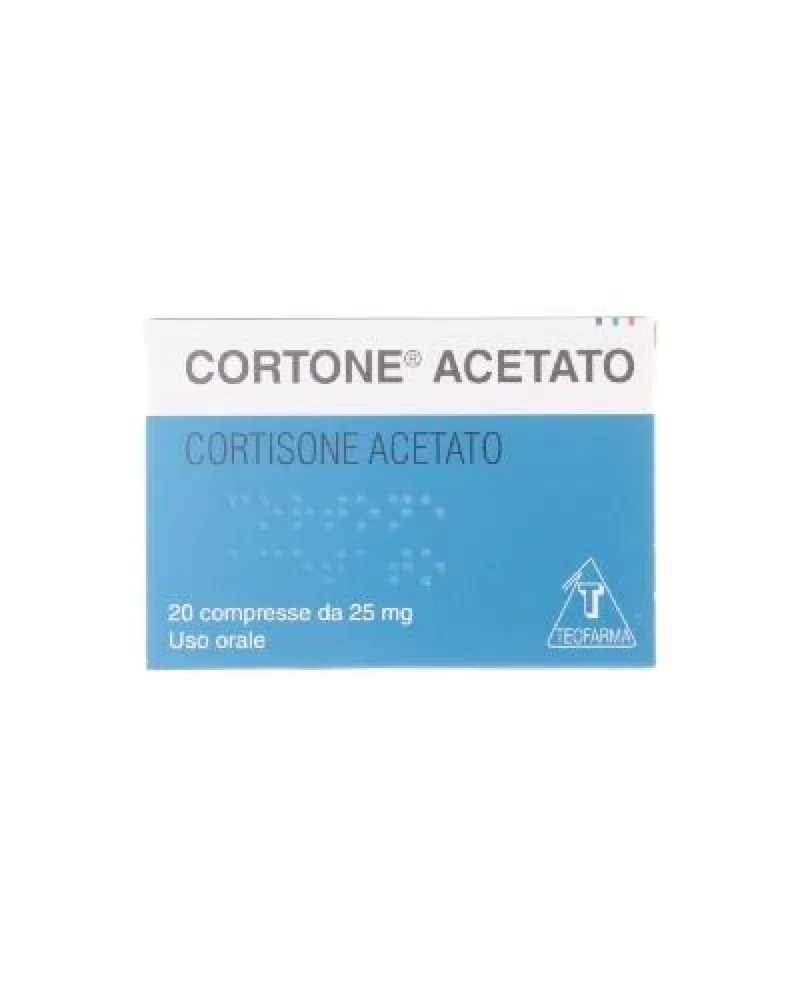
Table of Contents
Package leaflet: Information for the patient
Cortone Acetato 25 mg tablets
cortisone acetate
Please read this leaflet carefully before taking this medicine because it contains important information for you.
- Keep this leaflet. You may need to read it again.
- If you have any questions, ask your doctor or pharmacist.
- This medicine has been prescribed for you only. Do not give it to other people, even if their symptoms are the same as yours, as it could be harmful.
- If you experience any adverse reactions, including those not listed in this leaflet, contact your doctor or pharmacist. See section 4.
Contents of this leaflet:
- What Cortone Acetato is and what it is used for
- What you need to know before taking Cortone Acetato
- How to take Cortone Acetato
- Possible side effects
- How to store Cortone Acetato
- Contents of the pack and other information
1. What Cortone Acetate is and what it is used for
Cortone Acetate contains the active substance cortisone acetate, which belongs to a group of medicines called corticosteroids (or glucocorticoids). Corticosteroids can replace cortisol, a hormone naturally produced in the body by the adrenal glands, which helps regulate important processes affecting general health.
Cortone Acetate is used:
-
as short-term adjunctive treatment in cases of:
o acute and chronic joint diseases, such as rheumatoid arthritis,
o acute inflammation involving tendons and the surrounding membranes (acute tenosynovitis),
o acute and subacute inflammation of the joints (acute and subacute bursitis),
o acute joint inflammation due to gout; -
following recurrence or as maintenance treatment in cases of:
o a disease characterized by skin lesions and immune system disorders (systemic lupus erythematosus),
o acute inflammation of the heart caused by rheumatic disease (acute rheumatic carditis); -
for the treatment of a blistering skin and mucous membrane disease (pemphigus);
-
to control allergic conditions that cannot be treated conventionally, such as bronchial asthma and skin inflammation due to contact or allergies (contact dermatitis, atopic dermatitis);
-
in chronic and acute eye and adnexal inflammations and allergies;
-
to relieve symptoms and consequences of leukemia and lymphomas in adults, and of acute leukemia in children;
-
when hormone replacement therapy is required, including in diseases causing insufficient hormone production, such as Addison's disease, acute adrenal insufficiency, Waterhouse-Friderichsen syndrome, and post-surgical adrenal insufficiency;
-
in combination with other medicines for the treatment of recurrent colon lesions (ulcerative colitis), a form of diarrhoea (refractory sprue), and chronic intestinal inflammation (regional enteritis).
2. What you need to know before taking Cortone Acetate
Do NOT take Cortone Acetate
- if you are allergic to cortisone acetate or to any of the other ingredients of this medicine (listed in section 6);
- if you have tuberculosis;
- if you suffer from stomach or intestinal ulcers (gastro-duodenal ulcer);
- if you suffer from mental disorders (psychosis);
- if you have systemic fungal infections;
- if you have recently undergone intestinal surgery (intestinal anastomoses). However, the use of cortisone acetate may be justified for the treatment of hormone-sensitive diseases that endanger life or vision.
Warnings and precautions
Talk to your doctor or pharmacist before taking Cortone Acetate.
Your doctor will carry out regular checks to monitor possible effects of cortisone acetate on your body's metabolism [electrolytes, calcium (calcium excretion increases during glucocorticoid treatment), fluids, proteins, and carbohydrates].
Be especially careful when taking Cortone Acetate
-
if swelling occurs (caused by fluid retention): follow a low-sodium diet (less than 1 g per day); if this measure does not resolve the swelling, your doctor may reduce your dose of Cortone Acetato until urine output returns to normal, or may prescribe a medicine to increase urine production (diuretic). Only in rare cases does swelling become so severe as to require discontinuation of cortisone acetate treatment;
-
if you have or have had emotional instability or a tendency to develop mental disorders, as these may worsen during treatment. Symptoms such as euphoria, difficulty sleeping (insomnia), mood or personality changes, severe depression, or signs of actual psychiatric illness may also occur;
-
if you have blood clotting disorders (hypoprothrombinemia), consult your doctor before taking acetylsalicylic acid (aspirin);
-
if you have experienced or had significant stress such as trauma or surgery, even if you stopped treatment several months ago: your doctor will decide whether to continue or restart treatment, usually at higher doses;
-
if you have an infection: glucocorticoids may mask certain signs of infection and may increase susceptibility to infections. In such cases, your doctor will assess whether antibiotic treatment is necessary;
-
if you are due to be vaccinated: you must not be vaccinated against smallpox, nor receive other live vaccines, as this may cause immune system problems and antibody response may be inadequate;
-
if you have tuberculosis: you may use Cortone Acetato in cases of fulminant or generalized disease, and only in combination with appropriate anti-tuberculosis treatment. If you have asymptomatic tuberculosis or a positive tuberculin reaction, your doctor will monitor you closely, as the disease may reactivate.
During prolonged corticosteroid treatment, your doctor may prescribe chemoprophylaxis to prevent disease reactivation; -
if you are hyperthyroid (overactive thyroid);
-
if you have liver disease (hepatic cirrhosis);
-
if you have chronic intestinal inflammation with risk of intestinal perforation (ulcerative colitis);
-
if you have abscesses or bacterial infections with pus formation;
-
if you suffer from intestinal inflammation (diverticulitis);
-
if you have recently undergone intestinal anastomoses (surgical removal of parts of the intestine);
-
if you have diabetes mellitus;
-
if you have a condition characterized by the heart's inability to adequately supply blood to the body (heart failure);
-
if your kidney function is impaired;
-
if you have high blood pressure (hypertension);
-
if you suffer from calcium-deficiency-related bone fragility (osteoporosis);
-
if you suffer from severe muscle weakness (myasthenia gravis);
-
if you are infected with a parasite called Strongyloides;
-
if you are being treated with immunosuppressive drugs: be cautious about possible development of infections;
-
if you may come into contact with the varicella virus: treatment with immunoglobulins may be indicated;
-
if you may come into contact with the measles virus: prophylaxis with immunoglobulins may be indicated.
Contact your doctor if you experience blurred vision or other visual disturbances. The maintenance dose should always be the lowest dose capable of controlling symptoms: any dose reduction must always be gradual. This medicine is not contraindicated in patients with gluten intolerance (celiacs).
Children
Your doctor will carefully monitor the growth and development of children undergoing prolonged treatment.
Other medicines and Cortone Acetato
Inform your doctor or pharmacist if you are currently using, have recently used, or might use any other medicines.
Interactions have been reported with:
- certain antiepileptic drugs (phenobarbital and phenytoin),
- antifungal medicines used to treat fungal infections (ketoconazole),
- a type of anti-inflammatory medicine (salicylate),
- oral anticoagulants (medicines to prevent blood clotting),
- certain antibiotics (rifampicin and troleandomycin).
Pregnancy and breastfeeding
If you are pregnant, think you may be pregnant, planning a pregnancy, or breastfeeding, consult your doctor or pharmacist before taking this medicine.
Pregnancy
If you are pregnant, planning a pregnancy, or breastfeeding, take this medicine only if clearly instructed by your doctor, who will carefully evaluate the potential risks and benefits for you and the fetus. Infants born to mothers who took high doses of corticosteroids during pregnancy should be closely monitored for signs of reduced adrenal gland activity.
Breastfeeding
Do not use Cortone Acetato if you are breastfeeding, as it passes into breast milk. Inform your doctor if you are breastfeeding or intend to breastfeed.
Driving and using machines
Cortone Acetato does not impair the ability to drive or operate machinery.
Cortone Acetato contains lactose
Cortone Acetato contains lactose. If your doctor has diagnosed you with an intolerance to certain sugars, contact them before taking this medicine.
For individuals engaged in sports: using this medicine without therapeutic need constitutes doping and may lead to a positive anti-doping test.
3. How to take Cortone Acetate
Take this medicine exactly as directed by your doctor or pharmacist. If you have
any doubts, consult your doctor or pharmacist.
The recommended dose depends less on the specific diagnosis than on the physician’s assessment of your
condition, its severity, expected duration, and your individual response. Your doctor will adjust the recommended
doses listed below according to your individual case, based on clinical experience.
The tablets should be taken 2–4 times daily as directed by your physician.
- Chronic inflammation affecting multiple joints (primary chronic polyarthritis), asthma, chronic eye diseases, and other chronic conditions usually not life-threatening. Initial dose: 80–100 mg daily until a satisfactory response is achieved; usually for 1 or 2 weeks. Maintenance dose: gradually reduce the initial dose by 5–15 mg every 4–5 days until the lowest effective daily maintenance dose is reached: usually 50–75 mg.
- Severe seasonal asthma, acute eye diseases, and other conditions causing localized disease. Day 1: 200–300 mg; Day 2: 100–200 mg; Day 3: 100 mg. Subsequently, gradually reduce and finally discontinue. In case of eye infections, combine with antibiotic treatment.
- Acute joint inflammation and other acute diseases that progressively worsen in severity, or that may lead to death or permanent organ damage. Initial dose: up to 400 mg on the first day; thereafter 200 mg daily until a satisfactory response is achieved.
Maintenance dose: gradually reduce to 100 mg (or less) daily, until improvement in symptom severity appears likely. Resume treatment if a relapse occurs. - Diseases characterized by skin lesions and immune system disorders (systemic lupus erythematosus, pemphigus) and other prolonged or usually life-threatening conditions. Initial dose: 400 mg or more on the first day; then 200 mg daily until a satisfactory response is achieved. Maintenance dose: gradually reduce to 100 mg (or less) daily. Continue for a duration to be determined, or until improvement in symptom severity appears likely. Then gradually discontinue; however, resume treatment if relapses occur.
- Asthma, adrenal insufficiency often associated with meningitis (Waterhouse-Friderichsen syndrome), laryngeal edema, acute episodes of generalized lupus erythematosus, and other acute life-threatening conditions. First few days: 300–450 mg or more, then reduce to maintenance dose or discontinue.
- Conditions causing insufficient hormone production (Addison’s disease) or following surgical removal of the adrenal glands (replacement therapy). 10–20 mg, or sometimes more, daily, together with 4–6 g of sodium chloride or 1–3 mg of a drug called desoxycorticosterone acetate.
- During crises, surgical procedures, or other severe stress conditions. 100–300 mg or more daily until the unusual stress has passed and normal diet is resumed.
Use in children
Children undergoing prolonged treatment must be carefully monitored with regard to growth and development.
If you take more Cortone Acetato than you should
In case of accidental overdose of Cortone Acetato, contact your doctor immediately or go to the nearest hospital.
Data on overdose in humans are not available.
Consult your doctor or pharmacist for further information on the use of this medicine.
If you forget to take Cortone Acetato
Do not take a double dose to make up for the missed tablet.
If you stop taking Cortone Acetato
Do not abruptly stop taking this medicine unless clearly instructed by your doctor.
Dose reduction or discontinuation must be carried out gradually.
If you have any doubts about how to use this medicine, consult your doctor or pharmacist.
4. Possible side effects
Like all medicines, this medicine can cause side effects, although not everyone experiences them. The frequency of the side effects listed below is unknown (cannot be estimated from the available data).
Side effects related to water and electrolyte balance in the blood:
- sodium retention,
- fluid retention,
- potassium loss leading to excessive levels of bicarbonate in the blood associated with low potassium levels (hypokalemic alkalosis),
- high blood pressure with heart failure characterized by fluid accumulation.
Side effects related to muscles and bones:
- steroid-induced muscle disease (steroids being the class of drugs to which Cortone Acetato belongs),
- reduction in muscle mass,
- decreased mineral content in bones (osteoporosis) with possible fractures of long bones,
- tendon ruptures,
- loss of bone tissue in the femur (aseptic necrosis of the femoral and humeral head).
Side effects related to the gastrointestinal system:
- inflammation of the esophagus with mucosal tears (ulcerative esophagitis),
- inflammation of the pancreas,
- stomach and/or duodenal ulcer, possibly leading to perforation and bleeding,
- perforation of the small and large intestine (small and large bowel) in patients who already have inflammatory bowel disease,
- nausea,
- abdominal distension,
- liver-related disorders with increased levels of specific liver tests: transaminases and alkaline phosphatase.
Side effects related to the skin:
- impaired wound healing,
- skin changes due to thinning,
- variable-sized bleeding spots under the skin,
- altered responses to skin tests,
- urticaria,
- allergic dermatitis,
- angioneurotic edema,
- increased sweating.
Side effects related to the nervous system:
- various types of psychiatric disturbances such as: euphoria, insomnia, mood changes, personality changes, severe depression, and even frank psychotic manifestations or convulsions,
- increased intracranial pressure with papilledema (optic disc swelling),
- dizziness,
- headache.
Side effects related to the hormonal system:
- a condition characterized by weight gain, fluid retention, skin striae, and abnormal hair growth due to excess corticosteroids (Cushing's syndrome),
- disturbances in growth and development in children,
- suppression of adrenal gland and pituitary function,
- diabetes or prediabetic conditions, reduced carbohydrate tolerance (sugar) requiring in known diabetics an increase in insulin or oral antidiabetic drug doses,
- menstrual irregularities.
Ocular side effects:
- a specific type of cataract (posterior subcapsular),
- increased intraocular pressure,
- glaucoma,
- exophthalmos (protrusion of the eyeball),
- blurred vision, frequency unknown (frequency cannot be estimated from the available data).
Side effects related to metabolism:
- reduction in muscle mass due to excessive protein metabolism (negative nitrogen balance),
- weight gain,
- increased appetite.
Side effects related to the immune system:
- hypersensitivity.
Vascular side effects:
- thromboembolism.
Respiratory, thoracic and mediastinal side effects:
- hiccups (frequency unknown).
Following the instructions provided in this leaflet reduces the risk of side effects.
Reporting of side effects
If you experience any side effect, including those not listed in this leaflet, talk to your doctor or pharmacist. You can also report side effects directly via the national reporting system at https://www.aifa.gov.it/content/segnalazioni-reazioni-avverse. By reporting side effects, you can help provide more information on the safety of this medicine.
5. How to store Cortone Acetate
Keep this medicine out of the sight and reach of children.
Do not use this medicine after the expiry date stated on the pack after Exp. The expiry date refers to the last day of that month.
Do not dispose of any medicine via wastewater or household waste. Ask your pharmacist how to dispose of medicines no longer required. This will help protect the environment.
6. Package contents and other information
What Cortone Acetato contains
- The active substance is cortisone acetate. Each tablet contains 25 mg of cortisone acetate.
- The other components are: lactose, maize starch, magnesium stearate.
Description of the appearance of Cortone Acetato and contents of the pack
20 tablets of 25 mg.
Marketing Authorization Holder and Manufacturer
Marketing Authorization Holder
Teofarma S.r.l.
Via F.lli Cervi, 8
27010 Valle Salimbene (PV)
Manufacturer
Teofarma S.r.l.
Viale Certosa, 8/A
27100 Pavia