Cometriq
Italy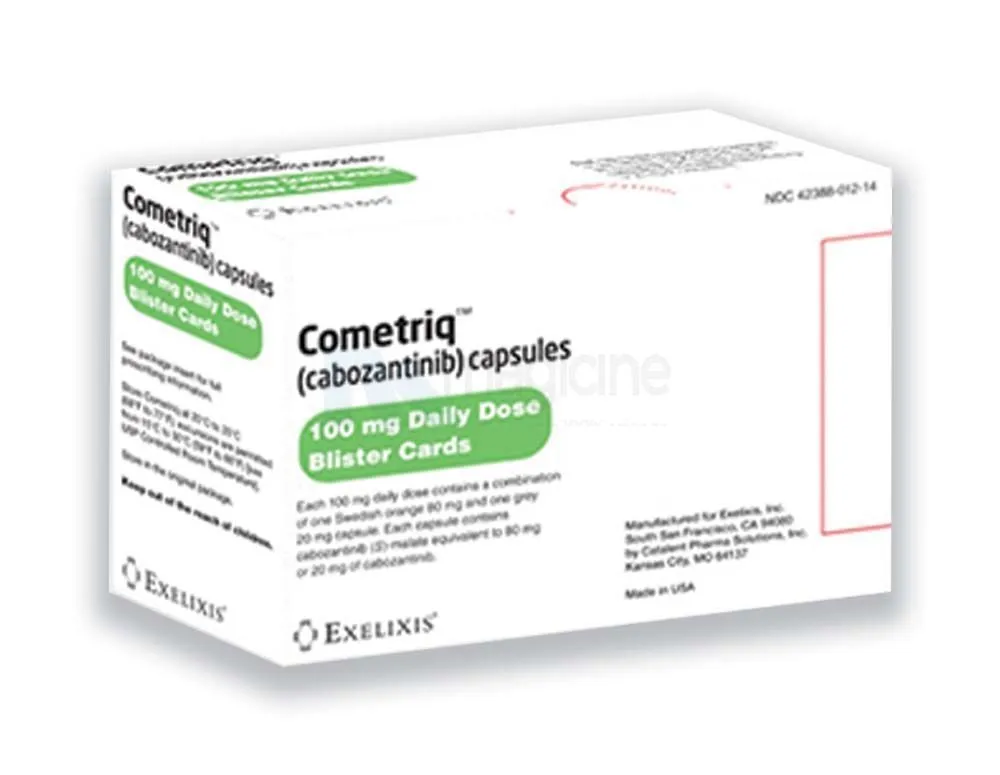
Table of Contents
Package leaflet: Information for the patient
COMETRIQ 20 mg hard capsules, 80 mg hard capsules
cabozantinib
Please read this leaflet carefully before taking this medicine because it contains
important information for you.
- Keep this leaflet. You may need to read it again.
- If you have any questions, ask your doctor or pharmacist.
- This medicine has been prescribed for you only. Do not give it to other people, even if their symptoms are the same as yours, because it may be harmful.
- If you experience any side effect, including any not listed in this leaflet, tell your doctor. See section 4.
Contents of this leaflet
- What COMETRIQ is and what it is used for
- What you need to know before taking COMETRIQ
- How to take COMETRIQ
- Possible side effects
- How to store COMETRIQ
- Contents of the pack and other information
1. What COMETRIQ is and what it is used for
What COMETRIQ is
COMETRIQ is an anticancer medicine that contains the active substance cabozantinib (S)-malate.
It is a medicine used to treat medullary thyroid cancer, a rare type of thyroid tumour,
which cannot be removed by surgery or has spread to other parts of the body.
How COMETRIQ works
COMETRIQ blocks the action of proteins called tyrosine kinase receptors (RTKs), which are involved
in cell growth and the development of new blood vessels that supply them. These proteins
may be present in high amounts in cancer cells, and by blocking their activity, COMETRIQ can slow down
the rate of tumour growth and help block the blood supply that the tumour needs.
COMETRIQ may slow down or stop the growth of medullary thyroid cancer. It may help reduce the size of tumours associated with this type of cancer.
2. What you need to know before taking COMETRIQ
Do not take COMETRIQ
- if you are allergic to cabozantinib or to any of the other ingredients of this medicine (listed in section 6).
Warnings and precautions
Talk to your doctor or pharmacist before taking COMETRIQ if you:
- have high blood pressure
- have or have had an aneurysm (a bulging and weakening of a blood vessel wall) or a tear in the wall of a blood vessel
- have diarrhoea
- have recently coughed up blood or had significant bleeding
- have had surgery within the last month (or if surgical procedures, including dental procedures, are planned)
- have received radiotherapy within the last 3 months
- have inflammatory bowel disease (e.g. Crohn’s disease, ulcerative colitis or diverticulitis)
- have been told that your tumour has spread to the airways or oesophagus
- have recently had a blood clot in your leg, a stroke, or a heart attack
- are taking medicines to control your heart rhythm, have a slow heart rate, have heart problems, or have problems with calcium, potassium, or magnesium levels in your blood
- have liver or kidney disease.
Inform your doctor if you have any of these conditions. You may need treatment for these conditions, or your doctor may decide to change your dose of COMETRIQ, or even stop treatment altogether. See also section 4 "Possible side effects".
You must inform your dentist that you are taking COMETRIQ. It is important that you pay special attention to dental and oral hygiene during treatment with COMETRIQ.
Children and adolescents
COMETRIQ is not recommended for children or adolescents. The effects of COMETRIQ in people under 18 years of age are not yet known.
Other medicines and COMETRIQ
Tell your doctor or pharmacist if you are taking, have recently taken, or might take any other medicines, including medicines obtained without a prescription. This is because COMETRIQ may affect how other medicines work. Also, some medicines may affect how COMETRIQ works. This may mean that your doctor needs to change the dose(s) of your medicines.
- Medicines used to treat fungal infections, such as itraconazole, ketoconazole, and posaconazole
- Medicines used to treat bacterial infections (antibiotics) such as erythromycin, clarithromycin, and rifampicin
- Medicines for allergies such as fexofenadine
- Medicines for angina pectoris (chest pain due to inadequate blood supply to the heart) such as ranolazine
- Medicines for epilepsy or seizures such as phenytoin, carbamazepine, and phenobarbital
- Herbal preparations containing St. John’s wort (Hypericum perforatum), sometimes used to treat depression or related conditions such as anxiety
- Medicines used to thin the blood, such as warfarin and dabigatran etexilate
- Medicines for high blood pressure or other heart conditions, such as aliskiren, ambrisentan, digoxin, talinolol, and tolvaptan
- Medicines for diabetes, such as saxagliptin and sitagliptin
- Medicines used to treat gout, such as colchicine
- Medicines used to treat HIV or AIDS, such as ritonavir, maraviroc, and emtricitabine
- Medicines used to treat viral infections such as efavirenz
- Medicines used to prevent organ transplant rejection (cyclosporine) and cyclosporine-based treatment regimens for rheumatoid arthritis and psoriasis
Oral contraceptives
If you take COMETRIQ while using oral contraceptives, they may not work. You must also use a barrier contraceptive method (e.g. condom or diaphragm) during treatment with COMETRIQ and for at least 4 months after stopping treatment.
COMETRIQ with food
Avoid eating grapefruit-containing foods for the entire duration of treatment, as this could lead to an increase in the level of COMETRIQ in your blood.
Pregnancy, breastfeeding, and fertility
Avoid becoming pregnant during treatment with COMETRIQ. If you are a woman and your partner, or if you are a man and your partner, are able to have children, use effective contraceptive methods during treatment and for at least 4 months after treatment ends. Talk to your doctor about which contraceptive methods are most appropriate while taking COMETRIQ. See section 2.
Talk to your doctor if you or your partner becomes pregnant or if you are planning to have a child while taking COMETRIQ.
Talk to your doctor BEFORE taking COMETRIQ if you (as a woman) and your partner, or you (as a man) and your partner, are planning to have a child after treatment has ended. Your fertility may be affected as a result of treatment with COMETRIQ.
Women taking COMETRIQ must not breastfeed during treatment and for at least 4 months after treatment ends, because cabozantinib and/or its metabolites may be excreted in breast milk and could therefore be harmful to the infant.
Driving and using machines
Exercise caution when driving or operating machinery. Remember that treatment with COMETRIQ may cause fatigue or weakness.
COMETRIQ contains sodium
This medicine contains less than 1 mmol of sodium (23 mg) per capsule, i.e. essentially "sodium-free".
3. How to take COMETRIQ
Take this medicine exactly as directed by your doctor or pharmacist. If
you have any doubts, consult your doctor or pharmacist.
You must continue taking this medicine until your doctor decides to stop
treatment. If serious side effects occur, your doctor may decide to adjust the dose or
stop treatment earlier than originally planned. Your doctor will decide whether the dose
needs to be adjusted, particularly during the first eight weeks of treatment with COMETRIQ.
COMETRIQ should be taken once daily. Depending on the dose prescribed for you, the number of capsules to take is listed below:
- 140 mg (1 orange capsule of 80 mg and 3 grey capsules of 20 mg)
- 100 mg (1 orange capsule of 80 mg and 1 grey capsule of 20 mg)
- 60 mg (3 grey capsules of 20 mg). Your doctor will determine the appropriate dose for you.
The capsules will be packed in a blister arranged according to the prescribed dose. Each blister contains enough capsules to last seven days (one week). Capsules are also available in a 28-day pack, consisting of 4 blister packs, each containing a seven-day supply of capsules.
Each day, take all the capsules along one row. Further information about the blister, including how many capsules you should take and the total number of capsules in each blister, is described below in section 6. To help you remember to take your dose, write the date you took the first dose in the space next to the capsule. To remove the capsule to be taken:
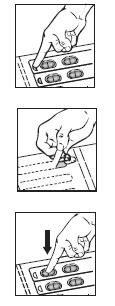
- Press down on the tab
- Remove the backing paper
- Push the capsule through the foil
COMETRIQ must not be taken during meals. You must not eat anything for at least 2 hours before and 1 hour after taking COMETRIQ. Swallow the capsules one at a time with water. Do not open the capsules.
If you take more COMETRIQ than you should
If you have taken more COMETRIQ than prescribed, contact your doctor immediately or go to hospital, remembering to bring the capsules and this patient information leaflet with you.
If you forget to take COMETRIQ
- If there are 12 hours or more until your next dose, take the missed dose as soon as you remember. Take your next dose at the usual time.
- If there are less than 12 hours until your next dose, do not take the missed dose. Take your next dose at the usual time.
If you stop taking COMETRIQ
Stopping treatment may interrupt the medicine's effect. Do not stop taking COMETRIQ unless you have discussed it with your doctor. If you have any further questions about the use of this medicine, ask your doctor.
4. Possible side effects
Like all medicines, COMETRIQ can cause side effects, although not everyone experiences them. If side effects occur, your doctor may ask you to take COMETRIQ at a lower dose. Your doctor may also prescribe additional medicines to help you manage these side effects.
Contact your doctor immediately if you experience any of the following side effects – you may need urgent medical treatment:
- Symptoms such as abdominal pain, nausea, vomiting, constipation, or fever. These symptoms may indicate gastrointestinal perforation, a hole forming in the stomach or intestine, which could be life-threatening.
- Swelling, pain in the hands and feet, or shortness of breath.
- Wounds that do not heal.
- Vomiting or coughing up blood, which may be bright red or resemble coffee grounds.
- Mouth, tooth, or jaw pain, swelling or sores inside the mouth, numbness or heaviness in the jaw, or tooth loss. These may be signs of bone tissue deterioration in the jaw (osteonecrosis).
- Seizures, headache, confusion, or difficulty concentrating. These symptoms may indicate a condition called reversible posterior encephalopathy syndrome (PRES). PRES is among the uncommon side effects (may occur in less than 1 in 100 people).
- Severe diarrhoea that does not improve.
Other side effects include:
Very common side effects (may occur in more than 1 out of 10 people)
- Stomach discomfort, including diarrhoea, nausea, vomiting, constipation, indigestion, and abdominal pain
- Difficulty swallowing
- Blisters, pain in the hands or soles of the feet, skin rash or redness, dry skin
- Decreased appetite, weight loss, altered taste sensation
- Tiredness, weakness, headache, dizziness
- Changes in hair colour (lightening), hair loss
- Hypertension (increased blood pressure)
- Redness, swelling or pain in the mouth or throat, difficulty speaking, hoarseness
- Abnormal blood test results used to monitor general health and liver function, low levels of electrolytes (such as magnesium, calcium, or potassium)
- Low platelet count
- Joint pain, muscle spasms
- Swelling of the lymph glands
- Pain in arms, hands, legs, or feet
Common side effects (may occur in up to 1 out of 10 people)
- Anxiety, depression, confusion
- Generalised pain, muscle or chest pain, ear pain, ringing in the ears
- Weakness, reduced sensation, or tingling in the limbs
- Chills, tremors
- Dehydration
- Inflammation of the pancreas or abdomen
- Inflammation of the lips and corners of the mouth
- Inflammation of hair follicles, acne, blisters (in areas other than hands or feet)
- Swelling of the face and other body parts
- Loss or changes in taste
- Hypotension (decreased blood pressure)
- Atrial fibrillation (fast and irregular heartbeat)
- Skin lightening, scaly skin, unusual paleness
- Abnormal hair growth
- Haemorrhoids
- Pneumonia (lung infection)
- Mouth, tooth, or jaw pain, swelling or sores inside the mouth, numbness or heaviness in the jaw, or tooth loss
- Reduced thyroid activity; symptoms may include: tiredness, weight gain, constipation, feeling cold, and dry skin
- Low white blood cell count
- Low blood phosphate levels
- Rupture, perforation, or bleeding of the stomach or intestine; inflammation or tear of the anus; bleeding from the lungs or trachea (airways)
- Abnormal connection between tissues of the digestive tract; symptoms may include severe or persistent stomach pain
- Abnormal connection between tissues of the trachea (airways), oesophagus, or lungs
- Abscess (collection of pus with swelling and inflammation) in the abdomen, pelvic area, or teeth/gums
- Blood clots in blood vessels and lungs
- Stroke
- Fungal infections of the skin, mouth, or genitals
- Wounds that do not heal
- Presence of protein or blood in urine, gallstones, pain during urination
- Blurred vision
- Increased blood bilirubin levels (which may cause jaundice/yellowing of the skin or eyes)
- Decreased blood protein levels (albumin)
- Abnormal kidney function tests (increased blood creatinine levels)
- Increased level of a serum protein called lipase.
Uncommon side effects (may occur in 1 out of 100 people)
- Inflammation of the oesophagus; symptoms may include heartburn, chest pain, feeling unwell, altered taste, bloated stomach, belching, and indigestion
- Infection and inflammation of the lung, lung collapse
- Skin ulcers, cysts, red spots on the face or thighs
- Facial pain
- Abnormal results in tests measuring blood cells or blood clotting
- Loss of muscle coordination, damage to skeletal muscles
- Loss of attention, loss of consciousness, language disturbances, delirium, abnormal dreams
- Chest pain due to blocked arteries, rapid heartbeat
- Liver damage, kidney failure
- Hearing impairment
- Eye inflammation, cataracts
- Blood clot/embolus that has travelled through the arteries and become lodged
- Absence of menstruation, vaginal bleeding
- A condition called reversible posterior encephalopathy syndrome (PRES), with symptoms such as seizures, headache, confusion, or difficulty concentrating
- Severe increase in blood pressure (hypertensive crisis)
- Collapsed lung with air trapped between the lung and chest wall, often causing shortness of breath (pneumothorax)
Not known (side effects with unknown frequency)
- Heart attack
- Dilation and weakening of a blood vessel wall or a tear in a blood vessel wall (aneurysms and arterial dissections)
- Inflammation of blood vessels in the skin (cutaneous vasculitis)
Reporting of side effects
If you experience any side effect, including those not listed in this leaflet, talk to your doctor or pharmacist. You can also report side effects directly via the national reporting system listed in Annex V.
By reporting side effects, you can help provide more information on the safety of this medicine.
5. How to store COMETRIQ
Keep this medicine out of the sight and reach of children.
Do not use this medicine after the expiry date stated on the blister after Exp. The expiry date refers to the last day of that month.
Do not store above 25°C. Store in the original packaging to protect the medicine from moisture.
Do not dispose of any medicine via wastewater or household waste. Ask your pharmacist how to dispose of medicines you no longer use. This will help protect the environment.
6. Package contents and other information
What COMETRIQ contains
The active substance is cabozantinib (S)-maleate.
The COMETRIQ 20 mg hard capsule contains cabozantinib (S)-maleate equivalent to 20 mg of
cabozantinib.
The COMETRIQ 80 mg hard capsule contains cabozantinib (S)-maleate equivalent to 80 mg of
cabozantinib.
The other components are:
- Capsule contents: microcrystalline cellulose, sodium croscarmellose, sodium starch glycolate, anhydrous colloidal silica, and stearic acid
- Capsule shell: gelatin and titanium dioxide (E171)
- The 20 mg capsule also contains black iron oxide (E172)
- The 80 mg capsule also contains red iron oxide (E172)
- Printing ink: shellac, black iron oxide (E172), and propylene glycol
Description of the appearance of COMETRIQ and contents of the pack
COMETRIQ 20 mg hard capsules are grey in colour and marked with “XL184 20mg” printed on one side.
COMETRIQ 80 mg hard capsules are orange in colour and marked with “XL184 80mg” printed on one side.
COMETRIQ hard capsules are packaged in blisters, divided according to dose. Each blister contains enough medicine for 7 days. Each blister strip contains the daily dose.
The 60 mg daily dose blister contains twenty-one 20 mg capsules for a total of 7 daily doses. Each daily dose is provided in a strip containing three 20 mg capsules:
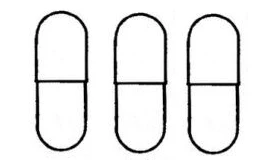
= 60 mg
Three grey 20 mg capsules
The 100 mg daily dose blister contains seven 80 mg capsules and seven 20 mg capsules for a total of 7 daily doses. Each daily dose is provided in a strip containing one 80 mg capsule and one 20 mg capsule:
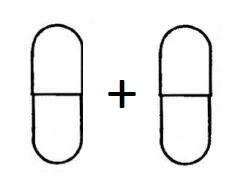
= 100 mg
One orange 80 mg capsule + one grey 20 mg capsule
The 140 mg daily dose blister contains seven 80 mg capsules and twenty-one 20 mg capsules for a total of 7 daily doses. Each daily dose is provided in a strip containing one 80 mg capsule and three 20 mg capsules:
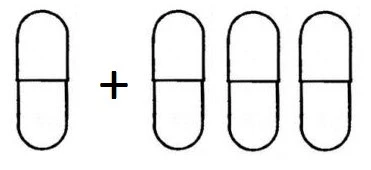
= 140 mg
One orange 80 mg capsule + three grey 20 mg capsules
COMETRIQ hard capsules are also available in 28-day packs:
84 capsules (4 blister packs of 21 x 20 mg) (60 mg daily dose)
56 capsules (4 blister packs of: 7 x 20 mg and 7 x 80 mg) (100 mg daily dose)
112 capsules (4 blister packs of: 21 x 20 mg and 7 x 80 mg) (140 mg daily dose)
Each 28-day pack contains enough medicine for 28 days.
Marketing Authorisation Holder
Ipsen Pharma
65 quai Georges Gorse
92100 Boulogne-Billancourt
France
Manufacturer
Catalent Germany Schorndorf GmbH
Steinbeisstr. 1 und 2
73614 Schorndorf
Germany
Tjoapack Netherlands B.V.
Nieuwe Donk 9
4879 AC Etten-Leur
The Netherlands
For further information about this medicine, please contact the local representative of the Marketing Authorisation Holder.
België/Belgique/Belgien, Luxembourg/Luxemburg, Italia
Ipsen NV Ipsen SpA
België /Belgique/Belgien Tel: + 39 02 39 22 41
Tél/Tel: + 32 9 243 96 00
France, Latvija
Ipsen Pharma Ipsen Pharma representative office
Tél: + 33 1 58 33 50 00 Tel: +371 67622233
България, Slovenija, Lietuva, Litva
Biomapas, UAB
Tel: +370 37 366307
Hrvatska
Biomapas Zagreb d.o.o.
Tel: +385 17 757 094
Česká republika
Ipsen Pharma, s.r.o.
Tel: + 420 242 481 821
Lietuva
Ipsen Pharma SAS Lietuvos filialas
Tel: + 370 700 33305
Danmark, Norge, Suomi/Finland, Sverige, Ísland
Institut Produits Synthèse (IPSEN) AB
Sverige/Ruotsi/Svíþjóð
Tlf/Puh/Tel/Sími: +46 8 451 60 00
Magyarország
Ipsen Pharma Hungary Kft.
Tel: +361 555 5930
Deutschland, Österreich
Ipsen Pharma GmbH
Deutschland
Tel: +49 89 2620 432 89
Nederland
Ipsen Farmaceutica B.V.
Tel: + 31 (0) 23 554 1600
Eesti
Centralpharma Communications OÜ
Tel: +372 60 15 540
Polska
Ipsen Poland Sp. z o.o.
Tel: + 48 (0) 22 653 68 00
Ελλάδα, Κύπρος, Malta
Ipsen Μονοπρόσωπη EΠΕ
Ελλάδα/Greece
Τηλ: + 30 210 984 3324
Portugal
Ipsen Portugal - Produtos Farmacêuticos S.A.
Tel: + 351 21 412 3550
España
Ipsen Pharma, S.A.
Tel: + 34 936 858 100
România
Ipsen Pharma România SRL
Tel: + 40 21 231 27 20
Ireland, United Kingdom (Northern Ireland)
Ipsen Pharmaceuticals Limited
Tel: + 44 (0)1753 62 77 77
Slovenská republika
Ipsen Pharma
Tel: + 420 242 481 821
Other sources of information
More detailed information on this medicine is available on the website of the European Medicines Agency: http://www.ema.europa.eu.