Colobreathe
Italy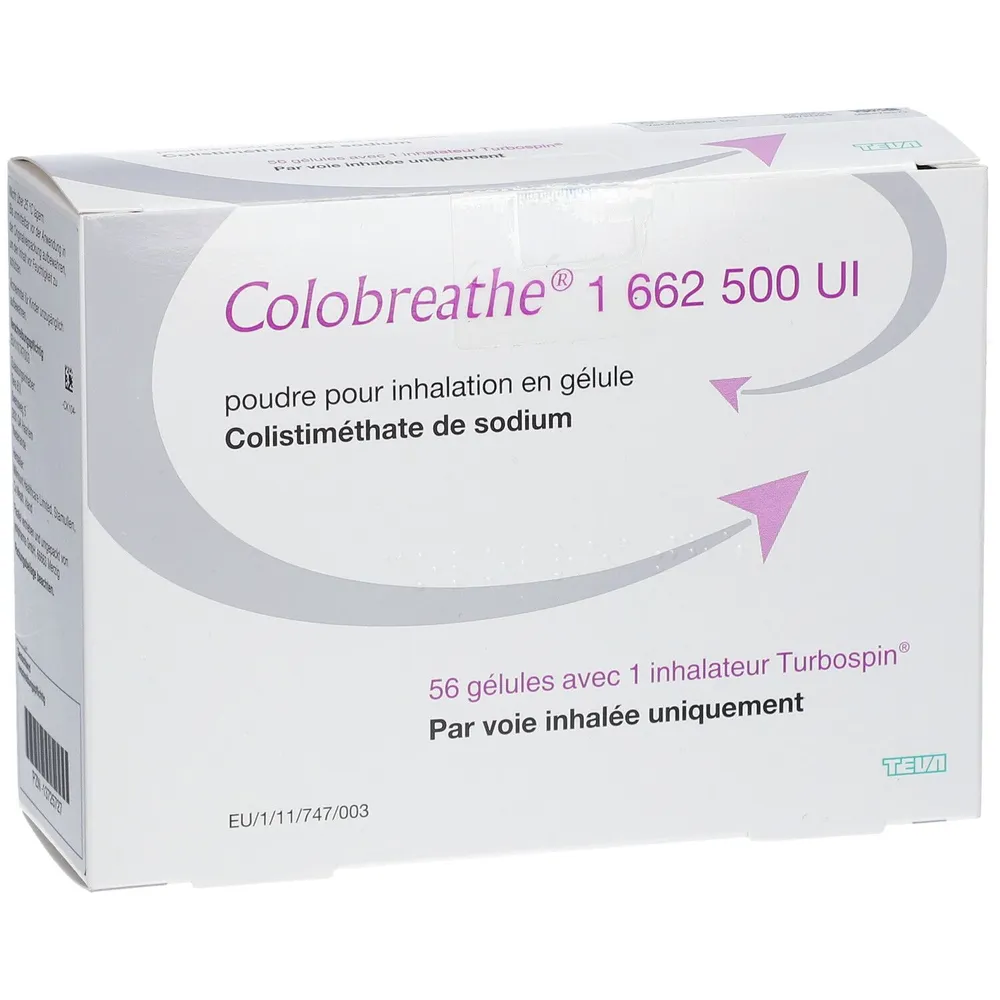
Table of Contents
Package leaflet: Information for the user
Colobreathe 1,662,500 IU powder for inhalation, hard capsules
colistimethate sodium
Please read this leaflet carefully before using this medicine because it contains important information for you.
- Keep this leaflet. You may need to read it again.
- If you have any questions, ask your doctor or pharmacist.
- This medicine has been prescribed for you only. Do not give it to other people, even if their symptoms are the same as yours, as it may be harmful.
- If you experience any side effects, including those not listed in this leaflet, talk to your doctor or pharmacist. See section 4.
Contents of this leaflet:
- What Colobreathe is and what it is used for
- What you need to know before using Colobreathe
- How to use Colobreathe
- Possible side effects
- How to store Colobreathe
- Contents of the pack and other information
1. What Colobreathe is and what it is used for
Colobreathe contains colistimethate sodium, a type of antibiotic known as a polymyxin.
Colobreathe is used to control chronic lung infections caused by the bacterium
Pseudomonas aeruginosa in adult and pediatric patients aged 6 years and older with cystic fibrosis. Pseudomonas aeruginosa is a very common bacterium, which infects almost all patients with
cystic fibrosis at some point in their lives. Some people acquire the infection when they are still
very young, while others become infected much later. If the infection is not properly controlled, it can cause lung damage.
How it works
Colobreathe works by destroying the bacterial cell membrane, resulting in a lethal effect on the bacteria.
2. What you need to know before using Colobreathe
Do not use Colobreathe
- if you/your child are allergic (hypersensitive) to sodium colistimethate, colistin sulfate, or polymyxins.
Warnings and precautions
Talk to your doctor or pharmacist before using Colobreathe.
Tell your doctor if you/your child have ever had any of the following conditions
- previously experienced a negative reaction to inhaled dry powder medicines, unless this has already been discussed with your doctor;
- have an existing muscle disease known as myasthenia gravis or the inherited disease porphyria;
- have blood in the sputum (the substance produced by coughing).
After each inhalation of Colobreathe, rinse your mouth with water. The rinsing water
must not be swallowed. Rinsing may reduce the risk of developing an oral fungal
superinfection during treatment and may also reduce the unpleasant taste associated with sodium
colistimethate.
When you/your child start using Colobreathe, you may experience cough, shortness of breath, chest tightness, or wheezing. The frequency of these side effects may decrease over time as you continue using the inhaler, or your doctor may prescribe a bronchodilator to be used before or after taking
Colobreathe. If these effects become troublesome, inform your doctor, who may change the treatment.
If you/your child have kidney or nerve problems, caution is required when taking Colobreathe, but your doctor will already be aware of this.
If you/your child are required to take other forms of colistimethate, by injection or nebulization, caution is required, but your doctor will already be aware of this.
Children
Do not administer Colobreathe to children under 6 years of age, as it is not suitable for them.
Other medicines and Colobreathe
Tell your doctor if you/your child are taking, have recently taken, or might take any other medicines, especially:
- If you/your child are taking aminoglycoside antibiotics, medicines used to treat infections, caution is required;
- If you/your child have myasthenia gravis and are taking macrolide antibiotics such as azithromycin and clarithromycin or fluoroquinolones such as norfloxacin and ciprofloxacin. Taking these medicines together with Colobreathe may cause muscle weakness problems;
- If you/your child are taking colistimethate by injection or via nebulization, caution is required;
- If you/your child are due to undergo general anesthesia, caution is required.
Pregnancy and breastfeeding
If you are pregnant, think you might be pregnant, are planning a pregnancy, or are breastfeeding, consult your doctor or pharmacist before using this medicine.
There is no available information on the safety of Colobreathe in pregnant women. Your doctor will inform you whether the benefits of the medicine outweigh the risks before you start treatment.
Sodium colistimethate may be excreted in breast milk. Discuss the use of Colobreathe with your doctor.
Driving and using machines
You may experience dizziness, confusion, or visual disturbances while using Colobreathe. Do not drive or operate machinery until these symptoms have resolved.
Colobreathe contains sodium
This medicine contains less than 1 mmol (23 mg) of sodium per capsule, i.e., essentially "sodium-free".
3. How to use Colobreathe
Use this medicine exactly as directed by your doctor. If you have any doubts, consult your doctor.
The first dose must be administered under medical supervision.
The recommended dose is
Adults and children aged 6 years and older
- Inhale the contents of one Colobreathe capsule twice daily using the Turbospin inhaler.
- There must be a 12-hour interval between doses.
Order in which to take or perform other treatments
If you/your child is taking other treatments for cystic fibrosis, you must follow the order listed below:
- Inhaled bronchodilators
- Chest physiotherapy
- Other inhaled medicines
- Then Colobreathe
You/your child should confirm the treatment order with your doctor.
Method of administration
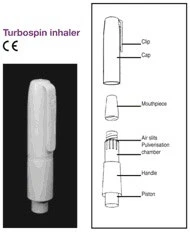
Colobreathe is inhaled into the lungs as a powder from the capsule using a portable inhaler called Turbospin. Colobreathe can only be administered using this device.
Do not swallow Colobreathe capsules.
To inhale Colobreathe from the capsule through the Turbospin inhaler, follow the steps outlined below. Your doctor, pharmacist, or nurse will show you/your child how to inhale the medicine when starting treatment:
Using Colobreathe with the Turbospin inhaler
Preparing the Turbospin inhaler
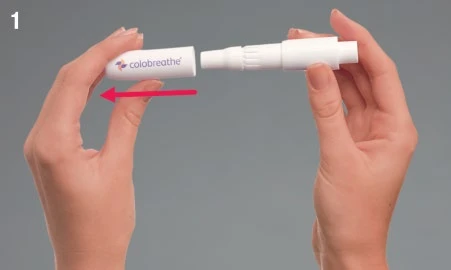
- Remove the cap. Simply pull it off gently.
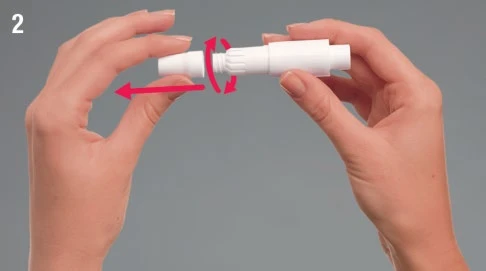
- Unscrew the mouthpiece to expose the chamber of the Turbospin inhaler.
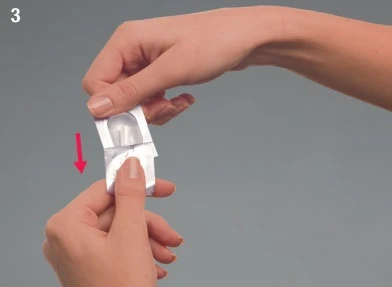
- Remove a single capsule from the blister pack. Once removed, the capsule must be used immediately.
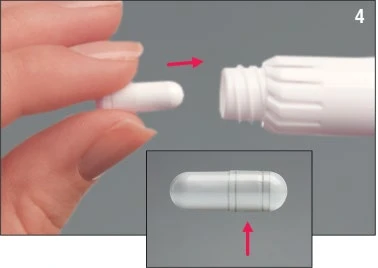
- Gently insert the capsule into the chamber, placing the larger end first. Do not apply pressure.
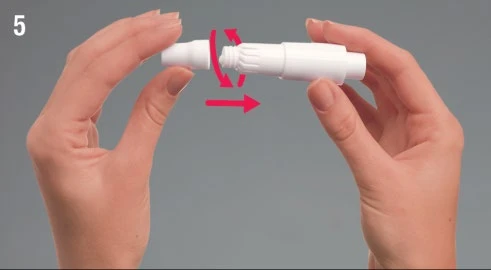
- Now screw the mouthpiece back onto the inhaler.
Puncturing the capsule and inhaling the medicine
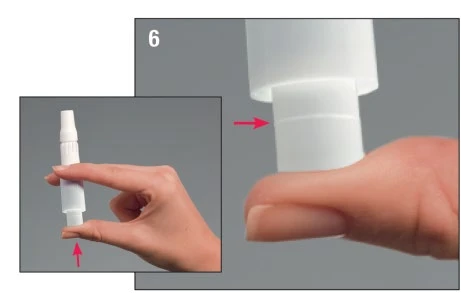
- To puncture the capsule:
- Holding the inhaler with the mouthpiece pointing upwards, gently push the plunger until you reach the visible line. The resistance felt indicates that the capsule is correctly positioned and ready to be punctured. Keep the device in this position before proceeding with puncturing.
- Now, with the capsule inside the chamber, continue pushing the plunger fully down and then release.
- The capsule is now punctured and you may inhale its contents.
- Do not puncture the capsule more than once. After puncturing, some powder may escape from the chamber. This is normal.
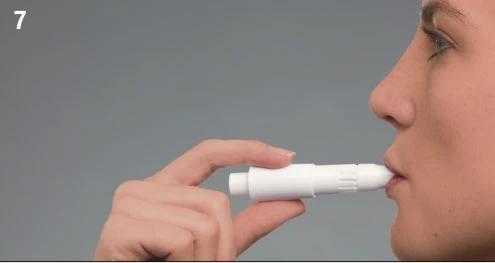
- After breathing out slowly, place the mouthpiece between your lips and teeth. Close your lips tightly around the mouthpiece. Be careful not to cover the air slits with your fingers during inhalation.
- Then, inhale slowly and deeply through your mouth, sufficiently to feel the capsule rotating inside the device.
- Remove the Turbospin device from your mouth and hold your breath for about 10 seconds or as long as comfortable, then breathe out slowly.
- If you do not feel the capsule rotating, it may be stuck. To dislodge it, gently tap the inhaler chamber with your fingers. Do not attempt to dislodge the capsule by repeatedly pressing the plunger. If you cannot dislodge the capsule and inhale the powder, discard the broken capsule and any residual powder and use a new capsule.
- Inhale the medicine again by repeating steps 7 and 8 to ensure you have inhaled the entire capsule contents.
- To check whether the capsule is empty, unscrew the mouthpiece and inspect it. If it is not empty, repeat steps 7, 8, and 9 until all contents are inhaled.
- After inhaling the full dose, rinse your mouth thoroughly with water and spit it out.
Removing the empty capsule from the Turbospin device
- Once the capsule is empty, unscrew the mouthpiece and remove the empty capsule. Dispose of it properly.
Additional information
As you inhale slowly, air enters the Turbospin inhaler into the chamber housing the capsule. The tiny medicine particles inside the capsule are carried by the airflow and travel through the airways into the lungs.
Occasionally, small fragments of the capsule shell may end up in your mouth or airways.
- If this happens, you may feel these fragments on your tongue or in your airways.
- The capsule shell is made of gelatin, a substance that is harmless to humans if swallowed or inhaled.
- The likelihood of the capsule breaking into multiple pieces increases if it is punctured more than once during step 6.
Cleaning the Turbospin device
Clean the Turbospin inhaler after each dose using the following procedure:
- Press the plunger fully down several times while holding the chamber upside down;
- Clean the chamber with a tissue or a cotton swab. Do not use water;
- Screw the mouthpiece back on securely and replace the cap; the inhaler is now ready for the next dose.
If you/your child uses more Colobreathe than you should or if a capsule has been swallowed accidentally, contact your doctor immediately.
If you/your child forgets to use Colobreathe
If you/your child forgets to take a dose of Colobreathe, take the missed dose as soon as you remember. You/your child must not take two doses within a 12-hour period. Continue as instructed thereafter.
If you/your child stops treatment with Colobreathe
Do not stop treatment unless your doctor tells you to do so. Your doctor will decide how long your/your child’s treatment should last.
If you/your child has any questions about using this medicine, consult your doctor.
4. Possible side effects
Like all medicines, this medicine can cause side effects, although not everyone gets them.
Allergic reactions
An allergic reaction to Colobreathe is possible (typically, severe allergic reactions can cause skin rashes, swelling of the face, tongue and throat, difficulty breathing due to narrowing of the airways, and loss of consciousness). If you/your child show signs of an allergic reaction, you must seek immediate medical attention.
Other possible side effects
You/your child may experience an unpleasant taste in the mouth after inhaling Colobreathe.
Very common: may affect more than 1 in 10 people
- breathing difficulties;
- cough, throat irritation;
- hoarse or weak voice, or even loss of voice;
- unpleasant taste.
Common: may affect up to 1 in 10 people
- headache;
- ringing or buzzing in the ears, balance disorders;
- coughing up blood, wheezing, chest discomfort, asthma, productive cough (cough with mucus), lung infection, crackling sounds in the lungs (detected by the doctor when listening with a stethoscope);
- vomiting, nausea;
- changes in lung function (detected by tests);
- joint pain;
- lack of energy, fatigue;
- increased body temperature.
Uncommon: may affect up to 1 in 100 people
- allergic reactions (hypersensitivity), which may include skin rashes and itching;
- weight fluctuations, loss of appetite;
- anxiety;
- seizures;
- drowsiness;
- ear blockage;
- chest pain;
- laboured breathing;
- nosebleeds, catarrh (nasal mucus, which may cause a blocked feeling), frequent cough with thick green mucus, sore throat, and sinus pain;
- unusual sounds in the chest (detected by the doctor when listening to the lungs with a stethoscope);
- diarrhoea, flatulence;
- excessive saliva production;
- toothache;
- protein in the urine (detected by laboratory tests);
- thirst.
The above side effects have been observed with similar frequency across all age groups.
Reporting of side effects
If you experience any side effect, including those not listed in this leaflet, please inform your doctor or pharmacist. You can also report side effects directly via the national reporting system detailed in Annex V. By reporting side effects, you can help provide more information on the safety of this medicine.
5. How to store Colobreathe
Keep this medicine out of the sight and reach of children.
Do not use this medicine after the expiry date stated on the carton and blister after
EXP/EXP. The expiry date refers to the last day of that month.
Do not store Colobreathe at temperatures above 25 °C.
Store in the original packaging only until the time of use to protect the medicine from moisture.
If you/ the child accidentally remove the foil and the capsules become exposed, discard them.
Dispose of the Turbospin inhaler after use of the treatment pack.
Do not dispose of any medicine via wastewater or household waste. Ask your pharmacist how to dispose of medicines no longer required. This will help protect the environment.
6. Package contents and other information
What Colobreathe contains
The active substance is colistimethate sodium. Each capsule contains 1,662,500 IU (equivalent
approximately to 125 mg) of colistimethate sodium.
The other components are:
Capsule shell
Gelatin
Polyethylene glycol
Sodium lauryl sulfate
Purified water
Description of the appearance of Colobreathe and contents of the pack
Colobreathe inhalation powder, hard capsule (inhalation powder), is supplied as small transparent hard gelatin capsules containing a fine white powder.
The Turbospin device is a breath-actuated dry powder inhaler made of polypropylene and stainless steel.
The capsules are packed in blisters within cartons containing:
- 56 hard capsules and one Turbospin dry powder inhaler, sufficient for 4 weeks.
- 8 hard capsules and one Turbospin dry powder inhaler, sufficient for 4 days.
It is possible that not all pack sizes are marketed.
Marketing Authorization Holder
Essential Pharma Limited,
Vision Exchange Building,
Triq it-Territorjals, Zone 1,
Central Business District,
Birkirkara, CBD 1070, Malta
Manufacturer
Teva Pharmaceuticals Europe BV
Swensweg 5
2031 GA Haarlem
The Netherlands
Millmount Healthcare Limited
Block 7, City North Business Campus
Stamullen
Co Meath
K32 YD60
Ireland
Merckle GmbH
Ludwig-Merckle-Str. 3
89143 Blaubeuren
Germany
Laboratorios Liconsa, S.A.
Avda. Miralcampo, 7, Pol. Ind.
Miralcampo
19200 Azuqueca de Henares (Guadalajara)
Spain
More detailed information on this medicinal product is available on the website of the European Medicines Agency, http://www.ema.europa.eu. In addition, links to other websites on rare diseases and related therapeutic treatments are provided.