Buscopan Compositum
Italy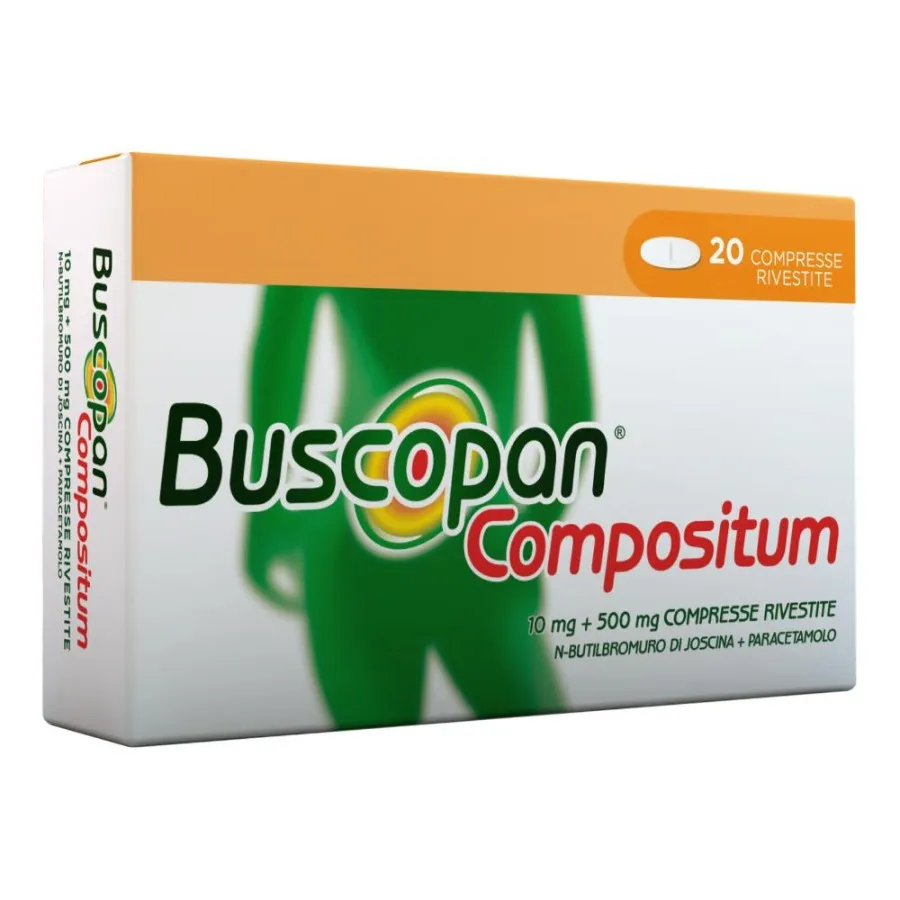
Table of Contents
Package leaflet: Information for the user
Buscopan Compositum 10 mg + 500 mg film-coated tablets
Hyoscine butylbromide + paracetamol
Please read all of this leaflet carefully before taking this medicine because it contains important information for you.
Always take this medicine exactly as described in this leaflet or as your doctor or pharmacist has instructed you.
- Keep this leaflet. You may need to read it again.
- If you need more information or advice, consult your pharmacist.
- If you experience any side effects, including those not listed in this leaflet, contact your doctor or pharmacist. See section 4.
- Contact your doctor if you do not notice any improvement or if your symptoms worsen after 3 days.
Contents of this leaflet:
- What Buscopan Compositum is and what it is used for
- What you need to know before taking Buscopan Compositum
- How to take Buscopan Compositum
- Possible side effects
- How to store Buscopan Compositum
- Contents of the pack and other information
1. What Buscopan Compositum is and what it is used for
Buscopan Compositum contains two active substances: N-butylscopolamine bromide (an active ingredient used in disorders of gastric and intestinal motility, or of the biliary tract) and paracetamol (an active ingredient used to reduce pain).
Buscopan Compositum is indicated in adults and children over 10 years of age for:
- pain and spasms in the stomach and intestine;
- pain due to obstruction in the flow of the biliary tract (through which bile flows, a substance involved in certain digestive processes).
Consult your doctor if you do not feel better or if you feel worse after 3 days.
2. What you should know before taking Buscopan Compositum
Do not take Buscopan Compositum
- If you are allergic to hyoscine N-butylbromide or paracetamol or NSAIDs (Non-Steroidal Anti-Inflammatory Drugs, medicines for pain and inflammation) or to any of the other ingredients of this medicine (listed in section 6);
- if you suffer from acute angle-closure glaucoma (a severe form of glaucoma, i.e. an eye disease caused by increased pressure of the fluid inside the eye);
- if you suffer from benign prostatic hyperplasia (enlargement of the prostate gland);
- if you suffer from urinary retention (inability of the urinary bladder to empty completely);
- if you suffer from pyloric stenosis (narrowing of the pylorus, the terminal portion of the stomach) or stenosis of other parts of the gastrointestinal tract (narrowing of other areas of the stomach and intestine);
- in case of intestinal obstruction or if you suspect intestinal obstruction;
- if you suffer from intestinal diseases associated with impaired intestinal motility such as paralytic or obstructive ileus (intestinal blockage). Symptoms include severe abdominal pain and absence of bowel movements and/or nausea/vomiting;
- if you suffer from megacolon (dilation of the colon);
- if you suffer from ulcerative colitis (chronic inflammatory bowel disease);
- if you suffer from reflux esophagitis (a condition caused by frequent regurgitation of stomach contents into the esophagus, the tube that carries food to the stomach);
- if you are elderly or physically weak and suffer from intestinal atony (lack of intestinal movement leading to intestinal obstruction);
- if you suffer from severe myasthenia gravis (muscle weakness);
- in children under 10 years of age;
- if your body does not produce an enzyme called glucose-6-phosphate dehydrogenase (a condition known as favism, which causes destruction of certain blood cells, red blood cells);
- if you suffer from severe hemolytic anemia (a disease caused by destruction of red blood cells);
- if you suffer from severe hepatocellular insufficiency (impaired liver function associated with destruction of liver cells);
- in case of rare hereditary conditions that may be incompatible with an excipient of the product (see "Warnings and precautions").
Warnings and precautions
Consult your doctor or pharmacist before taking this medicine.
Contact your doctor immediately if you experience severe abdominal pain
that does not go away or worsens or is accompanied by symptoms such as fever, nausea, vomiting,
altered bowel movements, abdominal bloating, low blood pressure, fainting or blood in the stool.
To avoid taking an excessive dose of paracetamol, one of the active ingredients in
Buscopan Compositum, you must ensure that you do not take other
medicines containing paracetamol at the same time, because taking paracetamol in high
doses may lead to serious adverse effects; see section “If you take more
Buscopan Compositum than you should”.
Do not exceed the recommended doses (see section 3 “How to take Buscopan
Compositum”), as liver damage may occur (see section “If
you take more Buscopan Compositum than you should”).
Buscopan Compositum should be used with caution:
- if your body produces insufficient amounts of glucose-6-phosphate dehydrogenase (a condition known as favism, which causes destruction of red blood cells);
- if you suffer from liver diseases such as hepatitis (inflammation of the liver), Gilbert's syndrome (a condition characterized by excessive increase of bilirubin in the blood), mild or moderate hepatocellular insufficiency (impaired liver function associated with destruction of liver cells);
- if you have low glutathione reserves;
- if you currently consume or have recently stopped regularly consuming large amounts of alcohol;
- if your kidneys do not function properly;
- if you are prone to closed-angle glaucoma (a severe form of glaucoma, i.e. an eye disease caused by increased pressure of the fluid inside the eye);
- if you are predisposed to intestinal or urinary tract obstructions;
- if you are prone to tachycardia (increased heart rate);
- if you have high blood pressure;
- if you suffer from congestive heart failure (heart disease);
- if you are prone to hyperthyroidism (excessive thyroid function resulting in elevated levels of thyroid hormones in the bloodstream);
- if you suffer from chronic obstructive respiratory diseases.
Buscopan Compositum should be used only under medical supervision:
- if you suffer from renal insufficiency (severe kidney disease);
- if you suffer from hepatic insufficiency (severe liver disease).
In these conditions, if necessary, your doctor may reduce your dose or prolong the interval
between individual doses.
Severe skin reactions: potentially fatal reactions such as Stevens-Johnson syndrome, toxic epidermal necrolysis, and acute generalized exanthematous pustulosis have been reported with the use of paracetamol. If symptoms or signs of Stevens-Johnson syndrome (SJS), toxic epidermal necrolysis (TEN), or acute generalized exanthematous pustulosis (e.g. progressive skin redness associated with blisters or mucosal lesions) occur, discontinue treatment with Buscopan Compositum immediately and seek the nearest hospital.
Even when taking paracetamol at prescribed doses after short-term treatment and in patients without prior liver disease, liver damage (hepatotoxicity) may occur (see section "Possible side effects").
If you need to take Buscopan Compositum for a prolonged period, you should undergo appropriate blood tests to monitor kidney and liver function as directed by your doctor.
If you frequently use pain-relieving medicines (analgesics), especially at high doses, you may develop headaches. In this case, do not increase the dose of the analgesic to treat it.
If you experience allergic reactions after taking Buscopan Compositum (very rarely observed, see section “Possible side effects”), discontinue treatment with Buscopan Compositum at the first signs of an allergic reaction and contact your doctor immediately.
Do not take Buscopan Compositum for more than 3 days unless otherwise prescribed by your doctor. If the pain does not go away or worsens, if you develop new symptoms, or if you experience redness or swelling, consult your doctor, as these could be signs of a serious condition.
In addition, consult your doctor before taking any other medicine. See also section “Other medicines and Buscopan Compositum”.
Children
Buscopan Compositum must not be used in children under 10 years of age.
Other medicines and Buscopan Compositum
Inform your doctor or pharmacist if you are taking, have recently taken, or might take any other medicines.
In particular, use this medicine with caution and only under strict medical supervision in the following situations:
-
if you regularly take medicines or substances that increase the workload on the liver, for example: rifampicin (an antibiotic), cimetidine (a medicine used for stomach ulcers), hypnotics (medicines used to treat anxiety and insomnia), and antiepileptics (medicines used to treat epilepsy such as glutethimide, phenobarbital, carbamazepine, and phenytoin). This also applies to all substances that may be harmful to the liver;
-
if you are taking chloramphenicol (to treat infections), as Buscopan Compositum may delay elimination of chloramphenicol from your body, causing harmful effects;
-
if you are taking medicines that thin the blood (anticoagulants), such as warfarin and similar medicines (vitamin K antagonists), as paracetamol may increase the risk of bleeding; inform your doctor if you notice bleeding;
-
if you are taking flucloxacillin (an antibiotic), due to a serious risk of blood and fluid disturbances (metabolic acidosis with high anion gap) that require urgent treatment and may occur particularly in cases of severe renal impairment, sepsis (when bacteria and their toxins circulate in the blood, leading to organ damage), malnutrition, chronic alcoholism, and when maximum daily doses of paracetamol are used;
-
if you are taking zidovudine (AZT or Retrovir, a medicine for treating HIV), as it may reduce the number of certain blood cells, white blood cells;
-
if you are taking probenecid (a medicine used, for example, to treat gout), as a reduction in the paracetamol dose may be necessary;
-
if you are taking colestyramine (to lower cholesterol), as it reduces the absorption of paracetamol;
-
if you are taking antidepressants (particularly tricyclic and tetracyclic antidepressants), antihistamines (medicines used for allergies or stomach acidity), antipsychotics (medicines used for mental disorders), quinidine (a heart medicine), amantadine (a medicine for central nervous system disorders involving loss of movement control, such as Parkinson's disease), disopyramide (a heart medicine), and other medicines such as tiotropium, ipratropium (used for respiratory diseases), or substances similar to atropine (substances acting on the nervous system), as their effects may be enhanced by Buscopan Compositum;
-
if you are taking medicines for nausea and vomiting, such as metoclopramide, as both their effect and that of Buscopan Compositum may be reduced;
-
if you are taking beta-adrenergic medicines, as Buscopan Compositum may increase the tachycardia (increased heart rate) induced by these medicines.
Medicines that slow gastric emptying (such as propanteline, a medicine for stomach ulcers) may reduce the absorption rate of paracetamol, delaying its effect; conversely, medicines that increase gastric emptying rate (such as metoclopramide or domperidone, medicines for nausea and vomiting) may increase the absorption rate of paracetamol.
Laboratory tests
Paracetamol, one of the active ingredients in Buscopan Compositum, may alter the results of certain laboratory tests, for example, measurements of serum uric acid levels (uricemia) and blood glucose levels (glycemia). If you are undergoing blood tests, inform your doctor or laboratory staff that you are taking Buscopan Compositum.
Buscopan Compositum and alcohol
If you regularly consume large amounts of alcohol, you must use Buscopan Compositum with extreme caution, otherwise your liver may be damaged.
Pregnancy, breastfeeding, and fertility
If you are pregnant, think you may be pregnant, planning to become pregnant, or breastfeeding, consult your doctor or pharmacist before using this medicine.
Pregnancy
There are insufficient data on the use of Buscopan Compositum during pregnancy.
Available data from the separate use of hyoscine N-butylbromide and paracetamol have shown insufficient evidence of adverse effects during pregnancy.
During pregnancy, data from cases of excessive paracetamol intake have not shown an increased risk of malformations or harmful effects.
During pregnancy, paracetamol should not be taken for prolonged periods, at high doses, or in combination with other medicines, as the safety of such use has not been established. Therefore, Buscopan Compositum is not recommended during pregnancy and may be taken only after consulting your doctor.
Breastfeeding
The safety of using this medicine during breastfeeding has not yet been established.
Paracetamol passes into breast milk. However, it is expected that at normal doses it will not cause adverse effects in the newborn.
The decision to continue or discontinue breastfeeding or to continue or discontinue treatment with Buscopan Compositum should be made only after consulting your doctor.
Fertility
No studies on the effects on fertility in humans have been conducted.
Buscopan Compositum contains sodium
This medicine contains 3.49 mg of sodium per tablet, i.e. less than 1 mmol (23 mg) of sodium, thus essentially "sodium-free".
Driving and operating machinery
No studies have been conducted on the ability to drive vehicles or operate machinery.
However, visual disturbances and drowsiness may occur; keep this in mind if you drive vehicles or operate machinery or perform tasks requiring attention and vigilance.
3. How to take Buscopan Compositum
Take this medicine exactly as stated in this leaflet or as directed by your doctor or pharmacist. If you have any doubts, consult your doctor or pharmacist.
The following dosage is recommended for adults and children aged 10 years and older, unless otherwise prescribed by a doctor:
The recommended dose is 1-2 tablets three times a day. Do not exceed 6 tablets per day.
The tablets must not be chewed, but swallowed whole with a sufficient amount of water.
Duration of treatment
Do not take Buscopan Compositum for more than 3 days unless otherwise prescribed by your doctor.
Consult your doctor if you are simultaneously taking other medicines containing paracetamol, as it may be necessary to adjust the dose (see section “Warnings and precautions”).
Use in children
Buscopan Compositum must not be used in children under 10 years of age.
If you take more Buscopan Compositum than you should
If you take an excessive dose of Buscopan Compositum, contact your doctor immediately or go to the nearest hospital.
In case of an overdose of paracetamol, elderly people, young children, individuals with liver disorders, regular alcohol consumers, and malnourished individuals are at higher risk of poisoning, which may even be fatal.
Symptoms in case of overdose
Hyoscine butylbromide
In case of overdose, effects such as urinary retention (difficulty of the urinary bladder to empty completely), dry mouth, skin flushing, tachycardia, reduced motility of the stomach and intestines, and transient visual disturbances may occur.
Paracetamol
Normally, symptoms appear within the first 24 hours and include pallor, nausea, vomiting, anorexia (lack of appetite), and pain in the abdominal area (abdominal pain). You may experience a temporary improvement in these symptoms, but mild abdominal pain may persist, which could still indicate liver damage. There may be an increase in blood transaminases (substances present in the liver), jaundice (manifested by yellowing of the skin or whites of the eyes), blood coagulation disorders (alterations affecting blood fluidity), hypoglycemia (low blood sugar levels), and progression to hepatic coma (severe liver damage associated with brain disorders).
In case of paracetamol overdose, there is a risk of severe liver damage, which may lead to coma and death. Liver damage must be assessed by your doctor, who will prescribe the necessary tests to evaluate your liver function.
In case of paracetamol overdose, you may also develop kidney damage, heart disorders, pancreas disorders (a gland involved in digestion and the metabolism of certain nutrients), and pancytopenia (reduction in the number of all types of blood cells).
Chronic intoxication
In cases of chronic intoxication, hemolytic anemia (a disease caused by the destruction of certain blood cells, red blood cells), cyanosis (a condition in which the skin turns blue), weakness, dizziness, paresthesia (a condition mostly characterized by tingling sensations in arms or legs), tremors, insomnia, headache, memory loss, disorders of the central nervous system, delirium (a state of mental confusion), and seizures (involuntary contractions of one or more muscles) may occur.
If you have taken an excessive dose of this medicine, contact your doctor immediately or go to the nearest hospital. Your doctor will prescribe the appropriate treatment.
If you forget to take Buscopan Compositum
Do not take a double dose to make up for the forgotten dose.
If you stop taking Buscopan Compositum
If you suddenly stop taking pain-relieving medicines (analgesics) after using them for a long time at high doses, you may experience symptoms such as headache, fatigue, and nervousness, which usually resolve within a few days. Before restarting analgesic treatment, consult your doctor and wait until these symptoms have passed.
If you have any doubts about the use of this medicine, consult your doctor or pharmacist.
4. Possible side effects
Like all medicines, this medicine can cause side effects, although not
everyone experiences them.
The possible side effects are listed below according to the following frequency:
Uncommon (may affect up to 1 in 100 patients)
- skin reactions (skin redness);
- abnormal sweating;
- itching;
- nausea;
- dry mouth.
Rare (may affect up to 1 in 1,000 patients)
- shock (decrease in blood pressure with severe reduction in heart function);
- tachycardia (increased heart rate);
- erythema (skin irritation).
Very rare (may affect up to 1 in 10,000 patients)
- Stevens-Johnson syndrome and toxic epidermal necrolysis (serious skin diseases characterized by erythema, blistering lesions with areas of skin detachment);
- generalized exanthematous pustulosis (characterized by the appearance of numerous small pustules, burning sensation, widespread itching and high fever);
- skin inflammation (urticaria, skin rash, exanthem).
Frequency not known (the frequency cannot be determined from the available data)
- pancytopenia (reduction in the number of all types of blood cells);
- agranulocytosis (reduction in the number of blood granulocytes, a type of white blood cells);
- thrombocytopenia (reduction in the number of platelets in the blood);
- neutropenia (reduction in the number of blood neutrophils, a type of white blood cells);
- leucopenia (reduction in the number of white blood cells in the blood);
- anaemia (reduction in haemoglobin in the blood, the substance that carries oxygen in the blood);
- haemolytic anaemia (excessive destruction of red blood cells);
- increased transaminases in the blood (substances present in the liver, whose elevation may indicate liver damage);
- allergic reactions, even severe (anaphylactic shock, anaphylactic reactions, drug-induced skin reactions, hypersensitivity), laryngeal edema (swelling of the larynx, the throat organ responsible for voice production), angioedema (allergic reaction with symptoms such as swelling of the face, tongue or throat, difficulty swallowing, itching, difficulty breathing);
- various types and severities of skin reactions, including cases of erythema multiforme (a condition characterized by the appearance of red spots on the skin with a "target-like" appearance associated with itching) and drug-induced fixed eruption;
- difficulty breathing;
- bronchial muscle spasms (especially in people suffering from asthma or allergies);
- urinary retention (inability of the urinary bladder to empty completely);
- kidney disorders: acute renal failure (rapid reduction in kidney function), interstitial nephritis (inflammation of the kidneys), haematuria (presence of blood in the urine), anuria (cessation or reduction in urine production);
- difficulty in urination;
- sweating;
- mydriasis (dilation of the pupil);
- visual disturbances (accommodation disorders, i.e. difficulty focusing images, increased ocular tension, i.e. increased pressure of the internal eye fluid);
- constipation;
- gastrointestinal reactions;
- liver disorders (such as hepatitis which may lead to acute liver failure or disturbances in liver function);
- drowsiness;
- dizziness;
- excess acid in the blood due to accumulation of pyroglutamic acid resulting from low glutathione levels.
Reporting of side effects
If you experience any side effect, including those not listed in this leaflet,
please contact your doctor or pharmacist. You may also report side effects directly
through the national reporting system at the following website
https://www.aifa.gov.it/content/segnalazioni-reazioni-avverse.
By reporting side effects, you can help provide more information on the
safety of this medicine.
5. How to store Buscopan Compositum
Store below 25°C.
Keep this medicine out of the sight and reach of children.
Do not use this medicine after the expiry date stated on the pack after EXP.
The expiry date refers to the last day of that month.
Do not dispose of any medicine via wastewater or household waste. Ask your pharmacist
how to dispose of medicines you no longer use. This will help protect the environment.
6. Package contents and other information
What Buscopan Compositum contains
- The active substances are: hyoscine butylbromide and paracetamol. Each tablet contains 10 mg of hyoscine butylbromide and 500 mg of paracetamol.
- The other components are: tablet core: microcrystalline cellulose, sodium carmellose, corn starch, ethylcellulose, colloidal silicon dioxide, magnesium stearate; tablet coating: hypromellose, polyacrylates, titanium dioxide, macrogol 6000, talc, silicone anti-foaming agent.
Description of the appearance of Buscopan Compositum and contents of the pack
Buscopan Compositum 10 mg + 500 mg film-coated tablets is available in the following pack sizes: 20 tablets and 30 tablets.
It is possible that not all pack sizes are marketed.
Marketing Authorization Holder
Opella Healthcare Italy S.r.l.
Viale L. Bodio, 37/B
20158 Milano (Italy)
Manufacturer
Delpharm Reims,
10 Rue Colonel Charbonneaux, 51100 Reims, France
Package leaflet: information for the user
Buscopan Compositum 10 mg + 800 mg suppositories
Hyoscine butylbromide + paracetamol
Please read this leaflet carefully before taking this medicine because it contains
important information for you.
Always take this medicine exactly as described in this leaflet or as your doctor or pharmacist has instructed.
- Keep this leaflet. You may need to read it again.
- If you need more information or advice, consult your pharmacist.
- If you experience any side effects, including those not listed in this leaflet, consult your doctor or pharmacist. See section 4.
- Consult your doctor if you do not notice any improvement or if your symptoms worsen after 3 days.
Contents of this leaflet:
- What Buscopan Compositum is and what it is used for
- What you need to know before taking Buscopan Compositum
- How to take Buscopan Compositum
- Possible side effects
- How to store Buscopan Compositum
- Contents of the pack and other information
1. What Buscopan Compositum is and what it is used for
Buscopan Compositum contains two active substances: hyoscine butylbromide (an active ingredient used in cases of motility disorders of the stomach and intestine, or of the biliary tract) and paracetamol (an active ingredient used to reduce pain).
Buscopan Compositum is indicated in adults and children over 10 years of age for the treatment of:
- pain and spasms in the stomach and intestine;
- pain due to obstruction in the flow of the biliary tract (where bile flows, a substance involved in certain digestive processes).
Consult your doctor if you do not feel better or if you feel worse after 3 days.
2. What you should know before taking Buscopan Compositum
Do not take Buscopan Compositum
- If you are allergic to hyoscine butylbromide or paracetamol or NSAIDs (Non-Steroidal Anti-Inflammatory Drugs, medicines for pain and inflammation) or to any of the other ingredients of this medicine (listed in section 6);
- if you have acute angle-closure glaucoma (a severe form of glaucoma, i.e. an eye disease caused by increased pressure of the fluid inside the eye);
- if you have prostatic hypertrophy (enlarged prostate);
- if you have urinary retention (inability of the urinary bladder to empty completely);
- if you have pyloric stenosis (narrowing of the pylorus, the terminal part of the stomach) or stenosis of other parts of the gastrointestinal tract (narrowing of other areas of the stomach and intestine);
- in case of intestinal obstruction or if you suspect you have an intestinal obstruction;
- if you suffer from intestinal diseases associated with impaired intestinal motility such as paralytic or obstructive ileus (intestinal obstruction). Symptoms include severe abdominal pain and absence of bowel movements and/or nausea/vomiting;
- if you have megacolon (dilation of the colon);
- if you have ulcerative colitis (chronic inflammatory bowel disease);
- if you have reflux esophagitis (a condition caused by frequent regurgitation of stomach contents into the esophagus, the tube that carries food to the stomach);
- if you are elderly or physically weak and suffer from intestinal atony (lack of intestinal movement leading to intestinal obstruction);
- if you have severe myasthenia gravis (muscle weakness);
- in children under 10 years of age;
- if your body does not produce an enzyme called glucose-6-phosphate dehydrogenase (a condition known as favism, which causes destruction of certain blood cells, red blood cells);
- if you have severe hemolytic anemia (a disease due to destruction of red blood cells);
- if you have severe hepatocellular insufficiency (liver dysfunction associated with destruction of liver cells);
- in case of rare hereditary conditions that may be incompatible with an excipient of the product (see "Warnings and precautions").
This medicine contains soy lecithin. If you are allergic to soy or peanuts, do not use
this medicine.
Warnings and precautions
Talk to your doctor or pharmacist before taking this medicine.
Contact your doctor immediately if you experience severe abdominal pain
that does not go away or worsens, or is accompanied by symptoms such as fever, nausea, vomiting,
altered bowel movements, abdominal swelling, low blood pressure, fainting, or blood in the stool.
To avoid taking an excessive dose of paracetamol, one of the active ingredients in
Buscopan Compositum, you must ensure that you are not simultaneously taking other
medicines containing paracetamol, since serious adverse effects may occur if paracetamol is taken
in high doses; see section “If you take more Buscopan Compositum than you should”.
Do not exceed the recommended doses (see section 3 “How to take Buscopan
Compositum”), as liver damage may occur (see section “If you take more
Buscopan Compositum than you should”).
Buscopan Compositum should be used with caution:
- if your body produces insufficient amounts of glucose-6-phosphate dehydrogenase (a condition known as favism, which causes destruction of red blood cells);
- if you suffer from liver diseases such as hepatitis (liver inflammation), Gilbert's syndrome (a condition characterized by excessive increase in bilirubin in the blood), mild or moderate hepatocellular insufficiency (liver dysfunction associated with destruction of liver cells);
- if you have low glutathione reserves;
- if you drink or have recently stopped drinking large amounts of alcohol regularly;
- if your kidneys do not function properly;
- if you are prone to closed-angle glaucoma (a severe form of glaucoma, i.e. an eye disease caused by increased pressure of the fluid inside the eye);
- if you are prone to intestinal or urinary tract obstructions;
- if you are prone to tachycardia (increased heart rate);
- if you have high blood pressure;
- if you suffer from congestive heart failure (a heart disease);
- if you are predisposed to congestive heart failure (a heart disease);
- if you are prone to hyperthyroidism (excessive functional activity of the thyroid gland, with elevated levels of thyroid hormones in circulation);
- if you suffer from chronic obstructive respiratory diseases.
Buscopan Compositum should only be used under medical supervision:
- if you have renal insufficiency (severe kidney disease);
- if you have hepatic insufficiency (severe liver disease).
In these conditions, if necessary, your doctor may reduce your dose or extend the interval
between individual doses.
Severe skin reactions: potentially fatal reactions such as Stevens-Johnson syndrome, toxic epidermal necrolysis, and acute generalized exanthematous pustulosis have been reported with the use of paracetamol. If symptoms or signs of Stevens-Johnson syndrome (SJS), toxic epidermal necrolysis (TEN), or acute generalized exanthematous pustulosis (e.g., progressive skin redness associated with blisters or mucosal lesions) occur, stop treatment with Buscopan Compositum immediately and go to the nearest hospital.
Even when taking paracetamol at prescribed doses after short-term treatment and in patients without prior liver disease, liver damage (hepatotoxicity) may occur (see section "Possible side effects").
If you need to take Buscopan Compositum for a prolonged period, you should undergo appropriate blood tests and assessments of kidney and liver function as directed by your doctor.
If you frequently use pain-relieving medicines (analgesics), especially at high doses, you may develop headaches. In this case, do not increase the dose of the analgesic to treat it.
If you experience allergic reactions after taking Buscopan Compositum (very rarely observed, see section “Possible side effects”), discontinue treatment with Buscopan Compositum at the first signs of an allergic reaction and contact your doctor immediately.
Do not take Buscopan Compositum for more than 3 days unless otherwise prescribed by your doctor. If the pain persists or worsens, if you develop new symptoms, or if you have redness or swelling, consult your doctor, as these could be signs of a serious condition.
In addition, consult your doctor before taking any other medicine. See also section “Other medicines and Buscopan Compositum”.
Children
Buscopan Compositum must not be used in children under 10 years of age.
Other medicines and Buscopan Compositum
Inform your doctor or pharmacist if you are taking, have recently taken, or might take any other medicine.
Use this medicine with particular caution and only under strict medical supervision in the following situations:
- if you regularly take medicines or substances that increase the workload on the liver, for example: rifampicin (an antibiotic), cimetidine (a medicine used for stomach ulcers), hypnotics (medicines used to treat anxiety and insomnia), and antiepileptics (medicines used to treat epilepsy such as glutethimide, phenobarbital, carbamazepine, and phenytoin). This also applies to all substances that may be harmful to the liver;
- if you are taking chloramphenicol (to treat infections), since Buscopan Compositum may delay its elimination from your body, causing harmful effects;
- if you are taking blood-thinning medicines (anticoagulants), such as warfarin and similar medicines (vitamin K antagonists), because paracetamol may increase the risk of bleeding; inform your doctor if you notice bleeding;
- if you are taking flucloxacillin (an antibiotic), due to a serious risk of blood and fluid abnormalities (metabolic acidosis with high anion gap) that require urgent treatment and may occur particularly in cases of severe renal impairment, sepsis (when bacteria and their toxins circulate in the blood causing organ damage), malnutrition, chronic alcoholism, and when maximum daily doses of paracetamol are used;
- if you are taking zidovudine (AZT or Retrovir, a medicine for the treatment of HIV) because it may reduce the number of certain blood cells, white blood cells;
- if you are taking probenecid (a medicine used, for example, to treat gout) because a reduction in the dose of paracetamol may be necessary;
- if you are taking colestyramine (to lower cholesterol) as it reduces the absorption of paracetamol;
- if you are taking antidepressants (especially tricyclic and tetracyclic antidepressants), antihistamines (medicines used for allergies or stomach acidity), antipsychotics (medicines used for mental disorders), quinidine (a heart medicine), amantadine (a medicine for central nervous system disorders involving loss of movement control, such as Parkinson's disease), disopyramide (a heart medicine), and other medicines such as tiotropium, ipratropium (used for respiratory diseases), or substances similar to atropine (substances acting on the nervous system), because their effects may be enhanced by Buscopan Compositum;
- if you are taking medicines for nausea and vomiting, such as metoclopramide, because both their effects and those of Buscopan Compositum may decrease;
- if you are taking medicines called beta-adrenergics, because Buscopan Compositum may increase the tachycardia (increased heart rate) induced by these medicines.
Laboratory tests
Paracetamol, one of the active ingredients in Buscopan Compositum, may alter the results of
certain laboratory tests, for example, measurements of uric acid levels (uricemia) and blood glucose (glycemia). If you need to have blood tests, inform your doctor or laboratory staff that you are taking Buscopan Compositum.
Inform your doctor or pharmacist if you are taking, have recently taken, or might take any other medicine.
Buscopan Compositum with alcohol
If you regularly consume large amounts of alcohol, you must use Buscopan Compositum with
extreme caution, otherwise your liver may be damaged.
Pregnancy, breastfeeding, and fertility
If you are pregnant, think you may be pregnant, are planning to become pregnant, or are breastfeeding, consult your doctor or pharmacist before using this medicine.
Pregnancy
There are insufficient data on the use of Buscopan Compositum during pregnancy.
Available data from the separate use of hyoscine butylbromide and paracetamol indicate insufficient evidence of adverse effects during pregnancy in women.
During pregnancy, data from cases of excessive paracetamol intake have not shown an increased risk of malformations or harmful effects.
However, during pregnancy, paracetamol should not be taken for prolonged periods, at high doses, or in combination with other medicines, as the safety of such use has not been established. Therefore, Buscopan Compositum is not recommended during pregnancy and may be taken only after consulting your doctor.
Breastfeeding
The safety of using this medicine during breastfeeding has not yet been established.
Paracetamol passes into breast milk. However, it is expected that at normal doses it will not cause adverse effects in the newborn.
The decision to continue or discontinue breastfeeding or to continue or discontinue treatment with Buscopan Compositum should only be made after consulting your doctor.
Fertility
No studies have been conducted on effects on fertility in humans.
Driving and using machines
No studies have been conducted on the ability to drive vehicles or operate machinery.
However, visual disturbances and drowsiness may occur; keep this in mind if you drive or operate machinery or perform tasks requiring attention and vigilance.
3. How to take Buscopan Compositum
Take this medicine exactly as stated in this leaflet or as instructed by your doctor or pharmacist. If you have any doubts, consult your doctor or pharmacist.
The following dosage is recommended for adults and children aged 10 years and older, unless otherwise prescribed by a doctor:
The recommended dose is 1 suppository 3–4 times a day.
Do not exceed 4 suppositories per day.
Duration of treatment
Do not use Buscopan Compositum for more than 3 days unless otherwise directed by your doctor.
Consult your doctor if you are taking other medicines containing paracetamol at the same time, as it may be necessary to adjust the dose (see section “Warnings and precautions”).
Use in children
Buscopan Compositum must not be used in children under 10 years of age.
If you take more Buscopan Compositum than you should
If you take too much Buscopan Compositum, contact your doctor immediately or go to the nearest hospital.
In case of paracetamol overdose, elderly people, young children, individuals with liver disorders, those who regularly consume alcohol, and malnourished individuals are at higher risk of poisoning, which may even be fatal.
Symptoms in case of overdose
N-butylscopolamine bromide
In case of overdose, effects such as urinary retention (difficulty completely emptying the bladder), dry mouth, skin flushing, tachycardia, reduced stomach and intestinal motility, and transient visual disturbances may occur.
Paracetamol
Symptoms usually appear within the first 24 hours and may include pallor, nausea, vomiting, anorexia (loss of appetite), and abdominal pain. You may experience temporary improvement of these symptoms, but mild abdominal pain may persist, which could still indicate liver damage. Increased blood transaminases (liver enzymes), jaundice (yellowing of the skin or whites of the eyes), blood coagulation disorders (alterations in blood fluidity), hypoglycemia (low blood sugar levels), and progression to hepatic coma (severe liver damage associated with brain disturbances) may occur.
In case of paracetamol overdose, there is a risk of severe liver damage, which may lead to coma and death. Liver damage must be assessed by a doctor, who will prescribe the necessary tests to evaluate liver function.
In case of paracetamol overdose, kidney damage, heart and pancreas disorders (the pancreas is a gland involved in digestion and the metabolism of certain nutrients), and pancytopenia (reduction in the number of all types of blood cells) may also develop.
Chronic intoxication
In cases of chronic intoxication, hemolytic anemia (a disease caused by destruction of red blood cells), cyanosis (a condition in which the skin turns bluish), weakness, dizziness, paresthesia (a sensation often described as tingling in arms or legs), tremors, insomnia, headache, memory loss, disorders of the central nervous system, delirium (a state of mental confusion), and convulsions (involuntary contractions of one or more muscles) may occur.
If you have taken an excessive dose of this medicine, contact your doctor immediately or go to the nearest hospital. Your doctor will prescribe the appropriate treatment.
If you forget to take Buscopan Compositum
Do not take a double dose to make up for the missed dose.
If you stop using Buscopan Compositum
If you suddenly stop taking pain-relieving medicines (analgesics) after using them for a long time at high doses, you may experience symptoms such as headache, fatigue, and nervousness, which usually resolve within a few days. Before restarting analgesics, consult your doctor and wait until these symptoms have subsided.
If you have any doubts about how to use this medicine, consult your doctor or pharmacist.
4. Possible side effects
Like all medicines, this medicine can cause side effects, although not everybody will experience them.
The possible side effects are listed below according to the following frequency:
Uncommon (may affect up to 1 in 100 people)
- skin reactions (skin redness);
- abnormal sweating;
- itching;
- nausea;
- dry mouth.
Rare (may affect up to 1 in 1,000 people)
- shock (decrease in blood pressure with severe reduction in heart function);
- tachycardia (increased heart rate);
- erythema (skin irritation).
Very rare (may affect up to 1 in 10,000 people)
- Stevens-Johnson syndrome and toxic epidermal necrolysis (serious skin diseases characterized by erythema, blistering lesions with areas of skin detachment);
- generalized exanthematous pustulosis (characterized by the appearance of numerous small pustules, burning sensation, widespread itching and high fever);
- skin inflammation (urticaria, skin rash, exanthema).
Frequency not known (frequency cannot be estimated from the available data)
- pancytopenia (reduction in the number of all types of blood cells);
- agranulocytosis (reduction in the number of blood granulocytes, a type of white blood cells);
- thrombocytopenia (reduction in the number of platelets in the blood);
- neutropenia (reduction in the number of neutrophils in the blood, a type of white blood cells);
- leucopenia (reduction in the number of white blood cells in the blood);
- anaemia (reduction in haemoglobin in the blood, the substance that carries oxygen in the blood);
- haemolytic anaemia (excessive destruction of red blood cells);
- increased transaminases in the blood (substances present in the liver, whose increase may indicate liver damage);
- allergic reactions, even severe (anaphylactic shock, anaphylactic reactions, drug rash, hypersensitivity), laryngeal oedema (swelling of the larynx, the throat organ responsible for voice production), angioedema (allergic reaction with symptoms such as swelling of the face, tongue or throat, difficulty swallowing, itching, breathing difficulties);
- skin reactions of various types and severity, including cases of erythema multiforme (a condition characterized by the appearance of red spots on the skin with a "target-like" appearance associated with itching) and fixed drug eruption;
- difficulty breathing;
- bronchial muscle spasms (especially in people suffering from asthma or allergies);
- urinary retention (inability of the urinary bladder to empty completely);
- kidney disorders: acute kidney failure (rapid reduction in kidney function), interstitial nephritis (kidney inflammation), haematuria (presence of blood in the urine), anuria (cessation or reduction in urine production);
- difficulty in urination;
- sweating;
- mydriasis (dilation of the pupil);
- visual disturbances (accommodation disorders, i.e. difficulty focusing images, increased ocular tension, i.e. increased pressure of the internal eye fluid);
- constipation;
- gastrointestinal reactions;
- liver disorders (such as hepatitis which may lead to acute liver failure or liver function disturbances);
- somnolence;
- dizziness;
- anorectal discomfort;
- excess acid in the blood due to high levels of pyroglutamic acid resulting from low glutathione levels.
Reporting of side effects
If you experience any side effect, including those not listed in this leaflet, talk to your doctor or pharmacist.
You can also report side effects directly via the national reporting system at the website
https://www.aifa.gov.it/content/segnalazioni-reazioni-avverse.
By reporting side effects, you can help provide more information on the safety of this medicine.
5. How to store Buscopan Compositum
Store below 30°C.
Keep this medicine out of the sight and reach of children.
Do not use this medicine after the expiry date stated on the packaging after EXP.
The expiry date refers to the last day of that month.
Do not dispose of any medicine via wastewater or household waste. Ask your pharmacist
how to dispose of medicines you no longer use. This will help protect the environment.
6. Package contents and other information
What Buscopan Compositum contains
- The active substances are: hyoscine butylbromide and paracetamol. Each suppository contains 10 mg of hyoscine butylbromide and 800 mg of paracetamol.
- The other components are: glycerides of saturated fatty acids, soybean lecithin.
Description of the appearance of Buscopan Compositum and package contents
Buscopan Compositum 10 mg + 800 mg suppositories is available in packs of 6 suppositories,
packaged in strips.
Marketing Authorization Holder
Opella Healthcare Italy S.r.l.
Viale L. Bodio, 37/B
20158 Milan (Italy)
Manufacturer
Istituto De Angeli S.r.l. - Loc. Prulli 103/c
Reggello (FI)