Adronat
Italy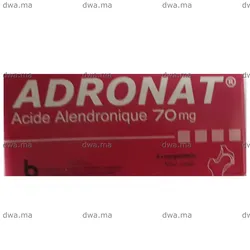
Table of Contents
Package leaflet: Information for the patient
ADRONAT 10 mg tablets
alendronic acid
Please read this leaflet carefully before taking this medicine because it contains
important information for you.
- Keep this leaflet. You may need to read it again.
- If you have any questions, ask your doctor or pharmacist.
- This medicine has been prescribed for you only. Do not give it to others, even if their symptoms are the same as yours, because it could be harmful.
- If you experience any side effect, including those not listed in this leaflet, talk to your doctor or pharmacist. See section 4.
Contents of this leaflet:
- What Adronat is and what it is used for
- What you need to know before taking Adronat
- How to take Adronat
- Possible side effects
- How to store Adronat
- Contents of the pack and other information
1. What is Adronat and what is it used for
What is Adronat
Adronat contains the active substance alendronic acid and belongs to a group of
medicines called bisphosphonates, which act on bone structure and density
(mineralization).
What is Adronat used for
Adronat is used to treat a disease that causes bones to become weak and more likely to break
(osteoporosis) in men and in postmenopausal women.
Adronat is also used in men and women for the treatment and prevention
of osteoporosis caused by a specific class of medicines used to treat inflammation, called glucocorticoids.
What is osteoporosis?
Osteoporosis is a disease that makes bones weaker, eventually leading to fractures. During menopause, the ovaries stop producing female hormones, oestrogens, which help maintain a woman’s healthy skeleton. As a result, bone tissue is lost and bones become more fragile. The risk of osteoporosis is greater the earlier a woman reaches menopause.
Osteoporosis can also occur in men. Glucocorticoids can also cause loss of bone tissue and osteoporosis in both men and women.
In its early stages, osteoporosis usually causes no symptoms. However, if left untreated, fractures may occur. Although fractures are typically painful, fractures of the spinal bones may go unnoticed until a decrease in height becomes apparent. Fractures can occur during normal daily activities, such as lifting weights, or from minor trauma that would not normally cause a fracture in healthy bone. Fractures most commonly occur in the hip, spine, or wrist and can be not only painful but may also lead to significant deformities and disability, such as increased curvature of the back (kyphosis) and limitations in movement.
2. What you need to know before taking Adronat
Do not take Adronat
- if you are allergic to the active substance or to any of the other ingredients of this medicine (listed in section 6)
- if you have problems with your oesophagus (the tube connecting the mouth to the stomach) that delay its emptying, such as narrowing (stenosis) or impaired function (achalasia)
- if you are unable to remain upright (standing or sitting) for at least 30 minutes
- if you have low levels of calcium in your blood (hypocalcaemia)
- if you have severe kidney problems (severe renal insufficiency)
- if you are pregnant or breastfeeding
If you think any of these apply to you, do not take the tablets. Consult your doctor and follow their instructions.
Warnings and precautions
Talk to your doctor or pharmacist before taking Adronat
Inform your doctor before starting Adronat:
- if you have difficulty swallowing (dysphagia), or if you have gastrointestinal problems such as oesophageal diseases, inflammation of the stomach (gastritis) or of the first part of the intestine (duodenitis). If you have previously suffered from severe gastric or duodenal conditions such as ulcers, gastric or intestinal bleeding within the past year, or have undergone surgery on the stomach or oesophagus, since Adronat may be irritating and could potentially worsen underlying gastrointestinal disease.
- if you have been diagnosed with a condition involving changes in the cells lining the lower part of the oesophagus (Barrett's oesophagus)
- if you have cancer
- if you are undergoing chemotherapy, radiotherapy, or treatment with medicines that inhibit angiogenesis (the formation of new blood vessels from pre-existing ones)
- if you are taking medicines for inflammation (glucocorticoids)
- if you smoke, as smoking may increase the risk of dental problems
You may be advised to have a dental examination (odontological check-up) before starting treatment with Adronat.
It is important to maintain good oral hygiene during treatment with Adronat. You should have regular dental check-ups throughout treatment and contact your doctor or dentist if you experience any mouth or dental problems such as tooth loss, pain, or swelling.
If you are under the care of a dentist or are scheduled for a dental procedure or tooth extraction, inform the dentist that you are taking Adronat.
Stop taking Adronat and contact your doctor immediately if you experience difficulty swallowing (dysphagia), pain when swallowing (odynophagia), chest pain (retrosternal pain), or the onset or worsening of burning sensations in the chest (heartburn).
If Adronat is not taken correctly or if you continue taking it after experiencing these symptoms, the risk of serious adverse effects on the oesophagus may increase.
It is very important that you understand how to take this medicine correctly (see section 3).
Treatment with Adronat should only be initiated after your doctor has confirmed that the cause of your osteoporosis is a deficiency in female hormones (oestrogens) and/or age-related factors, having ruled out other causes.
Adronat may irritate the mucosa of the upper gastrointestinal tract.
The risk of serious adverse effects on the oesophagus appears to be higher in patients who do not take Adronat correctly or who continue taking it after experiencing symptoms of oesophageal irritation.
In patients treated with Adronat, adverse effects affecting the oesophagus such as irritation (oesophagitis), lesions (ulcers and erosions), rarely followed by narrowing or perforation, have been reported. Some of these adverse effects have been severe and required hospitalisation.
In cancer patients receiving bisphosphonates, mainly by intravenous route, death of bone tissue in the jaw (osteonecrosis) has been reported, usually associated with tooth extraction or local infection (including osteomyelitis). Many of these patients were also receiving chemotherapy and corticosteroids. Osteonecrosis of the jaw has also been reported in patients with osteoporosis taking oral bisphosphonates.
Bone, joint, and muscle pain have been reported in patients treated with bisphosphonates. Since the medicine has been marketed, these symptoms have rarely been severe or disabling (see section 4). The onset of symptoms has varied from one day to several months after starting treatment. In most patients, discontinuation of treatment led to improvement of symptoms. Upon re-administration of the same medicine or another from the same class, some patients experienced recurrence of symptoms.
Unusual femoral fractures have been reported, primarily in patients on long-term therapy with this class of drugs for osteoporosis. These fractures occur spontaneously or after minor trauma, and some patients report thigh or groin pain.
X-rays often reveal signs of these fractures (stress fractures) weeks or months before a complete femoral fracture occurs.
Fractures often occur in both femurs (bilateral fractures); therefore, in patients treated with bisphosphonates who have sustained a femoral fracture, the other femur should be examined.
Delayed healing of these fractures has also been reported. In patients with suspected femoral fracture, your doctor will assess whether to discontinue bisphosphonate therapy, weighing the benefits against the risks.
During treatment with this type of medicine, you should report any thigh, hip, or groin pain to your doctor. If you experience such symptoms, you should be evaluated to rule out the presence of a femoral fracture.
Since the medicine has been marketed, rare cases of severe skin reactions have been reported, including skin peeling (Stevens-Johnson syndrome) and skin decomposition (toxic epidermal necrolysis).
Before starting Adronat treatment and periodically thereafter, your doctor may check your blood calcium levels (calcemia). Low blood calcium levels (hypocalcaemia) must be corrected before starting Adronat therapy (see section 2). Your doctor should monitor blood calcium levels and symptoms of hypocalcaemia during Adronat treatment and also manage other disorders such as vitamin D deficiency.
During treatment with Adronat, rare cases of low calcium levels (hypocalcaemia), occasionally severe, have occurred, particularly in patients with conditions that may predispose to hypocalcaemia, such as low parathyroid hormone production (hypoparathyroidism), vitamin D deficiency, or malabsorption of calcium, especially in patients taking glucocorticoids, which reduce calcium absorption. Adequate intake of calcium and vitamin D is recommended in patients receiving glucocorticoids.
Children and adolescents
Adronat is not recommended for children under 18 years of age.
Other medicines and Adronat
Inform your doctor or pharmacist if you are taking, have recently taken, or might take any other medicines, including those without a prescription.
Calcium supplements, antacids, and certain oral medicines may interfere with the absorption of Adronat if taken at the same time. At least 30 minutes must pass after taking Adronat before taking any other medicine (see instructions in section 3 "How to take Adronat").
Some medicines called NSAIDs (e.g., aspirin or ibuprofen), used to treat joint and bone inflammation (rheumatism) or long-term pain, may cause gastrointestinal disturbances. Therefore, caution should be exercised when taking these medicines together with Adronat.
Adronat with food and drink
Food and drinks (including mineral water) may reduce the effectiveness of Adronat if taken at the same time. It is therefore important to follow the instructions provided in section 3 "How to take Adronat".
Pregnancy and breastfeeding
If you are pregnant, think you may be pregnant, are planning to become pregnant, or are breastfeeding, consult your doctor or pharmacist before taking this medicine.
Adronat is indicated only for postmenopausal women.
Driving and using machines
During treatment with Adronat, adverse effects (including blurred vision, dizziness, and severe bone, muscle, or joint pain) have been reported that may affect your ability to drive or operate machinery. Individual responses to Adronat may vary (see section 4).
Adronat contains lactose
If your doctor has diagnosed you with an intolerance to certain sugars, contact them before taking this medicine.
3. How to take Adronat
Take this medicine exactly as directed by your doctor or pharmacist. If you have any doubts, consult your doctor or pharmacist.
The recommended dose is 1 tablet of 10 mg once daily.
The optimal duration of treatment for osteoporosis with this medicine has not been established.
Your doctor will periodically evaluate the optimal duration of treatment based on the benefits obtained versus the potential risks of Adronat, particularly after 5 or more years of use.
Adronat must be taken at least 30 minutes before any food, drink, or other medicine of the day, and only with tap water. Other drinks (including mineral water), food, and certain medicines may reduce the absorption of Adronat (see section 2).
Adronat is effective only when taken on an empty stomach.
To facilitate gastric release and reduce the possibility of local irritation or adverse effects, including in the oesophagus:
- take the Adronat tablet in the morning, only after getting up from bed to start the day, with a full glass of tap water (not mineral water, at least 200 ml);
- swallow the Adronat tablet whole. Do not chew, crush, or allow the tablet to dissolve in the mouth, due to the potential risk of injury to the mouth and pharynx;
- do not lie down until you have eaten something, and ensure that at least 30 minutes have passed since taking the Adronat tablet before lying down;
- do not take Adronat at bedtime or before getting up from bed in the morning;
- do not take Adronat with coffee or tea;
- do not take Adronat with fruit juices or milk;
- if you experience difficulty or pain when swallowing, chest pain, or new or worsening stomach burning, stop taking Adronat and contact your doctor immediately.
Your doctor may recommend calcium and vitamin D supplements if your dietary intake of these nutrients is inadequate (see section 2).
Use in children and adolescents
Adronat is not recommended for children under 18 years of age.
Use in the elderly
No dose adjustment is necessary for elderly patients.
Use in patients with renal impairment
No dose adjustment is required in patients with mild to moderate renal impairment (creatinine clearance greater than 35 ml/min). Adronat must not be administered in patients with severe renal impairment (creatinine clearance <35 ml/min), as there is insufficient information available.
If you take more Adronat than you should
If you accidentally take too many tablets, drink a glass of milk or take antacids and contact your doctor immediately or go to the nearest hospital. Do not induce vomiting and do not lie down to avoid oesophageal irritation.
If you forget to take Adronat
If you forget to take a dose of Adronat, take one tablet the morning after the day you remembered.
Do not take a double dose to make up for the missed tablet. Resume your regular daily dosing schedule as before. If in doubt, consult your doctor.
If you stop taking Adronat
It is important to continue taking Adronat for as long as prescribed by your doctor. Adronat is effective in the treatment of osteoporosis only if the tablets are taken continuously.
If you have any questions about how to use this medicine, consult your doctor or pharmacist.
4. Possible side effects
Like all medicines, this medicine can cause side effects, although not everybody gets them.
The following terms are used to describe how often the side effects have been reported:
Very common (occurs in at least 1 out of 10 patients treated)
Common (occurs in at least 1 out of 100 and less than 1 out of 10 patients treated)
Uncommon (occurs in at least 1 out of 1,000 and less than 1 out of 100 patients treated)
Rare (occurs in at least 1 out of 10,000 and less than 1 out of 1,000 patients treated)
Very rare (occurs in less than 1 out of 10,000 patients treated).
Very common:
- bone, muscle or joint pain, often of severe intensity
- mild and transient decreases in blood calcium and phosphate levels, usually within normal limits
Common:
- headache, dizziness
- vertigo
- abdominal pain, stomach discomfort or belching after meals, constipation, feeling of fullness or bloating in the stomach, diarrhoea, flatulence (intestinal gas), heartburn, difficulty swallowing, pain when swallowing, oesophageal ulcers causing chest pain, burning sensation or difficulty or pain when swallowing
- hair loss (alopecia), itching
- joint swelling
- fatigue, swelling of the hands or legs (peripheral oedema)
Uncommon:
- altered taste (dysgeusia)
- blurred vision, eye pain or redness. Inflammation of the eye (uveitis, scleritis, or episcleritis)
- nausea, vomiting, irritation or inflammation of the oesophagus or stomach, black or dark stools
- skin rash, skin redness
- flu-like symptoms such as muscle pain, general feeling of discomfort, and sometimes fever, usually at the beginning of treatment
Rare:
- allergic reactions such as hives, swelling of the face, lips, tongue and/or throat, which may cause difficulty in breathing and swallowing
- symptoms due to low levels of calcium in the blood including muscle cramps or spasms and/or tingling in the fingers or around the mouth
- narrowing of the oesophagus; mouth ulcers when tablets are chewed or sucked; stomach or peptic ulcers (sometimes severe or with bleeding)
- skin rash worsened by exposure to sunlight, severe skin reactions such as skin shedding (Stevens-Johnson syndrome) and skin decomposition (toxic epidermal necrolysis)
- mouth pain and/or pain in the jaw, swelling or sores inside the mouth, numbness or a feeling of heaviness in the jaw, or tooth loss. These may be signs of damage to the jawbone (osteonecrosis), usually associated with delayed healing and infection, often following dental extraction. Contact your doctor or dentist if you experience these symptoms
- rarely, an unusual fracture of the femur may occur, particularly in patients treated for a long time for osteoporosis. Contact your doctor if you experience pain, weakness or discomfort in the thigh, hip or groin, as this may be an early sign of a possible femur fracture
Very rare:
- contact your doctor if you experience ear pain, ear discharge and/or ear infection. These episodes could be symptoms of bone damage in the ear.
Reporting of side effects
If you experience any side effect, including those not listed in this leaflet, talk to your doctor or pharmacist.
You can also report side effects directly via the national reporting system at: www.agenziafarmaco.it/it/responsabili
By reporting side effects, you can help provide more information on the safety of this medicine.
5. How to store Adronat
Keep this medicine out of the sight and reach of children.
Do not use this medicine after the expiry date stated on the carton and on the blister
after EXP.
The expiry date refers to the last day of that month.
Do not dispose of any medicine via wastewater or household waste. Ask your pharmacist
how to dispose of medicines no longer required. This will help protect the environment.
6. Package contents and other information
What Adronat contains
- The active substance is alendronic acid, sodium salt 13.05 mg, corresponding to alendronic acid 10 mg.
- The other components are: microcrystalline cellulose, anhydrous lactose, sodium croscarmellose, magnesium stearate, carnauba wax.
Description of the appearance of Adronat and contents of the pack
Adronat is presented as tablets.
The tablets are packaged in opaque PVC/aluminum blisters.
Each blister contains 14 tablets.
Marketing Authorization Holder and Manufacturer
Marketing Authorization Holder
NEOPHARMED GENTILI S.r.l.
Via S. Giuseppe Cottolengo 15, 20143 Milan
Manufacturer responsible for batch release
Doppel Farmaceutici S.r.l.
Via Volturno, 48 – Quinto De’ Stampi
20089 Rozzano (Milan)
Patient information leaflet
ADRONAT 70 mg tablets
alendronic acid
Please read this entire leaflet carefully before taking this medicine, as it contains
important information for you.
- Keep this leaflet. You may need to read it again.
- If you have any questions, consult your doctor or pharmacist.
- This medicine has been prescribed for you only. Do not give it to others, even if their symptoms are the same as yours, as it could be harmful.
- If you experience any side effects, including those not listed in this leaflet, consult your doctor or pharmacist. See section 4.
- It is especially important to understand the information contained in section 3 before taking this medicine.
Contents of this leaflet:
- What ADRONAT is and what it is used for
- What you need to know before taking ADRONAT
- How to take ADRONAT
- Possible side effects
- How to store ADRONAT
- Contents of the pack and other information
1. What ADRONAT is and what it is used for
What is ADRONAT?
ADRONAT is a tablet containing the active substance alendronic acid (commonly called
alendronate) and belongs to a group of non-hormonal medicines known as bisphosphonates.
ADRONAT prevents the loss of bone tissue that occurs in women after menopause and
promotes bone rebuilding. It reduces the risk of vertebral and hip fractures.
What is ADRONAT used for?
Your doctor has prescribed ADRONAT for the treatment of osteoporosis. It reduces the risk of
vertebral and hip fractures.
ADRONAT is a treatment to be taken once a week.
What is osteoporosis?
Osteoporosis is thinning and weakening of the bones. It is common in women after
menopause. During menopause, the ovaries stop producing female hormones, oestrogens, which
help maintain a woman's healthy skeleton. As a result, bone tissue is lost and the bone becomes weaker. The risk of osteoporosis is greater the earlier a woman reaches menopause.
In the early stages, osteoporosis usually causes no symptoms. However, if left untreated, fractures may occur. Although fractures are usually painful, fractures of the bones in the spine may go unnoticed until they result in a loss of height. Fractures may occur during normal daily activities such as lifting weights, or with minor trauma that would not cause fractures in normal bone. Fractures typically occur in the hip, spine or wrist and can be not only painful but may lead to significant deformity and disability, such as curvature of the back (dowager's hump) and limitations in movement.
How can osteoporosis be treated?
Along with treatment with ADRONAT, your doctor may recommend lifestyle changes to improve the condition, such as:
Stopping smoking Smoking appears to increase the rate at which bone tissue is lost and,
therefore, may increase the risk of fractures.
Physical exercise Like muscles, bones need physical activity to stay strong and
healthy. Consult your doctor before starting any exercise
program.
Balanced diet Your doctor may provide information on diet or the possible need for
dietary supplements (especially calcium and vitamin D).
2. What you need to know before taking ADRONAT
Do not take ADRONAT:
- if you are allergic to alendronic acid or to any of the other ingredients of this medicine (listed in section 6);
- if you have certain problems with your esophagus (the tube connecting your mouth to your stomach), such as narrowing or difficulty swallowing;
- if you are unable to stand or sit upright for at least 30 minutes;
- if your doctor has told you that you have low levels of calcium in your blood.
If you think any of these apply to you, do not take the tablets. Consult your doctor and follow the advice given.
Warnings and precautions
Talk to your doctor or pharmacist before taking ADRONAT if:
- you have kidney problems;
- you have or have recently had difficulty swallowing or gastrointestinal problems;
- your doctor has told you that you have Barrett’s esophagus (a condition associated with changes in the cells lining the lower part of the esophagus);
- you have been diagnosed with a mineral malabsorption disorder in the stomach or intestine (malabsorption syndrome);
- you have been told that you have low levels of calcium in your blood;
- you have poor dental health, gum disease, are scheduled for a tooth extraction, or do not have regular dental check-ups;
- you have cancer;
- you are undergoing chemotherapy or radiotherapy;
- you are taking angiogenesis inhibitors (such as bevacizumab or thalidomide) used in cancer treatment;
- you are taking corticosteroids (such as prednisone or dexamethasone) used to treat conditions such as asthma, rheumatoid arthritis, and severe allergies;
- you are or have been a smoker (as this may increase the risk of dental problems).
You may be advised to have a dental examination before starting treatment with ADRONAT.
It is important to maintain good oral hygiene during treatment with ADRONAT. You should have regular dental check-ups throughout treatment and contact your doctor or dentist if you experience any mouth or dental problems such as tooth loss, pain, or swelling.
Irritation, inflammation, or ulceration of the esophagus (the tube connecting the mouth to the stomach) may occur, often with symptoms such as chest pain, burning in the upper stomach, difficulty or pain when swallowing, especially if patients do not drink a full glass of water and/or lie down within the first 30 minutes after taking ADRONAT. These side effects may worsen if patients continue taking ADRONAT after experiencing these symptoms.
Children and adolescents
ADRONAT must not be given to children and adolescents under 18 years of age.
Other medicines and ADRONAT
Tell your doctor or pharmacist if you are taking, have recently taken, or might take any other medicines.
Calcium supplements, antacids, and certain oral medications may interfere with the absorption of ADRONAT if taken at the same time. Therefore, it is important to follow the instructions provided in section 3.
Some medicines used for rheumatism or long-term pain called NSAIDs (e.g., acetylsalicylic acid or ibuprofen) may cause gastrointestinal problems. Therefore, caution should be used when taking these medicines together with ADRONAT.
ADRONAT with food and drink
Food and drinks (including mineral water) may reduce the effectiveness of ADRONAT if taken at the same time. Therefore, it is important to follow the instructions provided in section 3.
Pregnancy and breastfeeding
ADRONAT is indicated only for postmenopausal women. Do not take ADRONAT if you are pregnant or suspect you may be pregnant, or if you are breastfeeding.
Driving and using machines
With ADRONAT, side effects have been reported (e.g., blurred vision, dizziness, and severe bone, muscle, or joint pain) that may affect your ability to drive or operate machinery (see section 4).
ADRONAT contains lactose
If your doctor has diagnosed you with an intolerance to certain sugars, contact him or her before taking this medicine.
ADRONAT contains sodium
This medicine contains less than 1 mmol (23 mg) of sodium per tablet, i.e., essentially “sodium-free.”
3. How to take ADRONAT
Take this medicine exactly as directed by your doctor or pharmacist. If you have any doubts, consult your doctor or pharmacist.
Take one ADRONAT tablet once a week.
Carefully follow the instructions below:
- Choose the day of the week that best fits your routine. Take one ADRONAT tablet once a week on the chosen day.
It is very important that you follow steps 2), 3), 4), and 5) to help the ADRONAT tablet pass quickly into the stomach and help reduce the risk of irritating the oesophagus (the tube connecting the mouth to the stomach). - After getting up in the morning and before taking any food, drink, or other medicines, swallow the ADRONAT tablet whole with a full glass of tap water only (not mineral water) (at least 200 mL), to ensure adequate absorption of ADRONAT.
- Do not take with mineral water (still or sparkling).
- Do not take with coffee or tea.
- Do not take with juices or milk.
Do not crush, chew, or allow the tablet to dissolve in the mouth, as this may lead to the formation of ulcers in the oral cavity.
3) Do not lie down – remain in an upright position (sitting, standing, or walking) for at least 30 minutes after swallowing the tablet. Do not lie down until you have eaten something.
4) Do not take ADRONAT at bedtime or just before getting up in the morning.
5) If you experience difficulty or pain when swallowing, chest pain, or new or worsening heartburn, stop taking ADRONAT and contact your doctor.
6) After swallowing the ADRONAT tablet, wait at least 30 minutes before eating, drinking, or taking any other medicines, including antacids, calcium supplements, and vitamins. ADRONAT is effective only when taken on an empty stomach.
If you take more ADRONAT than you should
If you accidentally take too many tablets, drink a full glass of milk and contact your doctor immediately. Do not induce vomiting and do not lie down.
If you forget to take ADRONAT
If you forget to take your tablet, simply take one ADRONAT tablet the following morning. DO NOT take two tablets on the same day. Then resume taking your tablet on your chosen day of the week.
If you stop taking ADRONAT
It is important to continue taking ADRONAT for as long as prescribed by your doctor. Since it is not known how long you should take ADRONAT, you should periodically consult your doctor to assess whether continued treatment with this medicine is still appropriate for you.
An instruction card is included in the ADRONAT package. It contains important information reminding you how to take ADRONAT correctly.
If you have any doubts about how to use this medicine, consult your doctor or pharmacist.
4. Possible side effects
Like all medicines, this medicine can cause side effects, although not everyone gets them.
Go to the doctor immediately if you notice any of the following side effects, which may be serious and for which you may need urgent medical treatment:
Common (may affect up to 1 in 10 people):
- heartburn; difficulty swallowing; pain when swallowing; oesophageal ulcers (the tube connecting the mouth to the stomach), which may cause chest pain, heartburn, or difficulty or pain when swallowing.
Rare (may affect up to 1 in 1,000 people):
- allergic reactions such as hives; swelling of the face, lips, tongue and/or throat, possibly causing difficulty breathing or swallowing; severe skin reactions,
- mouth pain, and/or jaw pain, swelling or ulcers inside the mouth, numbness or a sensation of heaviness in the jaw, or tooth loss. These could be signs of bone damage in the jaw (osteonecrosis), usually associated with delayed healing and infection, often following dental extraction. Contact your doctor and dentist if you experience these symptoms,
- rarely, an unusual femur fracture may occur, particularly in patients receiving long-term treatment for osteoporosis. Contact your doctor if you experience pain, weakness or discomfort in the thigh, hip or groin, as this could be an early sign of a possible femur fracture,
- severe bone, muscle and/or joint pain.
Other side effects include
Very common (may affect more than 1 in 10 people):
- bone, muscle and/or joint pain, which is sometimes severe.
Common (may affect up to 1 in 10 people):
- joint swelling,
- abdominal pain; stomach discomfort or belching after meals; constipation; feeling of fullness or bloating in the stomach; diarrhoea, intestinal gas,
- hair loss; itching,
- headache; dizziness,
- fatigue; swelling of the hands or legs.
Uncommon (may affect up to 1 in 100 people):
- nausea; vomiting,
- irritation or inflammation of the oesophagus (the tube connecting the mouth to the stomach) or stomach,
- black or tarry stools,
- blurred vision; eye pain or redness,
- skin rash; skin redness,
- transient flu-like symptoms such as muscle aches, general malaise, and sometimes fever, usually at the beginning of treatment,
- taste disturbances.
Rare (may affect up to 1 in 1,000 people):
- symptoms due to low calcium levels in the blood, including muscle cramps or spasms and/or tingling in the fingers or around the mouth,
- peptic or stomach ulcers (sometimes severe or with bleeding),
- narrowing of the oesophagus (the tube connecting the mouth to the stomach),
- skin rash worsened by exposure to sunlight,
- mouth ulcers.
Very rare (may affect up to 1 in 10,000 people):
- consult your doctor if you experience ear pain, ear discharge and/or ear infection. These episodes could be signs of bone damage in the ear.
Reporting of side effects
If you get any side effects, including those not listed in this leaflet, talk to your doctor or pharmacist. You can also report side effects directly via the national reporting system at: www.aifa.gov.it/content/segnalazioni-reazioni-avverse.
By reporting side effects, you can help provide more information on the safety of this medicine.
5. How to store ADRONAT
Keep this medicine out of the sight and reach of children.
Do not use this medicine after the expiry date stated on the carton and blister after
Exp. The expiry date refers to the last day of that month.
This medicine does not require any special storage conditions.
Do not dispose of medicines via wastewater or household waste. Ask your pharmacist how to
dispose of medicines you no longer use. This will help protect the environment.
6. Package contents and other information
What ADRONAT contains
The active substance is alendronic acid. Each tablet contains 70 mg of alendronic acid (as sodium trihydrate).
The other components are microcrystalline cellulose (E460), anhydrous lactose (see section 2),
sodium croscarmellose and magnesium stearate (E572).
Description of the appearance of ADRONAT and contents of the pack
ADRONAT tablets are white, oval-shaped tablets, with a bone outline engraved on one side and "31" on the other.
The tablets are supplied in aluminum blisters packed in cartons in the following pack sizes: 2, 4, 8, 12 or 40 tablets.
Not all pack sizes may be marketed.
Marketing Authorization Holder and Manufacturer
Marketing Authorization Holder
NEOPHARMED GENTILI S.p.A.
Via San Giuseppe Cottolengo, 15 – 20143 Milan, Italy
Manufacturer
DOPPEL Farmaceutici S.r.l
Via Volturno, 48
Quinto De’ Stampi
20089 – Rozzano (MI), Italy
This medicinal product is authorized in the European Economic Area countries under the following names:
Italy: ADRONAT 70 mg tablets