Zykadia 150 mg hard capsules
Spain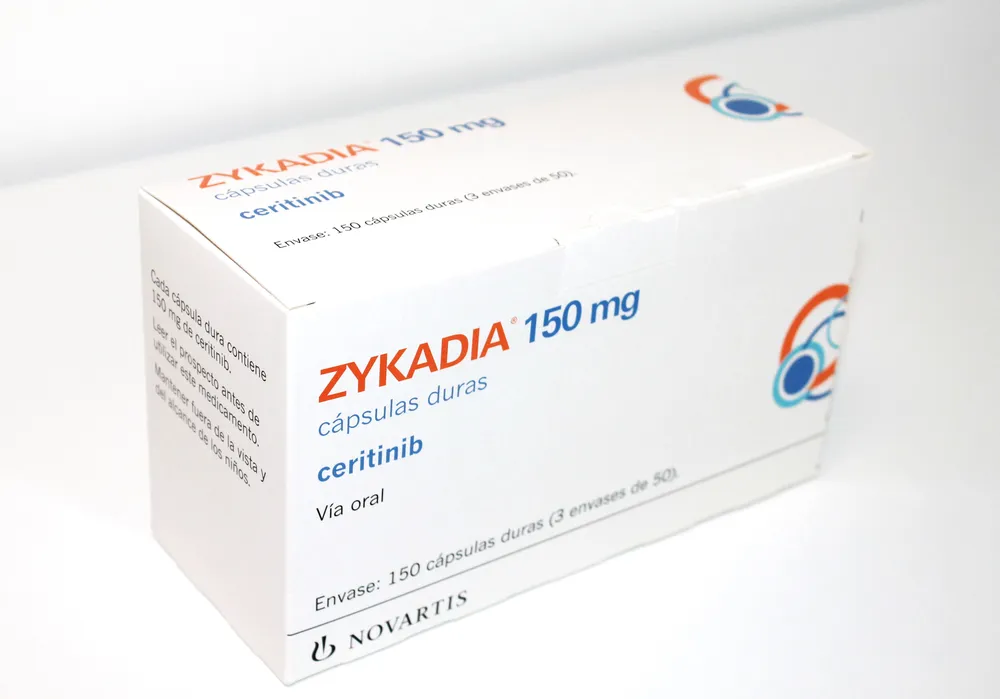
Table of Contents
Package leaflet: Information for the user
Introduction
Package leaflet: information for the patient
Zykadia 150 mg hard capsules
ceritinib
Read the entire leaflet carefully before starting to take this medicine, because it contains important information for you.
- Keep this leaflet, as you may need to read it again.
- If you have any questions, consult your doctor or pharmacist.
- This medicine has been prescribed for you only, and you should not give it to other people, even if they have the same symptoms as you, because it may harm them.
- If you experience any adverse effects, consult your doctor or pharmacist, even if they are adverse effects not listed in this leaflet. See section 4.
Contents of the leaflet
- What Zykadia is and what it is used for
- What you need to know before taking Zykadia
- How to take Zykadia
- Possible side effects
- How to store Zykadia
- Contents of the pack and other information
1. What Zykadia is and what it is used for
What Zykadia is
Zykadia is a cancer medicine that contains the active substance ceritinib. It is used to treat adult patients with advanced stages of a type of lung cancer called non-small cell lung cancer (NSCLC). Zykadia is only given to patients whose disease is caused by a defect in a gene called ALK (anaplastic lymphoma kinase).
How Zykadia works
In patients with ALK abnormalities, an abnormal protein is produced that stimulates the growth of cancer cells. Zykadia blocks the action of this abnormal protein, thereby slowing down the growth and spread of NSCLC.
If you have any questions about how Zykadia works or why this medicine has been prescribed for you, consult your doctor or pharmacist.
2. What you need to know before starting Zykadia
Do not take Zykadia
- if you are allergic to ceritinib or to any of the other ingredients of this medicine (listed in section 6).
Warnings and precautions
Talk to your doctor or pharmacist before starting Zykadia:
- if you have liver problems.
- if you have lung problems or difficulty breathing.
- if you have heart problems, including a slow heart rate, or if the results of an electrocardiogram (ECG) have shown an abnormality in the electrical activity of your heart known as "prolonged QT interval".
- if you have diabetes (high blood sugar).
- if you have pancreas problems.
- if you are currently taking steroids.
Immediately inform your doctor or pharmacist if you experience any of the following signs or symptoms during treatment with Zykadia:
- fatigue, itching of the skin, yellowing of the skin or the white part of the eye, nausea (feeling sick), vomiting, loss of appetite, pain in the right side of the abdomen (stomach), dark or brown-colored urine, bleeding or bruising more easily than normal. These may be signs or symptoms of liver problems.
- new or worsening cough with or without mucus, fever, chest pain, difficulty breathing or shortness of breath. These may be symptoms of lung problems.
- chest pain or discomfort, changes in heart rhythm (fast or slow), fainting, dizziness, bluish discoloration of the lips, difficulty breathing, swelling of the lower limbs or skin. These may be signs or symptoms of heart problems.
- severe diarrhea, nausea, or vomiting. These are symptoms of gastrointestinal problems.
- excessive thirst or increased frequency of urination. These may be symptoms of high blood sugar.
Your doctor may need to adjust your treatment or temporarily or permanently discontinue Zykadia.
Blood tests during treatment with Zykadia
Your doctor should perform blood tests before starting treatment, every 2 weeks during the first three months of treatment, and thereafter once a month. The purpose of these tests is to monitor your liver function. Your doctor should also perform blood tests to check the function of your pancreas and your blood sugar levels before starting Zykadia and regularly during treatment.
Children and adolescents
The use of Zykadia is not recommended in children and adolescents under 18 years of age.
Other medicines and Zykadia
Tell your doctor or pharmacist if you are taking, have recently taken, or might need to take any other medicines, including over-the-counter medicines such as vitamins or herbal supplements, as they may interact with Zykadia. It is especially important that you inform them about the following medicines.
Medicines that may increase the risk of Zykadia side effects:
- medicines used to treat HIV/AIDS (e.g., ritonavir, saquinavir).
- medicines used to treat infections. These include antifungal medicines (such as ketoconazole, itraconazol, voriconazole, posaconazole) and medicines used to treat certain bacterial infections (antibiotics such as telithromycin).
The following medicines may reduce the effectiveness of Zykadia:
- St. John’s wort, a herbal medicine used to treat depression.
- medicines used to prevent seizures or fits (antiepileptics such as phenytoin, carbamazepine, or phenobarbital).
- medicines used to treat tuberculosis (e.g., rifampicin, rifabutin).
Zykadia may increase the side effects associated with the following medicines:
- medicines used to treat irregular heart rhythm or other heart problems (e.g., amiodarone, disopyramide, procainamide, quinidine, sotalol, dofetilide, ibutilide, and digoxin).
- medicines used to treat stomach problems (e.g., cisapride).
- medicines used to treat mental health conditions (e.g., haloperidol, droperidol, pimozide).
- medicines used to treat depression (e.g., nefazodone).
- midazolam, a medicine used to treat acute seizures or as a sedative before or during surgery or medical procedures.
- warfarin and dabigatran, medicines used to prevent blood clots.
- diclofenac, a medicine used to treat pain and joint inflammation.
- alfentanil and fentanyl, medicines used to treat severe pain.
- cyclosporine, sirolimus, and tacrolimus, medicines used in organ transplantation to prevent organ rejection.
- dihydroergotamine and ergotamine, medicines used to treat migraine.
- domperidone, a medicine used to treat nausea and vomiting.
- moxifloxacin and clarithromycin, medicines used to treat bacterial infections.
- methadone, a medicine used to treat pain and for opioid dependence treatment.
- chloroquine and halofantrine, medicines used to treat malaria.
- topotecan, a medicine used to treat certain types of cancer.
- colchicine, a medicine used for gout.
- pravastatin and rosuvastatin, medicines used to lower cholesterol levels.
- sulfasalazine, a medicine used to treat inflammatory bowel disease or rheumatoid arthritis.
Consult your doctor or pharmacist if you are unsure whether your medicine is one of those listed above.
During treatment with Zykadia, these medicines should be used with caution or you may need to avoid them. If you are taking any of these, your doctor may need to prescribe an alternative medicine.
You should also inform your doctor if you are already taking Zykadia and are prescribed a new medicine that you have not taken before in combination with Zykadia.
Oral contraceptives
If you take Zykadia while using oral contraceptives, they may not be effective.
Taking Zykadia with food and drink
Do not eat grapefruit or drink grapefruit juice during treatment. It may increase the amount of Zykadia in your blood to a harmful level.
Pregnancy and breastfeeding
You should use an effective method of contraception during treatment with Zykadia and for 3 months after stopping treatment. Discuss with your doctor which contraceptive methods may be suitable for you.
The use of Zykadia during pregnancy is not recommended unless the potential benefit outweighs the potential risk to the baby. If you are pregnant, think you may be pregnant, or plan to become pregnant, consult your doctor before taking this medicine. Your doctor will discuss with you the potential risks of taking Zykadia during pregnancy.
Zykadia must not be used during breastfeeding. Together with your doctor, you will decide whether to breastfeed or take Zykadia. You must not do both.
Driving and using machines
You should exercise special caution when driving or operating machinery while taking Zykadia, as you may experience visual disturbances or fatigue.
Zykadia contains sodium
This medicine contains less than 1 mmol of sodium (23 mg) per capsule; essentially, it is "sodium-free".
3. How to take Zykadia
Follow exactly the instructions for using this medicine given by your doctor. If in doubt, consult your doctor again.
How much to take
The recommended dose is 450 mg (three capsules) taken once daily with food, although your doctor may change this recommendation if necessary. Your doctor will inform you exactly how many capsules you need to take. Do not change the dose without informing your doctor.
- Take Zykadia once daily at the same time each day, with food (for example, a snack or a full meal). If you are unable to eat while taking Zykadia, consult your doctor.
- You must swallow the capsules whole with water. Do not chew or crush them.
- If you vomit after swallowing the Zykadia capsules, do not take any additional capsules until your next scheduled dose.
How long to take Zykadia
- Continue taking Zykadia for as long as your doctor instructs.
- This is a long-term treatment, which may possibly last for months. Your doctor will monitor your condition to ensure the treatment is having the desired effect.
If you have any doubts about how long you should take Zykadia, consult your doctor or pharmacist.
If you take more Zykadia than you should
If you accidentally take too many capsules, or if someone else takes your medicine by accident, contact a doctor or hospital immediately. Medical treatment may be necessary.
If you forget to take Zykadia
What you should do if you forget to take a dose depends on how much time remains until your next dose:
- if your next dose is due in 12 hours or more, take the missed capsules as soon as you remember. Then continue with the next capsules at your usual time.
- if your next dose is due in less than 12 hours, do not take the missed capsules. Wait and take the next capsules at your usual time.
Do not take a double dose to make up for forgotten doses.
If you stop taking Zykadia
Do not stop treatment with this medicine before informing your doctor. If you have any other questions about the use of this medicine, ask your doctor.
4. Possible adverse effects
Like all medicines, this medicine can cause adverse effects, although not everyone will experience them.
STOP treatment with Zykadia and seek immediate medical help if you experience any of the following signs, which may be symptoms of an allergic reaction:
- Difficulty breathing or swallowing
- Swelling of the face, lips, tongue, or throat
- Intense itching of the skin, with red rash or bumps
Some adverse effects could be serious
If you experience any of the following adverse effects, inform your doctor or pharmacist immediately:
- Chest pain or discomfort, changes in heart rhythm (fast or slow), faintness, fainting, dizziness, bluish discoloration of the lips, difficulty breathing, swelling in the lower limbs or skin (possible signs or symptoms of heart problems)
- New or worsening cough, with or without mucus, fever, chest pain, breathing difficulties, wheezing (possible signs of lung problems)
- Fatigue, skin itching, yellowing of the skin or whites of the eyes, nausea or vomiting, loss of appetite, pain in the right side of the abdomen, dark or brown-colored urine, bleeding or bruising that occurs more easily than normal (possible signs of liver problems)
- Severe diarrhea, nausea, or vomiting
- Excessive thirst, increased frequency of urination (symptoms of high blood glucose levels)
- Severe pain in the upper abdomen (sign of inflammation of the pancreas, also known as pancreatitis)
Other possible adverse effects
The following adverse effects are also reported. If any of these effects become severe, inform your doctor or pharmacist.
Very common (may affect more than 1 in 10 people):
- Fatigue (tiredness and asthenia)
- Abnormal blood test results monitoring liver function (elevated levels of enzymes known as alanine aminotransferase and/or aspartate aminotransferase and/or gamma-glutamyl transferase and/or alkaline phosphatase in the blood, elevated bilirubin levels)
- Abdominal pain
- Decreased appetite
- Weight loss
- Constipation
- Rash
- Abnormal blood test results monitoring kidney function (elevated creatinine levels)
- Heartburn (possible sign of gastrointestinal tract disturbance)
- Reduction in the number of red blood cells, known as anemia
Common (may affect up to 1 in 10 people):
- Vision problems
- Low level of phosphate in the blood (detected in blood tests)
- High levels of enzymes called lipase and/or amylase in the blood (detected in blood tests)
- Markedly reduced urine output (possible risk of kidney problems)
Reporting of adverse effects
If you experience any adverse effect, talk to your doctor or pharmacist, even if it is a possible adverse effect not listed in this leaflet. You can also report them directly through the national reporting system detailed in Appendix V. By reporting adverse effects, you can help provide more information on the safety of this medicine.
5. Storage of Zykadia
- Keep this medicine out of the sight and reach of children.
- Do not use this medicine after the expiry date which is stated on the carton and blister after CAD and EXP. The expiry date refers to the last day of the month indicated.
- This medicine does not require any special storage temperature.
- Do not use this medicine if you notice any damage to the packaging or any signs of tampering.
Medicines should not be disposed of via wastewater or household waste. Ask your pharmacist how to dispose of medicines and packaging that you no longer need. This will help protect the environment.
6. Contents of the pack and other information
Composition of Zykadia
-
The active substance in Zykadia is ceritinib. Each hard capsule contains 150 mg of ceritinib.
-
The other components are:
-
Capsule contents: colloidal anhydrous silica; low-substituted hydroxypropylcellulose; sodium starch glycolate (type A) (see “Zykadia contains sodium” in section 2); magnesium stearate; microcrystalline cellulose.
-
Capsule cap: gelatin, indigotine (E132), and titanium dioxide (E171).
-
Printing ink: Shellac (bleached, wax-free) glaze 45%, black iron oxide (E172), propylene glycol, and 28% ammonium hydroxide.
Appearance of Zykadia and contents of the pack
Zykadia hard capsules have an opaque white body and an opaque blue cap, approximately 23.3 mm in length, with the text “LDK 150MG” printed on the cap and “NVR” on the body. They contain white to off-white powder.
The capsules are supplied in blister packs and available in pack sizes containing 40, 90, or 150 capsules (3 packs of 50). Not all pack sizes may be marketed in your country.
Marketing Authorization Holder
Novartis Europharm Limited
Vista Building
Elm Park, Merrion Road
Dublin 4
Ireland
Manufacturer
Novartis Farmacéutica, S.A.
Gran Via de les Corts Catalanes, 764
08013 Barcelona
Spain
Novartis Pharmaceuticals S.R.L.
Str. Livezeni nr. 7A
540472 Targu Mures
Romania
Novartis Pharma GmbH
Sophie-Germain-Strasse 10
90443 Nürnberg
Germany
For further information about this medicinal product, please contact the local representative of the Marketing Authorization Holder:
Belgium/Belgium/Belgium Novartis Pharma N.V. Tel/Tel: +32 2 246 16 11 | Lithuania SIA Novartis Baltics Lithuania Branch Tel: +370 5 269 16 50 |
| Luxembourg/Luxembourg Novartis Pharma N.V. Tel/Tel: +32 2 246 16 11 |
Czech Republic Novartis s.r.o. Tel: +420 225 775 111 | Hungary Novartis Hungária Kft. Tel.: +36 1 457 65 00 |
Denmark Novartis Healthcare A/S Tlf: +45 39 16 84 00 | Malta Novartis Pharma Services Inc. Tel: +356 2122 2872 |
Germany Novartis Pharma GmbH Tel: +49 911 273 0 | Netherlands Novartis Pharma B.V. Tel: +31 88 04 52 555 |
Estonia SIA Novartis Baltics Estonia Branch Tel: +372 66 30 810 | Norway Novartis Norge AS Tlf: +47 23 05 20 00 |
Greece Novartis (Hellas) S.A.E. Tel: +30 210 281 17 12 | Austria Novartis Pharma GmbH Tel: +43 1 86 6570 |
Spain Novartis Farmacéutica, S.A. Tel: +34 93 306 42 00 | Poland Novartis Poland Sp. z o.o. Tel.: +48 22 375 4888 |
France Novartis Pharma S.A.S. Tél: +33 1 55 47 66 00 | Portugal Novartis Farma - Produtos Farmacêuticos, S.A. Tel: +351 21 000 8600 |
Croatia Novartis Hrvatska d.o.o. Tel. +385 1 6274 220 | Romania Novartis Pharma Services Romania SRL Tel: +40 21 31299 01 |
Ireland Novartis Ireland Limited Tel: +353 1 260 12 55 | Slovenia Novartis Pharma Services Inc. Tel: +386 1 300 75 50 |
Iceland Vistor hf. Tel: +354 535 7000 | Slovakia Novartis Slovakia s.r.o. Tel: +421 2 5542 5439 |
Italy Novartis Farma S.p.A. Tel: +39 02 96 54 1 | Finland/Finland Novartis Finland Oy Puh/Tel: +358 (0)10 6133 200 |
Cyprus Novartis Pharma Services Inc. Tel: +357 22 690 690 | Sweden Novartis Sverige AB Tel: +46 8 732 32 00 |
Latvia SIA Novartis Baltics Tel: +371 67 887 070 |
Date of the most recent review of this leaflet:
Other sources of information
Detailed information on this medicine is available on the website of the European Medicines Agency: http://www.ema.europa.eu