Xelevia 100 mg film-coated tablets
Spain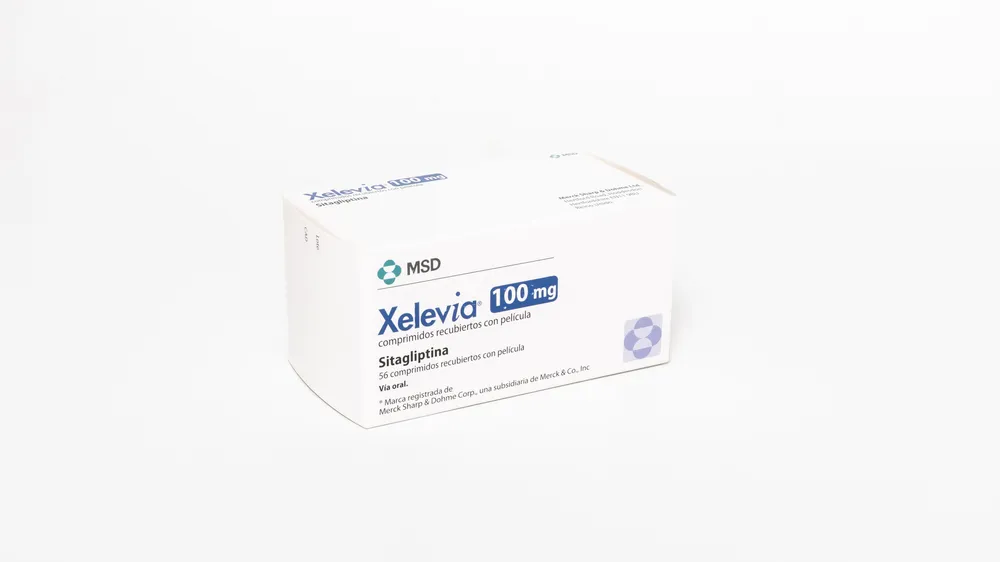
Table of Contents
- Patient Information Leaflet
- Introduction
- 1. What Xelevia is and what it is used for
- 2. What you need to know before taking Xelevia
- 3. How to take Xelevia
- Follow exactly the administration instructions for this medicine as indicated by your doctor. If in doubt, consult your doctor or pharmacist again.
- 4. Possible adverse effects
- 5. Xelevia storage
- 6. Contents of the pack and other information
Patient Information Leaflet
Introduction
Patient Information Leaflet
Xelevia 25 mg film-coated tablets
Xelevia 50 mg film-coated tablets
Xelevia 100 mg film-coated tablets
sitagliptin
Read the entire leaflet carefully before you start taking this medicine, as it contains important information for you.
- Keep this leaflet, as you may need to read it again.
- If you have any questions, ask your doctor, pharmacist, or nurse.
- This medicine has been prescribed for you only and must not be given to other people, even if they have the same symptoms as you, as it may harm them.
- If you experience any adverse effects, consult your doctor, pharmacist, or nurse, even if they are effects not listed in this leaflet. See section 4.
Contents of the leaflet
- What Xelevia is and what it is used for
- What you need to know before taking Xelevia
- How to take Xelevia
- Possible side effects
- How to store Xelevia
- Contents of the pack and other information
1. What Xelevia is and what it is used for
Xelevia contains the active substance sitagliptin, which belongs to a class of medicines called DPP-4 inhibitors (dipeptidyl peptidase-4 inhibitors) that reduce blood sugar levels in adult patients with type 2 diabetes mellitus.
This medicine helps increase insulin levels produced after a meal and reduces the amount of sugar produced by the body.
Your doctor has prescribed this medicine to help you lower your blood sugar, which is too high due to your type 2 diabetes. This medicine may be used alone or in combination with other blood sugar-lowering medicines (such as insulin, metformin, sulfonylureas, or glitazones) that you may already be taking for your diabetes, along with a diet and exercise program.
What is type 2 diabetes?
Type 2 diabetes is a condition in which your body does not produce enough insulin, and the insulin it does produce does not work as well as it should. Your body may also produce too much sugar. When this happens, sugar (glucose) builds up in the blood. This can lead to serious medical problems, such as heart disease, kidney disease, blindness, and amputation.
2. What you need to know before taking Xelevia
Do not take Xelevia
- if you are allergic to sitagliptin or to any of the other ingredients of this medicine (listed in section 6).
Warnings and precautions
Cases of inflammation of the pancreas (pancreatitis) have been reported in patients treated with Xelevia (see section 4).
If you develop blisters on the skin, this may be a sign of a condition called bullous pemphigoid. Your doctor may ask you to stop taking Xelevia.
Tell your doctor if you have or have had:
- a pancreatic disease (such as pancreatitis)
- gallstones, alcohol addiction, or very high blood levels of triglycerides (a type of fat). These medical conditions may increase your risk of developing pancreatitis (see section 4)
- type 1 diabetes
- diabetic ketoacidosis (a diabetes complication causing high blood sugar levels, rapid weight loss, nausea or vomiting)
- any kidney problems currently or in the past
- an allergic reaction to Xelevia (see section 4)
It is unlikely that this medicine will cause low blood sugar because it does not act when blood sugar levels are low. However, when this medicine is used in combination with a medicine containing a sulfonylurea or with insulin, low blood sugar (hypoglycemia) may occur. Your doctor may reduce the dose of your sulfonylurea or insulin medicine.
Children and adolescents
Children and adolescents under 18 years of age must not use this medicine. It is not effective in children and adolescents aged between 10 and 17 years. It is unknown whether this medicine is safe and effective when used in children under 10 years of age.
Other medicines and Xelevia
Tell your doctor or pharmacist if you are taking, have recently taken, or might need to take any other medicines.
In particular, tell your doctor if you are taking digoxin (a medicine used to treat irregular heartbeat and other heart problems). It may be necessary to monitor the level of digoxin in your blood if you are taking Xelevia.
Pregnancy and breastfeeding
If you are pregnant or breastfeeding, think you may be pregnant, or plan to become pregnant, consult your doctor or pharmacist before using this medicine.
This medicine must not be taken during pregnancy.
It is unknown whether this medicine passes into breast milk. You must not take this medicine if you are breastfeeding or plan to breastfeed.
Driving and using machines
The effect of this medicine on the ability to drive or use machines is none or negligible. However, dizziness and drowsiness have been reported, which may affect your ability to drive or use machines.
Also, taking this medicine together with medicines called sulfonylureas or with insulin may cause hypoglycemia, which may affect your ability to drive and use machines or work without secure support.
Xelevia contains sodium
This medicine contains less than 23 mg of sodium (1 mmol) per tablet; this is essentially “sodium-free”.
3. How to take Xelevia
Follow exactly the administration instructions for this medicine as indicated by your doctor. If in doubt, consult your doctor or pharmacist again.
The recommended usual dose is:
- one 100 mg film-coated tablet
- once daily
- orally
If you have kidney problems, your doctor may prescribe you lower doses (such as 25 mg or 50 mg).
You may take this medicine with or without food and drinks.
Your doctor may prescribe this medicine alone or together with other medicines that also lower blood sugar.
Diet and exercise can help your body use sugar more effectively. It is important that you follow the diet and exercise regimen recommended by your doctor while taking Xelevia.
If you take more Xelevia than you should
If you take more of this medicine than prescribed, contact your doctor immediately.
If you forget to take Xelevia
If you forget a dose, take it as soon as you remember. If you do not remember until it is time for your next dose, then skip the missed dose and continue with your regular schedule. Do not take a double dose of this medicine.
If you stop taking Xelevia
Keep taking this medicine for as long as your doctor continues to prescribe it, so it can continue helping control your blood sugar. You should not stop taking this medicine without first consulting your doctor.
If you have any further questions about the use of this medicine, ask your doctor or pharmacist.
4. Possible adverse effects
Like all medicines, this medicine can cause adverse effects, although not everyone experiences them.
STOP taking Xelevia and contact your doctor immediately if you notice any of the following serious adverse effects:
- Severe and persistent pain in the abdomen (stomach area) which may radiate to the back, with or without nausea and vomiting, as these may be signs of inflammation of the pancreas (pancreatitis).
If you experience a severe allergic reaction (frequency not known), including skin rash, hives, skin blisters/skin peeling, and swelling of the face, lips, tongue, and throat which may cause difficulty breathing or swallowing, stop taking this medicine and contact your doctor immediately. Your doctor will prescribe a treatment for the allergic reaction and switch you to another medicine for the treatment of diabetes.
Some patients experienced the following adverse effects after adding sitagliptin to treatment with metformin:
Common (may affect up to 1 in 10 people): low blood sugar, nausea, flatulence, vomiting
Uncommon (may affect up to 1 in 100 people): stomach pain, diarrhoea, constipation, drowsiness
Some patients experienced various types of stomach discomfort when starting combination treatment with sitagliptin and metformin together (frequency classified as common).
Some patients experienced the following adverse effects while taking sitagliptin in combination with a sulfonylurea and metformin:
Very common (may affect more than 1 in 10 people): low blood sugar
Common: constipation
Some patients experienced the following adverse effects while taking sitagliptin and pioglitazone:
Common: flatulence, swelling of hands or legs
Some patients experienced the following adverse effects while taking sitagliptin in combination with pioglitazone and metformin:
Common: swelling of hands or legs
Some patients experienced the following adverse effects while taking sitagliptin in combination with insulin (with or without metformin):
Common: influenza-like illness
Uncommon: dry mouth
Some patients experienced the following adverse effects while taking sitagliptin alone during clinical trials, or during use after approval alone and/or in combination with other antidiabetic medicines:
Common: low blood sugar, headache, upper respiratory tract infection, nasal congestion or runny nose, sore throat, osteoarthritis, pain in arm or leg
Uncommon: dizziness, constipation, itching
Rare: reduction in platelet count
Frequency not known: kidney problems (sometimes requiring dialysis), vomiting, joint pain, muscle pain, back pain, interstitial lung disease, bullous pemphigoid (a type of blistering skin condition)
Reporting of adverse effects
If you experience any adverse effect, talk to your doctor, pharmacist, or nurse, even if it is a possible adverse effect not listed in this leaflet. You can also report them directly through the national reporting system included in Appendix V. By reporting adverse effects, you can help provide more information on the safety of this medicine.
5. Xelevia storage
Keep this medicine out of the sight and reach of children.
Do not use this medicine after the expiry date which is stated on the blister and outer packaging following EXP. The expiry date refers to the last day of the month indicated.
Store below 25°C.
Medicines must not be disposed of via wastewater or household waste. Ask your pharmacist how to dispose of medicines and packaging you no longer need. This will help protect the environment.
6. Contents of the pack and other information
Composition of Xelevia
-
The active substance is sitagliptin:
-
Each Xelevia 25 mg film-coated tablet contains sitagliptin phosphate monohydrate equivalent to 25 mg of sitagliptin.
-
Each Xelevia 50 mg film-coated tablet contains sitagliptin phosphate monohydrate equivalent to 50 mg of sitagliptin.
-
Each Xelevia 100 mg film-coated tablet contains sitagliptin phosphate monohydrate equivalent to 100 mg of sitagliptin.
-
The other components are:
-
Tablet core: microcrystalline cellulose (E460), anhydrous calcium hydrogen phosphate (E341), sodium croscarmellose (E468), magnesium stearate (E470b), stearoyl fumarate and sodium propyl gallate.
-
Film coating: polyvinyl alcohol, macrogol 3350, talc (E553b), titanium dioxide (E171), iron oxide red (E172) and iron oxide yellow (E172).
Appearance of the product and contents of the pack
- Xelevia 25 mg film-coated tablets are round, pink in colour, marked with "221" on one side.
- Xelevia 50 mg film-coated tablets are round, light beige in colour, marked with "112" on one side.
- Xelevia 100 mg film-coated tablets are round, beige in colour, marked with "277" on one side.
Opaque blisters (PVC/PE/PVDC and aluminium). Packs of 14, 28, 30, 56, 84, 90 or 98 film-coated tablets and 50 x 1 film-coated tablets in pre-cut single-dose blisters.
Only certain pack sizes may be marketed.
Marketing Authorisation Holder and Manufacturer
Merck Sharp & Dohme B.V.
Waarderweg 39
2031 BN Haarlem
The Netherlands
For more information about this medicinal product, please contact the local representative of the Marketing Authorisation Holder:
Belgium/Belgium/Belgium MSD Belgium Tel/Tel: +32(0)27766211 | Lithuania UAB Merck Sharp & Dohme Tel. +370 5 2780 247 |
| Luxembourg/Luxembourg MSD Belgium Tél/Tel: +32(0)27766211 |
Czech Republic Merck Sharp & Dohme s.r.o. Tel.: +420 277 050 000 | Hungary MSD Pharma Hungary Kft. Tel.: +36 1 888 5300 |
Denmark MSD Danmark ApS Tlf.: +45 4482 4000 | Malta Merck Sharp & Dohme Cyprus Limited Tel: 8007 4433 (+356 99917558) |
Germany BERLIN-CHEMIE AG Tel: +49 (0) 30 67070 | Netherlands Merck Sharp & Dohme B.V. Tel: 0800 9999000 (+31 23 5153153) |
Estonia Merck Sharp & Dohme OÜ Tel: +372 614 4200 | Norway MSD (Norge) AS Tlf: +47 32 20 73 00 |
Greece MSD Α.Φ.Ε.Ε. Tel: +30 210 98 97 300 | Austria Merck Sharp & Dohme Ges.m.b.H. Tel: +43 (0) 1 26 044 |
Spain Merck Sharp & Dohme de España, S.A. Tel: +34 91 321 06 00 | Poland MSD Polska Sp. z o.o. Tel.: +48 22 549 51 00 |
France MSD France Tél: +33 (0)1 80 46 40 40 | Portugal Merck Sharp & Dohme, Lda Tel.: +351 21 4465700 |
Croatia Merck Sharp & Dohme d.o.o. Tel: +385 1 6611 333 | Romania Merck Sharp & Dohme Romania S.R.L. Tel.: +40 21 529 29 00 |
Ireland Merck Sharp & Dohme Ireland (Human Health) Limited Tel: +353 (0)1 2998700 | Slovenia Merck Sharp & Dohme, inovativna zdravila d.o.o. Tel: +386 1 520 4201 |
Iceland Vistor ehf. Tel: +354 535 7000 | Slovakia Merck Sharp & Dohme, s. r. o. Tel.: +421 2 58282010 |
Italy Neopharmed Gentili S.p.A. Tel: +39 02891321 | Finland MSD Finland Oy Puh/Tel: +358 (0)9 804 650 |
Cyprus Merck Sharp & Dohme Cyprus Limited Tel: 800 00 673 (+357 22866700) | Sweden Merck Sharp & Dohme (Sweden) AB Tel: +46 77 5700488 |
Latvia SIA Merck Sharp & Dohme Latvija Tel.: +371 67025300 |
Date of the most recent review of this leaflet: {MM/YYYY}.
Detailed information on this medicine is available on the European Medicines Agency website: http://www.ema.europa.eu.