Volibris 10 mg film-coated tablets
Spain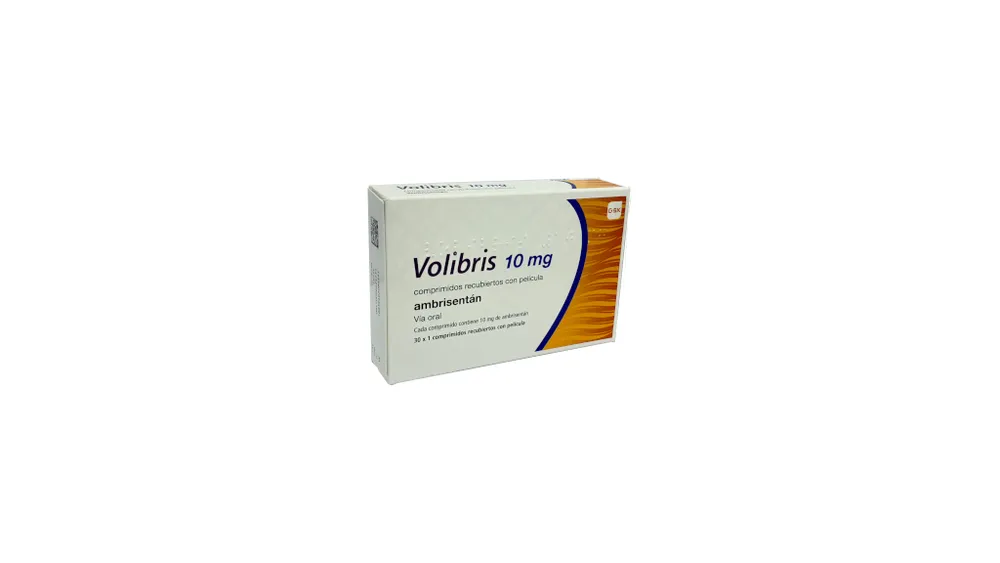
Table of Contents
Package leaflet: Information for the user
Introduction
Package leaflet: information for the user
Volibris 2.5mg film-coated tablets
Volibris 5mg film-coated tablets
Volibris 10mg film-coated tablets
ambrisentan
Read the entire leaflet carefully before you start taking this medicine, because it contains important information for you.
- Keep this leaflet, as you may need to read it again.
- If you have any questions, ask your doctor, pharmacist or nurse.
- This medicine has been prescribed for you only and must not be given to other people, even if they have the same symptoms as you, because it may harm them.
- If you experience any adverse reactions, consult your doctor, pharmacist or nurse, even if they are adverse reactions not listed in this leaflet. See section 4.
Contents of the leaflet
- What Volibris is and what it is used for
- What you need to know before taking Volibris
- How to take Volibris
- Possible side effects
- How to store Volibris
- Contents of the pack and other information
1. What Volibris is and what it is used for
Volibris contains the active substance ambrisentan. It belongs to a group of medicines called other antihypertensives (used to treat high blood pressure).
It is indicated for the treatment of pulmonary arterial hypertension (PAH) in adults, adolescents, and children aged 8 years and older. PAH is characterized by elevated blood pressure in the blood vessels (the pulmonary arteries) that carry blood from the heart to the lungs. In people with PAH, these arteries become narrower, causing the heart to work harder to pump blood through to the lungs. This leads to fatigue, dizziness, and shortness of breath.
Volibris widens the pulmonary arteries, making it easier for the heart to pump blood through them. This reduces blood pressure and relieves symptoms.
Volibris may also be used in combination with other medicines used to treat PAH.
2. What you need to know before taking Volibris
Do not take Volibris
- if you are allergic to ambrisentan, soy, or any of the other ingredients of this medicine (listed in section 6).
- if you are pregnant, if you are planning to become pregnant, or if you could become pregnant because you are not using a reliable method of contraception (birth control). Please read the information in the section "Pregnancy".
- if you are breastfeeding, read the information under the heading “Breastfeeding”.
- if you have liver disease. Consult your doctor, who will decide whether this medicine is suitable for you.
- if you have lung fibrosis of unknown cause (idiopathic pulmonary fibrosis).
Warnings and precautions
Talk to your doctor before starting to take this medicine:
- if you have liver problems
- if you have anaemia (reduction in the number of red blood cells)
- if you have swelling of the hands, ankles or feet due to fluid retention (peripheral oedema)
- if you have a lung disease in which the veins in the lungs are blocked (pulmonary veno-occlusive disease).
→ Your doctor will decide whether Volibris is suitable for you or not.
You will need regular blood tests
Before starting Volibris and periodically during treatment, your doctor will perform blood tests to check:
- whether you have anaemia
- whether your liver is functioning properly.
→ It is important that you have these blood tests regularly while taking Volibris.
Signs that your liver may not be working properly include:
- loss of appetite
- feeling unwell (nausea)
- vomiting
- high temperature (fever)
- stomach (abdominal) pain
- yellowing of the skin or eyes (jaundice)
- darkening of the urine
- itching of the skin.
If you notice any of these symptoms:
→ Inform your doctor immediately.
Children
Do not give this medicine to children under 8 years of age, as the safety and efficacy in this age group are unknown.
Taking Volibris with other medicines
Tell your doctor or pharmacist if you are taking, have recently taken, or might need to take any other medicines.
If you start taking cyclosporine A (a medicine used after organ transplantation or to treat psoriasis), your doctor may need to adjust your dose of Volibris.
If you are taking rifampicin (an antibiotic used to treat serious infections), your doctor will monitor you when you start taking Volibris.
If you are taking other medicines to treat PAH (iloprost, epoprostenol, sildenafil), your doctor may need to monitor you.
→ Inform your doctor or pharmacist if you are taking this medicine.
Pregnancy
Volibris can harm a developing fetus before, during, or shortly after treatment.
→ If there is any possibility that you could become pregnant, use a reliable method of contraception while taking Volibris. Discuss this with your doctor.
→ Do not take Volibris if you are pregnant or planning to become pregnant.
→ If you become pregnant or think you might be pregnant while taking Volibris, consult your doctor immediately.
If you are a woman of childbearing potential, your doctor will require you to take a pregnancy test before starting Volibris and periodically during treatment.
Breastfeeding
It is unknown whether the active ingredient of Volibris passes into breast milk.
→ Do not breastfeed while taking Volibris. Consult your doctor about this.
Fertility
If you are a man taking Volibris, this medicine may reduce your sperm count. Talk to your doctor if you have any questions or concerns about this.
Driving and using machines
Volibris may cause side effects such as low blood pressure, dizziness, and fatigue (see section 4), which may affect your ability to drive or operate machinery. Symptoms of your underlying illness may also impair your ability to drive or use machines.
→ Do not drive or operate machinery if you do not feel well.
Volibris contains lactose
Volibris tablets contain small amounts of a sugar called lactose. If your doctor has told you that you have an intolerance to certain sugars:
→ Consult your doctor before taking this medicine.
Volibris contains soya-derived lecithin
Do not use this medicine if you are allergic to soya (see section 2 “Do not take Volibris”).
Volibris 5 mg and 10 mg tablets contain an azo dye called aluminium lake of red allura AC (E129)
This may cause allergic-type reactions (see section 4).
Volibris contains sodium
This medicine contains less than 1 mmol of sodium (23 mg) per tablet; therefore, it is essentially “sodium-free”.
3. How to take Volibris
Follow exactly the instructions for administration of this medicine given by your doctor or pharmacist. If in doubt, consult your doctor or pharmacist again.
How much Volibris to take
Adults The usual dose is one 5 mg tablet once daily. Your doctor may decide to increase your dose to 10 mg once daily.
If you are taking cyclosporine A, do not take more than one 5 mg tablet of Volibris once daily.
Adolescents and children from 8 to under 18 years of age
Usual starting dose of Volibris | |
Weight of 35 kg or more | One tablet of 5 mg, once daily |
Weight at least 20 kg and less than 35 kg | One tablet of 2.5 mg, once daily |
Your doctor may decide to increase your dose. It is important that children attend their regular medical appointments, as their dose needs to be adjusted as they grow or gain weight.
If taken in combination with ciclosporin A, the dose of Volibris should be limited to 2.5 mg once daily in adolescents and children weighing less than 50 kg, or to 5 mg once daily if they weigh 50 kg or more.
How to take Volibris
It is best to take the tablet at the same time each day. Swallow the tablet whole with a glass of water; do not divide, crush, or chew the tablet. Volibris may be taken with or without food.
How to remove the tablet from the blister (for 5 mg and 10 mg tablets only)
These tablets come in special packaging designed to prevent children from removing them.
- Separate one tablet: Tear along the perforated lines to separate one "alveolus" from the strip.
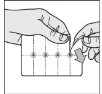
- Open the outer foil: Starting at the colored corner, open and separate the foil along the alveolus.

- Remove the tablet: Gently push the tablet through the foil from one side.

Volibris 2.5 mg tablets are supplied in a bottle, not in a blister pack.
If you take more Volibris than you should
If you take too many tablets, you may be more likely to experience adverse effects such as headache, flushing, dizziness, nausea (feeling unwell), or low blood pressure, which may cause a slight feeling of dizziness:
→ Seek advice from your doctor or pharmacist if you take more tablets than prescribed.
If you forget to take Volibris
If you forget to take a dose of Volibris, take it as soon as you remember, and then continue as before.
→ Do not take a double dose to make up for forgotten doses.
If you stop taking Volibris
Volibris is a treatment you will need to continue taking to control your PAH.
→ Do not stop taking Volibris unless your doctor tells you to.
If you have any further questions about using this medicine, ask your doctor or pharmacist.
4. Possible adverse effects
Like all medicines, this medicine can cause adverse effects, although not everyone experiences them.
Serious adverse effects
Tell your doctor if you experience any of the following:
Allergic reactions
This is a common adverse effect which may affect up to 1 in 10 people. You may notice:
- a rash or itching and swelling (usually of the face, lips, tongue or throat), which may cause difficulty breathing or swallowing.
Swelling (edema), especially in the ankles and feet
This is a very common adverse effect which may affect more than 1 in 10 people.
Heart failure
This occurs because the heart does not pump enough blood. This is a common adverse effect which may affect up to 1 in 10 people. Symptoms include:
- difficulty breathing
- extreme tiredness
- swelling in the ankles and legs.
Reduced number of red blood cells (anaemia )
This is a very common adverse effect which may affect more than 1 in 10 people. Sometimes this requires a blood transfusion. Symptoms include:
- tiredness and weakness
- difficulty breathing
- general malaise.
Low blood pressure (hypotension )
This is a common adverse effect which may affect up to 1 in 10 people. Symptoms include:
- dizziness
→Contact your doctor immediately if you (or your child) experience these effects or if they occur suddenly after taking Volibris.
It is important to have periodic blood tests to monitor for anaemia and to ensure your liver is functioning properly. Make sure you have also read the information in section 2 about "the need for regular blood tests" and "the signs that your liver may not be working properly".
Other adverse effects
Very common (may affect more than 1 in 10 people)
- headache
- dizziness
- palpitations (fast or irregular heartbeat)
- difficulty breathing that worsens shortly after starting Volibris
- runny or stuffy nose, nasal congestion or sinus pain
- nausea
- diarrhoea
- feeling of fatigue.
In combination with tadalafil (another medicine for PAH)
In addition to the above:
- flushing (redness of the skin)
- vomiting
- chest pain/chest discomfort.
Common (may affect up to 1 in 10 people)
- blurred vision or other changes in vision
- fainting
- abnormal blood test results for liver function
- increased nasal secretion
- constipation
- stomach (abdominal) pain
- chest pain or discomfort
- flushing (redness of the skin)
- vomiting
- feeling of weakness
- nosebleeds
- skin rash.
In combination with tadalafil
In addition to the above, except for abnormalities in blood test results for liver function:
- ringing in the ears (tinnitus ).
Uncommon (may affect up to 1 in 100 people)
- liver damage
- inflammation of the liver caused by the body's own immune defences (autoimmune hepatitis ).
In combination with tadalafil
- sudden hearing loss.
Adverse effects in children and adolescents
These are expected to be similar to those listed above for adults.
Reporting of adverse effects
If you experience any type of adverse effect, talk to your doctor, pharmacist or nurse, even if it is a possible adverse effect not listed in this leaflet. You may also report them directly through the national reporting system included in Appendix V. By reporting adverse effects, you can help provide more information on the safety of this medicine.
5. Storage of Volibris
Keep this medicine out of the sight and reach of children.
Do not use this medicine after the expiry date stated on the packaging after EXP.
The expiry date refers to the last day of the month indicated.
This medicine does not require any special storage conditions.
Medicines should not be disposed of via wastewater or household waste. Ask your pharmacist how to dispose of any unused medicine and its packaging. Doing so helps protect the environment.
6. Contents of the container and other information
Composition of Volibris
The active substance is ambrisentan.
Each film-coated tablet contains 2.5 mg, 5 mg, or 10 mg of ambrisentan.
For 2.5 mg tablets:
The other components are: lactose monohydrate, microcrystalline cellulose, sodium croscarmellose, magnesium stearate, polyvinyl alcohol, talc, titanium dioxide (E171), macrogol, and lecithin (soy) (E322).
For 5 mg and 10 mg tablets:
The other components are: lactose monohydrate, microcrystalline cellulose, sodium croscarmellose, magnesium stearate, polyvinyl alcohol, talc, titanium dioxide (E171), macrogol, lecithin (soy) (E322), and aluminium lake of Allura Red AC (E129).
Appearance of the product and contents of the container
Volibris 2.5 mg film-coated tablets (tablet) are white, round, 7 mm, convex tablets, engraved with "GS" on one side and "K11" on the other side.
Volibris 5 mg film-coated tablets (tablet) are pale pink, square, 6.6 mm, convex tablets, engraved with "GS" on one side and "K2C" on the other side.
Volibris 10 mg film-coated tablets (tablet) are dark pink, oval, 9.8 mm x 4.9 mm, convex tablets, engraved with "GS" on one side and "KE3" on the other side.
Volibris 2.5 mg film-coated tablets are supplied in bottles. Each bottle contains 30 tablets.
Volibris 5 mg and 10 mg film-coated tablets are supplied in unit dose blisters, in pack sizes of 10 × 1 or 30 × 1 tablets.
Not all pack sizes may be marketed.
Marketing Authorization Holder
GlaxoSmithKline (Ireland) Limited
12 Riverwalk
Citywest Business Campus
Dublin 24
Ireland
Manufacturer
GlaxoSmithKline Trading Services Limited
12 Riverwalk
Citywest Business Campus
Dublin 24
Ireland
Further information on this medicinal product is available upon request to the local representative of the Marketing Authorization Holder:
Belgium/Belgium/Belgium GlaxoSmithKline Pharmaceuticals s.a./n.v. Tel/Tel: + 32 (0) 10 85 52 00 | Lithuania GlaxoSmithKline (Ireland) Limited Tel: + 370 80000334 |
| Luxembourg/Luxembourg GlaxoSmithKline Pharmaceuticals s.a./n.v. Belgium/Belgium Tel/Tel: + 32 (0) 10 85 52 00 |
Czech Republic GlaxoSmithKline s.r.o. Tel: + 420 222 001 111 | Hungary GlaxoSmithKline (Ireland) Limited Tel.: + 36 80088309 |
Denmark GlaxoSmithKline Pharma A/S Tlf: + 45 36 35 91 00 | Malta GlaxoSmithKline (Malta) Limited Tel: + 356 80065004 |
Germany GlaxoSmithKline GmbH & Co. KG Tel.: + 49 (0)89 36044 8701 | Netherlands GlaxoSmithKline BV Tel: + 31 (0) 33 2081100 |
Estonia GlaxoSmithKline (Ireland) Limited Tel: + 372 8002640 | Norway GlaxoSmithKline AS Tlf: + 47 22 70 20 00 |
Greece GlaxoSmithKline Μονοπρόσωπη A.E.B.E. Tel: + 30 210 68 82 100 | Austria GlaxoSmithKline Pharma GmbH Tel: + 43 (0)1 97075 0 |
Spain GlaxoSmithKline, S.A. Tel: + 34 900 202 700 | Poland GSK Services Sp. z o.o. Tel.: + 48 (0)22 576 9000 |
France Laboratoire GlaxoSmithKline Tel: + 33 (0)1 39 17 84 44 | Portugal GlaxoSmithKline – Produtos Farmacêuticos, Lda. Tel: + 351 21 412 95 00 |
Croatia GlaxoSmithKline (Ireland) Limited Tel: + 385 800787089 | Romania GlaxoSmithKline (Ireland) Limited. Tel: + 40 800672524 |
Ireland GlaxoSmithKline (Ireland) Limited Tel: + 353 (0)1 4955000 | Slovenia GlaxoSmithKline (Ireland) Limited Tel: + 386 80688869 |
Iceland Vistor hf. Tel: + 354 535 7000 | Slovakia GlaxoSmithKline (Ireland) Limited Tel: + 421 800500589 |
Italy GlaxoSmithKline S.p.A. Tel: + 39 (0)45 7741 111 | Finland GlaxoSmithKline Oy Tel: + 358 (0)10 30 30 30 |
Cyprus GlaxoSmithKline (Ireland) Limited Tel: + 357 80070017 | Sweden GlaxoSmithKline AB Tel: + 46 (0)8 638 93 00 |
Latvia GlaxoSmithKline (Ireland) Limited Tel: + 371 80205045 | United Kingdom (Northern Ireland) GlaxoSmithKline (Ireland) Limited Tel: + 44 (0)800 221441 |
Date of the most recent review of this leaflet:
Other sources of information
Detailed information on this medicinal product is available on the website of the European Medicines Agency: http://www.ema.europa.eu/. It also provides links to other websites on rare diseases and orphan medicines.