Ursitan 3 mg/ml eye drops solution in single-dose containers
Spain
Table of Contents
Package leaflet: Information for the user
Introduction
Package leaflet: information for the user
Ursitan 3 mg/ml eye drops solution in single-dose container
tobramycin
Read the entire leaflet carefully before you start using this medicine, because it contains important information for you.
- Keep this leaflet, as you may need to read it again.
- If you have any questions, ask your doctor or pharmacist.
- This medicine has been prescribed for you only and you should not give it to others, even if they have the same symptoms as you, because it may harm them.
- If you experience any side effects, talk to your doctor or pharmacist, even if they are side effects not listed in this leaflet. See section 4.
Leaflet contents:
- What Ursitan is and what it is used for
- What you need to know before using Ursitan
- How to use Ursitan
- Possible side effects
- How to store Ursitan
- Contents of the pack and other information
1. What Ursitan is and what it is used for
Ursitan is an eye drop that contains an antibiotic (tobramycin) which acts against microorganisms causing bacterial infections of the eye surface.
Antibiotics are used to treat bacterial infections and are not effective against viral infections. It is important that you follow the instructions regarding dosage, dosing interval, and duration of treatment as indicated by your doctor. Do not store or reuse this medicine. If you have any antibiotic left after completing the treatment, return it to the pharmacy for proper disposal. Medicines must not be disposed of down the drain or in household waste. |
This medicine is used to treat bacterial infections on the surface of the eye and other parts of the eye, such as conjunctivitis, in adults, adolescents, and children 1 year of age and older. Eye infections can cause irritation symptoms such as redness and discharge.
2. What you need to know before using Ursitan
Do not use Ursitan:
If you are allergic to tobramycin or to any of the other ingredients of this medicine (listed in section 6).
Warnings and precautions
Talk to your doctor or pharmacist before starting to use Ursitan.
-
Use this medicine only in your eye(s).
-
If you develop symptoms of an allergic reaction while using this medicine, stop treatment and consult your doctor. Allergic reactions may range from localized itching or skin redness to severe allergic reactions (anaphylactic reaction) or serious skin reactions. These allergic reactions may occur with other topical or systemic antibiotics of the same family (aminoglycosides).
-
If you are using another antibiotic treatment together with this medicine, consult your doctor.
-
If you have or have had conditions such as myasthenia gravis (a neuromuscular disorder causing weakness in skeletal muscles) or Parkinson's disease (a progressive nervous system disorder affecting movement), consult your doctor. This type of antibiotic may worsen muscle weakness.
-
If your symptoms worsen or suddenly return, contact your doctor. If you use this medicine for a long time, you may become more susceptible to eye infections.
-
If you wear contact lenses
- Wearing contact lenses is not recommended during treatment of an eye infection.
-
If you or members of your maternal family have a disease caused by a mitochondrial mutation (a genetic disorder) or hearing loss due to antibiotics, you are advised to inform your doctor or pharmacist before taking this medicine. Certain mitochondrial mutations may increase your risk of hearing loss with this product. Your doctor may recommend genetic testing before administering tobramycin.
Other medicines and Ursitan
Tell your doctor or pharmacist if you are taking, have recently taken, or might need to take any other medicines.
Pregnancy and breastfeeding
Ursitan should only be used during pregnancy if clearly considered necessary by your doctor. If you are pregnant or breastfeeding, think you may be pregnant, or are planning to become pregnant or to breastfeed, consult your doctor or pharmacist before using this medicine.
Driving and using machines
You may notice blurred vision for a short while after instilling the eye drops. Do not drive or operate machinery until this effect has gone away.
Ursitan contains boron
This medicine should not be administered to children under 12 years of age without medical advice, as it contains boron and may impair fertility in the future.
3. How to use Ursitan
Follow exactly the instructions for using this medicine as given by your doctor or pharmacist. If in doubt, consult your doctor or pharmacist again.
Do not exceed the recommended dose prescribed by your doctor or pharmacist.
The recommended dose is:
Use in adults
In mild or moderate infections, instill 1 or 2 drops into the affected eye(s) every four hours. In severe infections, instill 2 drops into the affected eye(s) every hour until improvement is noticed, then gradually increase the dosing interval to complete the full course of treatment.
Use in children and adolescents:
This medicine can be used in adolescents and children aged 1 year and older at the same dose as in adults. The maximum daily dose is 14 drops in children from 1 to 2 years of age and 45 drops in children from 2 to 12 years of age. If in doubt, ask your doctor. The safety and efficacy of this medicine have not been established in children under 1 year of age. No data are available.
Remember to use your medicine at the scheduled times.
Your doctor will tell you how long your treatment with this medicine should last. Do not stop treatment earlier unless instructed by your doctor.
This medicine is for use only as eye drops.
Usage recommendations:
Follow exactly the instructions for using this medicine as given by your doctor. If in doubt, consult your doctor or pharmacist again.
|
|
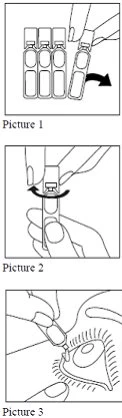
If drops are being applied to both eyes, repeat all the previous steps for the other eye.
If the drop does not fall into the eye, try again.
If you are using other eye medications, wait at least 5 minutes between administering this medicine and any other eye medications. Ophthalmic ointments should be administered last.
If you use more Ursitan than you should, you can remove it by rinsing the eyes with lukewarm water. Although adverse effects are not expected, do not apply further drops until it is time for your next scheduled dose.
In case of overdose or accidental ingestion, contact your doctor or pharmacist immediately or call the Toxicology Information Service at 91 562 04 20, indicating the medicine and the amount ingested.
If you forget to use Ursitan, apply a single dose as soon as you remember, then continue with your next scheduled dose. However, if it is almost time for your next dose, do not apply the missed dose and continue with your next dose according to your regular schedule. Do not apply a double dose to make up for missed doses.
If you have any further questions about the use of this medicine, ask your doctor or pharmacist.
4. Possible adverse effects
Like all medicines, Ursitan may produce adverse effects, although not everyone experiences them.
If these adverse effects become severe, consult your doctor or pharmacist.
The following adverse effects have been reported:
Frequent adverse effects (may affect up to 1 in 10 people)
- Eye effects: eye discomfort, eye redness.
Uncommon adverse effects (may affect up to 1 in 100 people)
- Eye effects: inflammation of the eye surface, corneal damage, visual impairment, blurred vision, eye and eyelid swelling, eyelid redness, dry eye, increased tear production, eye pain, eye itching, eye discharge.
- General effects: allergy (hypersensitivity), headache, urticaria, skin inflammation, reduced growth or number of eyelashes, loss of skin pigmentation, itching, and dry skin.
Frequency not known (cannot be estimated from available data)
- Eye effects: eye allergy, eye irritation, eyelid itching.
- General effects: severe allergic reaction, serious skin reactions (Stevens-Johnson syndrome and erythema multiforme), rash.
Reporting of adverse effects
If you experience any type of adverse effect, consult your doctor or pharmacist, even if they are possible adverse effects not listed in this leaflet. You may also report them directly via the Spanish Pharmacovigilance System for Human Medicinal Products: www.notificaRAM.es. By reporting adverse effects, you can help provide more information on the safety of this medicine.
5. Storage of Ursitan
Keep this medicine out of the sight and reach of children.
Do not use this medicine after the expiry date (EXP) stated on the carton and container. The expiry date is the last day of the month indicated.
This medicine does not require any special storage conditions.
- Shelf life after opening the sachet: 90 days.
- After first opening, keep the containers in the sachet and in the carton.
- Shelf life after container opening: the medicine should be used immediately. Any unused portion should be discarded.
Medicines must not be disposed of via wastewater or household waste. Dispose of empty containers and unused medicines at the SIGRE collection point at your pharmacy. If you are unsure, ask your pharmacist how to properly dispose of unused medicines and their containers. This will help protect the environment.
6. Contents of the pack and other information
Composition of Ursitan
- The active substance is tobramycin 3 mg/ml.
- 1 ml of solution contains 3 mg of tobramycin.
- Each single-dose container contains approximately 0.75 mg of tobramycin.
- The other components are tiloxapol, boric acid, anhydrous sodium sulfate, sodium chloride, and purified water.
Appearance of the product and contents of the pack
Ursitan is a clear eye drop solution packaged in plastic single-dose containers containing 0.25 ml.
The single-dose containers are contained within an aluminum pouch inside a cardboard box. Each single-dose container contains approximately 0.75 mg of tobramycin.
It is available in pack sizes of 10, 20 or 45 single-dose containers. Not all pack sizes may be marketed.
Marketing Authorization Holder and Manufacturer
Laboratorios Salvat, S.A.
C/ Gall, 30-36 - 08950
Esplugues de Llobregat
Barcelona - Spain
This medicinal product is authorized in the Member States of the European Economic Area and in the United Kingdom (Northern Ireland) under the following names:
Spain Ursitan 3 mg/ml eye drops solution in single-dose containers
Portugal Ursitan 0.75 mg/0.25 ml eye drops, solution in single-dose containers
Italy Ursitan 3 mg/ml eye drops, solution in single-dose containers
France Ursitan 3 mg/ml eye drops solution
Date of text revision: September 2023
Detailed and up-to-date information on this medicinal product is available on the website of the Spanish Agency for Medicines and Health Products (AEMPS) http://www.aemps.gob.es/