Toradol 30 mg/1 ml solution for injection
Spain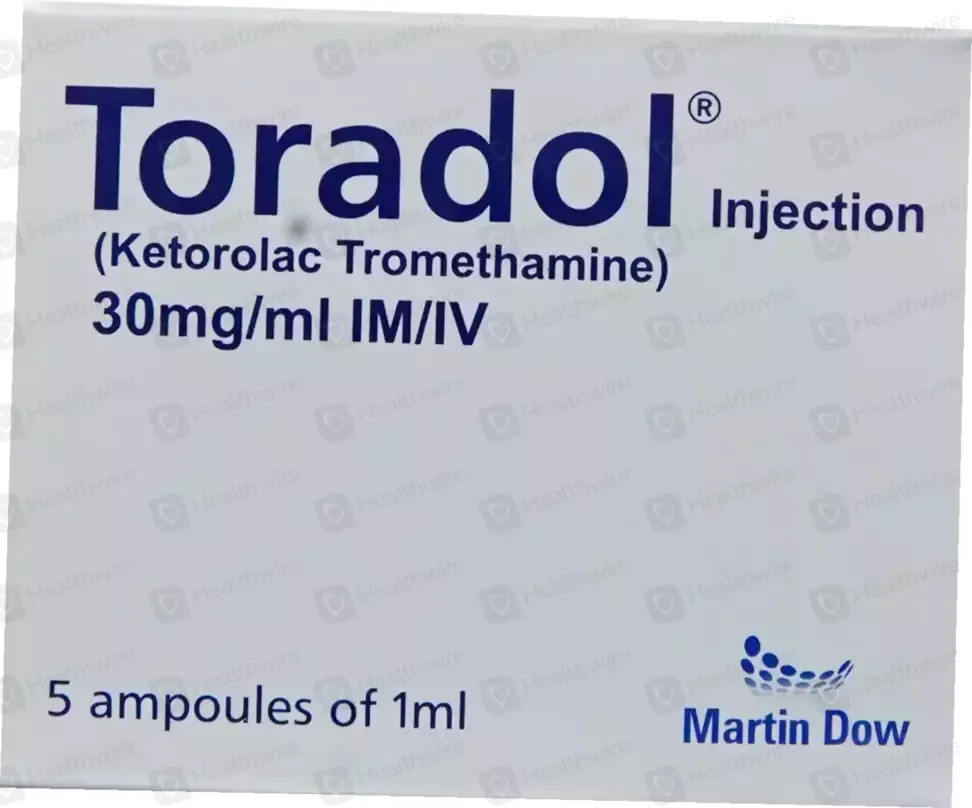
Table of Contents
Package leaflet: Information for the user
Introduction
Package leaflet: information for the user
TORADOL 30 mg/1 ml injection solution
Ketorolac trometamol
Read the entire leaflet carefully before you start using this medicine, because it contains important information for you.
- Keep this leaflet, as you may need to read it again.
- If you have any questions, ask your doctor or pharmacist.
- This medicine has been prescribed for you only and must not be given to other people, even if they have the same symptoms as you, since it could harm them.
- If you experience any adverse effects, consult your doctor or pharmacist, even if they are adverse effects not listed in this leaflet. See section 4.
Leaflet contents:
- What Toradol is and what it is used for
- What you need to know before using Toradol
- How to use Toradol
- Possible side effects
- How to store Toradol
- Contents of the pack and other information
1. What Toradol is and what it is used for
Toradol 30 mg/1 ml injection solution contains the active substance ketorolac tromethamine, which belongs to a group of medicines known as analgesics, anti-inflammatory, and antipyretic drugs.
Your doctor has prescribed Toradol for the short-term treatment of moderate to severe postoperative pain or for the treatment of pain caused by renal colic (kidney colic).
2. What you need to know before using Toradol
Inform your doctor if you have recently undergone or are scheduled to undergo stomach or intestinal surgery before receiving/taking/using Toradol, as Toradol may sometimes impair wound healing in the intestine following surgery.
Do not use Toradol
- if you have active peptic ulcer,
- if you have any history of gastrointestinal ulceration, bleeding, or perforation,
- if you are vomiting blood, have black stools, or bloody diarrhea,
- if you are allergic (hypersensitive) to ketorolac tromethamine or other non-steroidal anti-inflammatory drugs (NSAIDs), or to any of the other components of this medicine (listed in section 6),
- if you have experienced asthma attacks (difficulty breathing), acute rhinitis (inflammation of the nasal mucosa), urticaria (allergic skin reaction with itching), angioneurotic edema (swelling of the face, tongue, or throat causing breathing difficulties), or other allergic-type reactions after taking substances with similar effects (e.g. acetylsalicylic acid, ibuprofen, or other NSAIDs),
- if you have severe heart failure (your heart does not function properly),
- if you have moderate to severe renal impairment (your kidneys do not function properly),
- if you have hemorrhagic diathesis (tendency to bleed), coagulation disorders, or cerebral hemorrhage (bleeding in the brain),
- if you have bleeding or blood coagulation disorders, or are taking anticoagulants (medications used to "thin" the blood). If concomitant use of anticoagulants is necessary, your doctor will perform blood coagulation tests,
- during childbirth,
- if you are in the third trimester of pregnancy,
- if you are breastfeeding,
- as a preventive analgesic before or during surgery due to the risk of bleeding,
- the injectable form of Toradol must not be used for epidural or intrathecal administration because it contains alcohol.
Warnings and precautions
Talk to your doctor or pharmacist before starting to use Toradol.
Serious skin reactions have been reported with the use of NSAIDs, manifesting as red spots, generalized skin redness, ulcers, or widespread rash accompanied by flu-like symptoms including fever (see section 4). The rash may progress to widespread blisters or skin peeling. The highest risk of serious skin reactions occurs during the first weeks of treatment, but they may begin developing several months after starting the medication (see section 4). If you have experienced a serious skin reaction after using Toradol, you must never restart treatment. If you develop a skin rash or these skin symptoms, stop treatment with Toradol immediately and contact your doctor or seek immediate medical attention.
Be especially careful with Toradol
- If you experience gastrointestinal pain (irritation, ulceration, or perforation), rectal bleeding, or vomiting blood, you must stop treatment immediately and inform your doctor without delay.
- If you are over 65 years of age or are debilitated, extra caution is required and the lowest effective dose should be used.
- If you are taking medications that increase the risk of gastrointestinal ulceration or bleeding, such as heparin, antiplatelet agents, pentoxifylline, corticosteroids, thrombolytics, or antidepressants such as selective serotonin reuptake inhibitors (SSRIs) or serotonin-norepinephrine reuptake inhibitors (SNRIs).
- If you have had inflammatory bowel disease (ulcerative colitis, Crohn's disease).
- If you have kidney disease, your doctor may consider it necessary to perform certain tests during treatment with this medicine.
- Toradol may cause fluid retention; exercise special caution if you have decompensated heart failure or hypertension (high blood pressure).
- If you are receiving anticoagulant therapy (medications used to "thin" the blood: dicoumarols or heparin).
- If you experience symptoms of liver dysfunction such as itching or skin redness during treatment, you must stop treatment immediately and inform your doctor as soon as possible.
- If you experience skin redness, mucosal lesions, or any other sign of hypersensitivity or anaphylactic reaction (severe allergic reaction), stop treatment immediately and inform your doctor.
- If you suffer from complete or partial nasal polyp syndrome (a condition affecting the inside of the nose and paranasal sinuses due to benign tumors obstructing breathing), angioedema (hives, superficial swelling), or bronchospasm (difficulty breathing).
- If you are taking other medications such as methotrexate, as Toradol may alter or enhance their effects.
Consult your doctor, even if any of the above-mentioned conditions occurred only once in the past.
Cardiovascular precautions
Medicines like Toradol may be associated with a moderate increase in the risk of heart attack ("myocardial infarction") or stroke. This risk is more likely when high doses or prolonged treatment are used. Do not exceed the recommended dose or duration of treatment.
If you have heart problems, a history of stroke, or think you may be at risk for these conditions (for example, you have high blood pressure, diabetes, high cholesterol, or are a smoker), discuss this treatment with your doctor or pharmacist.
Also, these types of medicines may cause fluid retention, especially in patients with heart failure and/or high blood pressure (hypertension).
Precautions during pregnancy and in women of childbearing age
Because administration of drugs like Toradol has been associated with an increased risk of congenital abnormalities or miscarriage, their use is not recommended during the first and second trimesters of pregnancy unless strictly necessary. In such cases, the dose and duration of treatment should be limited to the minimum possible.
Administration of Toradol is contraindicated during the third trimester.
Administration of Toradol is contraindicated during breastfeeding.
For women of childbearing age, it should be noted that drugs like Toradol have been associated with reduced fertility.
Other medicines and Toradol
Inform your doctor or pharmacist if you are currently using, have recently used, or might need to use any other medicines.
It is not recommended to use Toradol together with: other non-steroidal anti-inflammatory drugs (including acetylsalicylic acid and selective COX-2 inhibitors), anticoagulants (dicoumarols or full-dose heparin), antiplatelet agents (such as acetylsalicylic acid, ticlopidine, or clopidogrel), pentoxifylline, probenecid, or lithium salts.
Exercise special caution if you are being treated with any of the following medicines: corticosteroids, thrombolytics (medications administered to help dissolve blood clots), antidepressants, methotrexate, antihypertensives, or furosemide (a diuretic used to increase urine output).
Pregnancy, breastfeeding, and fertility
If you are pregnant or breastfeeding, think you may be pregnant, or plan to become pregnant, consult your doctor or pharmacist before using this medicine.
Do not take Toradol if you are in the last 3 months of pregnancy, as it may harm the fetus or cause problems during delivery. It may cause kidney and heart problems in your fetus. It may affect your tendency and your baby's tendency to bleed and may delay or prolong labor more than expected. You should not take Toradol during the first 6 months of pregnancy unless strictly necessary and specifically advised by your doctor. If treatment is needed during this period or while trying to become pregnant, you should take the lowest possible dose for the shortest possible time. From week 20 of pregnancy, Toradol may cause kidney problems in your fetus if taken for more than a few days, which could lead to low levels of amniotic fluid surrounding the baby (oligohydramnios). If you require treatment for longer than a few days, your doctor may recommend additional monitoring.
Consult your doctor if you are trying to become pregnant or undergoing fertility treatment, as the use of this medicine may affect your ability to conceive.
Toradol should not be used during pregnancy, as it may be harmful to your baby (see section on precautions during pregnancy and in women of childbearing age).
Small amounts of the medicine may appear in breast milk; therefore, Toradol should not be used if you are breastfeeding.
Toradol should not be used during childbirth.
Driving and use of machines
Caution is advised when driving or operating machinery, especially at the beginning of treatment, as you may experience drowsiness, dizziness, vertigo, insomnia, or depression during treatment with Toradol.
Toradol contains ethanol
This medicine contains 100 mg of alcohol (ethanol) per ml, equivalent to 100 mg/ml (10% w/v). The amount in 1 ml of this medicine is equivalent to less than 3 ml of beer or 1 ml of wine.
The small amount of alcohol contained in this medicine does not produce any noticeable effect.
This medicine contains less than 1 mmol of sodium (23 mg) per ml; hence, it is essentially "sodium-free".
3. How to use Toradol
Follow exactly the administration instructions for this medicine as indicated by your doctor. If in doubt, consult your doctor or pharmacist again.
The dose of Toradol 30 mg/1 ml injectable solution should be adjusted according to the severity of pain and the patient's response, aiming to administer the lowest effective dose. The recommended initial dose of Toradol 30 mg/1 ml injectable solution by intramuscular (im) or intravenous (iv) route is 10 mg, followed by doses of 10–30 mg every 4 to 6 hours as needed to control pain. In cases of severe or very severe pain, the recommended initial dose is 30 mg of ketorolac.
The recommended maximum daily dose is 90 mg for non-elderly adults and 60 mg for elderly patients.
Remember to use your medicine.
Your doctor will indicate how long your treatment with Toradol should last. Do not stop treatment prematurely.
Treatment with Toradol 30 mg/1 ml injectable solution should be initiated in a hospital setting. The maximum duration of treatment should not exceed 2 days. If switching to oral therapy, the total duration of treatment with ketorolac must not exceed 7 days.
For the treatment of pain caused by renal colic, a single dose of 30 mg by im or iv route is recommended.
If you have received ketorolac by parenteral route and are subsequently switched to oral therapy, the total daily combined dose from both oral and parenteral formulations must not exceed 90 mg in adults and 60 mg in elderly patients.
In most patients, intramuscular or intravenous therapy with ketorolac provides adequate analgesia. However, opioid analgesics may be used concomitantly when, due to the intensity of pain, the recommended maximum doses of ketorolac are insufficient, or when a reduction in opioid requirements is desired.
When morphine is administered in association with ketorolac, the daily dose of morphine required is considerably reduced.
The im injection must be administered slowly and deeply into the muscle.
If you are over 65 years of age, increased caution is recommended, and lower doses should be used. It is recommended not to exceed a total daily dose of 60 mg.
Ketorolac must not be used if you have moderate or severe renal impairment. If you have mild renal impairment, you should receive lower doses of ketorolac (half the recommended dose, without exceeding a total daily dose of 60 mg), and periodic assessments of renal function tests should be performed.
Use in children and adolescents
Administration is not recommended in individuals under 16 years of age.
If you use more Toradol than you should
If you have used more Toradol than you should, contact your doctor or pharmacist immediately.
Symptoms may include abdominal pain, nausea, vomiting, hyperventilation (increased pulmonary ventilation), gastroduodenal ulcer, erosive gastritis, gastrointestinal bleeding, and renal dysfunction, which resolve upon discontinuation of the medicine.
In case of overdose or accidental ingestion, contact the Toxicology Information Service. Telephone 91.562.04.20.
If you forget to use Toradol
Do not use a double dose to make up for missed doses.
If you have any further questions about the use of this medicine, ask your doctor or pharmacist.
4. Possible adverse effects
Like all medicines, this medicine can cause adverse effects, although not everyone experiences them.
If you consider any of the adverse effects you experience to be severe, or if you notice any adverse effects not listed in this leaflet, inform your doctor or pharmacist.
The frequency of occurrence of adverse reactions is unknown because it cannot be estimated from the available information.
Gastrointestinal disorders: These are the most common adverse effects. The following may occur:
- Peptic ulcer, gastrointestinal perforation, or gastrointestinal bleeding, sometimes fatal, particularly in the elderly.
- Nausea, vomiting,
- Diarrhea, flatulence, constipation,
- Dyspepsia (digestive disturbance), gastritis (inflammation of the stomach lining), abdominal pain,
- Melena (blood in stools), hematemesis (blood in vomit),
- Ulcerative stomatitis (mouth lesions),
- Exacerbation (worsening) of ulcerative colitis and Crohn's disease (inflammatory bowel diseases),
- Abdominal discomfort,
- Belching,
- Feeling of fullness,
- Esophagitis (inflammation of the esophagus), pancreatitis (inflammation of the pancreas),
- Rectal bleeding,
- Dysgeusia (disturbance of taste).
Metabolism and nutrition disorders:
- Anorexia (loss of appetite),
- Hyperkalemia (increased potassium in blood), and
- Hyponatremia (decreased sodium in blood).
Nervous and musculoskeletal system disorders:
- Aseptic meningitis (inflammation of the meninges),
- Seizures,
- Dizziness,
- Dry mouth,
- Headache,
- Hyperkinesia (excessive activity),
- Myalgia (muscle pain),
- Paresthesia (loss of sensation),
- Sweating.
Psychiatric disorders:
- Abnormal dreams,
- Disturbance in thinking,
- Anxiety, depression, insomnia,
- Euphoria, hallucinations, psychotic reactions,
- Somnolence,
- Decreased concentration ability,
- Restlessness.
Renal and urinary disorders:
- Acute renal failure, "kidney pain" with or without hematuria (blood in urine) and hyperazotemia (accumulation of nitrogen in blood),
- Pollakiuria (frequent urination in small amounts),
- Urinary retention,
- Interstitial nephritis (kidney inflammation),
- Nephrotic syndrome (abnormal excretion of protein in urine),
- Oliguria (reduced urine production).
As with other inhibitors of prostaglandin synthesis, signs of renal impairment (e.g., increased creatinine and potassium levels) may occur after a dose of Toradol.
Cardiovascular disorders:
- Edema (swelling due to fluid accumulation),
- Hypertension (high blood pressure), and
- Heart failure, which are associated with treatment with non-steroidal anti-inflammatory drugs.
- Bradycardia (reduced heart rate),
- Flushing, palpitations,
- Hypotension (low blood pressure),
- Chest pain (any discomfort or abnormal sensation in the chest).
Reproductive system and breast disorders: Female infertility.
Respiratory, thoracic and mediastinal disorders:
- Bronchial asthma,
- Dyspnea (shortness of breath),
- Pulmonary edema (fluid accumulation in the lungs),
- Bronchospasm (difficulty breathing),
- Epistaxis (nosebleeds).
Hepatobiliary disorders:
- Abnormal liver function tests,
- Hepatitis (liver inflammation),
- Cholestatic jaundice (yellowing of the skin),
- Hepatic failure (liver dysfunction).
Skin and subcutaneous tissue disorders:
- Very rarely, skin hypersensitivity reactions of the vesiculobullous type may occur, including toxic epidermal necrolysis (Lyell's disease) and Stevens-Johnson syndrome (skin and mucous membrane lesions).
- Exfoliative dermatitis (skin peeling),
- Maculopapular rash (eruption),
- Pruritus (itching), urticaria (hives),
- Angioedema (swelling),
- Facial erythema (redness).
Immune system disorders:
- Hypersensitivity reactions (allergy),
- Anaphylaxis (allergic reaction),
- Laryngeal edema (swelling of the larynx),
- Anaphylactoid reactions (acute allergic-type reactions). Anaphylactoid reactions, like anaphylaxis, can be fatal.
Blood and lymphatic system disorders:
- Purpura (bleeding under the skin),
- Thrombocytopenia (decreased platelets in blood),
- Hemolytic uremic syndrome (anemia and blood in stools),
- Pallor.
Eye disorders:
- Visual disturbances.
Ear and labyrinth disorders:
- Tinnitus (ringing in the ears),
- Hypoacusis (reduced hearing),
- Vertigo.
General disorders and administration site conditions:
- Asthenia (lack of energy),
- Edema (swelling due to fluid accumulation),
- Reactions at the injection site,
- Fever,
- Polydipsia (increased thirst).
Additional investigations:
- Increased serum urea and creatinine levels,
- Increased potassium levels,
- Weight gain,
- Prolonged bleeding time,
- Abnormal liver function tests.
Injury, poisoning and procedural complications:
- Hematomas (bruises),
- Postoperative hemorrhage (bleeding after surgery).
If any other reaction not described in this leaflet occurs, consult your doctor or pharmacist.
Reporting of adverse effects
If you experience any type of adverse effect, consult your doctor or pharmacist, even if it is a possible adverse effect not listed in this leaflet. You may also report them directly through the Spanish Pharmacovigilance System for Human Medicines: www.notificaRAM.es.
By reporting adverse effects, you can help provide more information on the safety of this medicine.
5. Storage of Toradol
Keep the ampoules in the original packaging to protect them from light.
Keep this medicine out of the sight and reach of children.
Do not use Toradol after the expiry date stated on the packaging after EXP. The expiry date refers to the last day of the month indicated.
Medicines must not be disposed of via wastewater or household waste. Dispose of unused medicines and their containers at the SIGRE collection point at your pharmacy. If you are in doubt, ask your pharmacist how to properly dispose of unused medicines and their containers. This will help protect the environment.
6. Package contents and other information
Composition of Toradol
- The active substance is ketorolac trometamol. Each ampoule contains 30 mg of ketorolac trometamol.
- The other components are ethanol, sodium chloride, water for injections, and sodium hydroxide.
Presentation of the product and contents of the pack
Toradol 30 mg/1 ml solution for injection is available in cardboard packs containing 6 glass ampoules of 1 ml.
Marketing Authorization Holder and Manufacturer
Marketing Authorization Holder
Atnahs Pharma Netherlands B.V.
Copenhagen Towers
Ørestads Boulevard 108, 5.tv
DK-2300 København S
Denmark
Manufacturer
Misom Labs Limited,
Malta Life Sciences Park,
LS2.01.06 Industrial Estate,
San Gwann, SGN 3000,
Malta
or
Atnahs Pharma Denmark ApS
Copenhagen Towers
Ørestads Boulevard 108, 5.tv
DK-2300 København S
Denmark
Date of the most recent revision of this summary: January 2024
“Detailed and up-to-date information on this medicinal product is available on the website of the Spanish Agency for Medicines and Health Products (AEMPS) http://www.aemps.gob.es”http://www.aemps.gob.es/”