Tacforius 0.5 mg prolonged-release hard capsules EFG
Spain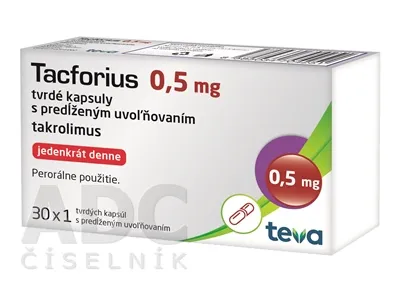
Table of Contents
Patient Information Leaflet
Introduction
Package Leaflet: Information for the Patient
Tacforius 0.5 mg prolonged-release hard capsules EFG
Tacforius 1 mg prolonged-release hard capsules EFG
Tacforius 3 mg prolonged-release hard capsules EFG
Tacforius 5 mg prolonged-release hard capsules EFG
tacrolimus
Read the entire leaflet carefully before you start taking this medicine, as it contains important information for you.
- Keep this leaflet as you may need to read it again.
- If you have any questions, ask your doctor or pharmacist.
- This medicine has been prescribed for you only and must not be given to other people, even if they have the same symptoms as you, because it could be harmful to them.
- If you experience any side effects, talk to your doctor or pharmacist, even if the side effects are not listed in this leaflet. See section 4.
Leaflet Contents
- What Tacforius is and what it is used for
- What you need to know before taking Tacforius
- How to take Tacforius
- Possible side effects
- How to store Tacforius
- Contents of the pack and other information
1. What Tacforius is and what it is used for
Tacforius contains the active substance tacrolimus. It is an immunosuppressant. After your organ transplant (liver, kidney), your body's immune system will attempt to reject the new organ. Tacforius is used to control your body's immune response, enabling it to accept the transplanted organ.
You may also receive Tacforius to treat rejection of your liver, kidney, heart, or other transplanted organ that is occurring when any previous treatment you were receiving has not been able to control this immune response after your transplant.
Tacforius is used in adults.
2. What you need to know before taking Tacforius
Do not take Tacforius
- if you are allergic to tacrolimus or to any of the other ingredients of this medicine (listed in section 6).
- if you are allergic to sirolimus or to any macrolide antibiotic (e.g., erythromycin, clarithromycin, josamycin).
Warnings and precautions
Immediate-release tacrolimus capsules (e.g., Tacni) and Tacforius extended-release capsules both contain the same active substance, tacrolimus. However, Tacforius extended-release capsules are taken once daily, whereas immediate-release capsules are taken twice daily. This is because Tacforius capsules allow prolonged release (slower release over a longer period of time) of tacrolimus. Tacforius extended-release capsules and immediate-release tacrolimus capsules are not interchangeable.
Consult your doctor or pharmacist before starting to take Tacforius:
- if you are taking any medicine (mentioned below in “Other medicines and Tacforius”)
- if you have or have had liver problems
- if you have had diarrhea for more than one day
- if you experience severe abdominal pain, with or without other symptoms such as chills, fever, nausea, or vomiting
- if you have an abnormality in the electrical activity of your heart called “QT interval prolongation.”
- if you have or have had damage to small blood vessels, known as thrombotic microangiopathy/thrombotic thrombocytopenic purpura/hemolytic uremic syndrome. Inform your doctor if you develop fever, bruising under the skin (which may appear as red spots), unexplained fatigue, confusion, yellowing of the skin or eyes, reduced urine volume, vision loss, or seizures (see section 4). The risk of developing these symptoms may increase when tacrolimus is taken together with sirolimus or everolimus.
Please avoid taking any herbal preparations, e.g., St. John’s wort (Hypericum perforatum) or any other herbal products, as they may affect the effectiveness and required dose of Tacforius. If in doubt, please consult your doctor before taking any herbal product or preparation.
Your doctor may need to adjust your dose of Tacforius.
You should maintain regular contact with your doctor. From time to time, your doctor may need to perform blood and urine tests, cardiac tests, or eye examinations to determine the appropriate dose of Tacforius.
You should limit your exposure to sunlight and UV (ultraviolet) light while taking Tacforius. This is because immunosuppressants may increase the risk of skin cancer. Wear appropriate protective clothing and use a sunscreen with a high sun protection factor.
Handling precautions:
Avoid contact with any part of the body such as skin or eyes, and avoid inhaling near the powder contained in the capsules. If such contact occurs, wash the skin and eyes thoroughly.
Children and adolescents
The use of Tacforius is not recommended in children and adolescents under 18 years of age.
Other medicines and Tacforius
Inform your doctor or pharmacist if you are taking, have recently taken, or might need to take any other medicines.
The use of Tacforius with cyclosporine (another medicine used to prevent organ transplant rejection) is not recommended.
If you need to visit a doctor other than your transplant specialist, inform the doctor that you are taking tacrolimus. Your doctor may need to consult your transplant specialist if you need to take another medicine that could increase or decrease your blood levels of tacrolimus.
Blood levels of Tacforius may be altered by other medicines you are taking, and blood levels of other medicines may be altered by taking Tacforius, which may require interruption, increase, or decrease of the Tacforius dose.
Some patients have experienced increased blood levels of tacrolimus while taking other medicines. This could lead to serious adverse effects such as kidney problems, nervous system disorders, and heart rhythm disturbances (see section 4).
The effect on Tacforius blood levels may occur soon after starting another medicine, so frequent and ongoing monitoring of Tacforius blood levels may be necessary during the first days of taking another medicine and frequently thereafter. Some other medicines may cause Tacforius blood levels to decrease, increasing the risk of organ transplant rejection. In particular, inform your doctor if you are taking or have recently taken medicines such as:
- antifungals and antibiotics, especially macrolide antibiotics used to treat infections, e.g., ketoconazole, fluconazole, itraconazole, posaconazole, voriconazole, clotrimazole, isavuconazole, miconazole, caspofungin, telithromycin, erythromycin, clarithromycin, josamycin, azithromycin, rifampicin, rifabutin, isoniazid, and flucloxacillin
- letermovir, used to prevent diseases caused by CMV (human cytomegalovirus)
- HIV protease inhibitors (e.g., ritonavir, nelfinavir, saquinavir), the pharmacoenhancer cobicistat, and combination tablets, or non-nucleoside reverse transcriptase inhibitors for HIV (efavirenz, etravirine, nevirapine) used to treat HIV infection
- HCV protease inhibitors (e.g., telaprevir, boceprevir, the combination ombitasvir/paritaprevir/ritonavir, with or without dasabuvir, elbasvir/grazoprevir, and glecaprevir/pibrentasvir), used to treat hepatitis C infection
- nilotinib and imatinib, idelalisib, ceritinib, crizotinib, apalutamide, enzalutamide, or mitotane (used to treat certain types of cancer)
- mycophenolic acid, used to suppress the immune system to prevent transplant rejection
- medicines for stomach ulcer and acid reflux (e.g., omeprazole, lansoprazole, or cimetidine)
- antiemetics, used to treat nausea and vomiting (e.g., metoclopramide)
- cisapride or the antacid magnesium-aluminum hydroxide, used to treat heartburn
- oral contraceptives or other hormonal treatments containing ethinylestradiol, hormonal treatments with danazol
- medicines used to treat high blood pressure or heart problems (e.g., nifedipine, nicardipine, diltiazem, and verapamil)
- antiarrhythmic medicines (amiodarone) used to control arrhythmia (irregular heartbeat)
- medicines known as “statins” used to treat high cholesterol and triglycerides
- carbamazepine, phenytoin, or phenobarbital, used to treat epilepsy
- cannabidiol (used, among others, for treating epileptic seizures)
- metamizole, used to treat pain and fever
- corticosteroids prednisolone or methylprednisolone, belonging to the class of corticosteroids used to treat inflammation or suppress the immune system (e.g., transplant rejection)
- nefazodone, used to treat depression
- herbal medicines containing St. John’s wort (Hypericum perforatum) or extracts of Schisandra sphenanthera.
Inform your doctor if you are receiving treatment for hepatitis C. Pharmacological treatment for hepatitis C may alter your liver function and may affect tacrolimus blood levels. Tacrolimus blood levels may decrease or increase depending on the medicines prescribed for hepatitis C. Your doctor may need to closely monitor tacrolimus blood levels and make necessary dose adjustments of Tacforius after starting hepatitis C treatment.
Inform your doctor if you are taking or need to take ibuprofen (used to treat fever, inflammation, and pain), antibiotics (cotrimoxazole, vancomycin, or aminoglycoside antibiotics such as gentamicin), amphotericin B (used to treat fungal infections), or antivirals (used to treat viral infections, e.g., aciclovir, ganciclovir, cidofovir, foscarnet). These medicines may worsen kidney or nervous system problems when taken together with Tacforius.
Inform your doctor if you are taking sirolimus or everolimus. When tacrolimus is taken together with sirolimus or everolimus, the risk of thrombotic microangiopathy, thrombotic thrombocytopenic purpura, and hemolytic uremic syndrome may increase (see section 4).
Your doctor also needs to know if you are taking potassium supplements or certain diuretics used for heart failure, hypertension, and nephropathy (e.g., amiloride, triamterene, or spironolactone), or the antibiotics trimethoprim and cotrimoxazole, which may increase potassium levels in your blood, non-steroidal anti-inflammatory drugs (NSAIDs, e.g., ibuprofen) used for fever, inflammation, and pain, anticoagulants (to prevent blood clotting), or oral medicines for the treatment of diabetes, while taking Tacforius.
If you plan to get vaccinated, consult your doctor.
Taking Tacforius with food and drink
Avoid grapefruit (also in juice form) while being treated with Tacforius, as it may affect your blood levels.
Pregnancy and breastfeeding
If you are pregnant or breastfeeding, think you may be pregnant, or plan to become pregnant, consult your doctor before using this medicine.
Tacrolimus passes into breast milk. Therefore, you must not breastfeed while taking Tacforius.
Driving and using machines
Do not drive or operate tools or machinery if you feel dizzy or drowsy, or have problems seeing clearly after taking Tacforius. These effects are more common if you also consume alcohol.
Tacforius contains lactose
If your doctor has informed you that you have an intolerance to certain sugars, consult him before taking this medicine.
Tacforius 5 mg capsules contain Ponceau 4R
This may cause allergic reactions.
3. How to take Tacforius
Follow exactly the instructions for using this medicine as given by your doctor. If in doubt, consult your doctor or pharmacist again. This medicine should only be prescribed by a physician experienced in the treatment of transplant patients.
Make sure that you receive the same tacrolimus medicine each time you collect your prescription, unless your transplant specialist has agreed to switch to a different tacrolimus medicine. This medicine should be taken once daily. If this medicine looks different than usual, or if the dosing instructions have changed, consult your doctor or pharmacist as soon as possible to ensure you have the correct medicine.
The initial dose to prevent rejection of your transplanted organ will be determined by your doctor based on your body weight. Initial daily doses immediately after transplantation will generally be within the range of
0.10 – 0.30 mg per kg of body weight per day
depending on the transplanted organ. These same doses may be used to treat rejection.
Your dose depends on your general condition and on other immunosuppressive medications you may be taking.
After starting treatment with Tacforius, your doctor will perform frequent blood tests to determine the correct dose. Afterwards, your doctor will need to perform regular blood tests to establish the correct dose and to adjust the dose from time to time. Your doctor will usually reduce your Tacforius dose once your condition has stabilized. Your doctor will tell you exactly how many capsules to take.
You will need to take Tacforius every day for as long as you require immunosuppression to prevent rejection of your transplanted organ. You should maintain regular contact with your doctor.
Tacforius is taken orally once daily in the morning. Take Tacforius on an empty stomach or 2 to 3 hours after a meal. Wait at least one hour before the next meal. Take the capsules immediately after removing them from the blister pack. The capsules must be swallowed whole with a glass of water.
Do not swallow the desiccant contained in the aluminum pouch.
If you take more Tacforius than you should
If you accidentally take too many capsules, contact your doctor or go to the nearest hospital emergency department.
If you forget to take Tacforius
If you forget to take your capsules in the morning, take them as soon as possible on the same day. Do not take a double dose the following morning.
If you stop taking Tacforius
Stopping treatment with Tacforius may increase the risk of rejection of your transplanted organ. Do not stop treatment unless instructed by your doctor.
If you have any further questions about the use of this medicine, ask your doctor or pharmacist.
4. Possible adverse effects
Like all medicines, this medicine can cause adverse effects, although not everyone will experience them.
Tacforius reduces the body's defence mechanisms (immune system), which will therefore not work as effectively in fighting infections. As a result, if you are taking Tacforius, you will be more susceptible to infections.
Some infections may be serious or fatal and may include those caused by bacteria, viruses, fungi, parasites, or other infections.
Inform your doctor immediately if you experience symptoms of an infection, including:
- Fever, cough, sore throat, weakness or general malaise
- Memory loss, difficulty thinking, trouble walking, or vision loss – these symptoms may be due to a very rare and serious brain infection that can be fatal (progressive multifocal leukoencephalopathy or PML)
Severe reactions, including allergic and anaphylactic reactions, may occur. Benign and malignant tumours have been reported after treatment with Tacforius.
Inform your doctor immediately if you suspect you are experiencing any of the following serious adverse effects:
Frequent serious adverse effects (may affect up to 1 in 10 people):
- Gastrointestinal perforation: severe abdominal pain with or without other symptoms such as chills, fever, nausea, or vomiting.
- Insufficient function of your transplanted organ.
- Blurred vision.
Uncommon serious adverse effects (may affect up to 1 in 100 people):
- Thrombotic microangiopathy (damage to small blood vessels), including haemolytic uraemic syndrome, with the following symptoms: low or no urine output (acute kidney failure), extreme fatigue, yellowing of the skin or eyes (jaundice), and bruising or abnormal bleeding, along with signs of infection.
Rare serious adverse effects (may affect up to 1 in 1,000 people):
- Thrombotic thrombocytopenic purpura: includes damage to small blood vessels and is characterised by fever and bruising under the skin that may appear as red spots, with or without unexplained extreme fatigue, confusion, yellowing of the skin or eyes (jaundice), symptoms of acute kidney failure (low or no urine output), vision loss, and seizures.
- Toxic epidermal necrolysis: erosion and blistering of the skin or mucous membranes, red and swollen skin that may peel off in large areas of the body.
- Blindness.
Very rare serious adverse effects (may affect up to 1 in 10,000 people):
- Stevens-Johnson syndrome: unexplained widespread skin pain, facial swelling, severe illness with blistering of the skin, mouth, eyes, and genitals, hives, tongue swelling, red or purple rash that spreads, and skin peeling.
- Torsades de pointes: changes in heart rate that may or may not be accompanied by symptoms such as chest pain (angina), fainting, dizziness, nausea, palpitations (awareness of heartbeat), and difficulty breathing.
Serious adverse effects with unknown frequency (frequency cannot be estimated from available data):
- Opportunistic infections (bacterial, fungal, viral, and protozoal): prolonged diarrhoea, fever, and sore throat.
- Benign and malignant tumours have been reported after treatment as a result of immunosuppression.
- Cases of pure red cell aplasia (a marked reduction in red blood cell count), haemolytic anaemia (reduced number of red blood cells due to abnormal breakdown, accompanied by fatigue), and febrile neutropenia (a decrease in the type of white blood cells that fight infection, accompanied by fever) have been reported. The exact frequency of these adverse effects is unknown. You may have no symptoms, or depending on the severity, you may experience: fatigue, apathy, abnormal paleness of the skin (pallor), difficulty breathing, dizziness, headache, chest pain, and cold sensation in hands and feet.
- Cases of agranulocytosis (a marked decrease in white blood cells accompanied by mouth ulcers, fever, and infection(s)). You may have no symptoms or may suddenly experience fever, chills, and sore throat.
- Allergic and anaphylactic reactions with the following symptoms: sudden itchy skin rash (hives), swelling of hands, feet, ankles, face, lips, mouth, or throat (which may cause difficulty swallowing or breathing), and feeling faint.
- Posterior reversible encephalopathy syndrome (PRES): headache, confusion, mood changes, seizures, and visual disturbances. These could be signs of a disorder known as posterior reversible encephalopathy syndrome, which has been reported in some patients treated with tacrolimus.
- Optic neuropathy (optic nerve damage): vision problems such as blurred vision, changes in colour vision, difficulty seeing details, or reduced visual field.
The following adverse effects may also occur after receiving Tacforius and may be serious:
Very common (may affect more than 1 in 10 people)
- Increased blood sugar, diabetes mellitus, increased potassium in the blood
- Difficulty sleeping
- Tremors, headache
- Increased blood pressure
- Abnormal liver function tests
- Diarrhoea, nausea
- Kidney problems
Common (may affect up to 1 in 10 people)
- Reduction in blood cells (platelets, red blood cells, or white blood cells), increased white blood cell count, changes in red blood cell counts (see blood tests)
- Reduced magnesium, phosphate, potassium, calcium, or sodium in the blood, fluid overload, increased uric acid or blood lipids, decreased appetite, increased blood acidity, other changes in blood salts (see blood tests)
- Anxiety symptoms, confusion and disorientation, depression, mood changes, nightmares, hallucinations, mental disorders
- Seizures, disturbances in consciousness level, tingling and numbness (sometimes painful) in hands and feet, dizziness, reduced writing ability, nervous system disorders
- Increased sensitivity to light, eye disorders
- Ringing in the ears
- Reduced blood flow in heart vessels, faster heartbeat
- Bleeding, partial or complete blockage of blood vessels, reduced blood pressure
- Shortness of breath, changes in lung tissue, fluid accumulation around the lungs, pharyngitis, cough, flu-like symptoms
- Inflammations or ulcers causing abdominal pain or diarrhoea, stomach bleeding, mouth ulcers or inflammation, fluid accumulation in the abdomen, vomiting, abdominal pain, indigestion, constipation, flatulence, abdominal bloating, loose stools, stomach problems
- Biliary tract disorders, yellowing of the skin due to liver problems, liver tissue damage, and liver inflammation
- Itching, rash, hair loss, acne, increased sweating
- Joint, limb, back, and foot pain, muscle spasms
- Insufficient kidney function, reduced urine production, difficulty or pain when urinating
- General weakness, fever, fluid accumulation in the body, pain and discomfort, increased blood alkaline phosphatase enzyme, weight gain, sensation of altered temperature
Uncommon (may affect up to 1 in 100 people)
- Changes in blood clotting, reduction in all types of blood cells (see blood tests)
- Dehydration
- Reduced proteins or blood sugar, increased blood phosphate
- Coma, brain haemorrhage, stroke, paralysis, brain disorders, speech and language abnormalities, memory problems
- Lens opacity
- Hearing deterioration
- Irregular heartbeat, cardiac arrest, reduced heart performance, heart muscle disorders, enlarged heart muscle, stronger heartbeat, abnormal ECG, abnormal heart rate and pulse
- Blood clot in a vein of a limb, shock
- Breathing difficulties, respiratory tract disorders, asthma
- Intestinal obstruction, increased blood amylase enzyme level, stomach content reflux into the throat, delayed stomach emptying
- Skin inflammation, burning sensation in sunlight
- Joint disorders
- Inability to urinate, painful menstruation, abnormal menstrual bleeding
- Multi-organ failure, catarrhal-type illness, increased sensitivity to heat and cold, chest pressure sensation, restlessness or abnormal sensation, increased blood lactate dehydrogenase enzyme, weight loss
Rare (may affect up to 1 in 1,000 people)
- Small skin bleeds due to blood clots
- Increased muscle rigidity
- Deafness
- Fluid accumulation around the heart
- Acute shortness of breath
- Cyst formation in the pancreas
- Problems with blood flow in the liver
- Severe illness with blister formation on the skin, mouth, eyes, and genitals; increased hairiness
- Thirst, falls, chest tightness sensation, reduced mobility, ulcer
Very rare (may affect up to 1 in 10,000 people)
- Muscle weakness
- Abnormal cardiac ultrasound
- Liver failure
- Pain when urinating, blood in urine
- Increased fatty tissue
Reporting of adverse effects
If you experience any adverse effect, consult your doctor or pharmacist, even if it is a possible adverse effect not listed in this leaflet. You can also report them directly through the national reporting system detailed in Appendix V. By reporting adverse effects, you can help provide more information on the safety of this medicine.
5. Storage of Tacforius
Keep this medicine out of the sight and reach of children.
Do not use this medicine after the expiry date stated on the carton and blister pack following "EXP". The expiry date refers to the last day of the month indicated.
Store in the original packaging to protect from light and moisture. This medicine does not require any special storage temperature conditions.
Use all prolonged-release hard capsules within one year after opening the aluminium wrapper.
Medicines must not be disposed of via wastewater or household waste. Ask your pharmacist how to dispose of medicines and packaging that you no longer need. This will help protect the environment.
6. Contents of the pack and other information
Composition of Tacforius
- The active substance is tacrolimus.
Each Tacforius 0.5 mg capsule contains 0.5 mg of tacrolimus (as monohydrate).
Each Tacforius 1 mg capsule contains 1 mg of tacrolimus (as monohydrate).
Each Tacforius 3 mg capsule contains 3 mg of tacrolimus (as monohydrate).
Each Tacforius 5 mg capsule contains 5 mg of tacrolimus (as monohydrate).
- The other components are:
Capsule contents
Hypromellose 2910, ethylcellulose, lactose, magnesium stearate.
Capsule shell
Tacforius 0.5 mg/1 mg/3 mg prolonged-release hard capsules EFG:
Iron oxide red (E172), iron oxide yellow (E172), titanium dioxide (E171), gelatin.
Tacforius 5 mg prolonged-release hard capsules EFG:
Iron oxide red (E172), iron oxide yellow (E172), titanium dioxide (E171), iron oxide black (E172), Ponceau 4R (E124), gelatin.
Printing ink
Shellac, propylene glycol, iron oxide black (E172), potassium hydroxide.
Nature and contents of the container
Tacforius 0.5 mg prolonged-release hard capsules EFG
Light yellow hard gelatin capsules printed with “TR” on the cap and “0.5 mg” on the light orange body.
Tacforius 1 mg prolonged-release hard capsules EFG
White hard gelatin capsules printed with “TR” on the cap and “1 mg” on the light orange body.
Tacforius 3 mg prolonged-release hard capsules EFG
Light orange hard gelatin capsules printed with “TR” on the cap and “3 mg” on the light orange body.
Tacforius 5 mg prolonged-release hard capsules EFG
Greyish-red hard gelatin capsules printed with “TR” on the cap and “5 mg” on the light orange body.
Tacforius 0.5 mg/3 mg/5 mg prolonged-release hard capsules EFG
Supplied as blisters or pre-cut single-dose blisters containing 10 capsules in an aluminum protective pouch including a desiccant. Packs of 30, 50 and 100 prolonged-release capsules in blisters and packs of 30x1, 50x1 and 100x1 prolonged-release capsules in pre-cut single-dose blisters are available.
Tacforius 1 mg prolonged-release hard capsules EFG
Supplied as blisters or pre-cut single-dose blisters containing 10 capsules in an aluminum protective pouch including a desiccant. Packs of 30, 50, 60 and 100 prolonged-release capsules in blisters and packs of 30x1, 50x1, 60x1 and 100x1 prolonged-release capsules in pre-cut single-dose blisters are available.
Marketing Authorization Holder
Teva B.V.
Swensweg 62
2031 GA Haarlem
The Netherlands
Manufacturer
Merckle GmbH
Ludwig-Merckle-Straße 3
89143 Blaubeuren
Germany
PLIVA Hrvatska d.o.o.
Prilaz baruna Filipovica 25
10 000 Zagreb
Croatia
Teva Czech Industries s.r.o.
Ostravská 29, c.p. 305
Opava-Komárov
74770
Czech Republic
Teva Operations Poland Sp. z.o.o.
Mogilska 80
31-546 Krakow
Poland
Teva Pharma S.L.U.
C/C, n. 4, Polígono Industrial Malpica,
ES-50016 Zaragoza
Spain
TEVA Pharmaceutical Works Private Limited Company
Pallagi út 13
4042 Debrecen
Hungary
For further information about this medicinal product, please contact the local representative of the Marketing Authorization Holder:
|
Belgium/Belgium/Belgien Teva Pharma Belgium N.V./S.A./AG Tel/Tel: +32 3 8207373 |
Lithuania UAB Sicor Biotech Tel: +370 52660203 |
|
Bulgaria Teva Bulgaria EOOD Tel: +359 24899585 |
Luxembourg/Luxembourg ratiopharm GmbH Germany/Germany Tel/Tel: +49 73140202 |
|
Czech Republic Teva Pharmaceuticals CR, s.r.o. Tel: +420 251007111 |
Hungary Teva Gyógyszergyár Zrt Tel: +36 12886400 |
|
Denmark Teva Denmark A/S Tlf: +45 44985511 |
Malta Teva Pharmaceuticals Ireland Ireland Tel: +44 2075407117 |
|
Germany TEVA GmbH Tel: +49 7314020208 |
Netherlands Teva Nederland B.V. Tel: +31 8000228400 |
|
Estonia UAB Sicor Biotech Estonia branch Tel: +372 6610801 |
Norway Teva Norway AS Tlf: +47 66775590 |
|
Greece Specifar A.B.E.E Tel: +30 2118805000 |
Austria ratiopharm Arzneimittel Vertriebs-GmbH Tel: +43 1970070 |
|
Spain Nordic Pharma, S.A.U. Tel.: +34 916404041 |
Poland Teva Pharmaceuticals Polska Sp. z o.o. Tel.: +48 223459300 |
|
France Teva Santé Tél: +33 155917800 |
Portugal Teva Pharma - Produtos Farmacêuticos, Lda Tel: +351 214767550 |
|
Croatia Pliva Hrvatska d.o.o Tel: +385 13720000 Ireland Teva Pharmaceuticals Ireland Tel: +44 2075407117 |
Romania Teva Pharmaceuticals S.R.L Tel: +40 212306524 Slovenia Pliva Ljubljana d.o.o. Tel: +386 15890390 |
|
Iceland Teva Pharma Iceland ehf Tel: +358 201805900 |
Slovakia TEVA Pharmaceuticals Slovakia s.r.o. Tel: +421 257267911 |
|
Italy Teva Italia S.r.l. Tel: +39 028917981 |
Finland/Sweden ratiopharm Oy Tel/Tel: +358 201805900 |
|
Cyprus Specifar A.B.E.E. Greece Tel: +30 2118805000 |
Sweden Teva Sweden AB Tel: +46 42121100 |
|
Latvia Sicor Biotech branch Latvia Tel: +371 67323666 |
United Kingdom (Northern Ireland) Teva UK Pharmaceuticals Ireland Ireland Tel: +44 2075407117 |
Date of the most recent review of this leaflet:
Detailed information on this medicine is available on the website of the European Medicines Agency: http://www.ema.europa.eu/.