Ropinirole Stada 2 mg prolonged-release tablets EFG
Spain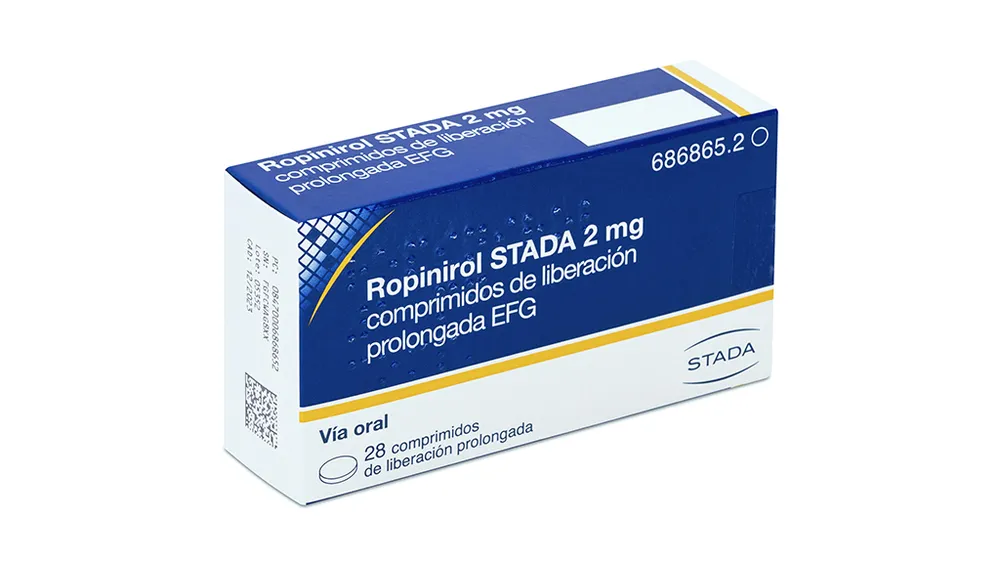
Table of Contents
Package leaflet: Information for the user
Introduction
Package leaflet: Information for the user
Ropinirol Stada 2 mg prolonged-release tablets EFG
Ropinirol Stada 4 mg prolonged-release tablets EFG
Ropinirol Stada 8 mg prolonged-release tablets EFG
Read the entire leaflet carefully before you start taking this medicine, because it contains important information for you.
- Keep this leaflet; you may need to read it again.
- If you have any questions, ask your doctor or pharmacist.
- This medicine has been prescribed for you only, and you should not give it to other people, even if they have the same symptoms as you, because it could harm them.
- If you experience any adverse effects, consult your doctor or pharmacist, even if they are adverse effects not listed in this leaflet. See section 4.
Leaflet contents
- What Ropinirol Stada is and what it is used for
- What you need to know before taking Ropinirol Stada
- How to take Ropinirol Stada
- Possible side effects
- How to store Ropinirol Stada
- Contents of the pack and other information
1. What Ropinirol Stada is and what it is used for
The active substance in Ropinirol Stada is ropinirole, which belongs to a group of medicines called dopamine agonists. Dopamine agonists work in a similar way to a natural substance found in the brain called dopamine.
Ropinirol prolonged-release tablets are used for the treatment of Parkinson's disease.
People with Parkinson's disease have low levels of dopamine in certain parts of the brain. Ropinirol has an effect similar to natural dopamine and thereby reduces the symptoms of Parkinson's disease.
2. What you need to know before taking Ropinirol Stada
DO NOT take Ropinirol Stada:
- if you are allergic to ropinirol or any of the other ingredients of this medicine (listed in section 6).
- if you have severe kidney disease.
- if you have liver disease.
Inform your doctor if you think you are in any of these situations.
Warnings and precautions
Talk to your doctor or pharmacist before starting ropinirol.
- if you are pregnant or think you may be pregnant.
- if you are breastfeeding.
- if you are under 18 years of age.
- if you have a serious heart condition.
- if you have a serious mental disorder.
- if you have any impulsive and/or abnormal behaviour.
Tell your doctor if you experience symptoms such as depression, apathy, anxiety, fatigue, sweating, or pain after stopping or reducing treatment with ropinirol (called dopamine agonist withdrawal syndrome or DAWS). If these symptoms persist for more than a few weeks, your doctor may need to adjust your treatment.
Tell your doctor if you or your family/carer notice that you are developing impulses or urges to behave in ways that are unusual for you and that you cannot resist the impulse, urge, or temptation to carry out certain activities that could harm you or others. This is known as impulse control disorders and may include behaviours such as pathological gambling, compulsive eating or spending, abnormally increased sex drive, or an increase in sexual thoughts or feelings. Your doctor may need to adjust or stop your treatment.
Tell your doctor if you or your family/carer notice that you are experiencing episodes of overactivity, euphoria, or irritability (symptoms of mania). These may occur with or without symptoms of impulse control disorder (see above). Your doctor may need to adjust or stop your treatment.
Tell your doctor if you think you are in any of these situations. Your doctor will decide whether treatment with ropinirol is suitable for you, or whether you need additional monitoring while taking it.
Other medicines and Ropinirol Stada
Tell your doctor or pharmacist if you are taking, have recently taken, or might need to take any other medicine.
Remember to inform your doctor or pharmacist if you start taking a new medicine while taking ropinirol.
Some medicines may affect the action of ropinirol, or make it more likely that you will experience side effects. Ropinirol may also alter the way other medicines work.
These medicines include:
- the antidepressant fluvoxamine.
- medicines for mental disorders, such as sulpiride.
- HRT (hormone replacement therapy).
- metoclopramide, used to treat nausea and heartburn.
- the antibiotics ciprofloxacin or enoxacin.
- any other medicine for Parkinson's disease.
Tell your doctor if you are taking, or have recently taken, any of these medicines.
If you are taking the following medicines with ropinirol, you may need additional blood tests:
- Vitamin K antagonists (used to reduce blood clotting), such as Warfarin (coumarin).
Taking Ropinirol Stada with food and drink
You may take ropinirol with or without food, as you prefer.
Pregnancy, breastfeeding, and fertility
Ropinirol is not recommended during pregnancy, unless your doctor tells you that the benefit of taking ropinirol is greater than any possible risk to the fetus.
Ropinirol should not be used during breastfeeding, as milk production may be affected.
The effect of ropinirol on fertility is unknown.
If you are pregnant or breastfeeding, think you may be pregnant, or are planning to become pregnant, consult your doctor or pharmacist before using this medicine. Your doctor will advise you on what to do if you are breastfeeding or plan to breastfeed. Your doctor may recommend that you stop treatment with ropinirol.
Driving and using machines
Ropinirol may make you feel sleepy. Some people may feel extremely sleepy, or may suddenly fall asleep without warning.
Ropinirol may cause hallucinations (seeing, hearing, or feeling things that are not real).
If you experience this: do not drive, do not use machines, and do not put yourself in situations where feeling sleepy or falling asleep could place you or others at serious risk or risk of death. Do not perform these activities until you are no longer affected.
Talk to your doctor if this could affect you.
Ropinirol Stada contains sodium
This medicine contains less than 1 mmol of sodium (23 mg) per tablet; essentially “sodium-free”.
Ropinirol Stada 2 mg contains lactose
This medicine contains lactose. If your doctor has informed you of an intolerance to certain sugars, consult with them before taking this medicine.
Ropinirol Stada 4 mg contains sunset yellow (E110)
This medicine may cause allergic reactions because it contains sunset yellow (E110). It may cause asthma, especially in patients allergic to acetylsalicylic acid.
3. How to take Ropinirol Stada
Follow exactly the instructions for using this medicine given by your doctor or pharmacist. If in doubt, consult your doctor or pharmacist again.
You may have been prescribed ropinirol alone for the treatment of your Parkinson's disease symptoms, or you may also have been prescribed another medicine called L-dopa (also known as levodopa). If you are taking L-dopa, you might experience some involuntary movements (dyskinesias) when you start taking ropinirol. Inform your doctor if this occurs, as you may need adjustments to the doses of your medicines.
Ropinirol prolonged-release tablets have been designed to release the active ingredient over a 24-hour period. If you have a condition causing medicines to pass through your body very quickly, for example diarrhea, the tablet may not dissolve completely and may not work properly. You may notice tablets in your stools. If this happens, inform your doctor as soon as possible.
What dose of Ropinirol Stada should you take?
It may take some time to determine the optimal ropinirol dose for you.
The recommended starting dose is 2 mg once daily during the first week. Thereafter, your doctor may increase the dose to 4 mg of ropinirol prolonged-release tablets once daily during the second week of treatment. In elderly patients, your doctor may increase the dose more slowly. Afterwards, your doctor may adjust the dose until reaching the most appropriate dose for you. Some patients take up to 24 mg of ropinirol prolonged-release tablets daily.
If you experience adverse effects at the beginning of treatment that you cannot tolerate, consult your doctor. Your doctor may advise you to switch to a lower dose of ropinirol film-coated tablets (immediate release), which you will take three times daily.
Use in children and adolescents
Do not give ropinirol to children. Ropinirol is normally not prescribed for individuals under 18 years of age.
Do not take more Ropinirol Stada tablets than your doctor has recommended.
It may take several weeks before ropinirol starts to work.
How to take your dose of Ropinirol Stada
Take ropinirol once daily, at the same time each day.
Swallow the ropinirol prolonged-release tablets whole with a glass of water.
Do not break, chew, or crush the prolonged-release tablets – doing so may cause you to receive too high a dose, because the medicine would be released into your body too quickly.
If you are switching from ropinirol film-coated tablets (immediate release)
Your doctor will adjust your dose of ropinirol prolonged-release tablets based on the dose of ropinirol film-coated tablets (immediate release) you are currently taking.
Take your ropinirol film-coated tablets (immediate release) as usual the day before switching. Then, take your ropinirol prolonged-release tablets the following morning, and do not take any further ropinirol film-coated tablets (immediate release).
If you take more Ropinirol Stada than you should
If you have taken too many ropinirol tablets, or if you discover that a child has taken them, contact your doctor or pharmacist immediately, or call the Toxicology Information Service at telephone number: 91 562 04 20, stating the medicine and the amount ingested. It is recommended to bring the medicine packaging and leaflet to the healthcare professional.
Someone who has overdosed on ropinirol may experience one or more of the following symptoms: feeling unwell (nausea), dizziness (vomiting), vertigo (a sensation of spinning), drowsiness, physical or mental fatigue, fainting, or hallucinations.
If you forget to take Ropinirol Stada
Do not take extra tablets or a double dose to make up for missed doses.
If you have forgotten to take ropinirol for one or more days, consult your doctor for advice on how to resume treatment.
If you stop taking Ropinirol Stada
Do not stop treatment with ropinirol without first consulting your doctor.
Take ropinirol for as long as your doctor tells you to.
Do not discontinue treatment unless instructed by your doctor.
If you stop treatment with ropinirol abruptly, your Parkinson's disease symptoms may worsen rapidly. A sudden interruption of treatment could cause a condition known as neuroleptic malignant syndrome, which may pose a serious health risk. Symptoms include: akinesia (loss of muscle movement), muscle rigidity, fever, unstable blood pressure, tachycardia (increased heart rate), confusion, or decreased level of consciousness (e.g., coma).
If you need to stop taking ropinirol, your doctor will gradually reduce your dose. If you have any further questions about the use of this medicine, ask your doctor or pharmacist.
4. Possible adverse effects
Like all medicines, this medicine can cause adverse effects, although not everyone will experience them.
Adverse reactions to ropinirol usually occur more frequently at the beginning of treatment or when the dose is increased. Adverse reactions are generally mild and may become less bothersome over time. Inform your doctor if you are concerned about side effects.
Very common adverse effects
May affect more than 1 in 10 people taking ropinirol:
- fainting
- drowsiness
- feeling unwell (nausea)
Common adverse effects
May affect up to 1 in 10 people taking ropinirol:
- falling asleep suddenly without feeling sleepy beforehand (sudden sleep episodes)
- hallucinations (seeing, hearing, or feeling things that are not really there)
- dizziness (vomiting)
- sensation of vertigo (dizziness)
- heartburn
- stomach pain
- constipation
- swelling of the legs, feet, or hands
Uncommon adverse effects
May affect up to 1 in 100 people taking ropinirol:
- dizziness or lightheadedness, especially when standing up suddenly (due to a drop in blood pressure)
- low blood pressure (hypotension)
- feeling very sleepy during the day (excessive somnolence)
- mental problems such as delirium (severe confusion), delusional ideas (irrational thoughts), or paranoia (irrational suspicions)
- hiccups
Some patients may experience the following adverse effects (frequency not known: cannot be estimated from available data):
- allergic reactions such as redness, skin swelling with itching (urticaria), swelling of the face, lips, mouth, tongue, or throat, which may cause difficulty swallowing or breathing, rash, or intense itching (see section 2)
- changes in liver function, which may be detected in blood tests
- acting in an aggressive manner
- excessive use of ropinirol (compulsion to take excessive doses of dopaminergic medication beyond what is needed to control motor symptoms, known as dopamine dysregulation syndrome)
- inability to resist the impulse, desire, or temptation to carry out certain actions that could be harmful to you or others, which may include:
- strong impulse to gamble excessively, despite significant personal or family consequences
- altered or increased sexual interest, and behavior that is very concerning to you or others, for example, excessive sexual behavior
- uncontrollable excessive shopping or spending
- binge eating (eating large amounts of food in a short period of time) or compulsive eating (eating more food than needed to satisfy hunger)
- episodes of hyperactivity, euphoria, or irritability
- after stopping or reducing treatment with ropinirol: depression, apathy, anxiety, fatigue, sweating, or pain (known as dopamine agonist withdrawal syndrome or DAWS)
spontaneous penile erection
Inform your doctor if you experience any of these behaviors; they will advise you on ways to manage or reduce the symptoms.
If you are taking Ropinirol Stada with L-dopa
People who take ropinirol with L-dopa may develop additional side effects:
- a very common side effect is uncontrolled movements (dyskinesias). If you are taking L-dopa, you may experience some uncontrolled movements (dyskinesias) when you start taking ropinirol. Inform your doctor if this occurs; your doctor may need to adjust the dose of the medicines you are taking.
- a common adverse effect is confusion.
Reporting of adverse effects:
If you experience any type of adverse effect, consult your doctor or pharmacist, even if they are possible side effects not listed in this leaflet. You may also report them directly via the Spanish Pharmacovigilance System for Human Medicines: https://www.notificaram.es. By reporting adverse effects, you can help provide more information on the safety of this medicine.
5. Storage of Ropinirole Stada
Keep this medicine out of the sight and reach of children.
Do not use this medicine after the expiry date stated on the blister, on the bottle, and on the carton, following EXP. The expiry date refers to the last day of the month indicated.
Do not store above 25°C.
HDPE bottle: The shelf life after first opening is 60 days.
Medicines should not be disposed of via wastewater or household waste. Return unused medicines and their containers to the SIGRE point at your pharmacy. If you are unsure, ask your pharmacist how to dispose of medicines and containers you no longer need. This will help protect the environment.
6. Contents of the pack and other information
Composition of Ropinirol Stada
- The active substance in Ropinirol Stada is ropinirol.
Each prolonged-release tablet contains 2 mg, 4 mg or 8 mg of ropinirol (as hydrochloride).
- The other components are:
Core of the prolonged-release tablet: ammonium methacrylate copolymer type B, hypromellose (E464), sodium lauryl sulfate, copovidone and magnesium stearate (E572).
Film coating:
- 2 mg: hypromellose (E464), iron oxide red (E172), lactose monohydrate, titanium dioxide (E171) and triacetin.
- 4 mg: macrogol 400, hypromellose (E464), orange-yellow aluminium lake (E110), titanium dioxide (E171) and indigo carmine aluminium lake (E132).
- 8 mg: hypromellose (E464), iron oxide red (E172), iron oxide black (E172), iron oxide yellow (E172), macrogol 400 and titanium dioxide (E171).
Appearance of the product and contents of the pack
Ropinirol Stada 2 mg are pink, round, biconvex prolonged-release tablets, 6.8 ± 0.1 mm in diameter and 5.5 ± 0.2 mm thick.
Ropinirol Stada 4 mg are light brown, oval, biconvex prolonged-release tablets, 12.6 x 6.6 ± 0.1 mm in size and 5.3 ± 0.2 mm thick.
Ropinirol Stada 8 mg are red, oval, biconvex prolonged-release tablets, 19.2 x 10.2 ± 0.2 mm in size and 5.2 ± 0.2 mm thick.
Ropinirol Stada is available in opaque white PVC/PCTFE-aluminum blisters and opaque white HDPE bottles with a white cylindrical polypropylene cap, featuring a tamper-evident ring with three break points and a desiccant insert.
Pack sizes:
Blister: 21, 28, 84 prolonged-release tablets
Bottle: 21, 28, 84 prolonged-release tablets
Only certain pack sizes may be marketed.
Marketing Authorization Holder and Manufacturer
Marketing Authorization Holder
Laboratorio STADA, S.L.
Frederic Mompou, 5
08960 Sant Just Desvern (Barcelona)
Spain
Manufacturer
Pharmathen, S.A.
6, Dervenakion str.,
15351 Pallini, Athens
Greece
or
Pharmathen International S.A.
Sapes Industrial Park, Block 5
(Rodopi) 69300
Greece
or
STADA Arzneimittel AG
Stadastrasse, 2-18
61118 Bad Vilbel
Germany
This medicinal product is authorized in the European Economic Area member states under the following names:
Germany: Ropinirol 2 mg Retardtabletten
Ropinirol 4 mg Retardtabletten
Ropinirol 8 mg Retardtabletten
Spain: Ropinirol Stada 2 mg prolonged-release tablets EFG
Ropinirol Stada 4 mg prolonged-release tablets EFG
Ropinirol Stada 8 mg prolonged-release tablets EFG
France: ROPINIROL EG 2 mg prolonged-release tablet
ROPINIROL EG 4 mg prolonged-release tablet
ROPINIROL EG 8 mg prolonged-release tablet
Italy: Ropinirolo EG STADA 2 mg compresse a rilascio prolungato
Ropinirolo EG STADA 4 mg compresse a rilascio prolungato
Ropinirolo EG STADA 8 mg compresse a rilascio prolungato
Netherlands: Ropinirol retard CF 2 mg tabletten met verlengde afgifte
Ropinirol retard CF 4 mg tabletten met verlengde afgifte
Ropinirol retard CF 8 mg tabletten met verlengde afgifte
Date of the most recent revision of this leaflet: August 2023.
Detailed information on this medicinal product is available on the website of the Spanish Agency of Medicines and Medical Devices (AEMPS) http://www.aemps.gob.es/