Pregabalin Viatris 25 mg hard capsules EFG
Spain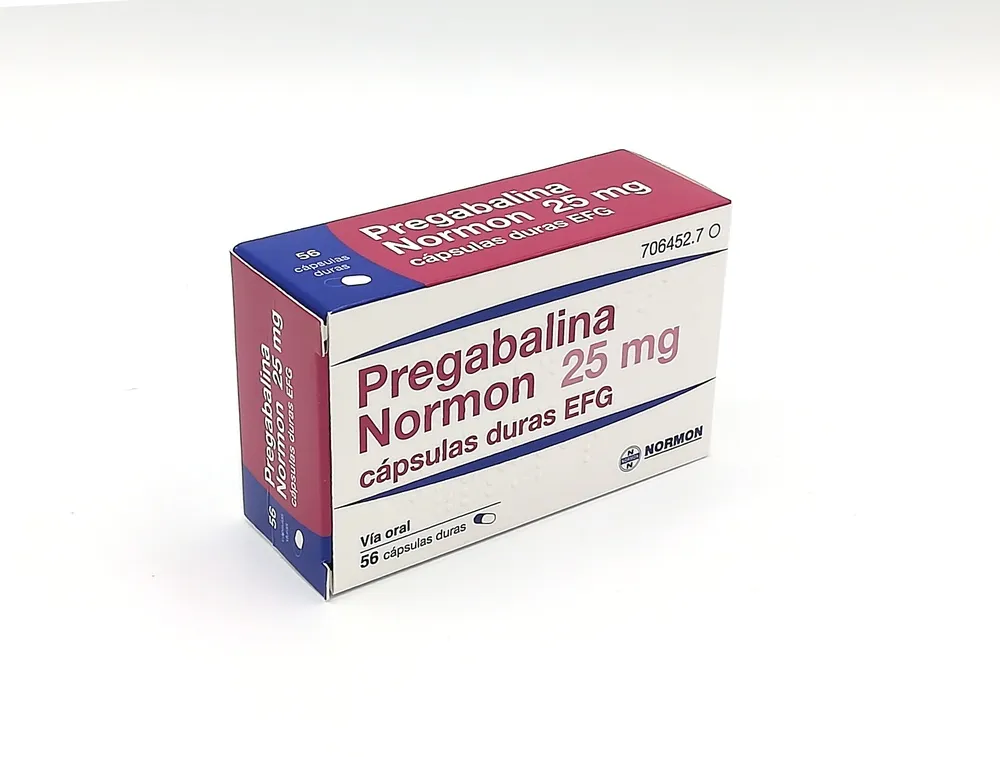
Table of Contents
Patient Information Leaflet
Introduction
Patient Information Leaflet
Pregabalin Mylan 25 mg hard capsules,
Pregabalin Mylan 50 mg hard capsules,
Pregabalin Mylan 75 mg hard capsules,
Pregabalin Mylan 100 mg hard capsules,
Pregabalin Mylan 150 mg hard capsules,
Pregabalin Mylan 200 mg hard capsules,
Pregabalin Mylan 225 mg hard capsules,
Pregabalin Mylan 300 mg hard capsules
pregabalin
Read the entire leaflet carefully before you start taking this medicine, as it contains important information for you.
- Keep this leaflet, as you may need to read it again.
- If you have any questions, consult your doctor or pharmacist.
- This medicine has been prescribed for you only and must not be given to other people, even if they have the same symptoms as you, since it could harm them.
- If you experience any adverse effects, consult your doctor or pharmacist, even if they are effects not listed in this leaflet. See section 4.
Leaflet Contents
- What Pregabalin Mylan is and what it is used for
- What you need to know before taking Pregabalin Mylan
- How to take Pregabalin Mylan
- Possible side effects
- How to store Pregabalin Mylan
- Contents of the pack and other information
1. What Pregabalin Mylan is and what it is used for
Pregabalin Mylan contains the active substance pregabalin, which belongs to a group of medicines used to treat epilepsy, neuropathic pain, and generalized anxiety disorder (GAD) in adults.
Peripheral and central neuropathic pain: Pregabalin Mylan is used to treat chronic pain caused by nerve damage. Various conditions can cause peripheral neuropathic pain, such as diabetes or shingles (herpes). The pain may be described as warmth, burning, throbbing, shooting, stabbing, sharp pain, cramps, continuous pain, tingling, numbness, or pins and needles. Peripheral and central neuropathic pain may also be associated with mood changes, sleep disturbances, fatigue, and may affect physical and social activities and overall quality of life.
Epilepsy: Pregabalin Mylan is used in the treatment of certain types of epilepsy (partial seizures with or without secondary generalization) in adults. Your doctor will prescribe Pregabalin Mylan to treat epilepsy when your current treatment does not adequately control the condition. You should take Pregabalin Mylan as an add-on to your current treatment. Pregabalin Mylan must not be used as monotherapy, but always in combination with other antiepileptic treatments.
Generalized anxiety disorder: Pregabalin Mylan is used to treat generalized anxiety disorder (GAD). Symptoms of GAD include excessive and prolonged anxiety and worry that are difficult to control. GAD may also cause restlessness or a feeling of being keyed up or on edge, easy fatigue, difficulty concentrating or mind going blank, irritability, muscle tension, or sleep disturbance. This is different from the everyday stress and worries of normal life.
2. What you need to know before starting to take Pregabalin Mylan
Do not take Pregabalin Mylan
- If you are allergic to pregabalin or to any of the other ingredients of this medicine (listed in section 6).
Warnings and precautions
Talk to your doctor or pharmacist before starting to take Pregabalin Mylan.
-
Some patients treated with Pregabalin Mylan have reported symptoms suggesting an allergic reaction. These symptoms include swelling of the face, lips, tongue, and throat, as well as the appearance of widespread skin rash. If you experience any of these symptoms, you must seek medical attention immediately.
-
Pregabalin Mylan has been associated with dizziness and somnolence, which may increase the risk of accidental injuries (falls) in elderly patients. Therefore, you should exercise caution until you become familiar with the effects this medicine may have.
-
Pregabalin Mylan may cause blurred vision, vision loss, or other changes in eyesight, many of which are transient. If you experience any changes in your vision, you must inform your doctor immediately.
-
Diabetic patients who gain weight while taking pregabalin may require adjustments in their diabetes medications.
-
Certain adverse effects, such as somnolence, may be more frequent, as patients with spinal cord injury may be taking other medications for conditions such as pain or spasticity, which have adverse effects similar to those of Pregabalin; thus, the intensity of these effects may increase when taken concomitantly.
-
Cases of heart failure have been reported in some patients treated with Pregabalin Mylan. Most of these patients were elderly and had cardiovascular disease. Before using this medicine, you must inform your doctor if you have a history of heart disease.
-
Cases of renal failure have been reported in some patients treated with Pregabalin Mylan. If during treatment with Pregabalin Mylan you notice a decrease in your ability to urinate, you must inform your doctor, as discontinuation of treatment may improve this condition.
-
A small number of people taking antiepileptic medicines such as Pregabalin Mylan have had thoughts of harming themselves or of suicide. If at any time you experience such thoughts, contact your doctor as soon as possible.
-
When Pregabalin Mylan is taken together with other medicines that may cause constipation (such as certain types of pain medications), gastrointestinal problems (e.g., constipation, intestinal blockage, or intestinal paralysis) may occur. Inform your doctor if you experience constipation, especially if you are prone to this problem.
-
Before taking this medicine, you must inform your doctor if you have a history of alcoholism or of drug abuse or dependence. Do not take a higher dose than the one prescribed to you.
-
Cases of seizures have been reported during treatment with Pregabalin Mylan or shortly after discontinuation of treatment with Pregabalin Mylan. If you experience seizures, contact your doctor immediately.
-
Cases of reduced brain function (encephalopathy) have been reported in some patients taking Pregabalin Mylan who also had other medical conditions. Inform your doctor if you have a history of serious illness, including liver or kidney disease.
Children and adolescents
The safety and efficacy of pregabalin have not been established in children and adolescents (under 18 years of age), and therefore pregabalin should not be used in this age group.
Taking Pregabalin Mylan with other medicines
Inform your doctor or pharmacist if you are taking, have recently taken, or might need to take any other medicines.
Pregabalin Mylan and certain medicines may affect each other (interactions). When Pregabalin Mylan is used together with certain medicines, adverse reactions observed with these medicines may be potentiated, including respiratory failure and coma. The degree of dizziness, somnolence, and reduced concentration may increase if Pregabalin Mylan is taken together with other medicines containing:
- Oxycodone – (used as an analgesic)
- Lorazepam – (used to treat anxiety)
- Alcohol
Pregabalin Mylan can be taken with oral contraceptives.
Taking Pregabalin Mylan with food, drinks, and alcohol
Pregabalin Mylan capsules can be taken with or without food.
It is recommended not to consume alcohol during treatment with Pregabalin Mylan.
Pregnancy and breastfeeding
You should not take Pregabalin Mylan during pregnancy or breastfeeding unless your doctor has instructed you to do so. An effective method of contraception should be used in women of childbearing potential. If you are pregnant or breastfeeding, think you may be pregnant, or plan to become pregnant, consult your doctor or pharmacist before using this medicine.
Driving and using machines
Pregabalin Mylan may cause dizziness, somnolence, and reduced concentration. You should not drive, operate heavy machinery, or engage in other potentially hazardous activities until you know whether this medicine affects your ability to perform these activities.
3. How to take Pregabalin Mylan
Follow exactly the instructions for using this medicine as given by your doctor or pharmacist. If in doubt, consult your doctor or pharmacist again.
Your doctor will determine the appropriate dose for you.
Pregabalin Mylan is for oral use only.
Peripheral and central neuropathic pain, epilepsy, or generalized anxiety disorder:
-
Take the number of capsules prescribed by your doctor.
-
The dose, which has been adjusted for you and your condition, will generally be between 150 mg and 600 mg daily.
-
Your doctor will instruct you to take Pregabalin Mylan two or three times a day. If twice daily, take Pregabalin Mylan once in the morning and once at night, approximately at the same time each day. If three times daily, take Pregabalin Mylan in the morning, at midday, and at night, approximately at the same time each day.
If you feel that the effect of Pregabalin Mylan is too strong or too weak, inform your doctor or pharmacist.
If you are an elderly patient (over 65 years of age), you should take Pregabalin Mylan as usual, unless you have kidney problems.
Your doctor may prescribe a different dosing regimen or different doses if you have kidney problems.
Swallow the capsule whole with water.
Continue taking Pregabalin Mylan until your doctor tells you to stop.
If you take more Pregabalin Mylan than you should
Call your doctor or go to the nearest emergency department immediately. Take the pack or bottle of Pregabalin Mylan capsules with you. As a result of taking more Pregabalin Mylan than you should, you may feel drowsy, confused, agitated, or restless. Seizures have also been reported.
If you forget to take Pregabalin Mylan
It is important that you take Pregabalin Mylan capsules regularly at the same time each day. If you forget to take a dose, take it as soon as you remember, unless it is nearly time for your next dose. In that case, continue with your next dose as normal. Do not take a double dose to make up for a missed dose.
If you stop taking Pregabalin Mylan
Do not stop taking Pregabalin Mylan unless your doctor tells you to. If you are going to stop treatment, this should be done gradually over a minimum of one week.
After stopping short- or long-term treatment with Pregabalin Mylan, you should be aware that you may experience certain adverse effects. These include sleep problems, headache, nausea, feeling anxious, diarrhea, flu-like symptoms, seizures, restlessness, depression, pain, sweating, and dizziness. These symptoms may occur more frequently or be more severe if you have been taking Pregabalin Mylan for a longer period of time.
If you have any further questions about the use of this medicine, ask your doctor or pharmacist.
4. Possible adverse effects
Like all medicines, this medicine can cause adverse effects, although not everyone experiences them.
Very common: may affect more than 1 in 10 people
- Dizziness, drowsiness, headache.
Common: may affect up to 1 in 10 people
- Increased appetite.
- Euphoria, confusion, disorientation, decreased sexual appetite, irritability.
- Attention disturbance, clumsiness, memory impairment, memory loss, tremors, difficulty speaking, tingling sensation, numbness, sedation, lethargy, insomnia, fatigue, abnormal sensation.
- Blurred vision, double vision.
- Dizziness, balance problems, falls.
- Dry mouth, constipation, vomiting, flatulence, diarrhea, nausea, bloated abdomen.
- Difficulty in erection.
- Swelling of the body including limbs.
- Drunken feeling, gait disturbances.
- Weight gain.
- Muscle cramps, joint pain, back pain, pain in the extremities.
- Sore throat.
Uncommon: may affect up to 1 in 100 people
- Loss of appetite, weight loss, low blood sugar levels, high blood sugar levels.
- Altered self-perception, restlessness, depression, agitation, mood changes, difficulty finding words, hallucinations, strange dreams, panic attacks, apathy, aggressiveness, elevated mood, mental deterioration, difficulty thinking, increased sexual appetite, sexual relationship problems including inability to reach climax, delayed ejaculation.
- Vision changes, unusual eye movements, visual disturbances including tunnel vision, light flashes, spasmodic movements, diminished reflexes, hyperactivity, dizziness upon standing, sensitive skin, loss of taste, burning sensation, movement tremor, decreased consciousness, loss of consciousness, fainting, increased sensitivity to noise, general malaise.
- Dry eyes, eye swelling, eye pain, tired eyes, watery eyes, eye irritation.
- Heart rhythm disturbances, increased heart rate, low blood pressure, high blood pressure, changes in heart rhythm, heart failure.
- Flushing, hot flushes.
- Difficulty breathing, nasal dryness, nasal congestion.
- Increased saliva production, burning sensations, numbness around the mouth.
- Sweating, rash, chills, fever.
- Muscle spasms, joint swelling, muscle stiffness, pain including muscle pain, neck pain.
- Breast pain.
- Difficulty or pain when urinating, inability to control urine.
- Weakness, thirst, chest tightness.
- Changes in blood and liver test results (elevated blood creatine phosphokinase, elevated alanine aminotransferase, elevated aspartate aminotransferase, decreased platelet count, neutropenia, increased blood creatinine, decreased blood potassium).
- Hypersensitivity, facial swelling, itching, urticaria, runny nose, nosebleeds, cough, snoring.
- Painful menstrual periods.
- Cold sensation in hands and feet.
Rare: may affect up to 1 in 1,000 people
- Altered sense of smell, fluctuating vision, depth perception disturbance, visual brightness, vision loss.
- Dilated pupils, strabismus.
- Cold sweat, throat tightness, tongue swelling.
- Pancreatitis.
- Difficulty swallowing.
- Slow or reduced body movement.
- Difficulty writing correctly.
- Increased fluid in the abdominal area.
- Fluid in the lungs.
- Seizures.
- Changes in electrocardiogram (ECG) corresponding to heart rhythm disturbances.
- Muscle damage.
- Milk secretion, abnormal breast growth, breast enlargement in men.
- Interruption of menstrual periods.
- Renal failure, reduced urine output, urine retention.
- Decreased white blood cell count.
- Inappropriate behavior.
- Allergic reactions (which may include difficulty breathing, eye swelling (keratitis), and a severe skin reaction characterized by rash, blisters, skin peeling, and pain).
- Jaundice (yellowing of the skin and eyes).
Very rare: may affect up to 1 in 10,000 people
- Liver failure.
- Hepatitis (liver inflammation).
If you experience swelling of the face or tongue, or if your skin reddens and develops blisters or peeling, you should seek immediate medical attention.
Certain adverse effects, such as drowsiness, may be more frequent because patients with spinal cord injury may be taking other medicines to treat, for example, pain or spasticity, which have adverse effects similar to those of Pregabalin, so that the intensity of these effects may increase when taken together.
Reporting of adverse effects
If you experience any adverse effect, consult your doctor or pharmacist, even if it is a possible adverse effect not listed in this leaflet. You may also report them directly through the national reporting system included in Appendix V. By reporting adverse effects, you can help provide more information on the safety of this medicine.
5. Storage of Pregabalin Mylan
Keep this medicine out of the sight and reach of children.
Do not use this medicine after the expiry date which is stated on the carton and on the blister after EXP. The expiry date is the last day of the month indicated.
Blister: Keep in the original packaging to protect from moisture.
Vial: Keep the vial tightly closed to protect from moisture.
Medicines must not be disposed of via wastewater or household waste. Ask your pharmacist how to dispose of medicines and their packaging when no longer needed. This will help protect the environment.
6. Contents of the pack and other information
Composition of Pregabalin Mylan
The active substance is pregabalin. Each hard capsule contains 25 mg, 50 mg, 75 mg, 100 mg, 150 mg, 200 mg, 225 mg or 300 mg of pregabalin.
The other components are: hydroxypropyl cellulose, maize starch, talc, gelatin, titanium dioxide (E171), sodium lauryl sulfate, black ink (containing shellac lacquer, black iron oxide (E172), macrogol, potassium hydroxide and concentrated ammonia solution), yellow iron oxide (E172) and erythrosine (E127).
Appearance of Pregabalin Mylan and contents of the pack
Hard capsule.
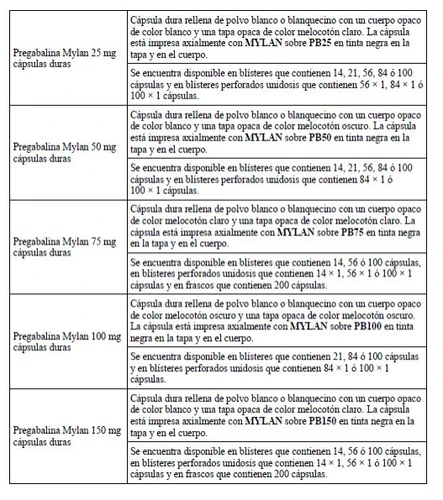
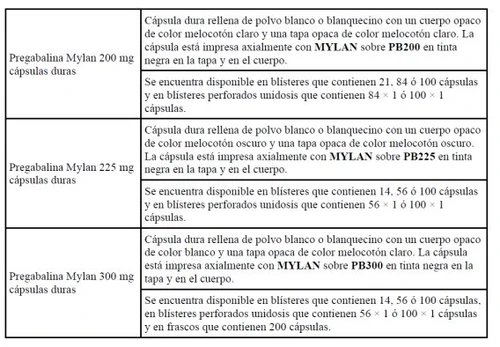
Only certain pack sizes may be marketed.
Marketing Authorization Holder
Mylan S.A.S
117 Allée des Parcs
69800 Saint-Priest
France
Manufacturers
Mylan Hungary Kft, Mylan utca 1, Komárom, 2900, Hungary
McDermott Laboratories Limited trading as Gerard Laboratories, 35/36 Baldoyle Industrial Estate, Grange Road, Dublin 13, Ireland
Mylan B.V., Dieselweg 25, 3752 LB Bunschoten, Netherlands
Logiters, Logistica, Portugal, S.A., Estrada dos Arneiros, 4, Azambuja, 2050-544, Portugal
For further information about this medicinal product, please contact the local representative of the Marketing Authorization Holder.
Belgium/Belgium/Belgium Mylan bvba/sprl Tel/Tel: + 32 (0)2 658 61 00 | Lithuania BGP Products UAB Tel: +370 5 205 1288 |
Bulgaria Generics Pharma Bulgaria EOOD Tel: +359 2 44 55 400 | Luxembourg/Luxembourg Mylan bvba/sprl Tel: + 32 (0)2 658 61 00 (Belgium/Belgium) |
Czech Republic Mylan Pharmaceuticals s.r.o. Tel: +420 222 004 400 | Hungary Mylan EPD Kft Tel: + 36 1 465 2100 |
Denmark Mylan AB Tlf: + 46 855 522 750 (Sweden) | Malta V.J. Salomone Pharma Ltd. Tel: + 356 21 22 01 74 |
Germany Mylan dura GmbH Tel: + 49-(0) 6172 888 01 | Netherlands Mylan BV Tel: + 31 (0)20 426 3300 |
Greece Generics Pharma Hellas EPE Tel: +30 210 993 6410 | Austria Arcana Arzneimittel GmbH Tel: +43 1 416 2418 |
Spain Mylan Pharmaceuticals, S.L Tel: + 34 900 102 712 | Poland Mylan Healthcare Sp. z.o.o. Tel: + 48 22 546 64 00 |
France Mylan S.A.S Tel: +33 4 37 25 75 00 | Portugal Mylan, Lda. Tel: + 351 21 412 72 56 |
Croatia Mylan Hrvatska d.o.o. Tel: +385 1 23 50 599 | Romania BGP Products SRL Tel: +40 372 579 000 |
Ireland Mylan Ireland Tel: +353 (0) 87 1694982 | Slovenia GSP Proizvodi d.o.o. Tel: + 386 1 236 31 85 |
Iceland Mylan AB Tel: + 46 855 522 750 (Sweden) | Slovakia Mylan s.r.o. Tel: +421 2 32 199 100 |
Italy Mylan S.p.A Tel: + 39 02 612 46921 | Finland/Finland Mylan OY Puh/Tel: + 358 20 720 9555 |
Cyprus Pharmaceutical Trading Co. Ltd. Tel: + 357 99403969 | Sweden Mylan AB Tel: + 46 855 522 750 |
Latvia BGP Products SIA Tel: +371 676 055 80 | United Kingdom Generics [UK] Ltd Tel: +44 1707 853000 |
Date of the most recent review of this leaflet
Detailed information on this medicine is available on the website of the European Medicines Agency: http://www.ema.europa.eu.