Nordimet 17.5 mg solution for injection in pre-filled pen
Spain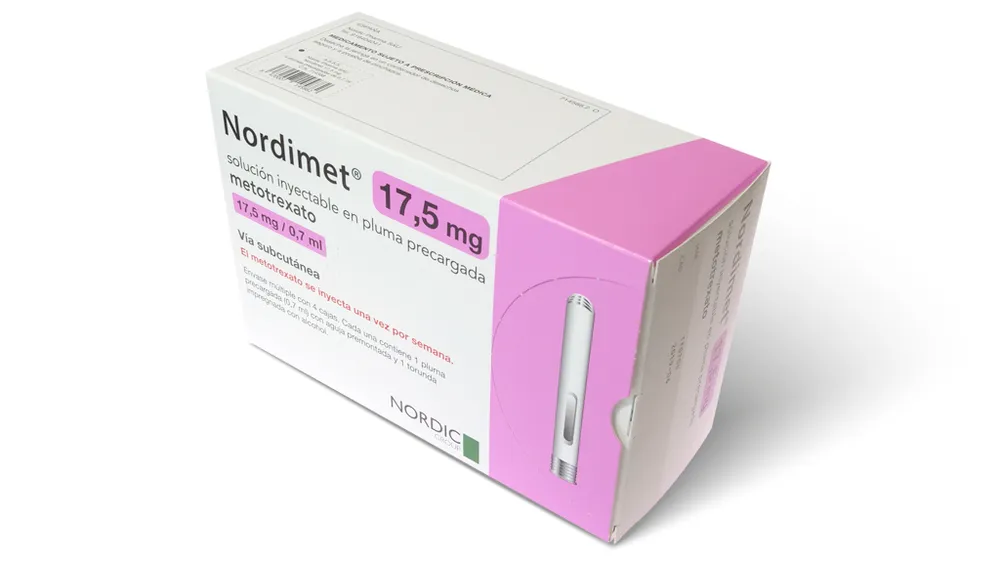
Table of Contents
Package leaflet: Information for the user
Introduction
Package leaflet: information for the user
Nordimet 7.5 mg solution for injection in pre-filled pen
Nordimet 10 mg solution for injection in pre-filled pen
Nordimet 12.5 mg solution for injection in pre-filled pen
Nordimet 15 mg solution for injection in pre-filled pen
Nordimet 17.5 mg solution for injection in pre-filled pen
Nordimet 20 mg solution for injection in pre-filled pen
Nordimet 22.5 mg solution for injection in pre-filled pen
Nordimet 25 mg solution for injection in pre-filled pen
methotrexate
Read the entire leaflet carefully before you start using this medicine, because it contains important information for you.
- Keep this leaflet, as you may need to read it again.
- If you have any questions, ask your doctor or pharmacist.
- This medicine has been prescribed for you only, and you should not give it to others, even if they have the same symptoms as you, because it could harm them.
- If you experience any adverse effects, consult your doctor or pharmacist, even if they are effects not listed in this leaflet. See section 4.
Leaflet contents
- What Nordimet is and what it is used for
- What you need to know before using Nordimet
- How to use Nordimet
- Possible side effects
- How to store Nordimet
- Contents of the pack and other information
1. What Nordimet is and what it is used for
Nordimet contains the active substance methotrexate, which:
- reduces inflammation or swelling, and
- reduces the activity of the immune system (the body's natural defense mechanism). An overactive immune system has been associated with inflammatory diseases.
Nordimet is a medicine used to treat several inflammatory conditions:
- Active rheumatoid arthritis in adults. Active rheumatoid arthritis is an inflammatory disease affecting the joints.
- Severe active juvenile idiopathic arthritis involving five or more joints (this form is therefore called polyarticular), in patients who have had an inadequate response to non-steroidal anti-inflammatory drugs (NSAIDs).
- Moderate to severe plaque psoriasis in adults who are candidates for systemic therapy, as well as severe psoriasis affecting the joints (psoriatic arthritis) in adult patients.
- Induction of remission in adults with moderate steroid-dependent Crohn's disease, in combination with corticosteroids.
- Maintenance of remission in Crohn's disease in adults who have responded to methotrexate, as monotherapy.
2. What you need to know before using Nordimet
Do not use Nordimet if:
- you are allergic to methotrexate or any of the other ingredients of this medicine (listed in section 6).
- you have severe kidney disease (your doctor can tell you whether you have severe kidney disease).
- you have severe liver disease (your doctor can tell you whether you have severe liver disease).
- you have disorders of the blood-forming system.
- you consume large amounts of alcohol.
- you have a weakened immune system.
- you have a serious or existing infection, for example, tuberculosis or HIV.
- you have gastrointestinal ulcers.
- you are pregnant or breastfeeding (see section “Pregnancy, breastfeeding and fertility”).
- you are receiving vaccines containing live microorganisms at the same time.
Warnings and precautions
Acute pulmonary hemorrhage has been reported with methotrexate in patients with underlying rheumatological disease. If you notice blood when spitting or coughing, contact your doctor immediately.
An increase in the size of lymph nodes (lymphoma) may occur, in which case treatment must be discontinued.
Diarrhea may be a toxic effect of Nordimet and requires interruption of treatment.
If you experience diarrhea, speak with your doctor.
Certain brain disorders (encephalopathy/leukoencephalopathy) have been reported in cancer patients receiving methotrexate. These side effects cannot be ruled out when methotrexate is used to treat other diseases.
If you, your partner, or caregiver notice the onset or worsening of neurological symptoms such as generalized muscle weakness, vision disturbances, changes in thinking, memory, and orientation leading to confusion and personality changes, contact your doctor immediately, as these may be symptoms of a very rare serious brain infection called progressive multifocal leukoencephalopathy (PML).
Methotrexate may make your skin more sensitive to sunlight. Avoid strong sunlight and do not use sunbeds or ultraviolet lamps without medical advice. To protect your skin from intense sunlight, wear suitable clothing or use a sunscreen with a high protection factor.
Important warning regarding administration of Nordimet
Methotrexate should only be used for the treatment of rheumatic diseases, skin conditions, and Crohn's disease once weekly. Incorrect administration of methotrexate may lead to serious adverse effects that could be fatal. Please read section 3 of this leaflet carefully.
Consult your doctor before starting Nordimet if:
- you have diabetes mellitus and are being treated with insulin;
- you have prolonged inactive infections (e.g., tuberculosis, hepatitis B or C, herpes zoster);
- you have or have had any liver disease or nephropathy;
- you have problems with lung function;
- you have severe obesity;
- you have abnormal accumulation of fluid in the abdomen or in the cavity between the lungs and the chest wall (ascites, pleural effusions);
- you are dehydrated or have a condition causing dehydration (e.g., dehydration due to vomiting, diarrhea, or inflammation of the mouth and lips).
If you have previously experienced skin problems after radiotherapy (radiation-induced dermatitis) or skin burns, these changes may reappear when taking Nordimet.
Children, adolescents, and elderly patients
Dosing instructions depend on the patient's body weight.
Use is not recommended in children under 3 years of age due to insufficient experience with this medicine in this age group.
Children, adolescents, and elderly patients treated with Nordimet should be closely monitored medically to detect possible adverse effects as early as possible.
The dose for elderly patients should be reduced due to age-related decline in liver and kidney function.
Special precautionary measures for treatment with Nordimet
Methotrexate temporarily affects sperm and egg production. Methotrexate may cause miscarriages and severe birth defects. If you are a woman, you must avoid becoming pregnant while receiving methotrexate and for at least 6 months after stopping treatment with methotrexate. If you are a man, you must avoid fathering a child while receiving methotrexate and for at least 3 months after stopping treatment.
See also section “Pregnancy, breastfeeding and fertility”.
Skin changes caused by psoriasis may worsen during treatment with Nordimet upon exposure to ultraviolet radiation.
Follow-up examinations and recommended precautions
Even when methotrexate is used at low doses, serious adverse effects may occur. To detect them early, your doctor will perform regular check-ups and laboratory tests.
Before starting treatment:
Before starting treatment, you will have a blood test to determine whether you have sufficient blood cells. You will also have a blood test to check liver function and detect whether you have hepatitis. In addition, serum albumin levels (a blood protein), hepatitis status (liver infection), and kidney function will be checked. Your doctor may also decide to perform additional liver tests, which may include imaging of the liver or taking a small tissue sample from the liver for more detailed examination. Your doctor may also check whether you have tuberculosis and may perform a chest X-ray or lung function test.
During treatment:
Your doctor may perform the following examinations:
- Examination of the oral cavity and pharynx to detect changes in the mucosa, such as inflammation or ulcers.
- Blood tests/full blood count including blood cell count and measurement of serum methotrexate levels.
- Blood tests to monitor liver function.
- Imaging tests to monitor liver status.
- Taking a small tissue sample from the liver for more detailed examination.
- Blood tests to monitor kidney function.
- Monitoring of the respiratory tract and, if necessary, lung function tests.
It is very important that you attend these scheduled examinations.
If the results of some of these tests are abnormal, your doctor will adjust your treatment accordingly.
Other medicines and Nordimet
Inform your doctor or pharmacist if you are taking, have recently taken, or might need to take any other medicines.
It is especially important that you inform your doctor if you are taking:
- other treatments for rheumatoid arthritis or psoriasis such as leflunomide, sulfasalazine (a medicine which, in addition to being used for arthritis and psoriasis, is also used to treat ulcerative colitis), acetylsalicylic acid, phenylbutazone, or amidopyrine;
- cyclosporine (to suppress the immune system);
- azathioprine (used to prevent organ transplant rejection);
- retinoids (used to treat psoriasis and other skin disorders);
- anticonvulsant medicines (used to prevent seizures), such as phenytoin, valproate, or carbamazepine;
- cancer treatments;
- barbiturates (injection for sleep);
- tranquilizers;
- oral contraceptives;
- probenecid (used to treat gout);
- antibiotics (e.g., penicillin, glycopeptides, trimethoprim-sulfamethoxazole, sulfonamides, ciprofloxacin, cephalothin, tetracyclines, chloramphenicol);
- pyrimethamine (used to prevent and treat malaria);
- vitamin preparations containing folic acid;
- proton pump inhibitors (medicines that reduce gastric acid production and are used to treat heartburn or severe ulcers), such as omeprazole or pantoprazol;
- theophylline (used to treat asthma);
- colestyramine (used to treat high cholesterol, pruritus, or diarrhea);
- NSAIDs, non-steroidal anti-inflammatory drugs (used to treat pain or inflammation);
- p-aminobenzoic acid (used to treat skin disorders);
- any vaccine containing live microorganisms (should be avoided), such as vaccines for measles, mumps, influenza, and yellow fever;
- metamizole (synonyms: novaminsulfone and dipyrone) (a medicine for severe pain and/or fever);
- nitrous oxide (a gas used in general anesthesia).
Nordimet with food, drinks, and alcohol
During treatment with Nordimet, you should avoid alcohol consumption and excessive intake of coffee, caffeinated soft drinks, and black tea, as they may increase adverse effects or interfere with the effectiveness of Nordimet. Also, ensure you drink plenty of fluids during treatment with Nordimet, as dehydration (reduction of body water) may increase Nordimet toxicity.
Pregnancy, breastfeeding, and fertility
If you are pregnant or breastfeeding, think you may be pregnant, or plan to become pregnant, consult your doctor before using this medicine.
Pregnancy
Do not use Nordimet during pregnancy or if you are trying to become pregnant. Methotrexate may cause congenital abnormalities, harm the fetus, or cause miscarriage. It is associated with malformations of the skull, face, heart and blood vessels, brain, and limbs. Therefore, it is very important that methotrexate is not given to pregnant women or women planning to become pregnant. In women of childbearing age, any possibility of pregnancy must be ruled out using appropriate measures, for example, a pregnancy test, before starting treatment. You must avoid becoming pregnant while taking methotrexate and for at least 6 months after stopping treatment by using reliable contraceptive methods during this time (see also section “Warnings and precautions”).
If you become pregnant during treatment or suspect you may be pregnant, speak with your doctor as soon as possible. You must be informed about the risk of harmful effects on the fetus during treatment.
If you wish to become pregnant, you should consult your doctor, who may refer you to a specialist before the planned start of treatment.
Breastfeeding
Do not breastfeed during treatment, as methotrexate passes into breast milk. If your doctor considers methotrexate treatment absolutely necessary during breastfeeding, you must stop breastfeeding.
Male fertility
Available evidence does not indicate an increased risk of malformations or miscarriages if the father takes less than 30 mg/week of methotrexate. However, a certain risk cannot be completely ruled out. Methotrexate may be genotoxic. This means that the medicine may cause genetic mutations. Methotrexate may affect sperm production and cause congenital abnormalities. For this reason, you should avoid fathering a child or donating semen while taking methotrexate and for at least 3 months after stopping treatment.
Driving and using machines
Adverse effects affecting the central nervous system, such as fatigue and dizziness, may occur during treatment with Nordimet. In some cases, the ability to drive vehicles and/or use machines may be reduced. If you feel fatigued or dizzy, you should not drive or use machines.
Nordimet contains sodium
This medicine contains less than 1 mmol (23 mg) of sodium per dose, i.e., essentially “sodium-free”.
3. How to use Nordimet
Important warning about the dose of Nordimet
Use Nordimet only once per week for the treatment of rheumatoid arthritis, active juvenile idiopathic arthritis, psoriasis, psoriatic arthritis, and Crohn's disease, which require weekly administration. Overuse of Nordimet can be fatal. Read section 3 of this leaflet very carefully. If you have any doubts, consult your doctor or pharmacist before taking this medicine.
Follow exactly the dosing instructions for this medicine as directed by your doctor. If in doubt, consult your doctor or pharmacist again.
Nordimet is administered only once per week. You and your doctor may agree on which day of the week you will receive the injection each week.
Incorrect administration of Nordimet may cause serious adverse effects that could be fatal.
The recommended dose is:
Dose in patients with rheumatoid arthritis
The recommended initial dose is 7.5 mg of methotrexate once per week.
Your doctor may increase the dose if the dose used is not effective but is well tolerated. The average weekly dose is 15–20 mg. A weekly dose exceeding 25 mg should generally not be exceeded. When Nordimet begins to take effect, your doctor may gradually reduce the dose to the lowest effective maintenance dose possible.
Improvement of symptoms is generally expected after 4–8 weeks of treatment. Symptoms may return if treatment with Nordimet is interrupted.
Use in adults with moderate to severe plaque psoriasis or severe psoriatic arthritis
Your doctor will administer a single test dose of 5–10 mg to evaluate possible adverse effects.
If the test dose is well tolerated, treatment will continue one week later with a dose of approximately 7.5 mg.
A response to treatment is generally expected after approximately 2–6 weeks. Depending on the effects of treatment and blood and urine test results, treatment will either continue or be discontinued.
Dose in adult patients with Crohn's disease
Your doctor will start treatment with a weekly dose of 25 mg. A response to treatment is generally expected after 8–12 weeks. Depending on the effects of treatment, your doctor may decide, when appropriate, to reduce the dose to 15 mg per week.
Use in children and adolescents under 16 years of age with polyarticular forms of juvenile idiopathic arthritis
Your doctor will calculate the required dose based on the child's body surface area (m²), and the dose will be expressed in mg/m².
Use in children < 3 years of age is not recommended, as there is insufficient experience in this age group.
Method and duration of administration
Nordimet is administered by subcutaneous injection (under the skin). It should be injected once per week, and it is recommended to inject Nordimet on the same day each week.
At the beginning of your treatment, a healthcare professional may administer Nordimet to you. However, your doctor may decide that you can learn to self-inject Nordimet. You will receive appropriate training for this. Under no circumstances should you attempt to self-inject unless you have been taught how to do so.
The duration of treatment will be determined by the doctor responsible for your treatment. Treatment of rheumatoid arthritis, juvenile idiopathic arthritis, plaque psoriasis, psoriatic arthritis, and Crohn's disease with Nordimet is long-term.
Information on how to self-inject Nordimet
If you have difficulty handling the pen, consult your doctor or pharmacist. Do not attempt to self-inject unless you have been trained to do so. If you are unsure, consult your doctor or nurse immediately.
Before self-injecting Nordimet
- Check the expiry date of the medicine. Do not use it if it has expired.
- Check that the pen is not damaged and that the medicine is a clear, yellowish solution. Otherwise, use another pen.
- Examine the site of the previous injection to check for redness, skin color changes, swelling, discharge, or ongoing pain. If so, speak with your doctor or nurse.
- Decide where you will inject the medicine. Change the injection site each time.
Instructions for self-injecting Nordimet
-
Wash your hands thoroughly with soap and water.
-
Sit or lie down in a comfortable, relaxed position. Make sure you can see the area of skin where the injection will be given.
-
The pen is pre-filled and ready to use. Visually inspect the pen. You should be able to see a yellow liquid through the viewing window. A small air bubble may be visible; this will not affect the injection and will not harm you.
A drop may appear at the needle tip. This is normal.
-
Choose an injection site and clean it with the alcohol swab provided. Allow 30 to 60 seconds for it to take effect. Suitable injection sites include the skin on the front of the abdominal wall and the skin on the front of the thigh.
-
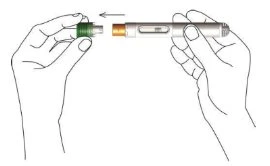
While holding the body of the pen, gently pull the green protective cap straight off the device. Do not twist or bend it.
After removing the cap, keep the pen in your hand. Avoid contact with any other surfaces. This helps ensure the pen is not accidentally activated and the needle remains clean.
-
Form a skin fold by gently pinching the skin at the injection site with your index and thumb fingers. Make sure to hold the skin fold throughout the injection.
-
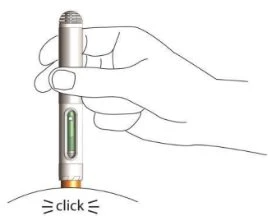
Move the pen toward the skin fold (injection site) with the needle shield pointing directly at the injection site. Place the yellow needle shield against the injection site so that the entire edge of the needle shield is in contact with the skin.
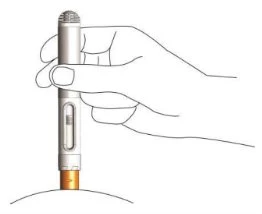
- Press down firmly with the pen on the skin until you hear and feel a click.
This activates the pen, and the solution will be automatically injected into the skin.
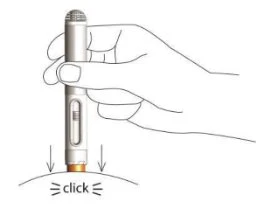
- The injection lasts up to 10 seconds. You will feel and hear a second click once the injection is complete.
- Wait an additional 2–3 seconds before removing the pen from the skin. The pen's safety shield will lock automatically to prevent needlestick injuries. You may now release the skin fold.
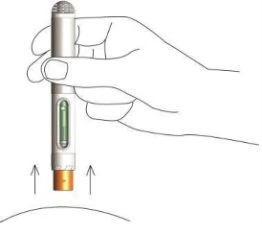
- Visually inspect the pen through the viewing window. You should see green plastic. This indicates that all the liquid has been injected. Dispose of the used pen in the sharps container provided. Close the container lid tightly and keep it out of reach of children. In case of accidental contact of methotrexate with the skin or soft tissues, rinse the area thoroughly with plenty of water.
If you use more Nordimet than you should
Follow the dosing recommendations provided by your treating doctor. Do not change the dose without consulting your doctor.
If you suspect you have used more Nordimet than you should, inform your doctor or go immediately to the nearest hospital. Take the medicine packaging and this leaflet with you.
An overdose of methotrexate may cause serious toxic reactions. Symptoms of overdose may include rapid bruising or bleeding, unusual weakness, mouth sores, nausea, vomiting, black or bloody stools, coughing up blood, vomit that looks like coffee grounds, and reduced urination (emptying of urine from the bladder). See also section 4.
If you forget to use Nordimet
Do not take a double dose to make up for a missed dose, but continue taking your prescribed dose as usual. Consult your doctor if you have any doubts.
If you stop using Nordimet
Do not stop or discontinue treatment with Nordimet without discussing it with your doctor. If you suspect you are experiencing adverse effects, consult your doctor immediately.
If you have any further questions about the use of this medicine, ask your doctor or pharmacist.
4. Possible adverse effects
Like all medicines, this medicine can cause adverse effects, although not everyone experiences them.
Inform your doctor if you experience sudden dizziness, difficulty breathing, swelling of the eyelids, face or lips, skin rash or itching (especially affecting your entire body).
Serious adverse effects
If you develop any of the following adverse effects, contact your doctor immediately:
- Inflammation of the lungs (symptoms may include general illness, dry and irritating cough, difficulty breathing, shortness of breath at rest, chest pain or fever).
- Coughing up blood.
- Severe peeling or blistering of the skin.
- Bleeding (including blood in vomit) or unusual bruising.
- Severe diarrhoea.
- Mouth ulcers.
- Black or tarry stools.
- Blood in the urine or faeces.
- Red spots on the skin.
- Fever.
- Yellowing of the skin (jaundice).
- Pain and difficulty urinating.
- Thirst and/or frequent urination.
- Seizures (convulsions).
- Loss of consciousness.
- Loss of vision or blurred vision.
The following adverse effects have been reported:
Very common (may affect more than 1 in 10 people)
Loss of appetite, nausea (feeling sick), stomach pain, inflammation of the lining of the mouth, indigestion and increased liver enzymes.
Common (may affect up to 1 in 10 people)
Reduced production of red blood cells (erythrocytes) with decreased white blood cells (leucocytes) and/or erythrocytes and/or platelets (thrombocytes) (leucopenia, anaemia, thrombocytopenia), headache, fatigue, drowsiness, inflammation of the lungs (pneumonitis) with dry, unproductive cough, difficulty breathing and fever, mouth ulcers, diarrhoea, skin rash, redness of the skin and itching.
Uncommon (may affect up to 1 in 100 people)
Decreased number of erythrocytes and thrombocytes, inflammation of the throat, dizziness, confusion, depression, inflammation of blood vessels, ulcers and bleeding in the digestive tract, inflammation of the intestines, vomiting, inflammation of the pancreas, liver disorders, diabetes, decreased blood proteins, herpes-like skin rash, rashes, sunburn-like reactions due to increased sensitivity of the skin to sunlight, hair loss, increase in rheumatoid nodules, skin ulcer, shingles (herpes zoster), joint or muscle pain, osteoporosis (reduction in bone mass), inflammation and ulcers of the bladder (possibly with blood in the urine), reduced kidney function, painful urination, inflammation and ulcers in the vagina.
Rare (may affect up to 1 in 1,000 people)
Infection (including reactivation of an inactive chronic infection), sepsis, red eyes, allergic reactions, anaphylactic shock, decreased number of antibodies in the blood, pericarditis, fluid accumulation in the pericardium, obstruction of cardiac filling due to fluid in the pericardium, visual disturbances, mood fluctuations, low blood pressure, blood clots, formation of scar tissue in the lung (pulmonary fibrosis), Pneumocystis jirovecii pneumonia, respiratory arrest, asthma, fluid accumulation in the pleura, inflammation of the gums, acute hepatitis (liver inflammation), darkening of the skin, acne, red or purple spots due to bleeding in blood vessels, allergic inflammation of blood vessels, bone fracture, kidney failure, decreased or absent urine output, electrolyte disturbances, fever, slow wound healing.
Very rare (may affect up to 1 in 10,000 people)
Reduction in certain white blood cells (agranulocytosis), severe bone marrow failure, liver failure, inflammation of glands, insomnia, pain, muscle weakness, numbness or tingling/less sensitivity to stimulation than normal, changes in taste sensation (metallic taste), seizures, inflammation of the lining of the brain with paralysis or vomiting, vision disturbances, damage to the retina, vomiting with blood, toxic megacolon (enlargement of the colon associated with severe pain), defective sperm formation (oligospermia), Stevens-Johnson syndrome, toxic epidermal necrolysis (Lyell's syndrome), increased pigmentation of the nails, loss of libido, problems achieving an erection, infection around the nails, serious complications of the digestive tract, boils, visible increase in small blood vessels of the skin, menstrual disorders, vaginal discharge, infertility, enlargement of breast glands in men (gynaecomastia) and lymphoproliferative disorders (excessive growth of white blood cells).
Frequency not known (cannot be estimated from available data)
Increase in certain white blood cells (eosinophilia), certain brain disorders (encephalopathy/leukoencephalopathy), nosebleeds, pulmonary haemorrhage, damage to jaw bones (secondary to excessive growth of white blood cells), protein in the urine, feeling of weakness, tissue destruction at the injection site, redness and peeling of the skin, inflammation.
Only mild local skin reactions (such as burning sensations, erythema, swelling, discolouration, intense itching and pain) have been observed with Nordimet, which decreased during treatment.
Nordimet may cause a decrease in the number of leucocytes and may reduce your resistance to infections. If you develop an infection with symptoms such as fever and a significant deterioration in your general health, or fever with symptoms of local infection such as sore throat/pharynx/mouth, or urinary problems, you must consult your doctor immediately. A blood test will be performed to check for possible leucocyte reduction (agranulocytosis). It is important that you inform your doctor if you are taking Nordimet.
It is known that methotrexate causes bone disorders such as joint and muscle pain and osteoporosis. The frequency of these risks in children is unknown.
Nordimet can cause serious adverse effects (sometimes potentially fatal). Your doctor will carry out tests to monitor for abnormalities developing in the blood (e.g. low white blood cell count, low platelet count, lymphoma) and changes in the kidneys and liver.
Reporting of adverse effects
If you experience any adverse effect, talk to your doctor or pharmacist, even if it is an adverse effect not listed in this leaflet. You can also report them directly through the national reporting system listed in Appendix V. By reporting adverse effects, you can help provide more information on the safety of this medicine.
5. Storage of Nordimet
Keep this medicine out of the sight and reach of children.
Do not use this medicine after the expiry date stated on the label of the pre-filled pen and on the carton, following EXP. The expiry date refers to the last day of the month indicated.
Store below 25 °C.
Keep the pen in the outer packaging to protect it from light.
Do not freeze.
Do not use this medicine if you notice that the solution is not clear or contains particles.
Nordimet is for single use only. Any used pen must be discarded. Medicines should not be disposed of via wastewater or household waste. Ask your pharmacist how to dispose of any unused medicines and their packaging. This will help protect the environment.
6. Contents of the pack and other information
Composition of Nordimet
The active substance is methotrexate. 1.0 ml of solution contains 25 mg of methotrexate.
The other components are sodium chloride, sodium hydroxide, and water for injections.
The following pre-filled pens are available:
Pre-filled pen of 0.3 ml containing 7.5 mg of methotrexate
Pre-filled pen of 0.4 ml containing 10 mg of methotrexate
Pre-filled pen of 0.5 ml containing 12.5 mg of methotrexate
Pre-filled pen of 0.6 ml containing 15 mg of methotrexate
Pre-filled pen of 0.7 ml containing 17.5 mg of methotrexate
Pre-filled pen of 0.8 ml containing 20 mg of methotrexate
Pre-filled pen of 0.9 ml containing 22.5 mg of methotrexate
Pre-filled pen of 1.0 ml containing 25 mg of methotrexate
What Nordimet looks like and contents of the pack
The pre-filled pens with Nordimet contain a clear, yellowish injectable solution.
Nordimet is available in packs containing 1 or 4 pre-filled pens and 1 or 4 alcohol swabs, and in multipacks containing 4 or 6 packs, each containing 1 pre-filled pen and one alcohol swab. Nordimet is also available in multipacks containing 3 packs (with 4 pre-filled pens and cotton swabs).
Only certain pack sizes may be marketed.
Marketing Authorization Holder
Nordic Group B.V.
Siriusdreef 41
2132 WT Hoofddorp
The Netherlands
Manufacturer
CENEXI - Laboratoires Thissen
Rue de la Papyrée 2-6
B-1420 Braine-l’Alleud
Belgium
Sever Pharma Solutions AB
Agneslundsvagen 27
P.O. Box 590
SE-201 25 Malmö
Sweden
FUJIFILM Diosynth Biotechnologies Denmark ApS
Biotek Allé 1
3400 Hillerød
Denmark
Date of the most recent revision of this leaflet:
Other sources of information
Detailed information on this medicine is available on the website of the European Medicines Agency: http://www.ema.europa.eu.