Lactated Ringer's solution Hartmann Braun solution for infusion
Spain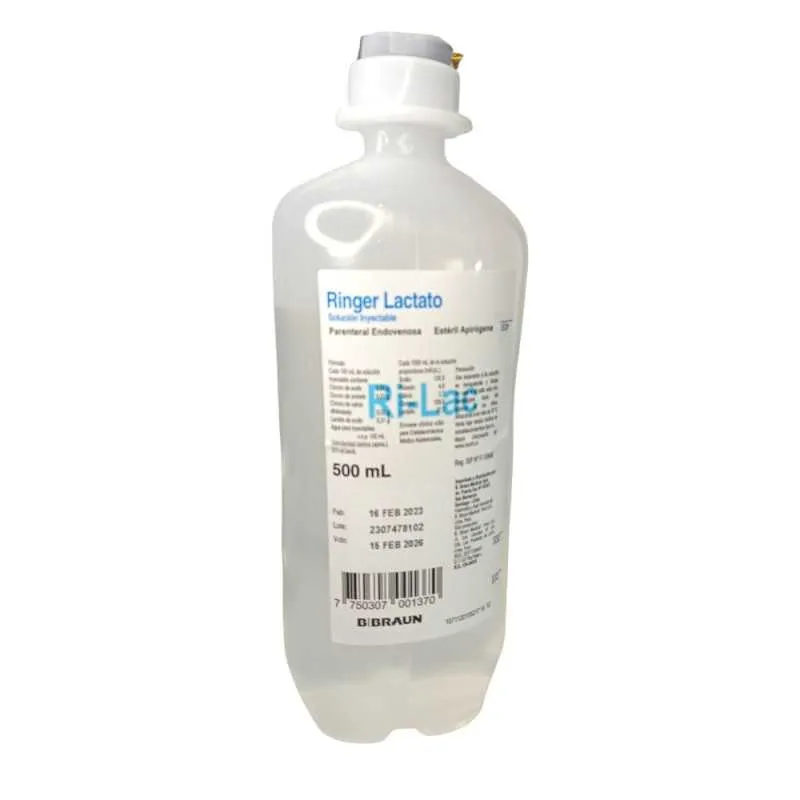
Table of Contents
- Package leaflet: Information for the user
- Introduction
- **Hartmann's Braun Ringer Lactate Solution**
- **Hartmann's Ringer's Lactate Solution for Infusion**
- 1. What Solución Lactato de Ringer Hartmann Braun is and what it is used for
- 2. Before using Hartmann Braun Ringer's Lactate Solution
- 3. How to use Lacatate Ringer Hartmann Braun
- 4. Possible adverse effects
- 5. Storage of Hartmann's Ringer Lactate Braun
- 6. Additional information
Package leaflet: Information for the user
Introduction
Package leaflet: information for the user
Hartmann's Braun Ringer Lactate Solution
Hartmann's Ringer's Lactate Solution for Infusion
Read the entire package leaflet carefully before you start using the medicine.
- Keep this leaflet, as you may need to read it again.
- If you have any questions, consult your doctor or pharmacist.
- This medicine has been prescribed for you; do not give it to others, even if they have the same symptoms as you, because it could harm them.
- If you consider any of the side effects you experience to be severe, or if you notice any side effects not listed in this leaflet, inform your doctor or pharmacist.
Package leaflet contents
- What Hartmann's Ringer's Lactate Solution is and what it is used for
- Before you use Hartmann's Ringer's Lactate Solution
- How to use Hartmann's Ringer's Lactate Solution
- Possible side effects
- How to store Hartmann's Ringer's Lactate Solution
- Further information
1. What Solución Lactato de Ringer Hartmann Braun is and what it is used for
Solución Lactato de Ringer Hartmann Braun belongs to the group of electrolytes and is used for electrolyte replacement in the following clinical situations:
- Restoration of extracellular fluid and electrolyte balance, or replacement of extracellular fluid loss when isotonic concentrations of electrolytes are sufficient.
- Short-term volume replacement (alone or in combination with colloids) in cases of hypovolemia or hypotension.
- Regulation or maintenance of acid-base balance in metabolic acidosis and/or treatment of mild to moderate metabolic acidosis (except lactic acidosis).
- As a vehicle or carrier solution for compatible electrolyte concentrates and drugs.
2. Before using Hartmann Braun Ringer's Lactate Solution
Do not use Hartmann Braun Ringer's Lactate Solution:
- If you have hyperhydration (excess fluid in the body)
- If you have severe renal failure or uncompensated heart failure
- In severe hepatocellular insufficiency or impaired lactate metabolism
- In case of generalized edema or ascitic cirrhosis
- If you are undergoing treatment with digitalis drugs (see Use with other medicines).
- If you have high levels of potassium in the blood (hyperkalemia).
- High levels of sodium in the blood (hypernatremia)
- High levels of chloride in the blood (hyperchloremia)
- High levels of calcium in the blood (hypercalcemia)
- If you have hypertonic dehydration
- Lactic acidosis, severe metabolic acidosis, and metabolic alkalosis
Take special care with Hartmann Braun Ringer's Lactate Solution:
If you suffer from any disease requiring reduced sodium intake, such as cardiac or renal disorders, excess fluid in the lungs, hypertension, etc., or other conditions associated with sodium retention.
Your doctor will monitor the patient, including checks of serum electrolytes and water balance, if you have certain conditions such as heart or lung failure, hypertension, peripheral or pulmonary edema, impaired renal function, pre-eclampsia, aldosteronism, or other conditions associated with sodium retention (see also Use with other medicines).
Because this medicine contains potassium and calcium salts, caution is recommended in patients predisposed to high levels of potassium and calcium in the blood (hyperkalemia or hypercalcemia).
Administration of this medicine may cause metabolic alkalosis.
Patients with serious illnesses, pain, postoperative stress, infections, burns, nervous system, cardiac, hepatic, or renal diseases, and patients taking medicines that increase the effect of vasopressin (a hormone regulating body fluid levels), are at a certain risk of developing abnormally low sodium levels in the blood (acute hyponatremia) when receiving this solution, which may lead to brain swelling (encephalopathy).
Children, women of childbearing age, and patients with severe brain disorders such as meningitis (infection of the membranes surrounding the brain) or brain injury are at a certain risk of severe and potentially fatal brain swelling caused by an acute decrease in blood sodium levels.
Pregnancy and breastfeeding
Consult your doctor or pharmacist before using any medicine.
As no studies have been conducted with this medicine in pregnant women, its administration during pregnancy is not recommended.
Use with other medicines
Inform your doctor, nurse, or pharmacist if you are using, or have recently used, any other medicines, including those obtained without a prescription.
-
Interactions related to the presence of sodium:
- Corticosteroids/steroids (anti-inflammatory agents) and carbenoxolone (for ulcers), which are associated with sodium and water retention (with edema and hypertension)
-
Interactions related to the presence of potassium:
- Amiloride, spironolactone, triamterene, alone or in combination (to increase normal urine output)
- ACE inhibitors and, by extrapolation, angiotensin II receptor antagonists (antihypertensives)
- Tacrolimus, cyclosporine (to prevent transplant rejection), which increase plasma potassium concentration and may lead to potentially fatal potassium levels, especially in case of renal failure.
-
Interactions related to the presence of calcium:
- Cardiac glycosides (for the heart), whose effects are potentiated by calcium and may lead to serious or fatal heart disturbances
- Thiazide diuretics (to increase normal urine output) or vitamin D, which may lead to excessively high calcium levels when administered with calcium
- Bisphosphonates (for osteoporosis), fluorides, certain fluoroquinolones, and tetracyclines (antibiotics), which are less absorbed when administered with calcium.
-
Interactions related to the presence of lactate:
- Acidic drugs such as salicylates (for pain), barbiturates (sedatives), and lithium, which are excreted more rapidly by the kidneys
- Alkaline drugs, particularly sympathomimetics (stimulants) (e.g., ephedrine, pseudoephedrine) and stimulants (e.g., dexamphetamine sulfate, phenfluramine hydrochloride), which are excreted more slowly by the kidneys.
-
Interaction with medicines that increase the effect of vasopressin and the risk of low sodium levels (hyponatremia):
-
Carbamazepine and oxcarbazepine used for the treatment of epilepsy
-
Vincristine and ifosfamide used for the treatment of cancer
-
Cyclophosphamide for treating cancer and autoimmune diseases
-
Selective serotonin reuptake inhibitors (SSRIs) for treating depression
-
Antipsychotics for mental disorders
-
Opioid analgesics for relieving severe pain
-
Non-steroidal anti-inflammatory drugs for relieving mild to moderate pain and treating body inflammation
-
Desmopressin for treating diabetes insipidus (extreme thirst and continuous production of large volumes of dilute urine)
-
Oxytocin used during childbirth
-
Vasopressin and terlipressin used to treat bleeding esophageal varices (dilated veins in the esophagus caused by liver problems)
-
Diuretics (medicines that increase the amount of urine excreted)
Medicines containing oxalate, phosphate, or carbonate/bicarbonate may cause precipitation if mixed with Hartmann Braun Ringer's Lactate Solution. Calcium complexes inactivate tetracycline-type antibiotics; therefore, they must not be mixed during parenteral administration.
Generally, solutions of this type are not recommended for addition of blood or blood components due to the risk of coagulation caused by the presence of calcium.
3. How to use Lacatate Ringer Hartmann Braun
Follow exactly the administration instructions for Lactated Ringer's Solution Braun as indicated by your doctor. If you have any doubts, consult your doctor or pharmacist.
Lactated Ringer's Solution Hartmann Braun will be administered only by healthcare personnel via intravenous infusion.
Your doctor will determine the duration of your treatment with Lactated Ringer's Solution Hartmann Braun. Do not stop the treatment prematurely. If you notice that the effect of Lactated Ringer's Solution Hartmann Braun appears too strong or too weak, inform your doctor or pharmacist.
The dose and administration schedule depend on the patient's age, body weight, and clinical condition.
Adults: The recommended dosage ranges from 500 ml to 3 liters every 24 hours. Administration should not exceed 40 ml of solution per kg of body weight per day.
The infusion rate should be adjusted according to the patient's clinical condition: normally it should not exceed 5 ml per kg of body weight per hour (1.7 drops/kg/min).
Infants and children: The recommended dosage ranges from 20–100 ml/kg every 24 hours.
Elderly: Lactated Ringer's Solution Hartmann Braun may be administered, adjusting the dose to individual requirements.
If you use more Lactated Ringer's Solution Hartmann Braun Braun than you should:
Symptoms of overdose include hyperhydration (excess body fluid) with increased tissue tension and venous congestion, disturbances in electrolyte balance, and edema—even pulmonary or cerebral edema.
Your doctor will monitor fluid and chemical balance and blood electrolyte levels (including sodium) before and during treatment, especially in patients with disorders affecting vasopressin release (a hormone regulating body fluids) and in patients taking medications that enhance vasopressin activity, due to the risk of abnormally low blood sodium levels (hyponatremia).
Treatment consists of discontinuing the medication, administering diuretics, and correcting the electrolyte and acid-base status.
In case of overdose or accidental ingestion, contact the Toxicology Information Service. Telephone (91) 562 04 20.
If you have any further questions about the use of this product, ask your doctor or pharmacist.
4. Possible adverse effects
Like all medicines, Lactated Ringer's Solution Hartmann Braun may cause adverse effects, although not everybody gets them:
-
Very common (more than 1 in 10 patients)
-
Allergic reactions or symptoms such as localized or generalized rashes, redness, swelling or irritation around the site where the medicine is administered
-
Fluid accumulation (edema) in the face and/or larynx, electrolyte disturbances in blood (sodium, potassium, calcium, chlorides)
-
Nasal congestion, cough, sneezing, bronchial muscle contraction and/or difficulty breathing.
-
Common (more than 1 in 100 but less than 1 in 10 patients)
-
Chest tightness, chest pain with tachycardia or bradycardia, anxiety.
-
In patients with heart problems or pulmonary edema, increased body fluids and heart failure. Feeling of anxiety.
-
Uncommon (more than 1 in 1,000 but less than 1 in 100 patients)
-
Panic attacks and convulsions.
-
Adverse reactions at the injection site such as pain, infection, phlebitis may occur.
- Frequency not known
- Imbalance in fluid levels and certain minerals in your body. You may experience low sodium levels (hyponatremia).
- Frequency not known
Abnormally low sodium levels in the blood can lead to a serious condition called hyponatremia. This can cause irreversible brain damage and death due to the development of cerebral edema (acute hyponatremic encephalopathy). Symptoms of cerebral edema include: headache, nausea, vomiting, seizures, tiredness and lack of energy.
Adverse effects related to any medication that has been added to the solution should also be taken into consideration.
Adverse reactions associated with the administration technique may occur, such as: infection at the injection site, fever, local reaction or pain, venous irritation, thrombosis or phlebitis which may extend beyond the site.
Reporting of adverse effects
If you experience any type of adverse effect, consult your doctor or pharmacist, even if it is a possible adverse effect not listed in this leaflet. You can also report them directly through the Spanish Pharmacovigilance System for Human Medicines: www.notificaRAM.es. By reporting adverse effects, you can help provide more information on the safety of this medicine.
5. Storage of Hartmann's Ringer Lactate Braun
Keep out of the reach and sight of children.
No special storage conditions are required.
Store in the original container.
Do not use Hartmann's Ringer Lactate Braun solution after the expiry date stated on the container. The expiry date refers to the last day of the month indicated.
Do not use Hartmann's Ringer Lactate Braun solution if cloudiness or sediment is observed, or if the container shows visible signs of deterioration.
Medicines should not be disposed of via wastewater or household waste. Ask your pharmacist how to dispose of unused medicines and their containers properly. This will help protect the environment.
6. Additional information
Composition of Hartmann Braun Ringer's Lactate Solution
The active substances are:
Per 100 ml | |
Sodium chloride | 600 mg |
Potassium chloride | 40 mg |
Calcium chloride dihydrate | 27 mg |
Sodium lactate | 312 mg |
The other components are: water for injections.
The electrolyte composition per 1000 ml is:
mmol/l | meq/l | |
Sodium | 131 | 131 |
Potassium | 5.4 | 5.4 |
Calcium | 1.8 | 3.6 |
Chlorides | 112 | 112 |
Lactate | 28 | 28 |
Appearance of the product and contents of the pack
Lactated Ringer's Solution Hartmann Braun is a solution for intravenous infusion. It is supplied in polyethylene containers with a capacity of 250, 500 and 1000 ml.
Marketing Authorization Holder and Manufacturer
B|BRAUN
- Braun Medical, S.A.
Ctra. de Terrassa, 121
08191-Rubí (Barcelona)
Spain
This summary of product characteristics was approved in July 2018.
Detailed information on this medicine is available on the website of the Spanish Agency for Medicines and Health Products (Agencia Española de Medicamentos y Productos Sanitarios).
This information is intended for healthcare professionals only:
Incompatibility must be checked if any other medicinal product is added to this solution.
Generally, solutions of this type are not recommended for addition of blood or blood components due to the risk of coagulation caused by the presence of calcium.
Handle under normal aseptic conditions used for intravenous infusion solutions.
After opening the container, discard any unused portion of the solution.