Invokana 300 mg film-coated tablets
Spain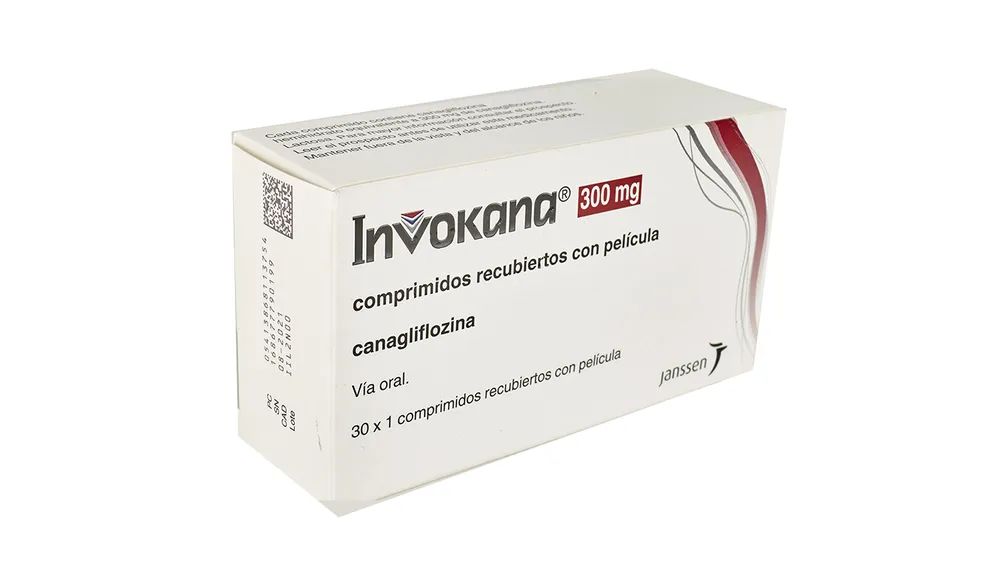
Table of Contents
Package leaflet: Information for the user
Introduction
Package leaflet: information for the patient
Invokana 100 mg film-coated tablets
Invokana 300 mg film-coated tablets
canagliflozin
Read the entire leaflet carefully before you start taking this medicine, because it contains important information for you.
- Keep this leaflet, as you may need to read it again.
- If you have any questions, ask your doctor, pharmacist or nurse.
- This medicine has been prescribed for you only, and you should not give it to other people, even if they have the same symptoms as you, because it may harm them.
- If you experience any adverse effects, consult your doctor, pharmacist or nurse, even if they are possible adverse effects not listed in this leaflet. See section 4.
Leaflet contents
- What Invokana is and what it is used for
- What you need to know before taking Invokana
- How to take Invokana
- Possible side effects
- How to store Invokana
- Contents of the pack and other information
1. What Invokana is and what it is used for
Invokana contains the active substance canagliflozin, which belongs to a group of medicines called "antihyperglycaemic agents."
Invokana is used:
- for the treatment of adults and children aged 10 years and older with type 2 diabetes.
This medicine works by removing more sugar from your body through the urine. This helps lower the amount of sugar in your blood and may help prevent heart disease in patients with type 2 diabetes mellitus (T2DM). It also helps delay the worsening of kidney function in patients with T2DM through a mechanism beyond blood glucose reduction.
Invokana is given either as monotherapy or in combination with other medicines you may already be taking to treat your type 2 diabetes (such as metformin, insulin, a DPP-4 inhibitor [such as sitagliptin, saxagliptin or linagliptin], a sulphonylurea [such as glimepiride or glipizide], or pioglitazone) that reduce blood sugar levels. You may already be taking one or more of these medicines for your type 2 diabetes.
It is important that you continue to follow your doctor’s or nurse’s advice regarding diet and exercise.
What is type 2 diabetes?
Type 2 diabetes is a condition in which the body does not produce enough insulin and/or the insulin produced does not work properly. It may also be that your body produces
too much sugar.
When this happens, sugar (glucose) builds up in the blood. This can lead to serious medical problems such as heart disease, kidney disease, blindness and amputations.
2. What you need to know before taking Invokana
Do not take Invokana:
- if you are allergic to canagliflozin or to any of the other ingredients of this medicine (listed in section 6).
Warnings and precautions
Talk to your doctor, pharmacist, or nurse before starting Invokana and during treatment:
- to learn what you can do to prevent dehydration (see section 4 for symptoms of dehydration)
- if you have type 1 diabetes, as Invokana should not be used to treat this condition
- if you experience rapid weight loss, nausea or vomiting, stomach pain, excessive thirst, rapid and deep breathing, confusion, unusual drowsiness or fatigue, sweet smell on your breath, sweet or metallic taste in your mouth, or unusual odor in your urine or sweat, contact your doctor or go immediately to the nearest hospital. These symptoms may be signs of "diabetic ketoacidosis" – a rare but serious, sometimes potentially life-threatening condition that can occur in people with diabetes due to increased levels of "ketone bodies" in the blood or urine, detectable through laboratory tests. The risk of developing "diabetic ketoacidosis" may increase with prolonged fasting, excessive alcohol consumption, dehydration, sudden reduction in insulin dose, or increased insulin requirements due to major surgery or serious illness.
- if you are scheduled for major surgery or a procedure requiring prolonged fasting, ask your doctor whether you should stop taking Invokana and when you should restart it.
- if you have diabetic ketoacidosis (a diabetes complication characterized by high blood sugar, rapid weight loss, nausea, or vomiting). Invokana should not be used to treat this condition.
- if you have severe kidney problems or require dialysis
- if you have severe liver problems
- if you have ever had serious heart disease or a stroke
- if you are taking medications to lower your blood pressure (antihypertensives) or have ever had low blood pressure (hypotension). More information can be found in the section “Other medicines and Invokana”
- if you have previously undergone amputation of a lower limb
- It is important that you regularly check your feet and follow any additional foot care advice, as well as maintain adequate hydration as advised by your doctor. You should immediately inform your doctor if you notice any wounds or discoloration, or if you experience any tenderness or pain in your feet. Some studies suggest that taking canagliflozin may have contributed to an increased risk of lower limb amputations (mainly amputations of toes and midfoot).
- Contact your doctor immediately if you develop a combination of symptoms such as pain, tenderness, redness, or swelling in the genital area or the area between the genitals and the anus, accompanied by fever or general malaise. These symptoms could indicate a rare but serious, even potentially life-threatening infection called necrotizing fasciitis of the perineum or Fournier's gangrene, which destroys tissue under the skin. Fournier's gangrene requires immediate treatment.
- if you have symptoms of a fungal genital infection, such as irritation, itching, unusual discharge, or odor.
- if you have a severe kidney or urinary tract infection with fever. Your doctor may ask you to stop taking Invokana until you have recovered.
If any of the above situations apply to you (or if you have any doubts), speak with your doctor, pharmacist, or nurse before taking this medicine.
Kidney function
Your kidneys will be checked with a blood test before you start and while you are taking this medicine.
Glucose in urine
Because of how this medicine works, your urine will test positive for sugar (glucose) while you are taking it.
Children and adolescents
Invokana can be used in children aged 10 years and older. There is no data available for children under 10 years of age. Invokana is not recommended for children under 10 years of age.
Other medicines and Invokana
Tell your doctor or pharmacist if you are taking, have recently taken, or might need to take any other medicines. This medicine may affect how other medicines work. Likewise, other medicines may affect how this medicine works.
In particular, inform your doctor if you are taking any of the following medicines:
- other antidiabetic medicines, either insulin or a sulfonylurea (such as glimepiride or glipizide); your doctor may decide to reduce your dose to avoid excessively low blood sugar levels (hypoglycemia)
- medicines to lower blood pressure (antihypertensives), including diuretics (medicines used to remove excess fluid from your body), as this medicine can also lower your blood pressure by eliminating fluid from the body. Section 4 lists possible symptoms of excessive fluid loss
- St. John’s wort (a herbal medicine used to treat depression)
- carbamazepine, phenytoin, or phenobarbital (medicines used to control seizures)
- lithium (a medicine used to treat bipolar disorder)
- efavirenz or ritonavir (medicines used to treat HIV infection)
- rifampicin (an antibiotic used to treat tuberculosis)
- cholestyramine (a medicine used to reduce cholesterol levels in the blood). See section 3, “While you are taking this medicine”
- digoxin or digitoxin (medicines used for certain heart conditions). If you take Invokana, it may be necessary to monitor digoxin or digitoxin levels in your blood
- dabigatran (an anticoagulant medicine that reduces the risk of blood clots).
Pregnancy and breastfeeding
If you are pregnant or breastfeeding, think you may be pregnant, or are planning to become pregnant, consult your doctor or pharmacist before using this medicine. Invokana should not be used during pregnancy. Consult your doctor for the best way to discontinue Invokana and manage your blood glucose as soon as you know you are pregnant.
You should not take this medicine while breastfeeding. Consult your doctor whether you should stop taking this medicine or stop breastfeeding.
Driving and using machines
The effect of Invokana on the ability to drive, ride a bicycle, or operate tools or machinery is negligible or none. However, some patients may experience dizziness or lightheadedness, which could affect their ability to drive, ride a bicycle, or operate tools or machinery.
Taking Invokana with other diabetes medicines called sulfonylureas (such as glimepiride or glipizida) or insulin may increase the risk of low blood sugar levels (hypoglycemia). Symptoms include blurred vision, tingling in the lips, trembling, sweating, paleness, mood changes, anxiety, or confusion. These may affect your ability to drive, ride a bicycle, or operate tools or machinery. Inform your doctor as soon as possible if you experience any symptoms of low blood sugar.
Invokana contains lactose
If your doctor has informed you that you have an intolerance to certain sugars, consult him before taking this medicine.
Invokana contains sodium
This medicine contains less than 1 mmol (23 mg) of sodium per tablet; this is essentially "sodium-free".
3. How to take Invokana
Follow exactly the instructions for administering this medicine as given by your doctor or pharmacist. If in doubt, consult your doctor or pharmacist again.
How much to take
- The recommended starting dose of Invokana is one 100 mg tablet per day. Your doctor will decide whether your dose should be increased to 300 mg.
- Your doctor may limit your dose to 100 mg if you have kidney problems.
- Your doctor will prescribe the appropriate dose for you.
When to take this medicine
- Swallow the tablet whole with water.
- You may take the tablet with or without food. It is best to take the tablet before the first meal of the day.
- Try to take it at the same time each day. This will help you remember to take it.
- If your doctor has prescribed canagliflozin together with a bile acid sequestrant such as cholestyramine (a medicine to lower cholesterol), you must take canagliflozin at least 1 hour before or 4 to 6 hours after taking the bile acid sequestrant.
Your doctor may prescribe Invokana together with another antihyperglycemic medicine.
Remember to take all your medicines as instructed by your doctor to achieve the best results for your health.
Diet and exercise
To control your diabetes, you still need to follow your doctor's, pharmacist's, or nurse's advice regarding diet and exercise. In particular, if you are following a weight-control diabetic diet, you should continue it while taking this medicine.
If you take more Invokana than you should
If you take more medicine than you should, consult your doctor or go immediately to the nearest hospital.
If you forget to take Invokana
- If you forget to take a dose, take it as soon as you remember. However, if it is almost time for your next dose, skip the missed dose.
- Do not take a double dose (two doses on the same day) to make up for the missed dose.
If you stop taking Invokana
Your blood sugar level may increase if you stop taking this medicine. Do not stop using this medicine without first talking to your doctor.
If you have any further questions about the use of this medicine, ask your doctor, pharmacist, or nurse.
4. Possible adverse effects
Like all medicines, this medicine can cause adverse effects, although not everyone experiences them.
Stop taking Invokana and consult a doctor or go immediately to the nearest hospital if you notice any of the following serious adverse effects:
Severe allergic reaction (rare, may affect up to 1 in 1,000 people)
Possible symptoms of a severe allergic reaction may include:
- swelling of the face, lips, mouth, tongue, or throat, which may cause difficulty breathing or swallowing.
Diabetic ketoacidosis (rare, may affect up to 1 in 1,000 people)
These are the symptoms of diabetic ketoacidosis (see also section 2):
- increased levels of "ketone bodies" in your urine or blood
- rapid weight loss
- nausea or vomiting
- stomach pain
- excessive thirst
- rapid and deep breathing
- confusion
- unusual drowsiness or fatigue
- sweet, fruity smell on your breath, sweet or metallic taste in your mouth, or unusual odour of your urine or sweat.
This may occur regardless of blood glucose levels. Diabetic ketoacidosis may occur more frequently as kidney function worsens. Your doctor may decide to temporarily or permanently discontinue treatment with Invokana.
Dehydration (uncommon, may affect up to 1 in 100 people)
- excessive fluid loss from your body (dehydration). This effect is more commonly observed in elderly people (≥ 75 years), people with kidney problems, and people taking diuretics.
Possible symptoms of dehydration include:
- feeling dizzy or lightheaded
- loss of consciousness (fainting), dizziness, or fainting upon standing
- very dry or sticky mouth, feeling very thirsty
- feeling very tired or weak
- little or no urination
- rapid heartbeat.
Tell your doctor as soon as possible if you experience any of the following adverse effects:
Hypoglycaemia (very common, may affect more than 1 in 10 people)
- low blood sugar (hypoglycaemia) – when taking this medicine together with insulin or a sulfonylurea (such as glimepiride or glipizide).
Possible symptoms of low blood sugar include:
- blurred vision
- tingling of the lips
- trembling, sweating, paleness
- change in mood or feeling anxious or confused.
Your doctor will explain how to treat low blood sugar and what to do if you experience any of the symptoms listed above.
Urinary tract infections (common, may affect up to 1 in 10 people)
-
These are signs of a serious urinary tract infection, e.g.:
-
fever and/or chills
-
burning sensation when passing urine
-
pain in your back or side.
Although uncommon, if you notice blood in your urine, inform your doctor immediately.
Other adverse effects:
Very common (may affect more than 1 in 10 people)
- vaginal fungal infections
Common (may affect up to 1 in 10 people)
- skin rash or redness of the penis or foreskin (fungal infection)
- changes in urination (such as increased frequency of urination or increased urine output, urgent need to urinate, need to urinate at night)
- constipation
- feeling thirsty
- nausea
- blood tests may show changes in lipid levels (cholesterol) and increased red blood cell count (haematocrit).
Uncommon (may affect up to 1 in 100 people)
- skin rash or redness of the skin, which may cause itching and include raised lumps, weeping rash, or blisters
- hives
- blood tests may show changes related to kidney function (elevated creatinine or urea) or elevated potassium
- blood tests may show increased levels of phosphate in the blood
- bone fracture
- kidney failure (mainly as a consequence of losing a large amount of fluid from your body)
- amputations of lower limbs (mainly toes), especially if you are at high risk of heart disease
- phimosis – difficulty retracting the foreskin from the tip of the penis
- skin reactions after exposure to sunlight.
Frequency not known (cannot be estimated from available data)
- necrotizing fasciitis of the perineum or Fournier's gangrene, a serious infection of the genital soft tissues or the area between the genitals and the anus.
Reporting of adverse effects
If you experience any adverse effect, talk to your doctor, pharmacist, or nurse, even if it is a possible adverse effect not listed in this leaflet. You can also report them directly through the national reporting system included in Appendix V.
By reporting adverse effects, you can help provide more information on the safety of this medicine.
5. Storage of Invokana
Keep this medicine out of the sight and reach of children.
Do not use this medicine after the expiry date stated on the blister and on the carton after EXP. The expiry date is the last day of the month indicated.
This medicine does not require any special storage conditions.
Do not use this medicine if you notice any visible signs of deterioration or tampering.
Medicines should not be disposed of via wastewater or household waste. Ask your pharmacist how to dispose of medicines and packaging once they are no longer needed. This will help protect the environment.
6. Contents of the pack and other information
Composition of Invokana
-
The active substance is canagliflozin.
-
Each tablet contains canagliflozin hemihydrate, equivalent to 100 mg or 300 mg of canagliflozin.
- The other components are:
- tablet core: lactose (see section 2 “Invokana contains lactose”), microcrystalline cellulose (E460[i]), hydroxypropyl cellulose (E463), sodium croscarmellose (E468) and magnesium stearate (E572).
- film coating: polyvinyl alcohol (E1203), titanium dioxide (E171), macrogol/PEG 3350 (E1521) and talc (E553b). The 100 mg tablet also contains yellow iron oxide (E172).
- The other components are:
Appearance of the product and contents of the pack
- Invokana 100 mg film-coated tablets (tablets) are yellow, capsule-shaped, 11 mm in length, with “CFZ” engraved on one side and “100” on the other side.
- Invokana 300 mg film-coated tablets (tablets) are white, capsule-shaped, 17 mm in length, with “CFZ” engraved on one side and “300” on the other side.
Invokana is available in single-dose, pre-cut PVC/aluminum blisters. Pack sizes are cardboard boxes containing 10 x 1, 30 x 1, 90 x 1, or 100 x 1 tablets.
Only some pack sizes may be commercially available.
Marketing Authorization Holder
Janssen-Cilag International NV
Turnhoutseweg 30
B-2340 Beerse
Belgium
Manufacturer
Janssen-Cilag SpA
Via C. Janssen
Borgo San Michele
04100 Latina
Italy
For further information on this medicinal product, please contact the local representative of the marketing authorization holder:
Belgium/Belgium/Belgium Menarini Benelux NV/SA Tel/Tel: +32 (0)2 721 4545 | Lithuania UAB "JOHNSON & JOHNSON" Tel: +370 5 278 68 88 |
| Luxembourg/Luxembourg Menarini Benelux NV/SA Tel/Tel: +32 (0)2 721 4545 |
Czech Republic Berlin-Chemie/A.Menarini Czech Republic s.r.o. Tel: +420 267 199 333 | Hungary Janssen‑Cilag Kft. Tel.: +36 1 884 2858 |
Denmark Berlin-Chemie AG Tlf: +45 78 71 31 21 | Malta AM MANGION LTD Tel: +356 2397 6000 |
Germany Berlin-Chemie AG Tel: +49 (0)30 6707-0 | Netherlands Menarini Benelux NV/SA Tel: +32 (0)2 721 4545 |
Estonia UAB "JOHNSON & JOHNSON" Estonia branch Tel: +372 617 7410 | Norway Berlin-Chemie AG Tlf: +45 78 71 31 21 |
Greece MENARINI HELLAS AE Tel: +30 210 8316111-13 | Austria
Tel: +43 1 879 95 85-0 |
Spain Laboratorios Menarini, S.A. Tel: +34 93 462 88 00 | Poland Berlin-Chemie/Menarini Polska Sp. z o.o. Tel.: +48 22 566 21 00 |
France MENARINI France Tel: +33 (0)1 45 60 77 20 | Portugal
Tel: +351 210 935 500 |
Croatia Johnson & Johnson S.E. d.o.o. Tel: +385 1 6610 700 | Romania Johnson & Johnson România SRL Tel: +40 21 207 1800 |
Ireland A.Menarini Pharmaceuticals Ireland Ltd Tel: +353 1 284 6744 | Slovenia Johnson & Johnson d.o.o. Tel: +386 1 401 18 00 |
Iceland Janssen‑Cilag AB c/o Vistor ehf. Tel: +354 535 7000 | Slovakia Berlin-Chemie / A. Menarini Distribution Slovakia s.r.o Tel: +421 2 544 30 730 |
Italy Laboratori Guidotti S.p.A. Tel: +39 050 971011 | Finland Berlin-Chemie/A. Menarini Finland Oy Tel/Tel: +358 403 000 760 |
Cyprus MENARINI HELLAS AE Tel: +30 210 8316111-13 | Sweden Berlin-Chemie AG Tfn: +45 78 71 31 21 |
Latvia UAB "JOHNSON & JOHNSON" Latvia branch Tel: +371 678 93561 |
Date of the most recent review of this leaflet: {month YYYY}.
Other sources of information
Detailed information on this medicinal product is available on the website of the European Medicines Agency: https://www.ema.europa.eu, and on the website of the Spanish Agency of Medicines and Medical Devices (AEMPS) (http://www.aemps.gob.es/).