Fentanest 0.05 mg/ml solution for injection
Spain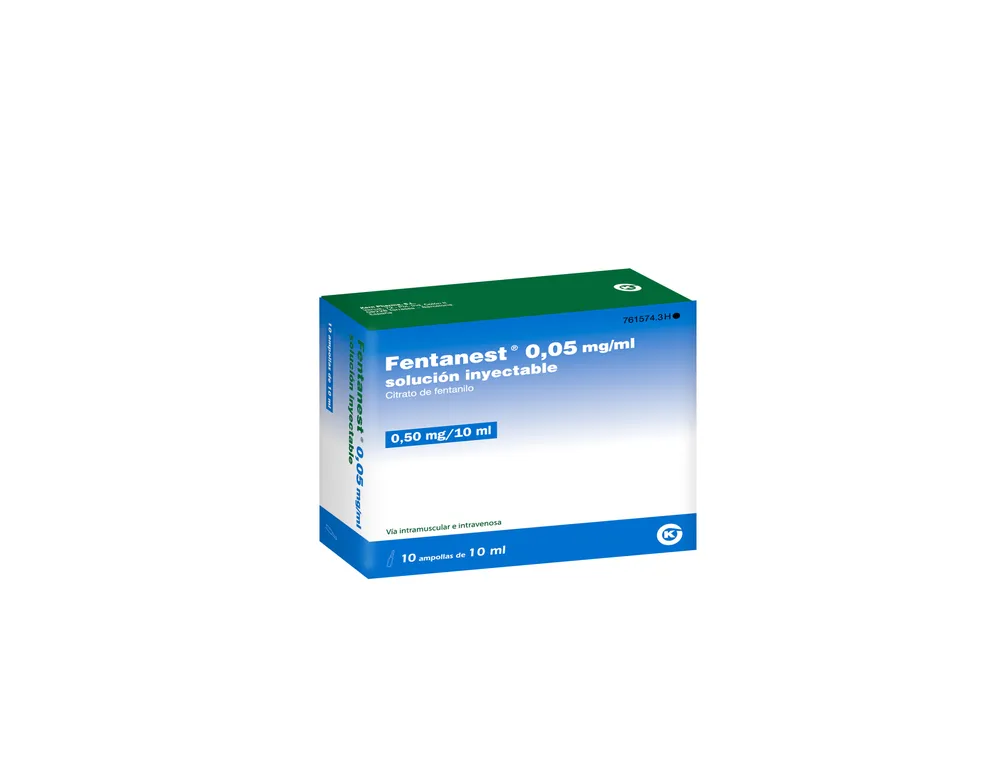
Table of Contents
Package leaflet: Information for the user
Introduction
Package leaflet: Information for the patient
Fentanest 0.05 mg/ml injectable solution
Fentanyl citrate
Read the entire leaflet carefully before you start using this medicine, because it contains important information for you.
|
Package leaflet contents:
- What Fentanest is and what it is used for
- What you need to know before using Fentanest
- How to use Fentanest injectable solution
- Possible side effects
- Storage of Fentanest
- Package contents and additional information
1. What Fentanest is and what it is used for
Fentanest contains fentanyl as the active substance. It is a potent pain-relieving medicine belonging to the group of narcotic analgesics or opioids.
Fentanest is used:
- In general or local anesthesia, as an adjunctive narcotic analgesic.
- As premedication analgesia to help induce and maintain general and local anesthesia, when administered together with a neuroleptic drug (a medicine that produces sedation of the nervous system), such as droperidol.
- As an anesthetic with oxygen in high-risk patients undergoing surgical procedures.
2. What you need to know before using Fentanest
Do not use Fentanest
- If you are allergic to fentanyl or to any of the other ingredients of this medicine (listed in section 6).
- If you have a known intolerance to this medicine or to other morphine-like drugs (medicines that have an effect similar to morphine).
- If you have cranioencephalic trauma, increased intracranial pressure, or coma.
- If the patient is under 2 years of age.
Warnings and precautions
Talk to your doctor, pharmacist, or nurse before using Fentanest if:
You or a family member have ever abused or been dependent on alcohol, prescription medicines, or illegal drugs ("addiction").
- You are a smoker.
- You have ever had problems with your mood (depression, anxiety, or a personality disorder), or if you have been treated by a psychiatrist for another mental illness.
As with other strong opioids, respiratory depression (slow or weak breathing that cannot provide adequate ventilation and perfusion to the lungs) is dose-dependent and can be reversed by using a narcotic antagonist (such as naloxone). However, additional doses of this antagonist may be required, since respiratory depression may last longer than the action of the opioid antagonist. Deep analgesia is accompanied by marked respiratory depression, which may persist or reappear during the postoperative period. For this reason, patients must remain under adequate monitoring. Resuscitation equipment and narcotic antagonist medicines must be readily available. Hyperventilation (faster and deeper breathing than normal) during anesthesia may alter the patient's response to carbon dioxide, affecting respiration in the postoperative period.
Muscle rigidity may occur, including rigidity of the thoracic muscles. This can be prevented by taking the following measures: very slow intravenous injection (which is usually sufficient for low doses), premedication with benzodiazepines, and administration of muscle relaxants.
Non-epileptic myoclonic movements (sudden, involuntary movements) may occur.
If the patient does not receive sufficient amounts of an anticholinergic medicine (medicines that calm intestinal muscle spasms), or when fentanyl is combined with a non-vagolytic muscle relaxant, bradycardia (decrease in heart rate) may occur, and even cardiac arrest. Bradycardia can be treated by administering atropine.
Opioids may cause low blood pressure, especially in patients with a significant reduction in normal blood volume (hypovolemia). Appropriate measures should be taken to maintain stable blood pressure.
Rapid bolus injection of opioids should be avoided in patients with compromised cerebrovascular function; transient reduction in mean arterial pressure has sometimes been accompanied by a transient reduction in cerebral perfusion in such patients.
If treatment is discontinued, withdrawal symptoms may appear. Inform your doctor or nurse if you think this is happening to you (see also section 4. Possible side effects).
Dependence and addiction
This medicine contains fentanyl, which is an opioid. It may cause dependence and/or addiction. |
Repeated use of opioid analgesics may lead to reduced effectiveness of the medication (the person becomes accustomed to it). It may also cause dependence and addiction, which could result in potentially fatal overdose. It is important that you consult your doctor if you are concerned about becoming dependent on Fentanest.
In particular, inform your doctor or pharmacist if you are taking:
- Certain analgesics for neuropathic pain (gabapentin and pregabalin).
Patients undergoing long-term opioid therapy or with a history of opioid dependence may require higher doses.
Dose reduction is recommended in elderly and debilitated patients. Careful dose adjustment of this medication is necessary in patients with the following conditions: hypothyroidism (decreased thyroid hormone levels), pulmonary disease, respiratory depression, alcoholism, or impaired renal or hepatic function. These patients also require prolonged postoperative monitoring.
When fentanyl is used concomitantly with droperidol, the physician must be aware of the characteristics of each drug, especially differences in duration of action. Concurrent administration of these drugs increases the likelihood of low blood pressure. Droperidol may cause uncontrolled movements of the body or face, which can be managed with medications used for Parkinson's disease.
Use of Fentanest with other medicines
Inform your doctor or pharmacist if you are currently using, have recently used, or might need to use any other medicine.
Concomitant use of barbituric acid derivatives with fentanyl should be avoided, as they may increase the respiratory depressant effect of fentanyl.
Concomitant use of fentanyl with buprenorphine, nalbuphine, or pentazocine (medications indicated for pain relief) is not recommended, as they may trigger withdrawal symptoms in opioid-dependent patients.
The simultaneous use of Fentanest with medications that slow down central nervous system activity (other central nervous system depressants) may result in additive depressant effects, hypoventilation and hypotension, and profound sedation or coma. Central nervous system depressants include:
- opioids,
- antipsychotics,
- hypnotics,
- general anesthetics,
- skeletal muscle relaxants,
- sedating antihistamines,
- alcoholic beverages.
Epinephrine should never be used as a vasoactive agent with fentanyl, as it may lead to hypotension.
Therefore, concomitant use of any of the drugs and active substances mentioned above requires close patient monitoring.
It has been reported that MAO inhibitors (a certain group of antidepressant medications) enhance the effect of narcotic analgesics, especially in patients with heart failure. Therefore, fentanyl should not be used within 14 days after discontinuation of treatment with these medications. Generally, it is recommended to discontinue MAO inhibitors at least two weeks before any surgical procedure. However, several reports describe the use of fentanyl during surgical procedures in patients receiving monoamine oxidase inhibitors without observed interactions.
Concomitant use of potent CYP3A4 inhibitors, e.g., ritonavir, ketoconazole, itraconazole, macrolide antibiotics, with fentanyl could lead to increased plasma concentrations of fentanyl, which might increase or prolong both therapeutic and adverse effects and could cause severe respiratory depression. In such cases, special caution and patient observation are warranted. Concomitant use of ritonavir or other potent CYP3A4 inhibitors with fentanyl is not recommended unless the patient is under constant monitoring.
The concomitant use of fentanyl and sedative medicines such as benzodiazepines or related drugs increases the risk of drowsiness, breathing difficulties (respiratory depression), coma, and may be fatal. Therefore, concomitant use should only be considered when no other treatment options are available.
However, if your doctor prescribes fentanyl together with sedative medicines, the dose and duration of concomitant treatment should be limited by your doctor.
Inform your doctor about all sedative medicines you are taking and follow your doctor’s recommendations regarding dosage carefully. It may be helpful to inform friends or family members so they are aware of the aforementioned signs and symptoms. Contact your doctor if you experience such symptoms.
Pregnancy, breastfeeding, and fertility
If you are pregnant or breastfeeding, think you may be pregnant, or are planning to become pregnant, consult your doctor or pharmacist before using this medicine.
The safety of fentanyl use during pregnancy has not been established. Fentanyl should not be used during pregnancy unless clearly necessary. Prolonged use during pregnancy may cause neonatal withdrawal syndrome.
The use of fentanyl during childbirth (including cesarean section) is not recommended, as fentanyl crosses the placenta and may cause respiratory depression in the newborn.
Fentanyl passes into breast milk and may cause sedation and respiratory depression in the newborn. Therefore, breastfeeding is not recommended for 24 hours after administration of the medication.
Driving and use of machines
Do not drive or operate tools or machinery after receiving Fentanest, as this medicine may affect your reaction ability. Your doctor will advise you how long you should wait before driving or using machinery.
Doping warnings
Athletes are advised that this medicine contains a component that may result in a positive analytical finding in doping control tests.
Fentanest contains sodium
This medicine contains less than 23 mg of sodium (1 mmol) per 2, 3, and 5 ml vial; this is essentially “sodium-free”.
This medicine contains 35.4 mg of sodium (main component of table/cooking salt) in each 10 ml vial. This corresponds to 1.81% of the maximum daily sodium intake recommended for an adult.
3. How to use Fentanest
Posology
This medicine must be administered by a doctor or nurse. Your doctor will determine the most appropriate dose for you based on your age, weight, general health status, type of procedure, and use of other medications.
Elderly and debilitated patients
The dose administered to elderly patients (65 years of age or older) or to debilitated patients just before surgery is lower than that indicated for other adults. If deemed necessary by the doctor, an additional dose may be given later.
Children aged 2 years and older
The dose administered to children just before surgery depends on the child's weight. If the doctor considers it necessary, an additional dose may be administered later.
Adolescents aged 12 to 17 years receive the same dose as adults.
Children under 2 years of age
There is no experience with the use of this medicine in children under 2 years of age. Therefore, administration of this medicine is not recommended in this age group.
Patients with renal problems
The doctor may decide to reduce the dose administered to patients with renal impairment.
Obese patients
The dose administered to obese patients just before surgery may be lower than that indicated for other adults. If deemed necessary by the doctor, an additional dose may be given later.
Route of administration
This medicine can be administered into a vein or into a muscle.
If you are given more Fentanyl than you should
Since administration of this medicine will take place in a hospital setting and will be performed by a doctor, it is unlikely that you will receive too much. However, consult your doctor or nurse if you think you have been given too much medicine, or if you begin to experience breathing difficulties, dizziness, symptoms of low blood pressure, or muscle stiffness. An overdose may also cause a brain disorder (known as toxic leukoencephalopathy).
If you have any further questions about the use of this medicine, ask your doctor or nurse.
4. Possible adverse effects
Like all medicines, this medicine can cause adverse effects, although not everyone will experience them.
Very common (may affect more than 1 in 10 people):
- Somnolence.
- Headache, dizziness.
- Nausea, vomiting, constipation.
- Sweating, pruritus.
Common (may affect up to 1 in 10 people):
- Sedation, nervousness, loss of appetite, depression.
- Dry mouth (xerostomia), discomfort in the upper abdomen (dyspepsia).
- Skin reactions at the application site.
Uncommon (may affect up to 1 in 100 people):
- Euphoria, amnesia, insomnia, hallucinations, agitation.
- Tremor, tingling sensation (paresthesia), speech disorders, muscle rigidity, myoclonus (involuntary, rapid, and irregular muscle movements).
- Tachycardia, bradycardia.
- Hypertension, hypotension.
- Dyspnea (shortness of breath), hypoventilation.
- Diarrhea.
- Acute skin rashes (exanthema), redness of the skin (erythema).
- Urinary retention.
- Difficulty swallowing.
Rare (may affect up to 1 in 1,000 people):
- Arrhythmia.
- Vasodilation.
- Hiccups.
- Edema (swelling), sensation of cold.
Very rare (may affect up to 1 in 10,000 people):
- Severe systemic allergic reaction (anaphylactic reaction).
- Delusional ideas, excited states, asthenia, anxiety, confusion, sexual dysfunction, symptoms of withdrawal syndrome.
- Clumsiness or loss of coordination (ataxia), seizures (including clonic seizures and grand mal seizures).
- Decreased vision in one or both eyes (amblyopia).
- Respiratory depression, apnea.
- Painful flatulence, intestinal obstruction.
- Pain in the urinary bladder (cystalgia), decreased urine production (oliguria).
Frequency not known (cannot be estimated from the available data):
- Development of tolerance and physical and psychological dependence with prolonged use of fentanyl.
- Delirium (symptoms may include a combination of agitation, restlessness, disorientation, confusion, fear, seeing or hearing things that are not real, sleep disturbances, nightmares).
- Withdrawal syndrome symptoms (may manifest as the appearance of the following adverse effects: nausea, vomiting, diarrhea, anxiety, chills, tremor, and sweating).
Respiratory depression is the most serious adverse effect of fentanyl.
Other adverse effects:
Laryngospasm.
After administration of fentanyl with another neuroleptic, such as droperidol, the following adverse reactions may occur: tremor, nervousness, postoperative hallucinatory experiences, and extrapyramidal symptoms.
Reporting of adverse effects
If you experience any type of adverse effect, consult your doctor or pharmacist, even if they are adverse effects not listed in this leaflet. You may also report them directly through the Spanish Pharmacovigilance System for Human Medicines: https://www.notificaram.es/. By reporting adverse effects, you can help provide more information on the safety of this medicine.
5. Storage of Fentanest
Keep out of sight and reach of children.
No special storage conditions required. Store in the original packaging to protect from light. Use immediately after opening.
Do not use this medicine after the expiry date stated on the container after “EXP”. The expiry date refers to the last day of the month indicated.
Medicines must not be disposed of via wastewater or household waste. Disposal of unused medicine and all materials that have come into contact with it must be carried out in accordance with local regulations. This helps protect the environment.
6. Contents of the pack and other information
Composition of Fentanest
- The active substance is fentanyl. Each ml of solution contains 0.0785 mg of fentanyl citrate, equivalent to 0.05 mg of fentanyl.
Each 2 ml ampoule contains 0.157 mg of fentanyl citrate, equivalent to 0.1 mg of fentanyl.
Each 3 ml ampoule contains 0.2355 mg of fentanyl citrate, equivalent to 0.15 mg of fentanyl.
Each 5 ml ampoule contains 0.3925 mg of fentanyl citrate, equivalent to 0.25 mg of fentanyl.
Each 10 ml ampoule contains 0.785 mg of fentanyl citrate, equivalent to 0.5 mg of fentanyl.
- The other components are sodium chloride and water for injections.
Appearance of the product and contents of the pack
Cartons containing 10 ampoules of 2 ml, 5 ampoules of 3 ml, 10 ampoules of 3 ml, 10 ampoules of 5 ml, or 10 ampoules of 10 ml.
Only certain pack sizes may be commercially available.
The ampoules are transparent and contain a clear, colourless liquid.
Marketing Authorization Holder and Manufacturer
Kern Pharma, S.L.
Venus, 72 - Pol. Ind. Colón II
08228 Terrassa - Barcelona
Spain
Date of the most recent review of this leaflet: March 2025
Detailed and up-to-date information on this medicine is available on the website of the Spanish Agency of Medicines and Health Products (AEMPS) http://www.aemps.gob.es/
This information is intended solely for healthcare professionals:
Refer to the Summary of Product Characteristics or Technical Data Sheet for a complete description and further information.
Dosage and method of administration
This medicine must only be administered in a setting where airway control is possible and by healthcare professionals capable of monitoring the airway (see Summary of Product Characteristics, section 4.4).
The dose of this medicine must be individually determined according to age, body weight, physical condition, underlying pathological condition, concomitant medication, and type of surgical procedure and anaesthesia.
Adults
Premedication
As premedication (30 to 60 minutes before surgery), the usual dose is 0.7 to 1.4 µg/kg (0.014 to 0.028 mL/kg) of Fentanest administered by intramuscular or slow intravenous route.
Use as analgesic supplement to local anaesthesia
Injectable Fentanest may be administered as an analgesic adjunct to local anaesthesia at doses ranging from 0.35 to 1.4 µg/kg (0.007 to 0.028 mL/kg) by intramuscular or intravenous route.
Use as analgesic supplement to general anaesthesia
Low doses: 2 µg/kg (0.04 mL/kg)
Low-dose fentanyl is highly useful in minor but painful procedures.
Moderate doses: 2 – 20 µg/kg (0.04–0.4 mL/kg)
When the surgical procedure is more complex, a moderate dose must be administered.
The duration of action is dose-dependent.
High doses: 20 – 50 µg/kg (0.4–1 mL/kg)
During major surgical procedures with prolonged duration, administration of doses of 20–50 µg/kg (0.4–1 mL/kg) of fentanyl with nitrous oxide/oxygen has shown a buffering effect.
Your doctor will provide ventilation and postoperative monitoring.
Increments of 25–250 micrograms/kg (0.5–5 mL) may be administered depending on your needs and the duration of the surgical procedure.
Use as an anaesthetic agent
When it is particularly important to reduce the response to surgical stimuli, doses of 50–100 µg/kg (1–2 mL/kg) may be administered intramuscularly or intravenously with oxygen and a muscle relaxant. This technique provides anaesthesia without the need for additional anaesthetic agents.
In some cases, doses up to 150 µg/kg (3 mL/kg) may be required to achieve an anaesthetic effect.
Fentanyl has been used in open-heart surgery and certain major surgical procedures in patients for whom particular protection of the heart against excess oxygen is indicated.
Use in elderly and debilitated patients
As with other opioids, the dose administered to elderly or debilitated patients should be reduced.
Use in children
For induction and maintenance of anaesthesia in children aged 2 to 12 years, the recommended dose should be reduced to 2–3 µg/kg (0.04–0.06 mL/kg).
Use in patients with renal impairment
Data from a study in which fentanyl was administered intravenously to patients undergoing kidney transplantation suggest that fentanyl elimination may be reduced in this patient population. Patients with renal impairment receiving fentanyl should be carefully monitored for signs of fentanyl toxicity, and the dose should be reduced if necessary (see Dosage and Administration).
Obese patients
In obese patients, there is a risk of overdose if the dose is calculated based on total body weight. The dose for obese patients should be calculated based on lean body mass rather than total body weight.
Special warnings and precautions for use
As with other strong opioids:
Respiratory depression is dose-related and can be reversed by administration of a narcotic antagonist (naloxone); however, additional doses of the antagonist may be required since respiratory depression may have a longer duration of action than opioid antagonists. Profound analgesia is accompanied by marked respiratory depression, which may persist or reappear in the postoperative period. Therefore, patients must be appropriately monitored. Resuscitation equipment and narcotic antagonists must be readily available.
Hyperventilation during anaesthesia may alter the patient's response to CO₂, thereby affecting respiration in the postoperative period.
Muscle rigidity, including rigidity of the thoracic muscles, may occur. This can be prevented by the following measures: slow intravenous injection (usually sufficient for low doses), premedication with a benzodiazepine, and administration of muscle relaxants.
Non-epileptic myoclonic movements may occur.
Bradycardia and possibly asystole may occur if the patient receives insufficient anticholinergic medication or if Fentanest is combined with a non-anticholinergic muscle relaxant. Bradycardia can be treated with atropine.
Opioids may cause hypotension, especially in patients with hypovolaemia. Appropriate measures should be taken to maintain stable blood pressure.
Rapid bolus injection of opioids should be avoided in patients with impaired cerebral vascular compliance, as the transient reduction in mean arterial pressure has occasionally been associated with transient reduction in cerebral blood flow in these patients.
Patients receiving long-term opioid treatment or with a history of opioid abuse may require higher doses.
If Fentanest is administered with droperidol, the physician must be aware of the properties of each drug, particularly the difference in duration of action. The incidence of hypotension increases with this combination. Droperidol may cause extrapyramidal symptoms, which can be managed with anti-parkinsonian drugs.
Pharmacological dependence and potential for abuse
Tolerance, physical and psychological dependence may develop after repeated administration of opioids. Risks are increased in patients with a personal history of substance abuse (including drug or alcohol abuse or addiction).
Withdrawal syndrome
Repeated administration at short intervals over prolonged periods may lead to the development of a withdrawal syndrome upon discontinuation of treatment, which may manifest as the following adverse effects: nausea, vomiting, diarrhoea, anxiety, chills, tremors, and sweating.
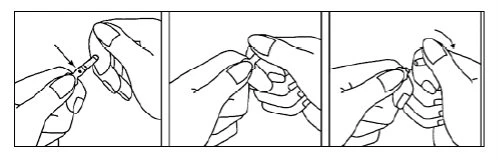
Instructions for opening the ampoules
- Hold the ampoule between the index and thumb fingers with the tip of the ampoule pointing upwards.
- Hold the tip of the ampoule by placing the index finger of the other hand against the neck of the ampoule. Place the thumb to cover the tip of the ampoule, as shown in the illustration.
- With index fingers together, press on the tip to open the ampoule.
Incompatibilities
In the absence of compatibility studies, this medicine must not be mixed with other medicinal products.
Contraindications
- Hypersensitivity to the active substance or to any of the excipients listed in section 6 of the technical data sheet, or to other opioids.
- Respiratory insufficiency without mechanical ventilation, due to the specific respiratory depressant effect of morphine-like drugs.