Eutirox 88 micrograms tablets
Spain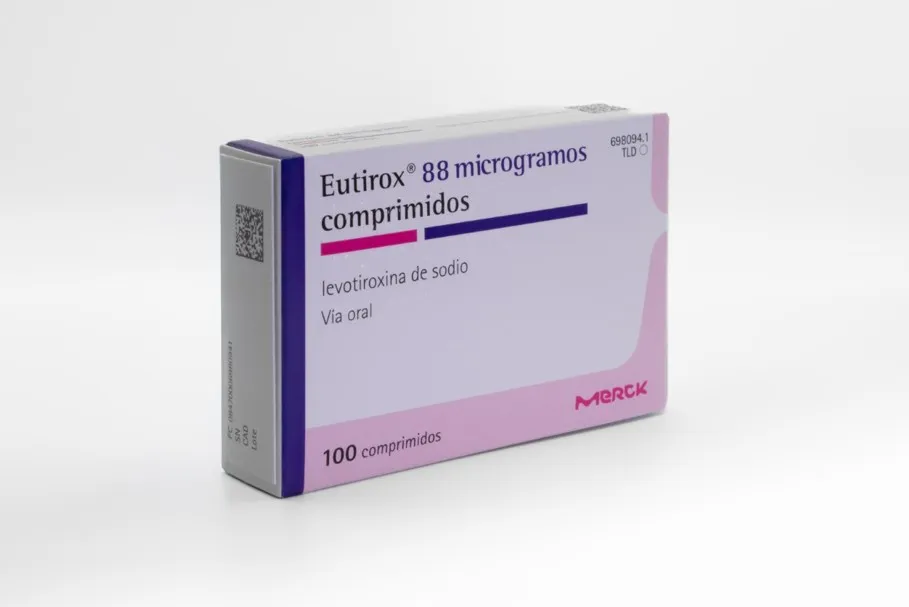
Table of Contents
Package leaflet: Information for the user
Introduction
Package leaflet: information for the user
Eutirox 25 micrograms tablets
Eutirox 38 micrograms tablets
Eutirox 50 micrograms tablets
Eutirox 63 micrograms tablets
Eutirox 75 micrograms tablets
Eutirox 88 micrograms tablets
Eutirox 100 micrograms tablets
Eutirox 112 micrograms tablets
Eutirox 125 micrograms tablets
Eutirox 137 micrograms tablets
Eutirox 150 micrograms tablets
Eutirox 175 micrograms tablets
Eutirox 200 micrograms tablets
sodium levothyroxine
Read the entire leaflet carefully before you start taking this medicine, because it contains important information for you.
- Keep this leaflet, as you may need to read it again.
- If you have any questions, ask your doctor or pharmacist.
- This medicine has been prescribed for you only and must not be given to other people, even if they have the same symptoms, as it may harm them.
- If you experience any adverse effects, consult your doctor or pharmacist, even if they are adverse effects not listed in this leaflet. See section 4.
Contents of the leaflet
-
What Eutirox is and what it is used for
-
What you need to know before taking Eutirox
-
How to take Eutirox
-
Possible side effects
-
How to store Eutirox
-
Contents of the pack and other information
1. What Eutirox is and what it is used for
Levothyroxine, the active ingredient in Eutirox, is a synthetic thyroid hormone used to treat diseases and dysfunctions of the thyroid gland. It has the same effect as the thyroid hormones naturally produced by the body.
Eutirox is used
- to treat benign goiter in patients with normal thyroid function,
- to prevent recurrence of goiter after surgery,
- to replace natural thyroid hormones when your thyroid gland does not produce sufficient amounts,
- to suppress tumor growth in patients with thyroid cancer.
Eutirox 25 micrograms, 38 micrograms, 50 micrograms, 63 micrograms, 75 micrograms, 88 micrograms and 100 micrograms tablets are also used to maintain balanced thyroid hormone levels when excess hormone production is being treated with antithyroid drugs.
Eutirox 100 micrograms, 150 micrograms and 200 micrograms tablets may also be used to test your thyroid function.
2. What you need to know before starting to take Eutirox
Do not take Eutirox
if any of the following apply to you:
- allergy (hypersensitivity) to the active substance or to any of the other components of Eutirox (listed in section 6),
- untreated dysfunction of the adrenal gland, pituitary gland, or excessive overproduction of thyroid hormones (thyrotoxicosis),
- acute heart disease (myocardial infarction or inflammation of the heart).
Do not take Eutirox together with other antithyroid medications if you are pregnant (see section “Pregnancy and breastfeeding” below).
Warnings and precautions
Consult your doctor or pharmacist before taking Eutirox if you have any of the following heart conditions:
- insufficient blood supply in the blood vessels of the heart (angina pectoris),
- heart failure,
- rapid and irregular heartbeat,
- high blood pressure,
- fatty deposits in your arteries (atherosclerosis).
These conditions must be under medical control before you start taking Eutirox or before undergoing a thyroid suppression test. While taking Eutirox, you will need frequent monitoring of your thyroid hormone levels. If you are unsure whether you have any of the conditions described, or if you are not receiving treatment, consult your doctor.
Your doctor will investigate whether you have adrenal or pituitary gland dysfunction, or uncontrolled overproduction of thyroid hormones due to autonomous thyroid function (thyroid autonomy), as these conditions must be medically managed before starting Eutirox or undergoing a thyroid suppression test.
Blood pressure should be monitored regularly when initiating levothyroxine treatment in very low birth weight premature neonates, as a rapid drop in blood pressure (known as circulatory collapse) may occur.
If you need to switch from your current medication to another containing levothyroxine, a thyroid imbalance may occur. Speak with your doctor if you have any concerns about changing your medication. Close monitoring (clinical and biological) is required during the transition period. Inform your doctor if you experience any adverse effects, as this may indicate that your dose needs to be adjusted upward or downward.
Consult your doctor:
-
if you are in menopause or postmenopausal; your doctor may need to periodically check your thyroid function due to the risk of osteoporosis.
-
before starting, stopping, or changing treatment with orlistat (a medication used to treat obesity); closer monitoring and dose adjustment may be needed.
-
if you experience signs of psychotic disorders (closer monitoring and dose adjustment may be needed).
Thyroid hormones must not be used for weight loss. Taking thyroid hormones will not reduce your weight if your thyroid hormone levels are within the normal range. Increasing the dose without specific medical indication may lead to serious adverse effects or even life-threatening complications. High doses of thyroid hormones must not be taken together with certain weight-loss medications such as amfepramone, cathine, or phenylpropanolamine, as this may increase the risk of serious or life-threatening adverse effects.
If you are undergoing laboratory tests to monitor your thyroid hormone levels, inform your doctor or laboratory staff that you are taking or have recently taken biotin (also known as vitamin H, vitamin B7, or vitamin B8). Biotin may interfere with laboratory test results. Depending on the test, results may be falsely elevated or falsely reduced due to biotin. Your doctor may instruct you to stop taking biotin before blood tests are performed. You should also be aware that other products you may be taking, such as multivitamins or supplements for hair, skin, and nails, may also contain biotin. This could affect laboratory test results. Inform your doctor or laboratory staff if you are taking these products (see information in the section "Other medicines and Eutirox").
Other medicines and Eutirox
Inform your doctor or pharmacist if you are taking, have recently taken, or might need to take any of the following medicines, as Eutirox may affect their effects:
- Antidiabetic medicines (medicines to lower blood sugar levels): Eutirox may reduce the effect of your antidiabetic medicine, so you may need additional monitoring of your blood sugar levels, especially at the beginning of Eutirox treatment. While taking Eutirox, the dose of your antidiabetic medicine may need to be adjusted.
- Cumarin derivatives (medicines used to prevent blood clotting): Eutirox may enhance the effect of these medicines, increasing the risk of bleeding, particularly in elderly patients. You may need periodic monitoring of your blood clotting values at the beginning and during Eutirox treatment. While taking Eutirox, the dose of your cumarin medicine may need to be adjusted.
Ensure you strictly follow the recommended time intervals if you need to take any of the following medicines:
- Medicines used to bind bile acids and reduce high cholesterol levels (such as cholestyramine or colestipol): take Eutirox 4–5 hours before these medicines, as they may block the absorption of Eutirox from the intestine.
- Antacids (for relief of acid indigestion), sucralfate (for stomach or intestinal ulcer), other medicines containing aluminium, medicines containing iron, medicines containing calcium: take Eutirox at least 2 hours before these medicines, otherwise they may reduce the effect of Eutirox.
Inform your doctor or pharmacist if you are taking, have recently taken, or might need to take any of the following medicines, as they may reduce the effect of Eutirox:
- propylthiouracil (antithyroid medicine),
- glucocorticoids (anti-allergic and anti-inflammatory medicines),
- beta-blockers (medicines to lower blood pressure and also used to treat heart conditions),
- sertraline (antidepressant medicine),
- chloroquine or proguanil (medicines to prevent or treat malaria),
- medicines that activate certain liver enzymes, such as barbiturates (sedatives, sleeping medicines), carbamazepine (antiepileptic medicine, also used to relieve certain types of pain and control mood disorders), or products containing St. John’s wort (a herbal medicine),
- medicines containing oestrogens used in hormone replacement therapy during and after menopause or to prevent pregnancy,
- sevelamer (a phosphate binder used to treat patients with chronic renal failure),
- tyrosine kinase inhibitors (anticancer and anti-inflammatory medicines),
- proton pump inhibitors (such as omeprazole, esomeprazole, pantoprazol, rabeprazole, and lansoprazole) used to reduce stomach acid production, which may reduce intestinal absorption of levothyroxine and thus make it less effective. If you are taking levothyroxine at the same time as a proton pump inhibitor, your doctor should monitor your thyroid function and may need to adjust your Eutirox dose,
- orlistat (a medicine used to treat obesity).
Inform your doctor or pharmacist if you are taking, have recently taken, or might need to take any of the following medicines, as they may enhance the effect of Eutirox:
- salicylates (medicines used to relieve pain and reduce fever),
- dicoumarol (a medicine to prevent blood clotting),
- high-dose furosemide (250 mg) (a diuretic medicine),
- clofibrate (a medicine to reduce blood fat levels).
Inform your doctor or pharmacist if you are taking, have recently taken, or might need to take any of the following medicines, as they may influence the effects of Eutirox:
- ritonavir, indinavir, lopinavir (protease inhibitors, medicines used to treat HIV infection),
- phenytoin (antiepileptic medicine).
You may need periodic monitoring of your thyroid hormone levels. An adjustment of your Eutirox dose may be necessary.
Inform your doctor if you are taking amiodarone (a medicine used to treat irregular heartbeats), as this medicine may affect the function and activity of your thyroid gland.
If you are scheduled for a diagnostic examination or scan using iodinated contrast agents, inform your doctor that you are taking Eutirox, as you may receive an injection that could affect your thyroid function.
If you are taking or have recently taken biotin, inform your doctor or laboratory staff when undergoing laboratory tests to monitor thyroid hormone levels. Biotin may affect laboratory test results (see Warnings and precautions).
Inform your doctor or pharmacist if you are using or have recently used any other medicines, including those obtained without a prescription.
Taking Eutirox with food and drinks
Inform your doctor if you consume soy-containing products, especially if you change the amount you consume. Soy products may reduce the intestinal absorption of Eutirox, and therefore a dose adjustment of Eutirox may be necessary.
Pregnancy and breastfeeding
If you are pregnant, continue taking Eutirox. Inform your doctor, as your dose may need to be changed.
If you have taken Eutirox together with an antithyroid medicine to treat overproduction of thyroid hormones, your doctor will advise you to discontinue Eutirox treatment upon becoming pregnant.
If you are breastfeeding, continue taking Eutirox as directed by your doctor. The amount of medicine excreted in breast milk is so small that it will not affect the baby.
Driving and using machines
No studies have been conducted on the effects on the ability to drive and use machines. Since levothyroxine is identical to the thyroid hormone naturally produced by the body, Eutirox is not expected to interfere with the ability to drive or use machinery.
Important information about some of the components of Eutirox
This medicine contains less than 23 mg of sodium (1 mmol) per tablet; essentially “sodium-free”.
3. How to take Eutirox
Follow exactly the administration instructions for Eutirox provided by your doctor or pharmacist. If in doubt, consult your doctor or pharmacist again.
Your doctor will determine your individual dose based on laboratory tests and examinations. Generally, treatment starts with a low dose, which is gradually increased every 2–4 weeks until your final individual dose is reached. During the first weeks of treatment, laboratory tests will be performed to adjust the dose appropriately.
If your baby was born with hypothyroidism, your doctor may recommend starting with a higher dose, as it is important to achieve rapid replacement. The recommended initial dose is 10 to 15 micrograms per kg of body weight during the first 3 months. After this period, your doctor will adjust the dose individually.
The following table indicates the usual dose ranges. A lower individualized dose may be sufficient:
- if you are an elderly patient,
- if you have heart problems,
- if you have severe or long-standing hypothyroidism,
- if your body weight is low or you have a large goiter.
Use of Eutirox | Recommended daily dose of Eutirox | |
| 75 – 200 micrograms | |
| 75 – 200 micrograms | |
| adults 25 – 50 micrograms* 100 – 200 micrograms | children 12.5 – 50 micrograms* 100 – 150 micrograms per m² of body surface area |
| 150 – 300 micrograms | |
| 50 – 100 micrograms | |
| If you take Eutirox 100 micrograms: 200 micrograms (2 tablets), starting 2 weeks before the test If you take Eutirox 150 micrograms: Start 4 weeks before testing with 75 micrograms (1/2 tablet) for 2 weeks, then 150 micrograms (1 tablet) until the test If you take Eutirox 200 micrograms: 200 micrograms (1 tablet), starting 2 weeks before the test |
*Eutirox 112 micrograms, 125 micrograms, 137 micrograms, 150 micrograms, 175 micrograms, and 200 micrograms tablets are not suitable for the lower dose range indicated here; your doctor may prescribe you lower-dose Eutirox tablets.
Administration
Eutirox is taken orally. Take a single dose daily on an empty stomach in the morning (at least half an hour before breakfast), preferably with some liquid, for example, half a glass of water.
Children may take their full daily dose of Eutirox at least half an hour before the first meal of the day. Immediately before administration, crush the tablet and mix it with a small amount of water, then give it to the child with additional liquid. Always prepare the mixture immediately before taking.
Duration of treatment
The duration of treatment may vary depending on the indication for which Eutirox is prescribed. Therefore, your doctor will inform you about the required treatment duration. Most patients need to take Eutirox for life.
If you take more Eutirox than you should
If you have taken a higher dose than prescribed, you may experience symptoms such as rapid heartbeat, anxiety, restlessness, or involuntary movements. In patients with neurological disorders such as epilepsy, seizures may occur in isolated cases. In patients at risk of psychotic disorders, symptoms of acute psychosis may appear. If this happens, consult your doctor.
In case of overdose or accidental ingestion, contact the Toxicology Information Service: Tel.: 915 620 420.
If you forget to take Eutirox
Do not take a double dose to make up for missed doses. Take the next dose as usual on the following day.
If you have any further questions about the use of this product, ask your doctor or pharmacist.
4. Possible adverse effects
Like all medicines, Eutirox may cause adverse effects, although not everyone will experience them.
You may experience one or more of the following adverse effects if you take more Eutirox than indicated or if you do not tolerate the prescribed dose (for example, when the dose is increased too rapidly): irregular or rapid heartbeat, chest pain, headache, muscle weakness or cramps, flushing (feeling of warmth and redness of the face), fever, vomiting, menstrual disturbances, pseudotumor cerebri (increased pressure inside the skull), tremors, restlessness, sleep disturbances, sweating, weight loss, and diarrhea.
Consult your doctor if you notice any of these effects. Your doctor may consider interrupting treatment for several days or reducing the daily dose until the adverse effects have disappeared.
You may experience an allergic reaction to any of the components of Eutirox (see section 6 “Composition of Eutirox”). Allergic reactions may include rash, urticaria, and swelling of the face or throat (angioedema). If this occurs, consult your doctor immediately.
If you consider any of the adverse effects you experience to be severe, or if you notice any adverse effects not listed in this leaflet, inform your doctor or pharmacist.
Reporting of adverse effects
If you experience any type of adverse effect, consult your doctor or pharmacist, even if it is a possible adverse effect not mentioned in this leaflet. You may also report them directly via the Spanish Pharmacovigilance System for Human Medicines: www.notificaRAM.es.
By reporting adverse effects, you can help provide more information on the safety of this medicine.
5. Storage of Eutirox
Keep this medicine out of the sight and reach of children.
Do not use Eutirox after the expiry date stated on the packaging, after EXP. The expiry date refers to the last day of the month indicated.
Do not store above 25 °C. Keep in the original packaging to protect from light.
Medicines must not be disposed of via wastewater or household waste. Return any unused medicines and their containers to the SIGRE Point at your pharmacy. If you have any doubts, ask your pharmacist how to properly dispose of unused medicines and their containers. This will help protect the environment.
6. Contents of the pack and other information
Composition of Eutirox
The active substance is levothyroxine.
Each Eutirox 25 microgram tablet contains 25 micrograms of sodium levothyroxine.
Each Eutirox 38 microgram tablet contains 38 micrograms of sodium levothyroxine.
Each Eutirox 50 microgram tablet contains 50 micrograms of sodium levothyroxine.
Each Eutirox 63 microgram tablet contains 63 micrograms of sodium levothyroxine.
Each Eutirox 75 microgram tablet contains 75 micrograms of sodium levothyroxine.
Each Eutirox 88 microgram tablet contains 88 micrograms of sodium levothyroxine.
Each Eutirox 100 microgram tablet contains 100 micrograms of sodium levothyroxine.
Each Eutirox 112 microgram tablet contains 112 micrograms of sodium levothyroxine.
Each Eutirox 125 microgram tablet contains 125 micrograms of sodium levothyroxine.
Each Eutirox 137 microgram tablet contains 137 micrograms of sodium levothyroxine.
Each Eutirox 150 microgram tablet contains 150 micrograms of sodium levothyroxine.
Each Eutirox 175 microgram tablet contains 175 micrograms of sodium levothyroxine.
Each Eutirox 200 microgram tablet contains 200 micrograms of sodium levothyroxine.
The other components are corn starch, citric acid, sodium croscarmellose, gelatin, magnesium stearate and mannitol (E 421).
Appearance of the product and contents of the pack
Eutirox tablets are white, round, flat on both sides, bevelled, with a dividing score line and engraved with the marking “EM 25”, “EM 38”, “EM 50”, “EM 63”, “EM 75”, “EM 88”, “EM 100”, “EM 112”, “EM 125”, “EM 137”, “EM 150”, “EM 175” or “EM 200” on one side.
Eutirox is available in packs of 20, 25, 30, 50, 60, 90, 100 or 500 tablets or in calendar packs of 28 or 84 tablets.
Only certain pack sizes may be marketed.
Marketing Authorisation Holder and Manufacturer
Marketing Authorisation Holder
Merck, S.L.
María de Molina, 40
28006, Madrid, Spain
Manufacturer
Merck Healthcare KGaA
Frankfurter Strasse 250
64293 Darmstadt, Germany
FAMAR HEALTH CARE SERVICES MADRID, S.A.U.
Avda. Leganés, 62
Alcorcón, 28923 Madrid, Spain
This medicinal product is authorised in the Member States of the European Economic Area under the following names:
Austria: Euthyrox
Denmark: Euthyrox
Germany: Euthyrox
Greece: Euthyrox
Iceland: Euthyrox
Croatia: Euthyrox
Norway: Euthyrox
Portugal: Eutirox
Spain: Eutirox
Sweden: Euthyrox
Date of the most recent revision of this leaflet: 07/2024
Other sources of information
Detailed and up-to-date information on this medicinal product is available by scanning the QR code on the outer packaging with a mobile phone (smartphone). You may also access this information at the following internet address:
Eutirox 25 micrograms: https://cima.aemps.es/info/64011
Eutirox 38 micrograms: https://cima.aemps.es/info/89799
Eutirox 50 micrograms: https://cima.aemps.es/info/64012
Eutirox 63 micrograms: https://cima.aemps.es/info/89800
Eutirox 75 micrograms: https://cima.aemps.es/info/64013
Eutirox 88 micrograms: https://cima.aemps.es/info/70044
Eutirox 100 micrograms: https://cima.aemps.es/info/64014
Eutirox 112 micrograms: https://cima.aemps.es/info/70042
Eutirox 125 micrograms: https://cima.aemps.es/info/64015
Eutirox 137 micrograms: https://cima.aemps.es/info/70043
Eutirox 150 micrograms: https://cima.aemps.es/info/64016
Eutirox 175 micrograms: https://cima.aemps.es/info/64017
Eutirox 200 micrograms: https://cima.aemps.es/info/64018
and on the website of the Spanish Agency of Medicines and Health Products (AEMPS) http://www.aemps.gob.es/.