DaTscan 74 MBq/ml solution for injection
Spain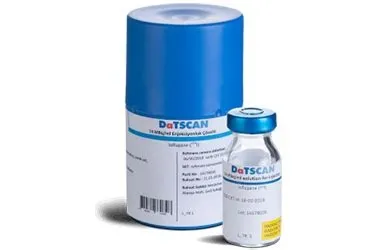
Table of Contents
Package leaflet: Information for the user
Introduction
Package leaflet: Information for the user
DaTSCAN 74 MBq/ml solution for injection
Ioflupane (123I)
Read all of this leaflet carefully before you are given this medicine, because it contains important information for you.
- Keep this leaflet. You may need to read it again.
- If you have any further questions, ask your nuclear medicine physician who supervises the procedure.
- If you get any side effects, talk to your nuclear medicine physician. This includes any side effects not listed in this leaflet. See section 4.
What is in this leaflet
-
What DaTSCAN is and what it is used for
-
What you need to know before you are given DaTSCAN 2.1 How DaTSCAN is used 2.2 Possible side effects 2.3 How DaTSCAN is stored
-
Contents of the pack and other information
1. What DaTSCAN is and what it is used for
DaTSCAN contains the active substance ioflupane (123I), which is used to help identify (diagnose) diseases in the brain. It belongs to a group of medicines called "radiopharmaceuticals", which contain a small amount of radioactivity.
- When a radiopharmaceutical is injected, it accumulates in a specific organ or area of the body for a short period of time.
- Because it contains a small amount of radioactivity, it can be detected from outside the body using a special medical device called a gamma camera.
- An image, known as a scintigram, can then be obtained. This scintigram will show exactly how the radiopharmaceutical is distributed in a particular organ and in the body. This can provide the doctor with valuable information about the structure of that organ.
When DaTSCAN is injected into an adult, it travels through the bloodstream and distributes throughout the body. It accumulates in a small area of the brain. Changes in this area of the brain occur in:
- Parkinsonism (including Parkinson's disease) and
- Dementia with Lewy bodies.
The resulting image will provide your doctor with information about any changes in this area of the brain. This image will help your doctor better understand your condition and decide on appropriate treatment options.
When DaTSCAN is used, you are exposed to small amounts of radiation. This exposure is lower than in some types of X-ray examinations. Your doctor and the nuclear medicine physician have determined that the clinical benefit you will receive from the radiopharmaceutical procedure outweighs the risk of exposure to small amounts of radiation.
This medicine is used solely for diagnostic purposes. It is used only to identify disease.
2. What you need to know before using DaTSCAN
DaTSCAN must not be used
-
if you are allergic to ioflupane or to any of the other ingredients of this medicine (listed in section 6).
-
if you are pregnant.
Warnings and precautions
Consult your nuclear medicine physician before receiving DaTSCAN if you have moderate or severe kidney or liver problems.
Children and adolescents
DaTSCAN is not recommended for children and adolescents aged 0 to 18 years.
Other medicines and DaTSCAN
Inform your nuclear medicine physician if you are taking or have recently taken any other medicines. Some medicines and substances may affect how DaTSCAN works. These include:
- bupropion (used to treat depression [sadness])
- benztropine (used to treat Parkinson's disease)
- mazindol (reduces appetite, used as a treatment for obesity)
- sertraline (used to treat depression [sadness])
- methylphenidate (used to treat hyperactivity in children and narcolepsy [excessive sleepiness])
- phentermine (reduces appetite, used as a treatment for obesity)
- amphetamine (used to treat hyperactivity in children and narcolepsy [excessive sleepiness]; also used recreationally as a drug)
- cocaine (sometimes used as an anesthetic for nasal surgery; also used recreationally as a drug)
Some medicines may reduce the quality of the images obtained. Your physician may ask you to stop taking them for a short period before receiving DaTSCAN.
Pregnancy and breastfeeding
Do not use DaTSCAN if you are pregnant or think you might be pregnant. This is because the unborn child could be exposed to radiation. Inform your nuclear medicine physician if you think you may be pregnant. Alternative diagnostic methods that do not involve radiation should be considered.
If you are breastfeeding, your nuclear medicine physician may postpone the use of DaTSCAN or advise you to stop breastfeeding.
It is not known whether ioflupane (123I) passes into breast milk.
-
You must not breastfeed your child for 3 days after receiving DaTSCAN.
-
Use infant formula to feed your child. Express breast milk regularly and discard it.
-
You must do this for 3 days, until the radioactivity has cleared from your body.
Driving and using machines
DaTSCAN has no known influence on the ability to drive or operate machinery.
DaTSCAN contains alcohol (ethanol) at 5% by volume. Each dose contains up to 197 mg of alcohol, equivalent to approximately 5 ml of beer or 2 ml of wine. This may be harmful for individuals with alcoholism and should be taken into account in pregnant or breastfeeding women, children, and high-risk groups such as patients with liver disease or epilepsy. Inform your physician if this applies to you.
3. How to use DaTSCAN
There are strict regulations regarding the use, handling, and disposal of radioactive materials. DaTSCAN will always be used in a hospital or similar facility. It will only be handled and administered by trained and qualified personnel who are skilled in its safe use. These individuals will inform you about the necessary steps for the safe use of this medicine. Your nuclear medicine physician will determine the most appropriate dose for you.
Before you receive DaTSCAN, your nuclear medicine physician will ask you to take tablets or liquid containing iodine. This helps prevent the accumulation of radioactivity in your thyroid gland. It is important that you take the tablets or liquid as directed by your physician.
DaTSCAN is administered as an injection, usually into a vein in the arm. The recommended radioactive dose administered via injection ranges between 111 and 185 MBq (megabecquerels; MBq is a unit used to measure radioactivity). A single injection is sufficient. Imaging with the camera is typically performed between 3 and 6 hours after the DaTSCAN injection.
If you are given more DaTSCAN than you should have received
Since DaTSCAN is administered by a physician under strictly controlled conditions, it is unlikely that you would receive an overdose. However, your nuclear medicine physician may advise you to drink plenty of fluids to help speed up the elimination of the medicine from your body. You will need to take care with your urine: your physician will inform you of the necessary precautions. This is standard practice with medicines such as DaTSCAN. Any residual ioflupane (123I) remaining in your body will naturally lose its radioactivity over time.
If you have any further questions about the use of this medicine, consult the nuclear medicine physician supervising the procedure.
4. Possible adverse effects
Like all medicines, DaTSCAN can have adverse effects, although not everyone will experience them.
The frequency of adverse effects is:
Frequent: may affect up to 1 in 10 people
- Headache
Uncommon: may affect up to 1 in 100 people
- Increased appetite
- Dizziness
- Altered sense of taste
- Nausea
- Dry mouth
- Vertigo
- A brief sensation of irritation similar to ants crawling on the skin (tingling)
- Severe pain (or burning sensation) at the injection site. This has been reported in patients who received DaTSCAN into a small vein
Frequency not known: cannot be estimated from the available data
-
Hypersensitivity (allergic)
-
Shortness of breath
-
Skin redness
-
Itching
-
Rash
-
Hives (urticaria)
-
Excessive sweating
-
Vomiting
-
Low blood pressure
-
Feeling of warmth
The amount of radioactivity in the body as a result of DaTSCAN injection is very small and will be eliminated from the body within a few days without the need for special precautions.
Reporting of adverse effects
If you experience any type of adverse effect, consult your nuclear medicine physician, even if it is a possible adverse effect not listed in this leaflet. You may also report them directly through the national reporting system included in Appendix V. By reporting adverse effects, you can help provide more information on the safety of this medicine.
5. Storage of DaTSCAN
You will not be required to store this medicinal product. This medicine is stored under the responsibility of a specialist in appropriate facilities. Storage of radiopharmaceuticals will comply with national regulations concerning radioactive materials.
The following information is intended for healthcare professionals only:
- Keep this medicinal product out of the sight and reach of children.
- Do not store above 25 °C.
- Do not freeze.
Do not use this medicinal product after the expiry date stated on the container and vial after EXP. The expiry date refers to the last day of the month indicated. Hospital staff must ensure that the product is properly stored and disposed of, and that it is not used beyond the expiry date shown on the label.
6. Contents of the pack and other information
Composition of DaTSCAN
- The active substance is ioflupane (123I). Each ml of solution contains ioflupane (123I) 74 MBq at the time of calibration (0.07 to 0.13 μg/ml of ioflupane).
- The other components are acetic acid, sodium acetate, ethanol and water for injections.
Appearance of the medicinal product and contents of the pack
DaTSCAN is a colourless injectable solution of 2.5 or 5 ml, supplied in a single 10 ml colourless glass vial sealed with a rubber stopper and an aluminium seal.
Marketing Authorization Holder and Manufacturer
GE Healthcare B.V.
De Rondom 8
5612 AP, Eindhoven
The Netherlands
Further information on this medicinal product is available upon request by contacting the local representative of the Marketing Authorization Holder.
Belgium/Belgium/Belgium GE Healthcare BVBA Tel/Tel: +32 (0) 2 719 7410 | Lithuania General Electric International Inc. Tel.: +370 68 726 753 |
Bulgaria GE Healthcare Bulgaria EOOD Tel.: + 359 2 9712561 | Luxembourg/Luxembourg GE Healthcare BVBA Belgium/Belgium/Belgium Tel/Tel: +32 (0) 2 719 7410 |
Czech Republic M.G.P. spol. s r.o. Tel.: +420 577 212 140 | Hungary Radizone Diagnost-X Kft. Tel: +36 1 787-5720 |
Denmark GE Healthcare A/S Tlf: +45 70 2222 03 | Malta Pharma-Cos Ltd. Tel: +356 21441 870 |
Germany GE Healthcare Buchler GmbH & Co. KG Tel: +49 (0) 5 307 93 00 | Netherlands GE Healthcare B.V. Tel: +31 (0) 40 299 10 00 |
Estonia GE Healthcare Estonia OÜ Tel: +372 6260 061 | Norway GE Healthcare AS Tlf: + 47 23 18 50 50 |
Greece GE Healthcare A.E. Tel: +30 210 8930600 | Austria GE Healthcare Handels GmbH Tel: +43 (0) 1 97272-0 |
Spain GE Healthcare Bio-Sciences, S.A.U Tel: +34 91 663 25 00 | Poland GE Medical Systems Polska Sp. z o.o. Tel: + 4822 330 83 00 |
France GE Healthcare SAS Tél: +33 1 34 49 54 54 | Portugal Satis – GE Healthcare Tel: + 351 214251352 |
Croatia GE Healthcare d.o.o. Tel: +385 (0)1 61 70 280 | Romania S.C. GENERAL ELECTRIC MEDICAL SYSTEMS ROMANIA S.R.L. Tel. + 40 37 2074527 |
Ireland GE Healthcare Limited UK Tel: +44 (0) 1494 54 40 00 | Slovenia Biomedis M.B. trgovina d.o.o. Tel: + 386 2 4716300 |
Iceland Icepharma Sími: + 354 540 8000 | Slovakia MGP, spol. s r. o. Tel: +421 2 5465 4841 |
Italy GE Healthcare S.r.l. Tel: +39 02 26001 111 | Finland/Suomi Oy GE Healthcare Bio-Sciences Ab Puh/Tel: +358 10 39411 |
Cyprus Phadisco Ltd Tel: +357 22 715000 | Sweden GE Healthcare AB Tel: + 46 (0) 8 559 504 00 |
Latvia General Electric International Inc. Tel: +371 6780 7086 | United Kingdom GE Healthcare Limited Tel: +44 (0) 1494 54 40 00 |
This patient information leaflet was last reviewed in <{MM/YYYY}>
Detailed information on this medicine is available on the European Medicines Agency website: http://www.ema.europa.eu.
This leaflet is available in all EU/EEA languages on the European Medicines Agency website.