Cytotec 200 micrograms tablets
Spain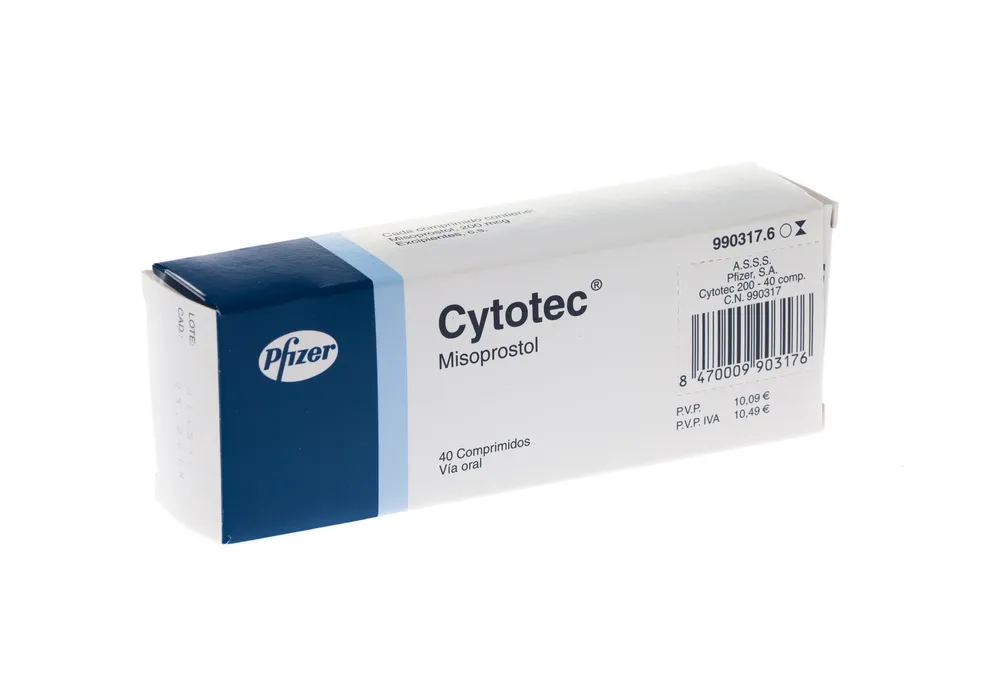
Table of Contents
- Package leaflet: Information for the user
- Introduction
- 1. What Cytotec is and what it is used for
- 2. What you need to know before starting to take Cytotec
- **Pregnancy, breastfeeding and fertility**
- 3. How to take Cytotec
- 4. Possible adverse effects
- 5. Storage of Cytotec
- 6. Contents of the pack and other information
Package leaflet: Information for the user
Introduction
Package leaflet: information for the user
Cytotec 200 micrograms tablets
Misoprostol
Read the entire leaflet carefully before you start taking this medicine, as it contains important information for you.
- Keep this leaflet, as you may need to read it again.
- If you have any questions, consult your doctor or pharmacist.
- This medicine has been prescribed for you only, and you should not give it to others, even if they have the same symptoms as you, because it could harm them.
- If you experience any adverse effects, consult your doctor or pharmacist, even if they are effects not listed in this leaflet. See section 4.
Contents of the leaflet
- What Cytotec is and what it is used for
- What you need to know before taking Cytotec
- How to take Cytotec
- Possible side effects
- How to store Cytotec
- Contents of the pack and other information
1. What Cytotec is and what it is used for
Misoprostol is a prostaglandin belonging to a group of medicines known as antiulcer agents. It is indicated in adults for the treatment of duodenal ulcer and for the prevention of gastrointestinal damage induced by long-term treatment with nonsteroidal anti-inflammatory drugs (NSAIDs).
2. What you need to know before starting to take Cytotec
Do not take Cytotec
- if you are a woman of childbearing potential and you are not using an effective method of contraception to prevent pregnancy (see section "Pregnancy" for more information).
- if you are pregnant, plan to become pregnant, or do not have a negative pregnancy test, since misoprostol increases uterine tone and contractions during pregnancy and may therefore cause abortion.
- if you are allergic to misoprostol, to other prostaglandins, or to any of the other ingredients of this medicine (listed in section 6).
Warnings and precautions
Talk to your doctor or pharmacist before starting to take Cytotec
- if you are pregnant or intend to become pregnant (see subsection "Pregnancy" below). Due to the risk to the fetus, treatment with Cytotec must be stopped immediately.
- if you are a woman of childbearing potential (see subsection "Pregnancy" below). Because of the risk to the fetus, it is important to use effective contraception while taking Cytotec.
- if you are a woman of childbearing potential, since treatment with misoprostol should not begin until pregnancy has been ruled out. You must use an appropriate method of contraception during treatment with this medicine. If you suspect you may be pregnant, you must stop treatment with misoprostol and consult your doctor.
- if you are taking non-steroidal anti-inflammatory drugs (NSAIDs), there remains a possibility of gastrointestinal bleeding, ulceration, or perforation despite treatment with misoprostol. This possibility should be considered even in the absence of gastrointestinal symptoms. If you are a patient predisposed to developing diarrhea, for example if you have irritable bowel syndrome.
- if you are dehydrated.
- if you have heart disease or circulatory problems, including high blood pressure.
Taking Cytotec with other medicines
Tell your doctor or pharmacist if you are taking, have recently taken, or might need to take any other medicines.
The use of antacids containing magnesium should be avoided during treatment with misoprostol, as they may worsen diarrhea induced by misoprostol.
Concomitant administration of misoprostol with non-steroidal anti-inflammatory drugs (NSAIDs) may rarely cause swelling of the limbs (peripheral edema) and abnormalities in biochemical tests (elevation of transaminases).
Taking Cytotec with food and drink
Cytotec should be taken during or after meals and at bedtime with a glass of water.
Pregnancy, breastfeeding and fertility
If you are pregnant or breastfeeding, think you may be pregnant or are planning to become pregnant, consult your doctor or pharmacist before using this medicine.
Pregnancy
Do not take Cytotec if you are pregnant or intend to become pregnant. Your doctor will inform you of the risks involved should you become pregnant, as Cytotec can cause miscarriage, premature birth or birth defects. Pregnancies exposed to misoprostol during the first trimester have been associated with an approximately threefold increased risk of birth defects, particularly facial paralysis, limb malformations, and brain and cranial abnormalities. If you are exposed to Cytotec during pregnancy, consult your doctor. If you decide to continue the pregnancy, you will require close prenatal monitoring and periodic ultrasound examinations, with special attention to the limbs and head.
Cytotec is contraindicated in pregnant women because it induces uterine contractions associated with abortions, premature births, birth defects and fetal death. Therefore, pregnancy must be ruled out before starting treatment with this medicine, and an adequate contraceptive method must be used during treatment.
Misoprostol is excreted in breast milk and should not be administered to breastfeeding mothers, as it may have adverse effects on the infant.
Driving and use of machines
Although effects of this kind are not expected, if dizziness occurs, driving and operating dangerous machinery should be avoided.
Cytotec contains castor oil and sodium
This medicine may cause stomach discomfort and diarrhoea because it contains castor oil.
This medicine contains less than 1 mmol of sodium (23 mg) per tablet; i.e., essentially "sodium-free".
3. How to take Cytotec
Follow exactly the administration instructions for this medicine as given by your doctor or pharmacist. If in doubt, please consult your doctor or pharmacist again.
The recommended dose in adults and elderly patients is:
For the prevention of gastrointestinal injuries induced by non-steroidal anti-inflammatory drugs (NSAIDs) in patients undergoing long-term treatment: 1 tablet (200 micrograms of misoprostol) 2 to 4 times daily, during or after meals and at bedtime. The recommended maximum daily dose is 2 to 4 tablets (400 micrograms to 800 micrograms of misoprostol).
For the treatment of duodenal ulcer: 4 tablets (800 micrograms of misoprostol) per day divided into 4 doses, for a minimum period of 4 weeks, even if symptoms have disappeared earlier. Your doctor may advise you to continue treatment up to 8 weeks.
Use in children and adolescents
Safety and efficacy have not been established in children and adolescents under 18 years of age.
Patients with impaired kidney function
If you have kidney problems (renal failure), your doctor may recommend a lower dose.
Cytotec is administered orally. The tablets should be swallowed whole with sufficient liquid during or after meals or at bedtime.
The tablet score line should not be used to split the tablet.
If you take more Cytotec than you should
You may experience the following symptoms: sedation, tremor, seizures, breathing difficulty, abdominal pain, diarrhea, fever, palpitations, low blood pressure, or slower heartbeats.
If you have taken more misoprostol than you should, contact your doctor, pharmacist, or call the Toxicology Information Service immediately at telephone: 91 562 04 20, indicating the medicine and amount taken. It is recommended to bring the medicine package and leaflet to the healthcare professional.
If you forget to take Cytotec
If you miss a dose, take the medicine as soon as possible and continue treatment as prescribed. Do not take a double dose to make up for missed doses.
If you stop taking Cytotec
Do not discontinue treatment without consulting your doctor, as there is a risk of developing gastrointestinal injury.
If you have any further questions about the use of this medicine, ask your doctor or pharmacist.
4. Possible adverse effects
Like all medicines, this medicine may cause adverse effects, although not everyone will experience them.
Diarrhea is the most common adverse effect. It usually occurs during the first days of treatment and is transient. To reduce the risk of diarrhea, it is recommended to take the medicine with food.
The reported adverse effects are classified according to their frequency as follows:
Very common (may affect more than 1 in 10 people):
- diarrhea,
- rash.
Common (may affect up to 1 in 10 people):
- dizziness, headache,
- abdominal pain, constipation, indigestion, flatulence, nausea and vomiting,
- birth defects (fetal malformations). If you become pregnant during treatment, stop taking Cytotec immediately and seek medical attention.
Uncommon (may affect up to 1 in 100 people):
- vaginal bleeding (including bleeding after menopause), bleeding between periods, menstrual disorders and uterine cramps,
- fever.
Rare (may affect up to 1 in 1,000 people):
- excessive or prolonged menstrual bleeding (menorrhagia), painful menstruation (dysmenorrhea),
- uterine rupture following administration of prostaglandins during the second or third trimester of pregnancy, mainly in women with previous deliveries or with a history of cesarean section. Seek urgent medical attention.
Frequency not known (cannot be estimated from available data):
- allergy,
- passage of amniotic fluid into the maternal circulation, which may cause cardiac failure, abnormal uterine contractions, fetal death, incomplete abortion, premature birth, retention of the placenta in the uterus after delivery, uterine bleeding,
- chills.
Reporting of adverse effects
If you experience any type of adverse effect, consult your doctor or pharmacist, even if it is an effect not listed in this leaflet. You may also report them directly via the Spanish Pharmacovigilance System for Human Medicines: https://www.notificaram.es. By reporting adverse effects, you can help provide more information on the safety of this medicine.
5. Storage of Cytotec
Store below 30°C. Keep in the original packaging to protect from light.
Keep this medicine out of the sight and reach of children.
Do not use this medicine after the expiry date stated on the container after EXP. The expiry date refers to the last day of the month indicated.
Medicines should not be disposed of via wastewater or household waste. Dispose of unused medicines and their containers at the SIGRE Point at your pharmacy. If you are unsure, ask your pharmacist how to properly dispose of unused medicines and their packaging. This will help protect the environment.
6. Contents of the pack and other information
Composition of Cytotec
- The active substance is misoprostol. Each tablet contains 200 micrograms of misoprostol.
- The other components (excipients) are: hypromellose, microcrystalline cellulose, sodium carboxymethylstarch (type A) (potato starch), hydrogenated castor oil. See section 2 "Cytotec contains castor oil".
Appearance of the product and contents of the pack
Cytotec 200 mcg is presented as white to off-white, hexagonal, scored tablets, marked on one side with "SEARLE" and "1461". Each pack contains 40 tablets.
Marketing Authorization Holder and Manufacturer
Marketing Authorization Holder
Pfizer, S.L.
Avda. de Europa, 20 B. Parque Empresarial La Moraleja. 28108 Alcobendas, Madrid.
Manufacturer
Piramal Pharma Solutions (Dutch) B.V.
Bargelaan 200
2333 CW
Leiden
The Netherlands
Date of the most recent revision of this leaflet: 06/2018
Detailed and up-to-date information on this medicine is available on the website of the Spanish Agency of Medicines and Medical Devices (AEMPS) http://www.aemps.es/