Bosulif 100 mg film-coated tablets
Spain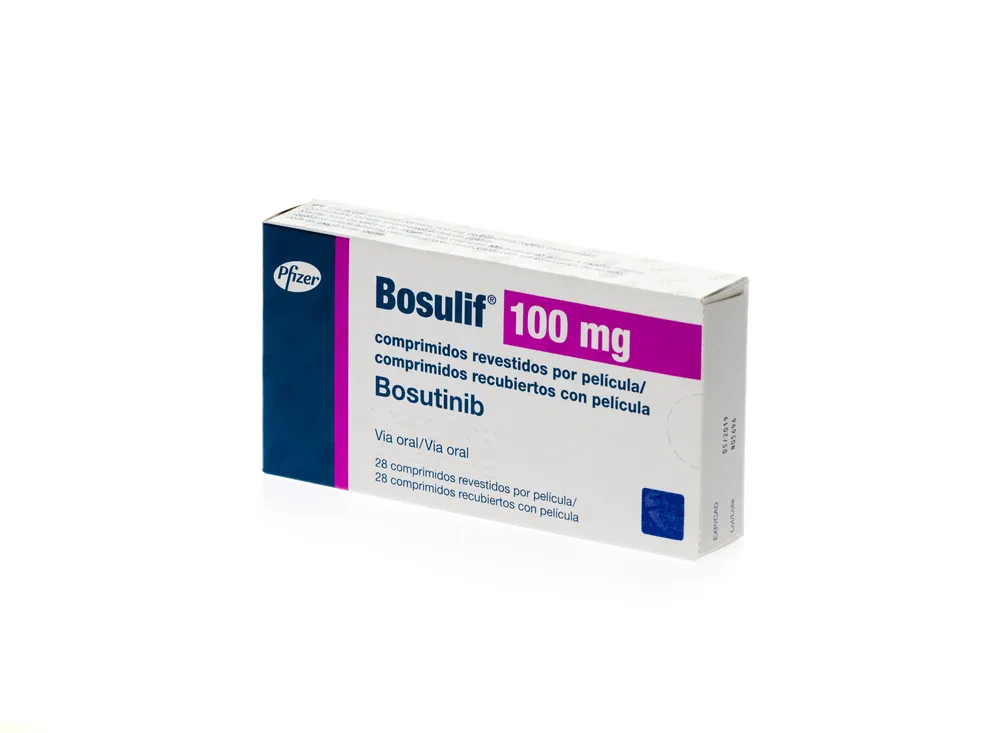
Table of Contents
Patient Information Leaflet
Introduction
Patient Information Leaflet
Bosulif 100 mg film-coated tablets
Bosulif 400 mg film-coated tablets
Bosulif 500 mg film-coated tablets
bosutinib
Read the entire leaflet carefully before you start taking this medicine, because it contains important information for you and your caregiver.
- Keep this leaflet, as you may need to read it again.
- If you have any questions, consult your doctor or pharmacist.
- This medicine has been prescribed for you only, and you should not give it to others, even if they have the same symptoms as you, because it may harm them.
- If you experience any adverse effects, consult your doctor, even if the effects are not listed in this leaflet. See section 4.
Leaflet Contents
- What Bosulif is and what it is used for
- What you need to know before taking Bosulif
- How to take Bosulif
- Possible side effects
- How to store Bosulif
- Contents of the pack and other information
1. What Bosulif is and what it is used for
Bosulif contains the active substance bosutinib. Bosulif is used to treat adult and pediatric patients aged 6 years and older who have a type of leukemia called Philadelphia chromosome-positive (Ph-positive) chronic myeloid leukemia (CML) in chronic phase (CP) at the time of diagnosis, or for whom previous treatments for CML have not been effective or are not suitable. It is also used to treat adult patients with Ph-positive CML in accelerated phase (AP) or blast phase (BP) for whom previous treatments for CML have not been effective or are not suitable.
In patients with Ph-positive CML, a change in DNA (genetic material) triggers a signal that causes the body to produce an excessive number of a specific type of white blood cells called granulocytes. Bosulif blocks this signal and thereby stops the production of these cells.
If you have any questions about how Bosulif works or why this medicine has been prescribed for you, consult your doctor.
2. What you need to know before taking Bosulif
Do not take Bosulif
- if you are allergic to bosutinib or any of the other ingredients of this medicine (listed in section 6).
- if your doctor has told you that you have impaired liver function.
Warnings and precautions
Talk to your doctor, pharmacist, or nurse before taking Bosulif:
-
if you have or have previously had liver problems. Inform your doctor if you have a history of liver problems, including any type of hepatitis (liver infection or inflammation), or a history of any signs and symptoms of liver problems (see section 4 “Possible side effects”), as Bosulif may affect liver function. Your doctor should perform blood tests to check your liver function before starting treatment with Bosulif and during the first 3 months of treatment, or as clinically indicated.
-
if you have diarrhoea or vomiting. Inform your doctor if you experience any signs or symptoms of stomach or intestinal problems (see section 4 “Possible side effects”). Your doctor may provide you with an antidiarrhoeal or antiemetic and/or fluids to help reduce symptoms. Your doctor may also temporarily interrupt, reduce the dose, or permanently discontinue treatment with Bosulif (see section 3 “How to take Bosulif”). Consult your doctor if using anti-nausea or anti-vomiting medication together with Bosulif may increase the risk of cardiac arrhythmias.
-
if you have bleeding problems. Inform your doctor if you experience any signs or symptoms of blood-related problems (see section 4 “Possible side effects”), as Bosulif reduces the blood’s ability to stop bleeding. During the first month, your doctor should perform complete blood counts weekly, and then monthly. Your doctor may also temporarily interrupt, reduce the dose, or permanently discontinue treatment with Bosulif (see section 3 “How to take Bosulif”).
-
if you have an infection. Inform your doctor if you experience any of the following signs and symptoms, such as fever, urinary problems like burning sensation when urinating, new cough, or new sore throat, as Bosulif reduces the blood’s ability to fight infections.
-
if you have fluid retention. Inform your doctor if you experience any of the following signs and symptoms of fluid retention during treatment with Bosulif, such as swelling of the ankles, feet, or legs; difficulty breathing, chest pain, or cough (all of which may be signs of fluid retention in the lungs or chest). Your doctor will monitor for fluid retention and treat your symptoms.
-
if you have heart problems. Inform your doctor if you have any heart conditions, such as heart failure or reduced blood flow to the heart that could lead to a heart attack. Seek immediate medical help if you experience difficulty breathing, sudden weight gain, chest pain, or swelling of the hands, ankles, or feet.
-
if you have been told you have an abnormal heart rhythm. Inform your doctor if you have arrhythmias or an abnormal electrical signal known as "QT interval prolongation." These conditions are always important, but even more so if you experience frequent or prolonged diarrhoea as mentioned above. If you faint (lose consciousness) or experience irregular heartbeats during treatment with Bosulif, inform your doctor immediately, as these may be signs of a serious heart condition (see section 2 “What you need to know before taking Bosulif”). Your doctor will perform an electrocardiogram (ECG) before starting treatment. Blood tests will also be performed before and during treatment; if low levels of potassium or magnesium are detected, your doctor will provide treatment to correct them.
-
if you have been told you have kidney problems. Inform your doctor if you urinate more frequently and produce larger amounts of light-coloured urine, or if you urinate less frequently and produce smaller amounts of dark-coloured urine. Also inform your doctor if you lose weight or experience swelling in your feet, ankles, legs, hands, or face. Your doctor will check your kidney function before treatment and closely monitor it during bosutinib treatment.
-
if you have ever had or may currently have a hepatitis B virus infection. This is because Bosulif could reactivate hepatitis B, which may be fatal in some cases. Before starting treatment, your doctor will test you for hepatitis B. If you have this infection, your doctor will closely monitor you for signs or symptoms throughout treatment and for several months after stopping treatment.
-
if you have or have previously had pancreas problems. Inform your doctor if you experience abdominal pain or discomfort. If you have abdominal pain and blood tests show high levels of lipase, an enzyme that helps the body break down fat from food, your doctor may stop treatment and perform tests to rule out pancreas problems.
-
if you experience any of these symptoms: severe skin rashes. Inform your doctor if you develop any of the following signs and symptoms of a painful red or purple rash that spreads and if blisters and/or other lesions appear on mucous membranes (e.g., mouth and lips). If you develop a severe skin reaction during treatment, your doctor will permanently discontinue treatment.
-
if you notice any of these symptoms: pain in the side, blood in the urine, or reduced urine output. If your condition is severe, your body may not be able to eliminate waste products from dying cancer cells. This is known as tumour lysis syndrome and may lead to kidney failure and heart problems within 48 hours after the first dose of Bosulif. Your doctor will ensure you are adequately hydrated and give you other medications to help prevent it. Your doctor will perform a blood test to check for high levels of uric acid and provide treatment to correct high levels before starting study treatment.
Sun/UV Protection
During treatment with bosutinib, you may become more sensitive to sunlight or UV rays. It is important to cover areas of skin exposed to sunlight and to use sunscreen with a high sun protection factor (SPF).
Patients of Asian origin
If you are of Asian origin, you may have a higher risk of adverse reactions with Bosulif. Your doctor will closely monitor for the possible occurrence of serious adverse reactions, especially when the dose is increased.
Children and adolescents
Bosulif is not recommended for children under 6 years of age. This medicine has not been studied in children under 1 year of age.
Other medicines and Bosulif
Tell your doctor or pharmacist if you are taking, have recently taken, or might need to take any other medicines, including over-the-counter medicines, vitamins, and herbal supplements. Some medicines may affect the levels of Bosulif in your body. You should inform your doctor if you are taking medicines containing any of the following active substances:
The following active substances may increase the risk of adverse reactions with Bosulif:
- ketoconazole, itraconazole, voriconazole, posaconazole, and fluconazole, used to treat fungal infections.
- clarithromycin, telithromycin, erythromycin, and ciprofloxacin, used to treat bacterial infections.
- nefazodone, used to treat depression.
- mibefradil, diltiazem, and verapamil, used to lower blood pressure in people with high blood pressure.
- ritonavir, lopinavir/ritonavir, indinavir, nelfinavir, saquinavir, atazanavir, amprenavir, fosamprenavir, and darunavir, used to treat human immunodeficiency virus (HIV)/AIDS infection.
- boceprevir and telaprevir, used to treat hepatitis C.
- aprepitant, used to prevent and control nausea and vomiting.
- imatinib, used to treat a type of leukaemia.
- crizotinib, used to treat a type of lung cancer called non-small cell lung cancer.
The following active substances may reduce the effectiveness of Bosulif:
- rifampicin, used to treat tuberculosis.
- phenytoin and carbamazepine, used to treat epilepsy.
- bosentan, used to reduce high blood pressure in the lungs (pulmonary hypertension).
- nafcillin, an antibiotic used to treat bacterial infections.
- St. John’s wort (an herbal remedy available without prescription), used to treat depression.
- efavirenz and etravirine, used to treat HIV/AIDS infections.
- modafinil, used to treat certain types of sleep disorders.
You should avoid using these medicines during treatment with Bosulif. If you are taking any of them, inform your doctor. Your doctor may adjust the dose of these medicines, adjust your Bosulif dose, or switch you to a different medicine.
The following active substances may affect heart rate:
- amiodarone, disopyramide, procainamide, quinidine, and sotalol, used to treat heart disorders.
- chloroquine and halofantrine, used to treat malaria.
- clarithromycin and moxifloxacin, antibiotics used to treat bacterial infections.
- haloperidol, used to treat psychotic disorders such as schizophrenia.
- domperidone, used to treat nausea and vomiting, or to stimulate breast milk production.
- methadone, used to treat pain.
These medicines should be used with caution during treatment with Bosulif. If you are taking any of them, inform your doctor.
Acid-reducing drugs
Proton pump inhibitors (PPIs) should be used with caution during treatment with Bosulif, as they may reduce the effectiveness of Bosulif. Your doctor may consider using short-acting antacids as an alternative to PPIs and may schedule the administration of Bosulif and antacids at different times (e.g., take Bosulif in the morning and antacids at night), whenever possible.
The medicines listed in this leaflet may not be the only ones that could interact with Bosulif; if you are unsure whether the above applies to you or your child, ask your doctor.
Taking Bosulif with food and drink
Do not take Bosulif with grapefruit or grapefruit juice, as this could increase the risk of adverse reactions.
Pregnancy, breastfeeding, and fertility
Bosulif should not be used during pregnancy unless clearly necessary, as Bosulif could harm the unborn baby. If you are pregnant or think you may be pregnant, consult your doctor before starting Bosulif.
Women taking Bosulif should be advised to use effective contraception during treatment and for at least 1 month after the last dose. Vomiting and diarrhoea may reduce the effectiveness of oral contraceptives.
Ask about sperm preservation before starting treatment if desired, due to the risk that Bosulif treatment may reduce fertility.
If you are breastfeeding, inform your doctor. Do not breastfeed during treatment with Bosulif, as it could harm the baby.
Driving and using machines
If you experience dizziness, blurred vision, or unusual fatigue, do not drive or operate machinery until these side effects have resolved.
Bosulif contains sodium
This medicine contains less than 1 mmol of sodium (23 mg) per 100 mg, 400 mg, or 500 mg film-coated tablet; i.e., essentially “sodium-free”.
3. How to take Bosulif
Follow exactly the instructions for use of this medicine provided by your doctor. If in doubt, consult your doctor or pharmacist again.
Bosulif will only be prescribed by a doctor experienced in the use of medicines for the treatment of leukemia.
Dosage and method of administration
Adults
The recommended dose is 400 mg once daily for patients with newly diagnosed CML. The recommended dose is 500 mg once daily for patients for whom previous medications used to treat CML have not been effective or are not suitable. If you are unable to tolerate the recommended dose or are not responding adequately to treatment with Bosulif, your doctor may further adjust your dose.
Children and adolescents (from 6 years of age)
The recommended dose is 300 mg/m² based on body surface area once daily for pediatric patients with newly diagnosed disease. The recommended dose is 400 mg/m² based on body surface area once daily for pediatric patients who are resistant or intolerant.
The following table provides dosage recommendations. As appropriate, the recommended dose may be achieved by combining different film-coated tablet and/or hard capsule presentations (see the hard capsule package leaflet).
Doses of bosutinib for pediatric patients with newly diagnosed disease (ND) and for resistant or intolerant patients (R/I)
Body surface area | Recommended dose for RD | Recommended dose for R/I |
0.55 to < 0.63 m² | 200 mg | 250 mg |
0.63 to < 0.75 m² | 200 mg | 300 mg |
0.75 to < 0.9 m² | 250 mg | 350 mg |
0.9 to < 1.1 m² | 300 mg | 400 mg |
≥ 1.1 m² | 400 mg* | 500 mg* |
- maximum initial dose (corresponding to the maximum initial dose in the indication for adults)
If you are unable to tolerate the recommended dose or are not responding adequately to treatment with Bosulif, your doctor may further adjust your dose.
Take the tablet(s) once daily, with food. Swallow the tablet(s) whole with some water.
For patients who cannot swallow tablets, hard capsule formulation is available.
If you take more Bosulif than you should
If you accidentally take too many Bosulif tablets or a higher dose than required, seek medical advice immediately. If possible, show the doctor the packaging or this leaflet. You may require medical attention.
If you forget to take Bosulif
If less than 12 hours have passed, take the recommended dose. If more than 12 hours have passed, take your next dose at the usual time, the following day.
Do not take a double dose to make up for forgotten doses.
If you stop taking Bosulif
Do not stop taking Bosulif unless instructed by your doctor. If you are unable to take the medicine as directed by your doctor or think you no longer need it, consult your doctor immediately.
If you have any further questions about the use of this medicine, ask your doctor or pharmacist.
4. Possible adverse effects
Like all medicines, this medicine can cause adverse effects, although not everyone will experience them.
Serious adverse effects
You should consult your doctor immediately if you experience any serious adverse effects (see also section 2 “What you need to know before taking Bosulif”):
Very common (may affect more than 1 in 10 people):
- reduction in the number of platelets (thrombocytopenia), red blood cells (anemia), or neutrophils (a type of white blood cells) (neutropenia), which may cause abnormal bleeding, fever, or frequent bruising without injury (you may have a disorder of the blood or lymphatic system) (see section 2 “What you need to know before taking Bosulif”).
- fluid around the lungs (pleural effusion).
Common (may affect up to 1 in 10 people):
- decrease in white blood cell count (leucopenia).
- bleeding from the stomach or intestines (gastrointestinal haemorrhage), which may include blood in vomit, stools, or urine, or black, tarry stools (see section 2 “What you need to know before taking Bosulif”).
- chest pain.
- toxic liver injury (hepatotoxicity), abnormal liver function, including liver disorder (abnormal liver function), which may be accompanied by itching, yellowing of the eyes and skin, dark urine, pain or discomfort in the upper right part of the stomach, or fever (see section 2 “What you need to know before taking Bosulif”).
- heart not pumping blood properly (heart failure).
- reduced blood flow to the heart (cardiac ischemia).
- lung infection (pneumonia).
- irregular heart rhythm (prolongation of QT interval on electrocardiogram), which may lead to fainting, dizziness, or palpitations.
- increased blood pressure (hypertension).
- high potassium levels in the blood (hyperkalaemia).
- acute kidney failure, renal failure, kidney impairment.
- fluid around the heart (pericardial effusion).
- allergic reaction (hypersensitivity to the medicine).
- abnormally high blood pressure in the arteries of the lungs (pulmonary hypertension).
- acute inflammation of the pancreas (acute pancreatitis).
Uncommon (may affect up to 1 in 100 people):
- fever associated with low white blood cell count (febrile neutropenia).
- liver damage (hepatic injury).
- life-threatening allergic reaction (anaphylactic shock).
- abnormal accumulation of fluid in the lungs (acute pulmonary edema).
- skin rash (drug eruption).
- skin peeling, scaly rash (exfoliative rash).
- inflammation of the lining of the heart or pericardium (pericarditis).
- marked decrease in the number of granulocytes (a type of white blood cells, granulocytopenia).
- serious skin disorder (erythema multiforme).
- nausea, difficulty breathing, irregular heartbeat, muscle cramps, seizures, cloudy urine, and fatigue related to abnormal laboratory test results (elevated potassium, uric acid, and phosphorus in blood, and decreased calcium in blood), which may lead to changes in kidney function and acute kidney failure (tumour lysis syndrome [TLS]).
- respiratory failure.
- inflammation of blood vessels in the skin, which may cause a skin rash or bruising (cutaneous vasculitis).
Frequency not known (cannot be estimated from available data):
- serious skin disorder (Stevens-Johnson syndrome, toxic epidermal necrolysis), which may include painful red or purple rash spreading and blistering and/or other lesions starting in mucous membranes (e.g., mouth and lips) due to an allergic reaction.
- interstitial lung disease (disorders causing scarring in the lungs): signs include cough, difficulty breathing, and painful breathing.
- reactivation (recurrence) of hepatitis B if you have had hepatitis B in the past (a liver infection).
Other adverse effects that may occur with Bosulif are:
Very common (may affect more than 1 in 10 patients):
- diarrhoea, vomiting, stomach pain (abdominal pain), nausea.
- fever (pyrexia), swelling of hands, feet or face (oedema), fatigue, weakness.
- respiratory tract infection.
- nasopharyngitis.
- abnormal blood function tests due to Bosulif possibly affecting the liver (elevated alanine aminotransferase [ALT], elevated aspartate aminotransferase [AST]) and/or the pancreas (elevated lipase), kidneys (elevated blood creatinine).
- decreased appetite.
- joint pain (arthralgia), back pain.
- headache.
- skin rash, with itching of the skin and/or generalised (rash).
- cough.
- difficulty breathing (dyspnoea).
- feeling of instability (dizziness).
Common (may affect up to 1 in 10 patients):
-
stomach irritation (gastritis).
-
pain.
-
influenza, bronchitis.
-
abnormalities in blood tests to determine if Bosulif is affecting the heart (elevated blood creatine phosphokinase), liver (elevated blood bilirubin, elevated gamma-glutamyl transferase [GGT]) and/or pancreas (elevated amylase).
-
decreased phosphorus in the blood (hypophosphataemia), excessive loss of body fluids (dehydration).
-
muscle pain (myalgia).
-
altered sense of taste (dysgeusia).
-
ringing in the ears (tinnitus).
-
hives (urticaria), acne.
-
sensitivity to UV rays from sunlight and other light sources (photosensitivity reaction).
-
itching (pruritus).
Reporting of adverse effects
If you experience any adverse effect, talk to your doctor, pharmacist, or nurse, even if it is a possible adverse effect not listed in this leaflet. You may also report them directly through the National Reporting System included in Appendix V. By reporting adverse effects, you can help provide more information on the safety of this medicine.
5. Storage of Bosulif
- Keep this medicine out of the sight and reach of children.
- Do not use this medicine after the expiry date stated on the aluminium side of the blister foil and on the outer packaging following “EXP”. The expiry date refers to the last day of the month indicated.
- This medicine does not require any special storage conditions.
- Do not use this medicine if you notice that the packaging is damaged or shows signs of tampering.
- Medicines should not be disposed of via wastewater or household waste. Ask your pharmacist how to properly dispose of medicines and packaging you no longer need. This will help protect the environment.
6. Contents of the pack and other information
Composition of Bosulif
- The active substance is bosutinib. Bosulif film-coated tablets are available in different strengths.
Bosulif 100 mg: each film-coated tablet contains 100 mg of bosutinib (as monohydrate).
Bosulif 400 mg: each film-coated tablet contains 400 mg of bosutinib (as monohydrate).
Bosulif 500 mg: each film-coated tablet contains 500 mg of bosutinib (as monohydrate).
- The other components are: microcrystalline cellulose (E460), sodium croscarmellose (E468), poloxamers 188, povidone (E1201) and magnesium stearate (E470b). The tablet coating contains polyvinyl alcohol, titanium dioxide (E171), macrogol 3350, talc (E553b) and yellow iron oxide (E172, in Bosulif 100 mg and 400 mg) or red iron oxide (E172, in Bosulif 400 mg and 500 mg) (see section 2 “Bosulif contains sodium”).
Appearance of the product and contents of the pack
Bosulif 100 mg film-coated tablets are yellow, oval-shaped, biconvex tablets, marked with “Pfizer” on one side and “100” on the other.
Bosulif 100 mg is supplied in blisters containing 14 or 15 film-coated tablets. Each pack contains 28, 30 or 112 film-coated tablets.
Bosulif 400 mg film-coated tablets are orange, oval-shaped, biconvex tablets, marked with “Pfizer” on one side and “400” on the other.
Bosulif 400 mg is supplied in blisters containing 14 or 15 film-coated tablets. Each pack contains 28 or 30 film-coated tablets.
Bosulif 500 mg film-coated tablets are red, oval-shaped, biconvex tablets, marked with “Pfizer” on one side and “500” on the other.
Bosulif 500 mg is supplied in blisters containing 14 or 15 film-coated tablets. Each pack contains 28 or 30 film-coated tablets.
Only some pack sizes may be marketed.
Marketing Authorisation Holder
Pfizer Europe MA EEIG
Boulevard de la Plaine 17
1050 Bruxelles
Belgium
Manufacturer
Pfizer Manufacturing Deutschland GmbH
Mooswaldallee 1
79108 Freiburg Im Breisgau
Germany
For further information regarding this medicinal product, please contact the local representative of the Marketing Authorisation Holder:
Belgium / Belgium / Belgium Luxembourg/Luxembourg Pfizer NV/SA Tél/Tel: +32 (0)2 554 62 11 | Lithuania Pfizer Luxembourg SARL filialas Lietuvoje Tel. + 370 52 51 4000 |
| |
Czech Republic Pfizer, spol. s r.o. Tel: +420 283 004 111 | Hungary Pfizer Kft. Tel.: +36-1-488-37-00 |
Denmark Pfizer ApS Tlf: +45 44 20 11 00 | Malta Vivian Corporation Ltd. Tel: +356 21344610 |
Germany PFIZER PHARMA GmbH Tel: +49 (0)30 550055 51000 | Netherlands Pfizer BV Tel: +31 (0)10 406 43 01 |
Estonia Pfizer Luxembourg SARL Eesti filiaal Tel: +372 666 7500 | Norway Pfizer AS Tlf: +47 67 52 61 00 |
Greece Pfizer Ελλάς A.E. Τηλ: +30 210 6785 800 | Austria Pfizer Corporation Austria Ges.m.b.H. Tel: +43 (0)1 521 15-0 |
Spain Pfizer, S.L. Tél: +34 91 490 99 00 | Poland Pfizer Polska Sp. z o.o. Tel:+48 22 335 61 00 |
France Pfizer Tél: +33 (0)1 58 07 34 40 | Portugal Laboratórios Pfizer, Lda. Tel: +351 21 423 5500 |
Croatia Pfizer Croatia d.o.o. Tel: + 385 1 3908 777 | Romania Pfizer Romania S.R.L. Tel: +40 (0) 21 207 28 00 |
Ireland Pfizer Healthcare Ireland Unlimited Company Tel: 1800 633 363 (toll free) +44 (0)1304 616161 | Slovenia Pfizer Luxembourg SARL Pfizer, podružnica za svetovanje s podrocja farmacevtske dejavnosti, Ljubljana Tel.: + 386 (0)1 52 11 400 |
Iceland Icepharma hf. Sími: +354 540 8000 | Slovakia Pfizer Luxembourg SARL, organizacná zložka Tel.: + 421 2 3355 5500 |
Italy Pfizer S.r.l. Tel: +39 06 33 18 21 | Finland Pfizer Oy Puh./Tel: +358 (0)9 43 00 40 |
Cyprus Pfizer Ελλάς Α.Ε. (Cyprus Branch) Tηλ: +357 22 817690 | Sweden Pfizer AB Tel: +46 (0)8 550 520 00 |
Latvia Pfizer Luxembourg SARL filiale Latvija Tel.: + 371 670 35 775 |
Date of the most recent review of this leaflet:
Detailed information on this medicine is available on the website of the European Medicines Agency: https://www.ema.europa.eu.