Alunbrig 90 mg + 180 mg film-coated tablets
Spain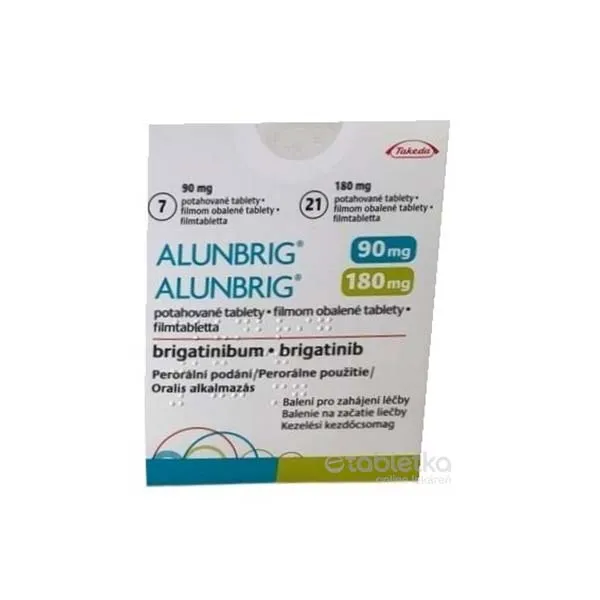
Table of Contents
Package leaflet: Information for the patient
Introduction
Package leaflet: information for the patient
Alunbrig 30mg film-coated tablets
Alunbrig 90mg film-coated tablets
Alunbrig 180mg film-coated tablets
brigatinib
Read the entire leaflet carefully before you start taking this medicine, because it contains important information for you.
- Keep this leaflet, as you may need to read it again.
- If you have any questions, ask your doctor or pharmacist.
- This medicine has been prescribed for you only and must not be given to other people, even if they have the same symptoms as you, because it could harm them.
- If you experience any adverse effects, consult your doctor or pharmacist, even if they are adverse effects not listed in this leaflet. See section 4.
Leaflet contents
- What Alunbrig is and what it is used for
- What you need to know before taking Alunbrig
- How to take Alunbrig
- Possible side effects
- How to store Alunbrig
- Contents of the pack and other information
1. What Alunbrig is and what it is used for
Alunbrig contains the active substance brigatinib, a type of cancer medicine called a kinase inhibitor. Alunbrig is used to treat a type of advanced-stage lung cancer in adults known as non-small cell lung cancer. It is given to patients whose cancer is associated with an abnormal form of the anaplastic lymphoma kinase (ALK) gene.
How Alunbrig works
The abnormal gene produces a protein known as kinase that stimulates the growth of cancer cells. Alunbrig blocks the action of this protein, thereby slowing down the growth and spread of the cancer.
2. What you need to know before taking Alunbrig
Do not take Alunbrig
- if you are allergic to brigatinib or to any of the other ingredients of this medicine (listed in section 6).
Warnings and precautions
Talk to your doctor before starting Alunbrig or during treatment if you have:
- lung or breathing problems
Lung problems, some of which are serious, are more common during the first seven days of treatment. Symptoms may be similar to those of lung cancer. Inform your doctor if new symptoms appear or existing symptoms worsen, including breathing discomfort, shortness of breath, chest pain, cough, and fever.
- high blood pressure
- a slow heart rate (bradycardia)
- vision problems
Inform your doctor of any visual disturbances you experience during treatment, such as seeing flashing lights, blurred vision, or sensitivity to light.
- muscle problems
Inform your doctor of any unexplained muscle weakness, discomfort, or pain.
- pancreatic problems
Talk to your doctor if you experience pain in the upper abdomen, including pain that worsens after eating and may radiate to the back, weight loss, or nausea.
- liver problems
Talk to your doctor if you have pain in the right side of your abdomen, yellowing of the skin or whites of the eyes (jaundice), or dark-colored urine.
- high blood sugar (hyperglycemia)
- sensitivity to sunlight
Limit exposure to sunlight during treatment and for at least 5 days after the last dose. When exposed to sunlight, wear a hat, protective clothing, broad-spectrum sunscreen with ultraviolet A (UVA)/ultraviolet B (UVB) protection, and lip balm with a sun protection factor (SPF) of 30 or higher. This will help protect you from possible sunburn.
Inform your doctor if you have kidney problems or are on dialysis. Symptoms related to kidney problems may include nausea, changes in the amount or frequency of urination, or abnormalities in blood tests (see section 4).
Your doctor may need to adjust your treatment or temporarily or permanently discontinue Alunbrig. See also the beginning of section 4.
Children and adolescents
Alunbrig has not been studied in children or adolescents. Treatment with Alunbrig is not recommended in individuals under 18 years of age.
Other medicines and Alunbrig
Inform your doctor or pharmacist if you are taking, have recently taken, or might need to take any other medicines.
The following medicines may affect Alunbrig or be affected by Alunbrig:
- ketoconazole, itraconazole, voriconazole: medicines used to treat fungal infections
- indinavir, nelfinavir, ritonavir, saquinavir: medicines used to treat HIV
- clarithromycin, telithromycin, troleandomycin: medicines used to treat bacterial infections
- nefazodone: a medicine used to treat depression
- St. John’s wort: a herbal medicine used to treat depression
- carbamazepine: a medicine used to treat epilepsy, manic/depressive episodes, and certain types of pain
- phenobarbital, phenytoin: medicines used to treat epilepsy
- rifabutin, rifampicin: medicines used to treat tuberculosis or certain infections
- digoxin: a medicine used to treat heart problems
- dabigatran: a medicine used to prevent blood clotting
- colchicine: a medicine used to treat gout attacks
- pravastatin, rosuvastatin: medicines used to reduce high cholesterol levels
- methotrexate: a medicine used to treat severe joint inflammation, cancer, and the skin condition psoriasis
- sulfasalazine: a medicine used to treat severe intestinal inflammation and rheumatic joint conditions
- efavirenz, etravirine: medicines used to treat HIV
- modafinil: a medicine used to treat narcolepsy
- bosentan: a medicine used to treat pulmonary hypertension
- nafcillin: a medicine used to treat bacterial infections
- alfentanil, fentanyl: medicines used to treat pain
- quinidine: a medicine used to treat irregular heart rhythms
- cyclosporine, sirolimus, tacrolimus: medicines used to suppress the immune system
Taking Alunbrig with food and drink
Avoid consuming grapefruit-containing products during treatment, as they may alter the amount of brigatinib in your body.
Pregnancy
Alunbrig is not recommended during pregnancy unless the benefit outweighs the risk to the unborn child. If you are pregnant, think you may be pregnant, or plan to become pregnant, consult your doctor about the risks of using Alunbrig during pregnancy.
Women of childbearing potential must avoid becoming pregnant while receiving Alunbrig treatment. Effective non-hormonal contraception is mandatory during treatment and for 4 months after discontinuation of Alunbrig. Ask your doctor about suitable contraceptive methods for you.
Breastfeeding
Do not breastfeed during treatment with Alunbrig. It is unknown whether brigatinib passes into breast milk, and there is a potential risk of harm to the breastfed infant.
Fertility
Men receiving Alunbrig treatment are advised not to father a child during treatment and to use effective contraception during treatment and for 3 months after stopping treatment.
Driving and using machines
Alunbrig may cause visual disturbances, dizziness, and fatigue. Do not drive or operate machinery during treatment if you experience these symptoms.
Alunbrig contains lactose
If your doctor has informed you that you have an intolerance to certain sugars, consult with them before taking this medicine.
Alunbrig contains sodium
This medicine contains less than 1 mmol of sodium (23 mg) per tablet, i.e., essentially “sodium-free”.
3. How to take Alunbrig
Follow exactly the instructions for administering this medicine as given by your doctor or pharmacist. If you are unsure, consult your doctor or pharmacist again.
The recommended dose is
One 90 mg tablet once daily for the first seven days of treatment; thereafter, one 180 mg tablet once daily.
Do not change the dose without consulting your doctor. Your doctor may adjust the dose according to your needs, which might require using a 30 mg tablet to achieve the new recommended dose.
Starter pack for beginning treatment
At the beginning of your treatment with Alunbrig, your doctor may prescribe you a starter pack. To facilitate the initiation of treatment, each starter pack consists of an outer package containing two inner packages with:
- 7 film-coated tablets of Alunbrig 90 mg
- 21 film-coated tablets of Alunbrig 180 mg
The required dose is printed on the starter pack.
Method of administration
- Take Alunbrig once daily, always at the same time.
- Swallow the tablets whole with a glass of water. Do not break or dissolve the tablets.
- The tablets may be taken with or without food.
- If you vomit after taking Alunbrig, do not take additional tablets; wait until your next scheduled dose.
Do not ingest the desiccant container present in the bottle.
If you take more Alunbrig than you should
Inform your doctor or pharmacist immediately if you have taken more tablets than recommended.
If you forget to take Alunbrig
Do not take a double dose to make up for missed doses. Take your next dose as scheduled.
If you stop taking Alunbrig
Do not stop your treatment with Alunbrig without consulting your doctor.
If you have any further questions about the use of this medicine, ask your doctor or pharmacist.
4. Possible side effects
Like all medicines, this medicine can cause side effects, although not everybody gets them.
Tell your doctor or pharmacist immediately if you experience any of the following serious side effects:
Very common (may affect more than 1 in 10 people):
- high blood pressure
Consult your doctor if you experience headaches, dizziness, blurred vision, chest pain, or shortness of breath.
- vision problems
Consult your doctor if you notice any visual disturbances, such as seeing flashing lights, blurred vision, or sensitivity to light. Your doctor may stop your treatment with Alunbrig and refer you to an ophthalmologist.
-
increased creatine phosphokinase levels in blood tests: may indicate muscle damage, for example, of the heart. Consult your doctor if you experience unexplained weakness, discomfort, or muscle pain.
-
increased levels of amylase or lipase in blood tests: may indicate inflammation of the pancreas.
Consult your doctor if you experience pain in the upper abdomen, including abdominal pain that worsens after eating and may radiate to the back, weight loss, or nausea.
-
increased levels of liver enzymes in blood tests (aspartate aminotransferase and alanine aminotransferase): may indicate damage to liver cells. Consult your doctor if you experience pain in the right side of the stomach area, yellowing of the skin or whites of the eyes (jaundice), or dark-colored urine.
-
increased blood sugar levels
Consult your doctor if you feel very thirsty, need to urinate more often than usual, feel very hungry, have nausea, or feel weak, tired, or confused.
Common (may affect up to 1 in 10 people):
- lung inflammation
Consult your doctor if you develop new or worsening breathing or lung problems, including chest pain, cough, or fever, especially during the first week of treatment with Alunbrig, as these may be symptoms of serious lung problems.
- slow heart rate
Consult your doctor if you experience chest discomfort or pain, changes in heart rhythm, dizziness, lightheadedness, or fainting.
- sensitivity to sunlight
Consult your doctor if you experience any skin reaction.
See also section 2, “Warnings and precautions”.
Uncommon (may affect up to 1 in 100 people):
- inflammation of the pancreas, which may cause severe and persistent stomach pain, with or without nausea and vomiting (pancreatitis)
Other possible side effects:
Consult your doctor or pharmacist if you notice any of the following side effects.
Very common (may affect more than 1 in 10 people):
-
lung infection (pneumonia)
-
cold-like symptoms (upper respiratory tract infection)
-
decrease in the number of red blood cells (anaemia) in blood tests
-
decrease in the number of white blood cells, called neutrophils and lymphocytes, in blood tests
-
prolonged blood clotting time measured by activated partial thromboplastin time test
-
blood tests may show increased blood levels of:
‑ insulin
‑ calcium
-
blood tests may show decreased blood levels of:
- phosphorus
- magnesium
- sodium
- potassium
- decreased appetite
- headache
- symptoms such as numbness, tingling, prickling sensations, weakness, or pain in the hands or feet (peripheral neuropathy)
- dizziness
- cough
- shortness of breath
- diarrhoea
- nausea
- vomiting
- abdominal (stomach) pain
- constipation
- inflammation of the mouth or lips (stomatitis)
- increased levels of alkaline phosphatase enzyme in blood tests (may indicate organ damage or dysfunction)
- rash
- itchy skin
- muscle or joint pain (including muscle spasms)
- increased creatinine levels in blood tests (may indicate reduced kidney function)
- fatigue
- tissue swelling due to fluid retention
- fever
Common (may affect up to 1 in 10 people):
- low platelet count in blood tests, which may increase the risk of bleeding and bruising
- difficulty sleeping (insomnia)
- memory disorders
- change in taste sensation
- abnormal electrical activity of the heart (prolongation of QT interval on electrocardiogram)
- fast heart rate (tachycardia)
- palpitations
- dry mouth
- indigestion
- flatulence
- increased levels of lactate dehydrogenase in blood tests (may indicate tissue breakdown)
- increased levels of bilirubin in blood tests
- dry skin
- musculoskeletal chest pain
- pain in arms and legs
- stiffness of muscles and joints
- chest discomfort and pain
- pain
- increased cholesterol levels in blood tests
- weight loss
Reporting of side effects
If you get any side effects, talk to your doctor or pharmacist. This includes any possible side effects not listed in this leaflet. You can also report them directly via the national reporting system listed in Appendix V. By reporting side effects, you can help provide more information on the safety of this medicine.
5. Storage of Alunbrig
Keep this medicine out of the sight and reach of children.
Do not use this medicine after the expiry date stated on the label of the bottle or blister and cardboard carton following EXP. The expiry date is the last day of the month indicated.
This medicine does not require any special storage conditions.
Medicines must not be disposed of via wastewater or household waste. Ask your pharmacist how to dispose of medicines and containers you no longer need. This will help protect the environment.
6. Contents of the pack and other information
Composition of Alunbrig
- The active substance is brigatinib.
Each 30 mg film-coated tablet contains 30 mg of brigatinib.
Each 90 mg film-coated tablet contains 90 mg of brigatinib.
Each 180 mg film-coated tablet contains 180 mg of brigatinib.
- The other ingredients are monohydrate lactose, microcrystalline cellulose, sodium carboxymethylstarch type A, colloidal anhydrous silica, magnesium stearate, talc, macrogol, polyvinyl alcohol, and titanium dioxide (see also section 2, ‘Alunbrig contains lactose’ and ‘Alunbrig contains sodium’).
Appearance of Alunbrig and contents of the pack
Alunbrig film-coated tablets are oval (90 mg and 180 mg) or round (30 mg), white to off-white in colour, with a convex surface on both sides.
Alunbrig 30 mg:
- Each 30 mg tablet contains 30 mg of brigatinib.
- Film-coated tablets approximately 7 mm in diameter, marked with “U3” on one side and plain on the other.
Alunbrig 90 mg:
- Each 90 mg tablet contains 90 mg of brigatinib.
- Film-coated tablets approximately 15 mm in length, marked with “U7” on one side and plain on the other.
Alunbrig 180 mg:
- Each 180 mg tablet contains 180 mg of brigatinib.
- Film-coated tablets approximately 19 mm in length, marked with “U13” on one side and plain on the other.
Alunbrig is available in plastic strips (blisters) packed in a carton containing:
- Alunbrig 30 mg: 28, 56 or 112 film-coated tablets
- Alunbrig 90 mg: 7 or 28 film-coated tablets
- Alunbrig 180 mg: 28 film-coated tablets
Alunbrig is also available in plastic bottles with child-resistant screw caps. Each bottle contains a desiccant and is packed in a carton containing:
- Alunbrig 30 mg: 60 or 120 film-coated tablets
- Alunbrig 90 mg: 7 or 30 film-coated tablets
- Alunbrig 180 mg: 30 film-coated tablets
Keep the desiccant container inside the bottle.
Alunbrig is available in a starter pack format for initiation of treatment. Each pack contains an outer carton with two inner cartons including the following:
- Alunbrig 90 mg film-coated tablets
1 plastic strip (blister) containing 7 film-coated tablets
- Alunbrig 180 mg film-coated tablets
3 plastic strips (blisters) containing 21 film-coated tablets in total
Only certain pack sizes may be commercially available.
Marketing Authorisation Holder
Takeda Pharma A/S
Delta Park 45
2665 Vallensbaek Strand
Denmark
Manufacturer:
Takeda Austria GmbH
St. Peter‑Strasse 25
4020 Linz
Austria
Takeda Ireland Limited
Bray Business Park
Kilruddery
Co. Wicklow
A98 CD36
Ireland
For more information about this medicinal product, please contact the local representative of the Marketing Authorisation Holder:
Belgium/Belgium/Belgium Takeda Belgium NV Tel/Tel: +32 2 464 06 11 | Lithuania Takeda, UAB Tel: +370 521 09 070 |
Bulgaria Takeda Bulgaria EOOD Tel.: +359 2 958 27 36 | Luxembourg/Luxembourg Takeda Belgium NV Tel/Tel: +32 2 464 06 11 |
Czech Republic Takeda Pharmaceuticals Czech Republic s.r.o. Tel: +420 234 722 722 | Hungary Takeda Pharma Kft. Tel.: +36 1 270 7030 |
Denmark Takeda Pharma A/S Tlf: +45 46 77 10 10 | Malta Drugsales Ltd Tel: +356 21419070 |
Germany Takeda GmbH Tel: +49 (0)800 825 3325 | Netherlands Takeda Nederland B.V. Tel: +31 20 203 5492 |
Estonia Takeda Pharma AS Tel: +372 6177 669 | Norway Takeda AS Tlf: +47 800 800 30 |
Greece Takeda Hellas S.A. Tel: +30 210 6387800 | Austria Takeda Pharma Ges.m.b.H. Tel: +43 (0) 800‑20 80 50 |
Spain Takeda Farmacéutica España, S.A. Tel: +34 917 90 42 22 | Poland Takeda Pharma Sp. z o.o. Tel.: +48223062447 |
France Takeda France SAS Tél: +33 1 40 67 33 00 | Portugal Takeda Farmacêuticos Portugal, Lda. Tel: +351 21 120 1457 |
Croatia Takeda Pharmaceuticals Croatia d.o.o. Tel: +385 1 377 88 96 | Romania Takeda Pharmaceuticals SRL Tel: +40 21 335 03 91 |
Ireland Takeda Products Ireland Ltd Tel: 1800 937 970 | Slovenia Takeda Pharmaceuticals farmacevtska družba d.o.o. Tel: +386 (0) 59 082 480 |
Iceland Vistor hf. Tel: +354 535 7000 | Slovakia Takeda Pharmaceuticals Slovakia s.r.o. Tel: +421 (2) 20 602 600 |
Italy Takeda Italia S.p.A. Tel: +39 06 502601 | Finland Takeda Oy Tel: 0800 774 051 |
Cyprus A.POTAMITIS MEDICARE LTD Tel: +357 22583333 | Sweden Takeda Pharma AB Tel: 020 795 079 |
Latvia Takeda Latvia SIA Tel: +371 67840082 | United Kingdom (Northern Ireland) Takeda UK Ltd Tel: +44 (0) 3333 000 181 |
Date of the most recent review of this leaflet:
Other sources of information
Detailed information on this medicine is available on the European Medicines Agency website: http://www.ema.europa.eu.