Actiq 1200 micrograms, buccal tablets with integrated oral applicator
Spain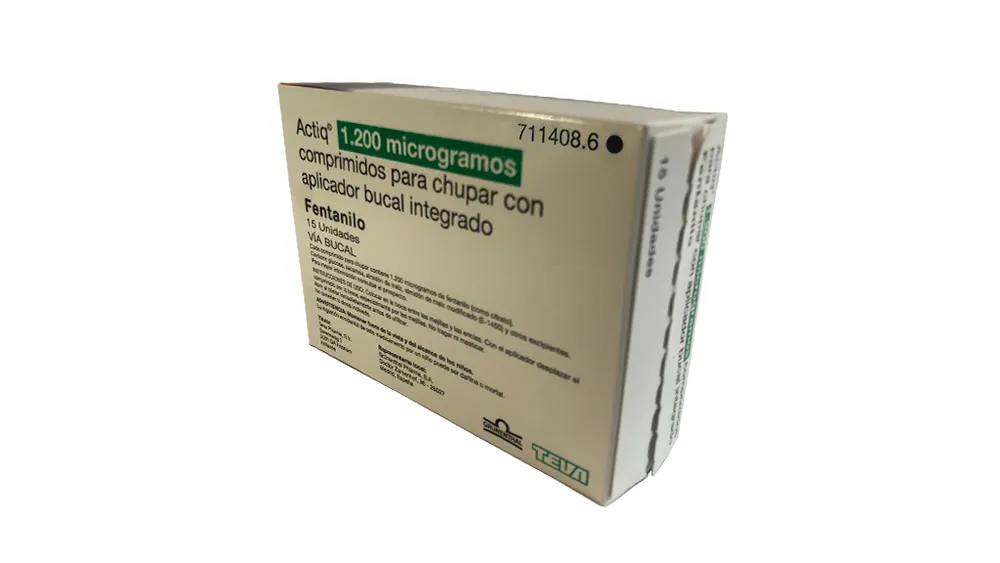
Table of Contents
Package leaflet: Information for the user
Introduction
Package leaflet: Information for the user
Actiq 200 micrograms sucking tablets with integrated oral applicator
Actiq 400 micrograms sucking tablets with integrated oral applicator
Actiq 600 micrograms sucking tablets with integrated oral applicator
Actiq 800 micrograms sucking tablets with integrated oral applicator
Actiq 1,200 micrograms sucking tablets with integrated oral applicator
Actiq 1,600 micrograms sucking tablets with integrated oral applicator
fentanyl
Read the entire leaflet carefully before you start using this medicine, because it contains important information for you.
- Keep this leaflet, as you may need to read it again.
- If you have any questions, ask your doctor or pharmacist.
- This medicine has been prescribed for you only and must not be given to other people, even if they have the same symptoms as you, because it could harm them.
- If you experience any adverse effects, consult your doctor or pharmacist, even if they are adverse effects not listed in this leaflet. See section 4.
Leaflet contents:
- What Actiq is and what it is used for
- What you need to know before using Actiq
- How to use Actiq
- Possible side effects
- How to store Actiq
- Contents of the pack and other information
1. What Actiq is and what it is used for
Actiq contains the active substance fentanyl, a potent analgesic belonging to the opioid group. Actiq is available as suckable tablets with an integrated oral applicator.
- Actiq is indicated for the treatment of breakthrough cancer pain in adult and adolescent patients aged 16 years and older who are already receiving opioid analgesics for persistent (around-the-clock) pain caused by cancer. Breakthrough pain is a sudden additional pain that occurs on top of the underlying persistent pain, despite the use of regular opioid analgesic medications.
2. What you need to know before using Actiq
DO NOT use Actiq:
-
if you are not already taking an opioid medicine prescribed by your doctor (e.g., codeine, fentanyl, hydromorphone, morphine, oxycodone, meperidine) regularly, every day at the same time, for at least one week, to control persistent pain. If you have not been taking these medicines, do not use Actiq, as its use may increase the risk of your breathing becoming slower and/or shallower, or even stopping completely.
-
if you are allergic to fentanyl or to any of the other ingredients of this medicine (listed in section 6).
-
if you are currently taking monoamine oxidase inhibitors (MAOIs) (for the treatment of severe depression) or have taken them within the last 2 weeks (see section 2 “Consult your doctor or pharmacist BEFORE starting to use Actiq if”).
-
if you are taking a medicine containing sodium oxybate.
-
if you have severe respiratory problems or severe obstructive lung disease.
-
if you have short-term pain (e.g., pain from injuries, surgery, headache or migraines) that is not breakthrough pain.
DO NOT use Actiq if any of the above apply to you. If you are unsure, consult your doctor or pharmacist BEFORE using Actiq.
Warnings and precautions
While being treated with Actiq, continue using the opioid pain medicine you are taking for your persistent (ongoing) cancer-related pain.
Keep this medicine in a safe and secure place, out of reach of others (see section 5 Storage of Actiq for more information).
Consult your doctor or pharmacist BEFORE starting to use Actiq if:
-
The other opioid medicine you are taking for your persistent (ongoing) cancer-related pain has not yet been stabilized.
-
You have a medical condition affecting your breathing (such as asthma, wheezing, or difficulty breathing).
-
You have a head injury or have previously lost consciousness.
-
You have heart problems, especially a slow heart rate.
-
You have liver or kidney problems, as these affect how your body eliminates the medicine.
-
You have low blood pressure due to low blood volume.
-
You are diabetic.
-
You are over 65 years of age, as a lower dose may be required and any dose increase should be carefully monitored by your doctor.
-
You are using benzodiazepines (see section 2 “Other medicines and Actiq”). Using benzodiazepines may increase the risk of serious adverse effects, including death.
-
You are using antidepressants or antipsychotics (selective serotonin reuptake inhibitors (SSRIs), serotonin-norepinephrine reuptake inhibitors (SNRIs), monoamine oxidase inhibitors (MAOIs); see section 2 “DO NOT use Actiq” or “Other medicines and Actiq”). Using these medicines with Actiq may cause a potentially life-threatening condition called serotonin syndrome (see section 2 “Other medicines and Actiq”).
-
You have ever abused or been dependent on opioids, any other medicine, alcohol, or illegal drugs.
-
You have ever developed adrenal insufficiency (a condition in which the adrenal glands do not produce enough hormones) or sex hormone deficiency (androgen deficiency) with opioid use (see section 4, “Serious adverse effects”).
-
You drink alcohol; see section “Use of Actiq with food, drinks and alcohol”.
Consult your doctor DURING treatment with Actiq if:
-
You feel increased sensitivity to pain (hyperalgesia) that does not respond to a higher dose of medicine as prescribed by your doctor.
-
You notice signs of dental caries. Actiq contains approximately 2 grams of sugar; frequent use increases your risk of dental caries, which can be severe. It is important to maintain good oral hygiene during treatment with Actiq. Visit your dentist regularly during treatment.
-
You experience a combination of the following symptoms: nausea, vomiting, anorexia, fatigue, weakness, dizziness, and low blood pressure. Together, these symptoms may indicate a potentially life-threatening condition called adrenal insufficiency, in which the adrenal glands do not produce enough hormones.
-
Sleep-related breathing disorders: Actiq may cause sleep-related breathing disorders such as sleep apnea (pauses in breathing during sleep) and sleep-related hypoxemia (low oxygen levels in the blood). Symptoms may include pauses in breathing during sleep, waking up at night due to difficulty breathing, difficulty staying asleep, or excessive daytime sleepiness. If you or someone else notices these symptoms, contact your doctor. Your doctor may consider reducing your dose.
Long-term use and tolerance
This medicine contains fentanyl, an opioid. Repeated use of opioid painkillers may make the medicine less effective over time (the body becomes accustomed to it, known as pharmacological tolerance). You may also become more sensitive to pain when using Actiq. This is known as hyperalgesia. Increasing the dose of Actiq may continue to reduce pain for a time, but it may also be harmful. If you notice the medicine losing effectiveness, consult your doctor. Your doctor will decide whether it is better to increase the dose or gradually reduce the use of Actiq.
Dependence and addiction
This medicine contains fentanyl, which is an opioid. It may cause dependence and/or addiction.
Repeated use of Actiq may lead to dependence, abuse, and addiction, which could result in a potentially fatal overdose. The risk of these adverse effects may be higher with higher doses and prolonged use. Dependence or addiction may lead to a feeling of loss of control over how much medicine you need to take or how often you need to take it. You may feel the need to continue using the medicine even if it no longer helps relieve your pain.
The risk of dependence or addiction varies from person to person. The risk of becoming dependent on or addicted to Actiq may be higher if:
-
you or a family member has abused or been dependent on alcohol, prescription medicines, or illegal drugs (“addiction”).
-
you smoke.
-
you have ever had mood disorders (depression, anxiety, or a personality disorder) or have received treatment from a psychiatrist for other mental illnesses.
If you notice any of the following symptoms while using Actiq, it could be a sign of dependence or addiction:
-
You need to use the medicine for longer than prescribed by your doctor.
-
You need to use a higher dose than recommended.
-
You are using the medicine for reasons other than those prescribed, for example, “to stay calm” or “to help you sleep”.
-
You have made repeated but unsuccessful attempts to stop using the medicine or control its use.
-
You feel unwell when you stop using the medicine (e.g., nausea, vomiting, diarrhea, anxiety, chills, tremors, and sweating), and you feel better once you take it again (“withdrawal effects”).
If you notice any of these signs, consult your doctor to determine the best treatment for you, when it is appropriate to stop the medicine, and how to do so safely.
Seek URGENT medical advice if:
- You experience symptoms such as difficulty breathing or dizziness, swelling of the tongue, lips, or throat while using Actiq. These may be the first signs of a severe allergic reaction (anaphylaxis, hypersensitivity; see section 4 “Serious adverse effects”).
Children and adolescents
Actiq is not recommended for children and adolescents under 16 years of age.
Use in athletes
This medicine contains fentanyl, which may result in a positive doping test.
Other medicines and Actiq
Do not use this medicine and inform your doctor or pharmacist:
-
If you are taking other fentanyl-based treatments previously prescribed for breakthrough pain. If you still have these fentanyl products at home, contact your pharmacist, who will advise you on how to dispose of them.
-
If you are taking monoamine oxidase inhibitors (MAOIs) (medicines for severe depression) or have taken them within the last two weeks (see section 2 “DO NOT use Actiq” and “Consult your doctor or pharmacist BEFORE starting to use Actiq if”).
Inform your doctor or pharmacist before using Actiq if you are taking, have recently taken, or might need to take any other medicine. This includes medicines purchased without a prescription and herbal remedies. In particular, inform your doctor or pharmacist if you are taking any of the following medicines:
- The concomitant use of Actiq and sedative medicines, such as benzodiazepines or related drugs, increases the risk of drowsiness, difficulty breathing (respiratory depression), and coma, and may be life-threatening. Therefore, concomitant use should only be considered when no other treatment options are possible.
However, if your doctor prescribes Actiq together with sedative medicines, the dose and duration of concomitant treatment should be limited by your doctor.
-
Inform your doctor about all sedative medicines you are taking (such as sleeping pills, medicines for anxiety, certain medicines for allergic reactions (antihistamines), or tranquilizers) and strictly follow the dose recommended by your doctor. It may be helpful to inform friends or family members to alert them to the signs and symptoms described above. Contact your doctor if you experience such symptoms.
-
Certain muscle relaxants, such as baclofen or diazepam (see also section “Warnings and precautions”).
-
Any medicine that may affect how your body eliminates Actiq, such as ritonavir or other medicines used to control HIV infection (AIDS), or other medicines known as “CYP3A4 inhibitors” such as ketoconazole, itraconazole, or fluconazole (used for fungal infections), troleandomycin, clarithromycin, or erythromycin (medicines for bacterial infections), and “CYP3A4 inducers” such as rifampicin or rifabutin (medicines for bacterial infections), carbamazepine, phenobarbital, or phenytoin (medicines used to treat seizures).
-
Certain strong painkillers known as partial agonist/antagonist opioids, such as buprenorphine, nalbuphine, and pentazocine (medicines for pain). While using these medicines, you may experience symptoms of withdrawal (nausea, vomiting, diarrhea, anxiety, chills, tremor, and sweating).
-
Certain medicines for neuropathic pain (gabapentin and pregabalin).
-
Serotonergic medicines used to treat depression (antidepressants: such as selective serotonin reuptake inhibitors (SSRIs) and serotonin-norepinephrine reuptake inhibitors (SNRIs)) or antipsychotics. Using these medicines with Actiq may lead to a potentially life-threatening condition called serotonin syndrome (see section 2 “Consult your doctor or pharmacist BEFORE starting to use Actiq if” and “DO NOT use Actiq”). Symptoms of serotonin syndrome may include changes in mental status (e.g., agitation, hallucinations, coma) and other effects such as body temperature above 38°C, increased heart rate, unstable blood pressure, exaggerated reflexes, muscle rigidity, lack of coordination, and/or gastrointestinal symptoms (e.g., nausea, vomiting, diarrhea). Your doctor will advise you whether Actiq is suitable for you.
If you are undergoing surgery requiring general anesthesia, consult your doctor or nurse.
Use of Actiq with food, drinks and alcohol
-
Actiq may be used before or after meals. However, do not use it during a meal.
-
You may drink a small amount of water before using Actiq to moisten your mouth. However, do not eat or drink anything while using Actiq.
-
Do not drink grapefruit juice while using Actiq, as it may affect how your body eliminates Actiq.
-
Do not consume alcoholic beverages while being treated with Actiq. This may increase the risk of serious adverse effects, including death.
Pregnancy and breastfeeding
If you are pregnant or breastfeeding, think you may be pregnant, or plan to become pregnant, consult your doctor or pharmacist before using this medicine.
Pregnancy
Actiq should not be used during pregnancy unless discussed with your doctor.
If Actiq is used for long periods during pregnancy, there is a risk that the newborn may develop withdrawal syndrome, which may be fatal if not recognized and treated by a doctor (see section 4 “Other adverse effects, frequency not known”).
Do not use Actiq during labor, as it may cause breathing difficulties in the newborn.
Breastfeeding
Fentanyl may pass into breast milk and cause adverse effects in the infant. Do not use Actiq if you are breastfeeding. Breastfeeding should not be initiated until at least 5 days after the last dose of Actiq.
Driving and use of machines
This medicine may affect your ability to drive or operate certain tools or machinery. Consult your doctor about whether it is safe for you to drive or operate certain tools or machinery in the hours following Actiq use.
Do not drive or operate certain tools or machinery if: you feel drowsy or dizzy; you have blurred or double vision; or you have difficulty concentrating. It is important to know how Actiq affects you before driving or operating certain tools or machinery.
Actiq contains glucose
This medicine contains approximately 1.89 grams of glucose per dose. This should be considered in patients with diabetes mellitus. Patients with glucose or galactose malabsorption should not take this medicine.
It may cause dental caries.
Actiq contains sucrose
This medicine contains sucrose. Patients with hereditary fructose intolerance (HFI), glucose or galactose malabsorption, or sucrase-isomaltase deficiency should not take this medicine.
It may cause dental caries.
Actiq contains sodium
This medicine contains less than 23 mg of sodium (1 mmol) per lozenge; this is essentially “sodium-free”.
3. How to use Actiq
Follow exactly the administration instructions for this medicine as given by your doctor. If in doubt, consult your doctor or pharmacist again.
Before starting treatment and regularly during treatment, your doctor will also explain to you what to expect from using Actiq, when and for how long you should use it, when you should contact your doctor, and when you should stop using it (see also section 2).
When you first start using Actiq, your doctor will work with you to find the Actiq dose that relieves your breakthrough pain. It is very important that you use Actiq exactly as directed by your doctor.
-
Do not change the dose of Actiq or of other painkillers on your own. Any change in dosing must be prescribed and monitored by your doctor.
-
If you have any doubts about the correct dose or have questions about the use of Actiq, consult your doctor.
How the medicine enters the body
When you place Actiq in your mouth:
- The lozenge dissolves, and the active substance is released. This process takes about 15 minutes.
- The active substance is absorbed through the oral mucosa into the bloodstream.
Using the medicine in this way allows rapid absorption, resulting in fast relief of breakthrough pain.
Determining the correct dose
You should begin to feel relief quickly while using Actiq. However, until you and your doctor determine the dose that effectively controls breakthrough pain, you may not experience sufficient pain relief within 30 minutes of starting to use one unit of Actiq (15 minutes after finishing the Actiq lozenge). If this occurs, your doctor may allow you to use a second Actiq lozenge of the same dose to treat the same breakthrough pain episode.
Do not use a second unit unless instructed by your doctor. Never use more than two units to treat a single breakthrough pain episode.
During dose determination, you may need to have Actiq units of different concentrations at home. However, keep only the Actiq concentrations you need at home. This helps prevent possible confusion and overdose. Consult your pharmacist on how to dispose of Actiq units you no longer need.
How many units to use
Once the correct dose has been determined with your doctor, use 1 unit for a breakthrough pain episode. Consult your doctor if your correct dose of Actiq does not relieve your breakthrough pain over several consecutive breakthrough pain episodes. Your doctor will decide whether your dose needs to be adjusted.
You must inform your doctor immediately if you use Actiq more than four times a day, as you may require a change in your treatment regimen. Your doctor may adjust your treatment for persistent pain; once persistent pain is controlled, your doctor may need to adjust your Actiq dose. If your doctor suspects increased pain sensitivity related to Actiq (hyperalgesia), a reduction in your Actiq dose may be considered (see section 2 "Warnings and precautions"). To achieve the best results, inform your doctor about your pain and how Actiq is working, so that the dose can be adjusted if necessary.
How to use the medicine
Opening the packaging – Each Actiq unit is sealed in its own blister pack.
- Open the packaging when you are ready to use it. Do not open it prematurely.
- Hold the blister pack with the printed side facing away from you.
- Hold the short end of the blister pack.
- Place scissors near the end of the Actiq unit and cut completely along the long end (see illustration).
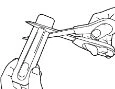
- Separate the printed back of the blister pack and completely remove it from the packaging.
- Remove the Actiq unit from the blister pack and immediately place the Actiq lozenge in your mouth.
Using the Actiq unit
- Place the lozenge between your cheek and gums.
- Using the applicator, continuously move Actiq around your mouth, especially along the cheeks. Rotate the applicator frequently.
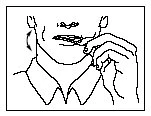
- For optimal relief, the entire Actiq unit should be finished within about 15 minutes. If you finish it too quickly, you will swallow more of the medicine and obtain less relief from breakthrough pain.

- Do not bite or chew the lozenge. This would result in lower blood levels and less pain relief than when used as directed.
- If for any reason you do not finish the entire lozenge each time you experience breakthrough pain, contact your doctor.
Frequency of Actiq administration
Once you have achieved a dose that effectively controls your pain, do not use more than four Actiq units per day. If you think you may need more than four Actiq units daily, you must inform your doctor immediately.
How many Actiq units you should use
Do not use more than two Actiq lozenges to treat a single breakthrough pain episode.
If you use more Actiq than you should
The most common adverse effects if you take too much are drowsiness, dizziness, and nausea.
- If you start feeling dizzy, nauseous, or very sleepy before the lozenge has completely dissolved, remove it from your mouth and ask someone in your household to help you.
- A serious adverse effect of Actiq is slow and/or shallow breathing. This may occur if the Actiq dose is too high or if you use too much Actiq. In severe cases, taking too much Actiq may also lead to coma. If you feel very dizzy, very drowsy, or have slow or shallow breathing, seek immediate medical help.
- An overdose may also cause a brain disorder known as toxic leukoencephalopathy.
- In case of overdose or accidental ingestion, consult your doctor or pharmacist or call the Toxicology Information Service. Telephone: 91 562 04 20, indicating the medicine and the amount ingested.
What to do if a child or adult accidentally uses Actiq
If you suspect someone has accidentally used Actiq, seek medical help immediately. Try to keep the person awake (by calling their name or gently shaking their arm or shoulder) until medical help arrives.
If you forget to take Actiq
If breakthrough pain is still present, you should use Actiq as directed by your doctor. If breakthrough pain has subsided, do not use more Actiq until another breakthrough pain episode occurs.
If you stop treatment with Actiq
You should stop Actiq when you no longer have any breakthrough pain. However, you must continue taking your regular opioid painkiller for persistent cancer pain as directed by your doctor. When stopping Actiq treatment, you may experience withdrawal symptoms similar to possible adverse effects of Actiq. If you experience withdrawal symptoms or are concerned about pain relief, consult your doctor. Your doctor will evaluate whether you need medications to reduce or eliminate withdrawal symptoms.
If you have any further questions about the use of this medicine, ask your doctor or pharmacist.
4. Possible adverse effects
Like all medicines, this medicine can cause adverse effects, although not everyone will experience them. If you notice any adverse effect, contact your doctor.
Serious adverse effects
- The most serious adverse effects are shallow breathing, low blood pressure, and shock.
You or your caregiver must REMOVE the Actiq unit from the mouth, contact your doctor immediately, and seek urgent help if you experience any of the following adverse effects – you may require urgent medical attention:
- If you are very drowsy or have slow or shallow breathing.
- Difficulty breathing or dizziness, swelling of the tongue, lips, or throat, which may be early signs of a severe allergic reaction.
Note for caregivers:
If you observe that the patient using Actiq has slow and/or shallow breathing or is difficult to awaken, take the following steps IMMEDIATELY:
- Grasp the Actiq unit by the applicator, remove it from the patient's mouth, and keep it out of reach of children or pets until it is disposed of.
- SEEK EMERGENCY MEDICAL ASSISTANCE
- While waiting for emergency help to arrive, if the person appears to be breathing slowly, encourage them to breathe every 5–10 seconds.
If you feel excessively dizzy, drowsy, or experience any other discomfort while using Actiq, remove the Actiq unit from your mouth using the applicator and dispose of it according to the instructions provided in this leaflet (see section 5). Then contact your doctor for further guidance on the use of Actiq.
- Contact your doctor if you experience a combination of the following symptoms:
Nausea, vomiting, loss of appetite, fatigue, weakness, dizziness, and low blood pressure.
Together, these symptoms may be signs of a potentially life-threatening condition called adrenal insufficiency, a disorder in which the adrenal glands do not produce enough hormones.
- Prolonged fentanyl treatment during pregnancy may cause withdrawal syndrome in the newborn, which may be life-threatening (see section 2 Pregnancy and breastfeeding).
Other adverse effects
Very common: may affect more than 1 in 10 people
- Vomiting, nausea/discomfort, constipation, stomach (abdominal) pain
- Asthenia (weakness), drowsiness, sedation, dizziness, headache
- Shortness of breath
Common: may affect up to 1 in 10 people
- Confusion, anxiety, seeing or hearing things that are not there (hallucinations), depression, mood changes
- Feeling unwell
- Muscle spasm, sensation of vertigo or dizziness, loss of consciousness, sedation, tingling sensation, numbness, difficulty coordinating movements, increased or altered sensitivity to touch, seizures (epileptic fits)
- Dry mouth, oral inflammation, tongue disorders (e.g., burning sensation or ulcers), taste disturbances
- Gas, bloating, indigestion, decreased appetite, weight loss
- Blurred or double vision
- Sweating, skin rashes, skin itching
- Difficulty urinating
- Accidental injuries (e.g., falls)
Uncommon: may affect up to 1 in 100 people
- Dental caries (which may lead to tooth extraction), intestinal paralysis, mouth ulcers, bleeding gums
- Coma, difficulty speaking
- Abnormal dreams, feeling of indifference, abnormal thoughts, excessive feeling of well-being
- Blood vessel dilation
- Urticaria (hives)
Frequency not known
The following adverse effects have also been reported with the use of Actiq, but their frequency is unknown:
- Gum recession, gum inflammation, tooth loss, severe breathing problems, flushing, sensation of intense heat, diarrhea, swelling of arms or legs, fatigue, insomnia, pyrexia, withdrawal syndrome (which may manifest as adverse effects such as nausea, vomiting, diarrhea, anxiety, chills, tremor, and sweating)
- Decreased sex hormones (androgen deficiency)
- Drug dependence (addiction) (see section 2)
- Drug abuse (see section 2)
- Pharmacological tolerance (see section 2)
- Delirium (symptoms may include a combination of agitation, restlessness, disorientation, confusion, fear, seeing or hearing things that are not real, sleep disturbances, nightmares)
- Difficulty breathing during sleep
- Bleeding at the site of administration
Prolonged fentanyl treatment during pregnancy may cause withdrawal symptoms in the newborn, which may be potentially life-threatening (see section 2).
While using Actiq, you may experience irritation, pain, and ulcers at the application site and bleeding gums.
Reporting of adverse effects
If you experience any adverse effect, consult your doctor or pharmacist, even if it is a possible adverse effect not listed in this leaflet. You may also report them directly via the Spanish Pharmacovigilance System for Human Medicines: https://www.notificaram.es. By reporting adverse effects, you can help provide more information on the safety of this medicine.
5. Storage of Actiq
Keep this medicine in a safe and secure place, out of reach of other people. This medicine can cause serious harm or even be fatal to individuals who accidentally or intentionally use it when it has not been prescribed for them.
The Actiq analgesic medicine is very potent and could be potentially fatal to a child if used accidentally. Actiq must be kept out of sight and reach of children.
- Do not use Actiq after the expiry date stated on the blister pack and carton. The expiry date refers to the last day of the month indicated.
- Store below 30°C.
- Always keep Actiq in its blister packaging until you are ready to use it. Do not use Actiq if the blister pack is damaged or opened before use.
- If you have stopped using Actiq, or have unused units of Actiq at home, return all unused units to your pharmacist.
How to dispose of used Actiq units
Partially used Actiq units may still contain enough medicine to be harmful or potentially fatal to a child.
Regardless of whether any medicine remains in the applicator, the applicator must be properly disposed of as follows:
-
If no medicine remains, discard the applicator in a trash container that is out of reach of children and pets.
-
If medicine remains in the applicator, place the tablet under a stream of hot running water to dissolve any residue, then discard the applicator in a trash container that is out of reach of children and pets.
-
If you do not finish an entire Actiq unit and cannot immediately dissolve the remaining medicine, store the partially used Actiq unit out of reach of children and pets until you have time to dispose of it as described above.
-
Do not flush partially used Actiq units, Actiq applicators, or blister packaging down the toilet.
Medicines should not be disposed of via drains or household waste. Return empty containers and unused medicines to the SIGRE point at your pharmacy. If in doubt, ask your pharmacist how to properly dispose of unused medicines and packaging. This helps protect the environment.
6. Contents of the pack and other information
Composition of Actiq
-
The active substance is fentanyl. Each oral transmucosal lozenge contains:
-
200 micrograms of fentanyl (as citrate)
-
400 micrograms of fentanyl (as citrate)
-
600 micrograms of fentanyl (as citrate)
-
800 micrograms of fentanyl (as citrate)
-
1,200 micrograms of fentanyl (as citrate)
-
1,600 micrograms of fentanyl (as citrate)
-
The other components are:
Oral transmucosal lozenge:
Hydrated dextrins (equivalent to approximately 1.89 grams of glucose), citric acid, disodium phosphate, artificial berry flavour (maltodextrin (containing glucose), propylene glycol (E1520), artificial flavours and triethyl citrate), magnesium stearate.
Edible adhesive used to attach the lozenge to the applicator:
Modified edible corn starch (E 1450), icing sugar (as sucrose and corn starch), water.
Printing ink:
Water, de-waxed white shellac, synthetic coal tar blue dye (E 133) and ammonium hydroxide to adjust pH (E527).
Description of the product and contents of the pack
Each Actiq oral transmucosal lozenge consists of a white to off-white solid medicine attached to an oral mucosa applicator. During storage, the lozenge may develop a slightly mottled appearance. This is due to minor changes in the product's flavouring and does not affect the medicine's efficacy in any way.
Actiq is available in 6 different strengths: 200, 400, 600, 800, 1,200 and 1,600 micrograms. The strength is marked on the white lozenge, on the applicator, on the blister and on the carton to ensure that you use the correct one. Each strength is associated with a specific colour.
Each blister pack contains one single unit of Actiq.
Blister packs are supplied in boxes containing 3, 6, 15 or 30 individual Actiq units.
Only some pack sizes may be commercially available.
Marketing Authorization Holder and Manufacturer
Marketing Authorization Holder:
Phoenix Lab., Unit 12 Bunkilla Plaza, Bracetown Business Park, Clonee, Co. Meath, Ireland
Manufacturer:
Merckle GmbH
Ludwig-Merckle-Strasse 3
89143 Blaubeuren
Germany
Further information about this medicine is available from the local representative of the Marketing Authorization Holder:
Local representative:
Euromed Pharma, Spain, S.L.
Avenida Eduard Maristany, 430-432
08918, Badalona, Barcelona, Spain
Date of the most recent revision of this leaflet: March 2025
Detailed and up-to-date information on this medicine is available on the website of the Spanish Agency of Medicines and Medical Devices (AEMPS) http://www.aemps.gob.es/